Water Weight vs Fat Loss: Scale Fluctuation Decoder
If you are in a calorie deficit but the scale is bouncing around, you are not failing. This guide breaks down water weight vs fat loss, what causes daily weight fluctuations (glycogen, sodium, stress, creatine, hormones), and a simple step-by-step system to track true progress with trend weight.

If the scale jumps up after a few “perfect” days, it can feel like your progress vanished overnight. In reality, most day-to-day weight changes are driven by water shifts, not sudden fat gain. This guide will help you decode common causes of fluctuations, from sodium and carbs to stress and sore muscles. You will also learn how to track real fat loss with trend weigh-ins, simple logging habits, and clear rules for what is normal versus what deserves attention.
Water weight vs fat loss, what changes overnight
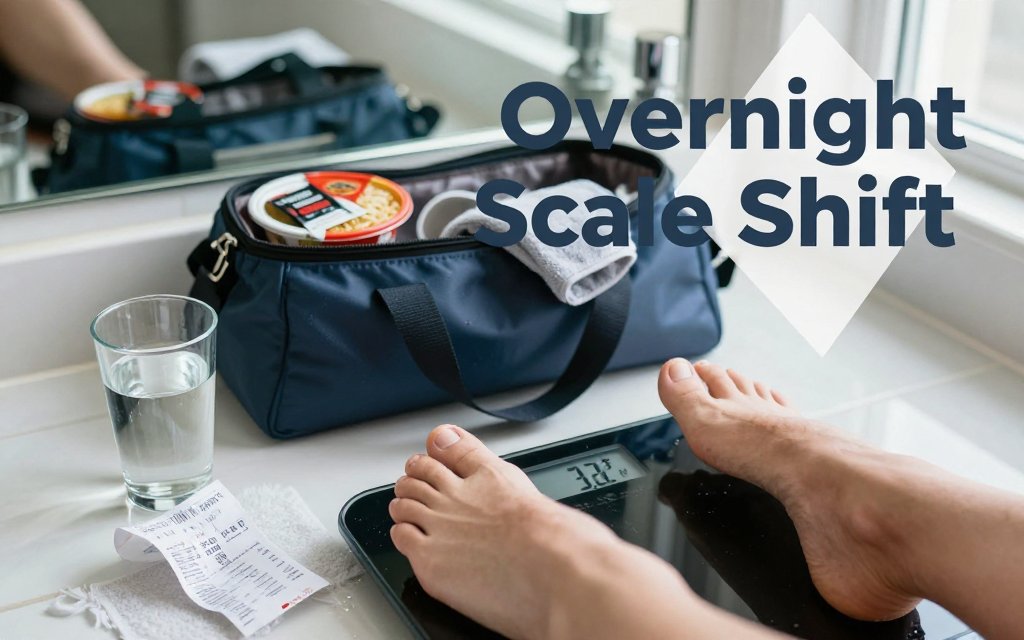
You go to bed feeling proud: you hit a tough workout, drank plenty of water, and had a “normal” dinner that just happened to be salty. Maybe it was ramen, a burrito bowl with extra soy sauce, or pizza after leg day. Then the next morning, the scale is up 1 to 5 pounds. That spike is almost always fast-moving weight: water, food volume still in your gut, and stored carbs (glycogen) pulling in water. Actual body fat does not appear overnight like that. Think of your scale as a snapshot of what is inside you right now, not a report card on your progress.
“Think of the scale like a bathroom sponge. Some days it is holding extra water from sodium, carbs, stress, or sore muscles. The sponge can get heavier without adding any new body fat.”
A simple reality check helps calm the panic. The classic rule of thumb says about 3,500 calories is roughly one pound of fat, so true fat gain overnight would require a huge surplus for most people. Even if that rule is an oversimplification over time, it is still useful for overnight expectations, and it is discussed in this 3,500 kcal rule analysis. Meanwhile, normal day-to-day scale noise often lands around 0.5 to 2.0 percent of your body weight. A 180-pound person can commonly see 1 to 4 pounds swing without any real change in fat.
Another fast-changing variable is plain old food mass and fluid still moving through you. A later dinner, higher fiber day, or a big restaurant meal can sit heavier in your digestive tract the next morning. For example, a large salad, a burrito bowl, and a diet soda can add a lot of volume even if calories are reasonable. This is one reason consistency matters in tracking and weigh-ins. If you meal prep and log by grams, make sure you are consistent about whether foods are weighed raw or cooked, since that changes the number you enter. Calorie tracking gets cleaner when you follow raw vs cooked food weights rules for the foods you repeat each week.
Glycogen water weight, the carb connection
Glycogen is your stored carbohydrate, mostly in muscle and liver, and it is packaged with water. This is where glycogen water weight shows up fast, especially if you have been eating lower-carb and then reintroduce carbs. A common example: after a low-carb week, you add back 150 to 250 g of carbs in a day or two with rice, oats, fruit, and a couple slices of bread. Your workouts feel better, and your scale jumps. That does not mean you gained fat. It often means you refilled storage. When carbs drop again, stress decreases, or your routine stabilizes, some people notice a “whoosh,” which is simply that extra water releasing.
Why weight jumps overnight after sodium, stress, and hard training
Sodium pulls water into the body to keep fluid balance steady, so a ramen or pizza night can easily show up as a heavier morning. Travel stacks the effect because flights, long drives, and hotel sleep can disrupt hydration, movement, and meal timing. Stress and short sleep can also push cortisol higher, and many people hold more water when they are run down. Then add hard training: soreness (DOMS) is basically tiny muscle damage plus repair, and that process can increase local inflammation and water retention. A simple expectation to remember is 24 to 72 hours. Once your normal routine returns, water weight often settles back down.
The most practical move is to stop treating one weigh-in as a verdict. Weigh under the same conditions (after using the bathroom, before eating, similar clothing), then watch the trend using a 7-day average. If you are in a consistent calorie deficit, true fat loss will show up across weeks even if the daily line looks messy. To keep your head clear, pair the scale with at least one more signal: waist measurement, how your jeans fit, or progress photos every 2 to 4 weeks. If today’s number is higher after restaurant food or a new workout, log as usual, hit your protein target, drink water, and keep sodium and carbs consistent for a couple days. The trend will tell the real story.
The biggest causes of daily weight fluctuations
A bathroom scale reports total body mass, not body fat. That sounds obvious, but it explains why you can be in a steady calorie deficit and still see a random +2 to +6 lb jump overnight. For example, if you average a 500 calorie daily deficit, a realistic fat loss pace is about 1 lb per week. Water shifts, food volume sitting in your gut, and inflammation from training can easily blur that progress for days at a time. The fix is not panicking over one weigh-in, it is spotting patterns: daily weights, plus a 7 to 14 day rolling average, tell the truth.
The most common scale noise trigger is sodium. A salty dinner (think restaurant ramen, deli sandwiches, pizza, or a soy sauce heavy stir-fry) can pull extra water into your bloodstream and tissues, then show up as a heavier morning weight. Another big one is glycogen, your stored carbohydrate. If you had a higher-carb day (pasta, bagels, rice bowls, cereal), you refill glycogen and carry more water with it, even if your calories were perfectly on target. If you want less drama, aim for consistent sodium and carbs across weekdays, and use a simple shopping fallback like protein-ratio frozen meals rule so your intake does not swing wildly.
Quick decoder table, what caused the jump and how long it lasts
Screenshot this and use it like a decision tree. The goal is not to guess perfectly, it is to stop making big calorie changes based on normal physiology. If your log is consistent and the table says the “noise” can last 2 to 5 days, treat the scale like a weather report, not a grade on your effort. One practical rule: if the jump has a clear cause (salty meal, travel day, tough lifting session), wait 72 hours before you change anything. Most of the time, the scale catches up once routines return.
| Cause | Range time | Do |
|---|---|---|
| Sodium | 1-4 lb, 1-3 d | Hydrate, stay steady |
| Glycogen | 1-6 lb, 2-5 d | Expect after carbs |
| Creatine | 1-4 lb, 1-3 wk | Keep dose consistent |
| Period | 1-5 lb, 3-7 d | Compare cycle weeks |
| Sleep/stress/alcohol | 1-3 lb, 1-4 d | Prioritize sleep, water |
| Constipation/travel/lifting | 1-5 lb, 2-14 d | Wait, keep logging |
Here is how to use the table without spiraling. If the scale jumps but your calories and steps stayed steady, your next move is to keep everything boring for three more mornings: same breakfast, similar sodium, similar carbs, and normal water intake. Then check your 7 day average, not today’s number. True fat gain requires sustained surplus, so the red flag is a multi-week upward trend (think 14 days) with no meaningful change in logging accuracy, restaurant frequency, or portion sizes. In that case, adjust one lever, such as reducing 150 to 250 calories per day, rather than slashing food because of one salty dinner.
Gut weight is another sneaky one. Constipation can add real scale weight because you are literally holding more material in your digestive tract. Big swings in fiber can do it too: going from low-fiber to high-fiber (for example, adding a cup of beans, a high-fiber cereal, and a big salad in one day) often increases water in the intestines and slows transit briefly. Travel stacks several triggers at once: different sodium, later meals, less walking, and longer sitting. Alcohol can swing both directions, sometimes a lower morning weight from dehydration, followed by a rebound 24 to 48 hours later as you rehydrate and eat saltier foods. None of that is fat gain by itself.
Creatine, menstrual cycle, and other misunderstood weight changes
Creatine is a classic “my diet stopped working” moment. Many people see the scale rise after starting creatine, especially if they do a loading phase. The most common explanation is increased water stored inside muscle, which can make you heavier while your workouts feel better and your reps go up. That is not fat gain. If you want the research summary, the ISSN creatine position stand discusses weight gain as a commonly reported effect in creatine studies. Practical tip: keep your creatine dose consistent (many people use 3 to 5 g daily), and judge progress by strength, waist measurements, photos, and your trend weight, not day-to-day spikes.
Menstrual cycle water retention can be even more confusing because the pattern is real, but highly individual. Many people notice more bloating and a higher scale weight in the late luteal phase (the days before bleeding) and in the first few days of menstruation, then a “whoosh” back down as hormones shift. The most useful strategy is comparison, not perfection: compare the same week of this cycle to the same week of your last cycle. Actionable reassurance: keep calories consistent, keep protein steady, and do not try to “fix” a hormone-driven bump with aggressive restriction. If cycle-related changes feel extreme or come with concerning symptoms, it is smart to check in with a clinician.
Give any scale spike 72 hours before you react. If your calories and steps are steady, most jumps are just water, food volume, or sore muscles. Trend lines change slowly; panic cuts make progress harder.
Starting a new lifting program deserves its own callout because it can last longer than a salty meal. Novel training creates muscle damage and inflammation, which pulls in water during recovery. It is common to see a stubbornly higher scale weight for 1 to 3 weeks even while you are losing fat, especially if you went from “mostly cardio” to squats, deadlifts, and lunges. The best “if this, then expect that” rule: if performance is improving and your food log matches your target calories, assume the bump is recovery water and stay the course until the 14 day trend confirms otherwise. Consistency is the skill that turns scale noise into useful feedback.
How to track weight loss accurately with trend weight

Track fat loss with a rolling average, not a single weigh-in. Your body can be in a real calorie deficit while the scale looks “stuck” because water weight is noisy. Even under normal free-living conditions, short-term body weight swings can be large enough to hide progress for 1 to 3 weeks. Research tracking day-to-day changes shows that shorter-term fluctuations over several days to 3 weeks often land around 1 to 2 kg (about 2 to 4 lb), mostly from water, glycogen, gut contents, and sodium balance, not overnight fat gain. That is why trend weight is your best friend: it filters out the noise so you can see the signal. For the research context, see this two-week weight-change study.
“If you only react to today’s weigh-in, you will change your plan every 24 hours and never learn what works. Trend weight is boring, and that is the point. Boring is reliable.”
Step-by-step, the simple weigh-in and logging routine
Pick a weigh-in time you can repeat, then protect it like a dentist appointment. For most people, the cleanest data is first thing in the morning after using the bathroom, before food or drinks, with minimal clothing. Use the same scale on the same hard surface (tile beats carpet). If you are traveling, do not panic when a hotel scale reads differently. Just keep logging, and let the trend line smooth it out. The goal is not “a good number.” The goal is a consistent measurement so you can connect your habits (calories, macros, steps, workouts, sleep) to your results.
To get a trend weight, you can do it old-school or use an app. Old-school: add your last 7 weigh-ins, divide by 7, and write down that average as your “trend.” Apps make this painless and usually more readable: Happy Scale (iOS), Libra (Android), and TrendWeight (web) all emphasize smoothing so you can stop arguing with single days. If daily weighing spikes anxiety, shift to 3 to 4 weigh-ins per week, still under the same conditions, and average only the numbers you have. The trend becomes slightly slower to react, but it is still far more reliable than weekly “random Tuesday” weigh-ins.
The extra logging step that changes everything is adding three quick context clues, because they explain the “why” behind a spike. Sodium-heavy meals are the classic culprit (think takeout ramen, pizza, deli sandwiches, or a big restaurant meal). Hard training days can also cause temporary water retention, especially after lifting that creates soreness. If you menstruate, cycle day matters a lot; if you do not, major stress and short sleep can still show up as scale bloat. Keep this simple: one note per day is enough, like “salty sushi,” “leg day,” or “3 hours sleep.” A week later, patterns jump out fast.
Normal stall vs real stall, simple rules that prevent overcorrecting
Here is a range that keeps you grounded: if your trend weight is down about 0.25 to 1.0 percent of your body weight per week, that is solid for most diets. For a 180 lb person, that is roughly 0.5 to 1.8 lb per week on average. Some weeks will look flat even when fat loss is happening. That is normal. Trend weight is like watching grass grow: it moves slowly, then you look back at 14 to 28 days and realize it clearly changed. If you see a “plateau” for 5 days, do not slash calories. Look for the context clues first.
Waiting is often the smart move after a salty weekend, a new creatine routine, or the first few weeks of a new training block. Those are classic times when water can rise while you are still losing fat. Give it at least 7 to 14 days, keep your calorie target steady, and focus on consistency: hit your planned meals, keep protein high, and keep steps predictable. A tight, boring routine is your test. If the trend line resumes dropping, you just saved yourself from a frustration spiral. If you have kidney, heart, or blood pressure concerns, check with your doctor before changing sodium or supplements.
Adjust only when the trend is truly flat for 3 to 4 weeks and your tracking is consistent. Before you cut calories, do a quick audit for hidden extras that can erase a deficit: 1 tablespoon of cooking oil is about 120 calories, “tastes” while cooking add up, and weekend alcohol can quietly stack 300 to 800 calories across a night. Then tighten your meal structure instead of chasing extreme rules. Think higher-protein anchors like Greek yogurt, chicken bowls, beans, or eggs, plus a high-fiber carb like oats or potatoes for satiety. If your average intake drops by even 150 to 250 calories per day, your trend usually responds within the next couple of weeks.
When the scale is a red flag, not noise
A few weird weigh-ins are just noise. A trend line that keeps climbing for 3 to 4 straight weeks is different. If your rolling average is up week after week, it is rarely “mystery water” hanging around forever. More often, it is one of three things: intake is higher than you think, activity quietly dropped, or something medical is affecting water balance and appetite (med changes, stress, sleep, hormones, or other issues worth a quick check-in with your clinician). The good news is that you do not need to panic. You just need a calm, honest audit so you can either fix the controllables or get the right support.
If your trend is not moving, what to audit first
Start with expectations, because they keep you confident and realistic. If you truly average a 300 to 500 calorie daily deficit, the trend should usually show movement within 2 to 4 weeks, even with normal water swings from sodium, workouts, and carbs. Clinical obesity guidelines commonly describe 1 to 2 lb per week as a typical early target when daily intake is reduced by about 500 to 1,000 calories, which helps anchor what “real” loss looks like on the scale over time, not day to day fluctuations. See the NHLBI obesity treatment guidance for the deficit and weekly-loss ranges. If your 3 to 4 week trend is flat, assume something in your average is canceling the deficit and audit in order.
Here is the fastest audit order because it targets the biggest calorie leaks first. Do this for 7 days before you change your plan, and treat it like a data collection week, not a punishment week. The goal is to make your “average intake” real, especially on days you are busy, social, tired, or eating out. If you want to keep it simple, pick two meals you eat often (like oatmeal and chicken bowls) and weigh those portions for a week. Most stalls come from small extras that feel invisible, like cooking oil, handfuls of snacks, and drinks.
Once the audit is done, make one modest change and reassess for another 2 weeks. Two easy options that work well for busy people are: cut 150 to 250 calories per day (for example, swap a 2 tbsp ranch pour for 1 tbsp, or change a 16 oz sweetened latte to an Americano plus 2 tbsp milk), or add 1,500 to 2,500 steps per day (a 15 to 25 minute walk after lunch plus a short evening loop). If restaurants are frequent, tighten there first. A “healthy” bowl can still be 900 to 1,200 calories once cheese, guac, oils, and large rice portions stack up. Keep your target the same, just make the logging match reality.
Why did my weight jump 2 to 4 pounds overnight?
Overnight jumps are usually water and digestion, not fat. Sodium pulls water in, higher carbs refill glycogen (which stores with water), late meals leave more food in your system, constipation adds scale weight, alcohol disrupts fluid balance, and hard training causes temporary inflammation. Muscle glycogen is commonly described as being stored with at least about 3 g of water per 1 g glycogen in exercise research, which can move the scale fast after a high-carb day. The systematic review on glycogen and water summarizes this relationship. Give it 48 to 72 hours, keep your routine steady, and check your rolling average.
I am in a calorie deficit but the scale is not moving, what now?
Use the 3 to 4 week trend rule. If your rolling average is flat for that long, treat it as feedback, not failure. Tighten tracking for 7 days: weigh cooking oil, log drinks (a “splash” of juice or a craft beer can be 120 to 220 calories), and reduce restaurant meals where portions are hardest to estimate. Then choose one adjustment: minus 150 to 250 calories per day, or plus 1,500 to 2,500 steps per day. Keep protein steady and do not slash calories aggressively. Reassess the trend after 14 more days, not after one weigh-in.
How do I know if it is water retention from my period?
Compare the same week of your cycle month to month, not random days. Many people see higher scale weight in the late luteal phase and early bleed, then a drop afterward, but your pattern may be different. The giveaway is consistency: similar timing, similar symptoms, and a return toward baseline within several days. What to do: keep calories steady, keep sodium and fiber consistent, prioritize sleep, and keep training reasonable (hard workouts can add extra water on top). Avoid making big plan changes based on one week. If swelling is severe, new, or accompanied by concerning symptoms, check in with your doctor.
Ready to stop guessing and start tracking with confidence? Download CalMeal for free and take the stress out of calorie counting with AI-powered food recognition that makes logging faster and more accurate. Start today, build a clear nutrition picture, and let the trend tell the truth. Get CalMeal on iOS or Android.
Start Tracking Your Nutrition Today
Download CalMeal for free and take the guesswork out of calorie counting with AI-powered food recognition.