Acai Bowl Calories: Build One Under 500
An acai bowl can fit a calorie deficit if you treat toppings like “calorie knobs.” Learn typical acai bowl calories, dial in macros, and build a filling bowl under 500 calories without sacrificing taste.
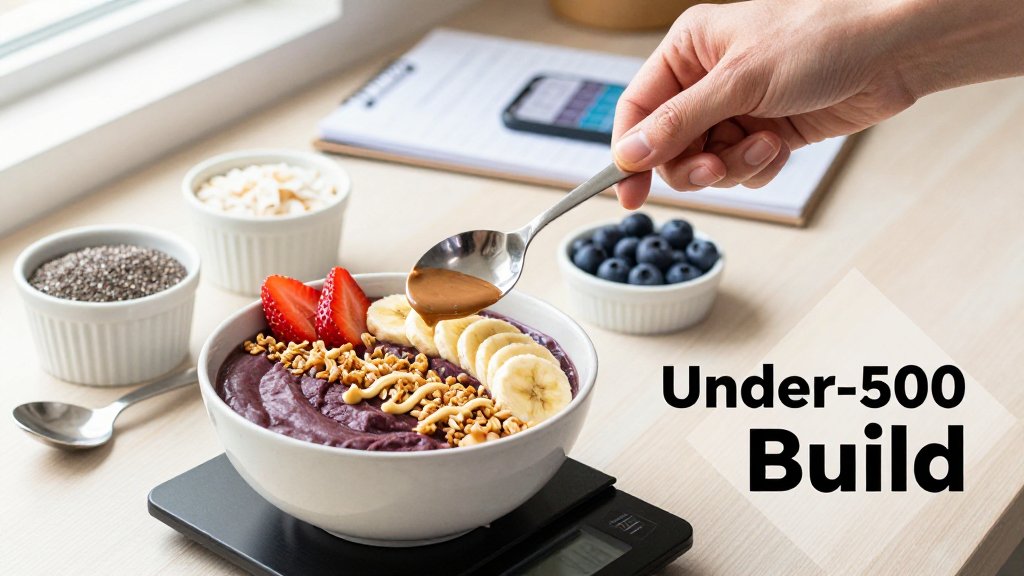
Acai bowls can feel like the perfect healthy breakfast, yet the calorie count often comes from what you sprinkle on top, not the purple base. If you are trying to stay under 500 calories, a few smart swaps make a huge difference without sacrificing taste or that cafe style look. In this guide, you will learn how to choose an unsweetened acai base, use fruit strategically for sweetness, portion granola and nut butter, and log your bowl in a way that stays accurate.
How many calories are in an acai bowl
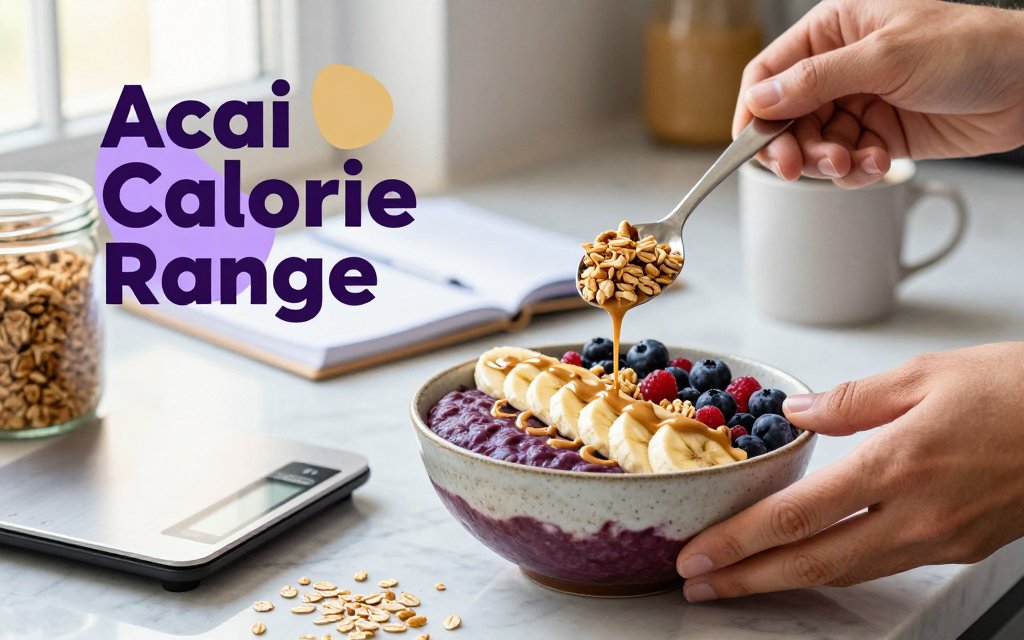
Most of the calorie swing in an acai bowl comes from what gets sprinkled, poured, and drizzled on top, not from the acai itself. That is good news, because it means you can keep the same “treat” vibe and still hit a calorie target that supports fat loss. As a quick expectation setter, a carefully measured homemade bowl can land under 500 calories pretty comfortably, while cafe bowls can climb fast if they are large, juice-based, and heavy on granola plus nut butter. If you want a simple rule to remember, think: build your bowl like a budget, and make toppings earn their spot.
The quick answer: typical ranges and why they vary
A typical homemade acai bowl that stays “weight loss friendly” is often about 350 to 500 calories when you measure the base and keep toppings modest. Cafe bowls vary much more because portions are bigger and add-ons are easy to overdo. For a real world snapshot, one chain’s nutrition sheet for acai bowls lists 12 oz acai bowls at about 305 to 447 calories, and 18 oz bowls at about 454 to 688 calories, depending on the flavor and build. Add extra drizzles or double granola and it gets higher quickly. The takeaway: size plus toppings decide the final number.
So why do two bowls that look similar end up hundreds of calories apart? The biggest “hidden” drivers are (1) sweetened acai blends (some are basically acai plus added sugar), (2) fruit juice used to blend the base (apple juice, orange juice, or sorbet style mixes), (3) a large granola pour that turns into a thick layer, and (4) multiple nut butter drizzles that look light but add up fast. Even at home, the same ingredients can change the total a lot if you switch from one tablespoon to four tablespoons of granola, or from one teaspoon to a free-pour nut butter swirl.
If you want a practical way to stay consistent, focus on controlling the “high impact” add-ons first, then use lower calorie fruit to make the bowl feel big. Here are the calorie levers that usually matter most, in the order they tend to wreck (or save) your under-500 plan.
Calorie math for bowls: pick a 200 to 250 calorie base, add 100 to 150 calories of fruit, then cap crunch and nut butter at 50 to 100 calories total. Measure once, repeat forever.
One simple trick: treat toppings like switches, not decorations
Try this mental model next time you build or order: base + fruit + crunch + fat. Your base is the blended purple part (acai pack plus whatever liquid or yogurt you add). Fruit is volume and sweetness (berries, banana slices, mango). Crunch is usually granola, cereal, or cacao nibs. Fat is nut butter, coconut flakes, chia, hemp, or chocolate. The “switches” are crunch and fat, because they are calorie dense and easy to over-pour. For an under-500 target, aim for roughly 200 to 250 calories in the base, 100 to 150 from fruit, and only 50 to 100 from toppings. If you track macros, this also makes your carbs and fats more predictable.
Here is a concrete under-500 build you can copy, then adjust: blend 1 unsweetened acai pack with 1 cup frozen mixed berries and a splash of unsweetened almond milk (or water) until thick. Add half a banana only if you need more sweetness and creaminess. That base typically lands around 200 to 280 calories depending on your banana and liquid choices. For toppings, use sliced strawberries or blueberries for “more bowl” with fewer calories, then pick one crunch and one fat: for example, 2 tablespoons granola plus 1 teaspoon peanut butter. You keep the flavor and texture contrast, but you avoid the common trap of layering granola plus nut butter plus honey all at once.
To make this feel effortless on busy mornings, set up your environment once. Pre-portion granola into small containers or snack bags so you are not pouring from the big bag half awake. Keep a real teaspoon in your nut butter jar and treat that spoon as the serving tool, not a suggestion. If you are ordering out, choose the smaller size, ask for granola on the side, and pick either nut butter or honey, not both. Want a bonus win for fullness? Build around fiber by adding berries and chia in measured amounts, and consider pairing your bowl habits with track 30g fiber daily. For personal health concerns, check in with your doctor or a registered dietitian.
Acai bowl macros: build yours like a meal
An acai bowl can fit under 500 calories and still feel like a real meal, but only if you build it like one. That means you are not just chasing fruit volume, you are aiming for macro balance: enough protein to stay satisfied, enough fiber to slow digestion, and a measured amount of calorie-dense toppings. A simple rule that works for most goals is: keep the base around 200 to 300 calories, reserve 100 to 150 calories for protein, then spend the rest on fiber-forward toppings like berries and seeds. If you do this, you can land in a sweet spot of roughly 25 to 35 g protein and 8 to 12 g fiber without the bowl turning into a 700+ calorie surprise.
Is an acai bowl healthy: it depends on protein and portions
It is healthy when it has a measured base, controlled added sugar, and enough protein and fiber to keep you full. The common mistake is building an all-fruit bowl that looks “clean” but is basically a smoothie plus dessert toppings. Fruit is nutritious, but a large banana, a big pour of juice, granola, honey, and nut butter can push calories up fast, and the protein can still be near zero. Start with a portion you can repeat: one 100 g packet of unsweetened acai is about 80 calories (USDA-based data shown in acai puree nutrition facts), then add volume with ice and frozen berries. To spot added sugars quickly while shopping, use front-of-pack calorie label tips.
Protein and fiber are what flip a bowl from “treat” to “meal.” For protein, pick one primary add-in and measure it: 3/4 cup nonfat Greek yogurt, 1 scoop whey or pea protein, or a blended cottage cheese base (cottage cheese plus a splash of milk blends surprisingly smooth). If you want a dairy-free option, choose soy milk instead of almond milk because it typically brings more protein per cup, and it blends well with acai. For fiber, add 1 tablespoon chia or ground flax, then top with berries (raspberries and blackberries are especially fiber-friendly). The FDA Daily Value for fiber is 28 g, which you can see in FDA Nutrition Facts label guidance, so a bowl with 8 to 12 g fiber can make a meaningful dent in your day without extra calories from sugar.
If your bowl is mostly fruit plus granola and honey, treat it like dessert. A meal-style bowl has a measured base, one protein booster, and one fiber booster. Add toppings with teaspoons, not handfuls.
| Swap | Cals | Bonus |
|---|---|---|
| Granola half to 2 Tbsp | -150 | still crunchy |
| Honey drizzle to none | -60 | less sugar |
| Nut butter 1 Tbsp to 1 tsp | -80 | same flavor |
| Add Greek yogurt | +90 | +17g protein |
| Add protein scoop | +120 | +20g protein |
| Add chia 1 Tbsp | +60 | +5g fiber |
Macro targets under 500: three templates that work
Instead of guessing, pick a template and repeat it for a week. Repetition makes calorie tracking easier, and it also helps you learn which macro mix actually keeps you full. The three options below cover most goals: general fat loss, post-workout recovery, and steady energy with lower added sugar. The numbers are “aim here” targets, not perfection standards. If your day is higher carb, keep the bowl a little higher protein. If dinner will be heavier, keep the bowl closer to 400 to 450 calories by trimming toppings. Most bowls go over 500 because of two things: oversized granola pours and casual nut butter scoops. Measure those first, and everything gets easier.
Here is what those templates look like with real ingredients. Fat-loss balanced: 100 g unsweetened acai, 1/2 banana, 1 cup frozen mixed berries, 3/4 cup nonfat Greek yogurt, 1 tablespoon chia, 2 tablespoons granola. High-protein post-workout: keep the same base, but add 1 scoop protein powder and cut granola to 1 tablespoon. Lower-sugar steady-energy: use 1/4 banana (or skip it), add extra raspberries, blend with unsweetened soy milk, and use 1 teaspoon peanut butter instead of honey. The goal is not to remove everything “fun,” it is to put the fun in measured amounts so the bowl still does its job: keeping you satisfied.
To change your bowl by 50 to 100 calories without redoing the whole recipe, adjust one lever at a time. Reducing granola by 2 tablespoons often saves roughly 60 to 100 calories, depending on brand. Swapping 1 tablespoon nut butter for 1 teaspoon can save around 60 to 80 calories while keeping the flavor. Switching from juice to water, ice, or unsweetened almond milk can cut another 50 to 120 calories without changing the bowl’s size much. If you are short on protein, add 1/2 scoop protein powder (or a few spoonfuls of Greek yogurt) instead of adding more fruit. If you need more fullness, add 1 tablespoon chia or ground flax before you add more granola.
One last check that keeps bowls “meal-like” is timing and context. If this is breakfast before a long meeting, prioritize protein and fiber, then go lighter on fast carbs like honey and large banana portions. If it is truly a post-workout bowl, you can keep it under 500 while still pushing carbs higher by using berries and a measured granola portion, plus a full scoop of protein powder. However you build it, log the ingredients the same way every time, especially the toppings. If you have medical conditions, are pregnant, or are managing blood sugar, talk with your clinician or a registered dietitian about the best macro targets for you.
Acai bowl toppings calories: the topping budget method
A simple way to keep your bowl under 500 calories is to treat toppings like a budget, not a free-for-all. If your blended base lands around 250 to 320 calories (acai pack plus fruit, liquid, and maybe protein), you usually have about 180 to 240 calories left for everything on top. That is enough for crunch and richness if you spend it on purpose. I like a “one premium, two basics” rule: pick one premium topping (granola or nut butter), then add two basics (fresh fruit and a seed, or fruit and cacao nibs). Your bowl still looks loaded, but your calories stay predictable.
Here are practical “calorie prices” you can use right away. Values vary by brand and spoon size, but these portions are a solid starting point. If you want to double-check a specific food, use USDA FoodData Central and match the serving weight to what you actually pour. The goal is not perfection, it is consistency. If you keep your premium topping to about 70 to 120 calories, you can still afford fruit volume and a small flavor booster without accidentally turning a snack into a 900-calorie meal.
Granola calories and crunch swaps that save 100-plus calories
Granola is usually the number 1 calorie creep because it pours fast and looks “normal” even when it is a lot. Many people accidentally add a cup without noticing, and depending on the brand, that can be 400 to 500 calories just in crunch. Try this once: measure 2 tablespoons into your hand or a small bowl first, sprinkle it on, then take one bite before adding more. That pause is everything. If you still want more, add 1 tablespoon at a time. You can end up satisfied at 3 tablespoons (about 90 to 120 calories) instead of a mindless half-cup or full cup.
If your bowl is “healthy” but never fits your calorie target, the problem is often the silent toppings. Pour granola and nut butter into a measuring spoon once, then build your bowl from that measured amount, not from the bag.
You can keep the crunch with smaller portions by stacking textures. Do 1 tablespoon granola plus a lower-calorie crunch so every bite still has snap. Good options include puffed rice cereal (it looks huge for very few calories), high-fiber cereal that is intentionally light, cacao nibs in teaspoons (they are intense, so a little goes far), or sliced almonds measured by the tablespoon. Toasted coconut is another “big aroma” topping that works best in teaspoons. The trick is to mix crunchy toppings instead of choosing one heavy hitter. Your palate reads “crunchy bowl,” while your calorie budget reads “reasonable.”
Nut butter calories: how to keep the flavor without the “drizzle trap”
Nut butter is pure comfort, but it is also where the “drizzle trap” happens. A spoon turns into two, and two tablespoons can quietly add 200-plus calories. Use a strategy instead of willpower. My favorite is “thin and spread”: stir 1 teaspoon peanut butter or almond butter with a splash of warm water (or mix it into 1 to 2 tablespoons Greek yogurt). You get a creamy sauce that covers the whole bowl for about 30 to 60 calories, not 150. Another option is powdered peanut butter, which can deliver a peanut flavor hit for fewer calories once mixed with water. Whichever you choose, measure first, then drizzle.
After granola and nut butter, the next big calorie add-ons are the “little extras”: honey, chocolate chips, and large piles of seeds. You do not have to ban them, just pick one premium topping per bowl. For example, choose either 1/4 cup granola (about 140 calories) or 1 tablespoon nut butter (about 100 calories), then keep the rest mostly fruit and small boosters. A sample topping plan that feels generous: 2 tablespoons granola (about 70 calories), 1 teaspoon thinned peanut butter (about 35 calories), 1/2 banana (about 50 calories), 1 teaspoon chia (about 20 calories), plus 1/2 cup berries (about 40 calories). Image concept: a photo of an acai bowl surrounded by labeled measuring spoons and mini ramekins, each with a simple “calorie price tag” like “granola 2 tbsp,” “nut butter 1 tsp,” and “chips 1 tbsp.”
Low calorie acai bowl under 500: recipes and logging
How to log an acai bowl when you do not know the grams
An acai bowl is one of those meals where the calories hide in the “extras,” so the easiest way to log it (without feeling fussy) is to build it in the same order you eat it. Step 1: log the base first (acai pack or sorbet, plus any milk, yogurt, protein powder, or sweetener blended in). Step 2: log fruit on top (banana slices, berries, mango). Step 3: log toppings last, and use default portions you can picture: 1 tablespoon nut butter, 1 teaspoon honey, 1 handful granola, 1 sprinkle of coconut. If you are unsure, use a “round up toppings” rule, because toppings are where estimates usually drift low.
For cafe bowls, start with the best case: search the exact menu item name and pick the closest match in your tracker (CalMeal or any app). If the shop posts nutrition, use it. If not, build it from components and add a buffer. My go to is a 10% to 20% buffer for bowls with unknown granola and drizzles, because those are easy to overpour. Example: you log 420 calories from components, you would bump it to about 460 to 500 calories for a more realistic entry. For delivery, use the photo: count visible topping “zones” (granola strip, nut butter puddles, fruit layer), choose conservative household measures, and round up any sauces you cannot measure.
Now for a few reliable under 500 builds you can repeat. Build 1 (creamy and filling, roughly 380 to 450 calories depending on brands): 1 unsweetened acai pack blended with 1/2 cup unsweetened almond milk, plus 3/4 cup nonfat Greek yogurt. Top with 1/2 cup strawberries, 1 tablespoon chia seeds, and 1 tablespoon granola for crunch. Build 2 (chocolate peanut butter vibe, roughly 420 to 490 calories): 1 acai pack, 1/2 banana, 1 scoop protein powder, 1 tablespoon cocoa powder, then top with 1 tablespoon peanut butter and a small sprinkle of cacao nibs. If you want it sweeter, add cinnamon before you add honey.
Build 3 (tropical, still under budget, roughly 390 to 470 calories): blend 1 acai pack with 1/2 cup frozen pineapple and a splash of almond milk, then top with kiwi slices, 1 tablespoon pumpkin seeds, and 1 tablespoon granola. The simple trick is to decide your “topping budget” before you start. If your base plus fruit lands around 320 calories, you have about 180 calories left for crunch and drizzle. That is enough for either 2 tablespoons granola plus 1 tablespoon nut butter, or a bigger granola portion with no nut butter. Pick one main topping and keep the rest tiny.
If you are guessing portions, aim to be consistently a little high. Log the base, then fruit, then toppings, and round toppings up. Consistency beats perfection for progress this week and next.
FAQ: acai bowl calories and macro questions
These are the questions I hear most from people trying to keep acai bowls in their routine while losing weight or tracking macros. The short version is that an acai bowl can fit, but your result depends on portion size and topping choices, not the word “superfood.” If you have health concerns or a medical condition, check in with your doctor or a registered dietitian for personalized guidance. For general weight management, the Centers for Disease Control and Prevention describes weight change as coming down to balancing calories in with calories out, which is why logging your actual bowl matters more than choosing the “healthiest” topping name. CDC guidance on calorie balance is a helpful refresher. (cdc.gov)
Are acai bowls good for weight loss if I am in a calorie deficit
Yes, they can be, as long as your bowl fits your deficit and keeps you satisfied. The most quotable rule is: “An acai bowl helps with weight loss when it is a measured meal, not an untracked snack plus toppings.” Make it work by adding protein (Greek yogurt or protein powder), keeping granola to a small sprinkle, and choosing one calorie dense extra (nut butter or coconut, not both). Next step: pre-log a “default bowl” in your tracker and adjust only the toppings you change day to day. (cdc.gov)
What is the lowest-calorie acai bowl base I can use
The lowest-calorie base is usually an unsweetened acai puree pack blended with water or unsweetened almond milk, plus extra volume from frozen berries or even frozen cauliflower rice. The key is avoiding bases that are already sweetened with added sugar, juice concentrates, or sorbet style blends, because those can push calories up before toppings even start. Practical next step: in your tracker, compare two entries side by side (unsweetened acai puree versus acai sorbet) and save the lower-calorie one as your “base template,” then build the rest of the bowl on top of it. (foodrepo.org)
How much granola and nut butter can I add and stay under 500 calories
A simple, repeatable answer is: keep granola to about 2 tablespoons and nut butter to 1 tablespoon if you want a comfortable under 500 bowl. That combo often lands around 150 to 220 calories total, depending on the brand, which leaves room for a satisfying base plus fruit. If you want more crunch, choose more granola and skip nut butter, or swap to sliced almonds (thin layer) instead of a thick spoon of peanut butter. Next step: measure those two toppings once at home, take a quick photo, and use that visual as your cafe portion guide. (uhhospitals.org)
Ready to stop guessing and start tracking your nutrition today? Download CalMeal for free and take the stress out of calorie counting with AI-powered food recognition that helps you log meals faster and more accurately. Start with your next acai bowl, then keep the momentum going with every snack and meal. Get CalMeal on iOS or Android.
Start Tracking Your Nutrition Today
Download CalMeal for free and take the guesswork out of calorie counting with AI-powered food recognition.