Calories in a banana and carbs in a banana, from small to large
A medium banana has 105 calories, but bananas range from 72 to 135 calories by size. Here's the full size chart with carbs, fiber and protein, plus what logging the wrong size adds up to over a month.
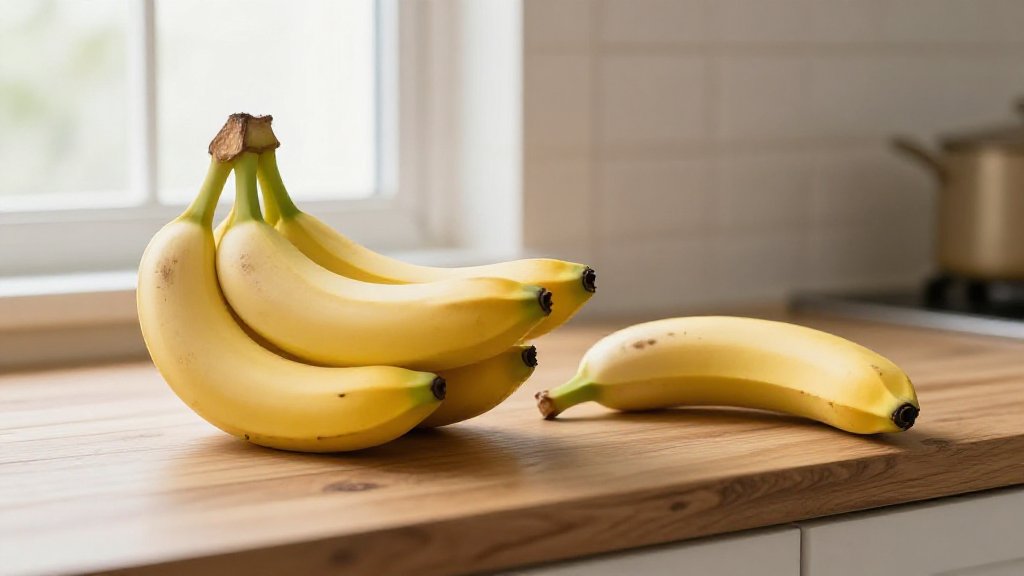
A medium banana has 105 calories, and that's the figure most food logs fill in by default. The catch is that calories in a banana run anywhere from 72 to 135, and the fruit in your hand may not be medium at all.
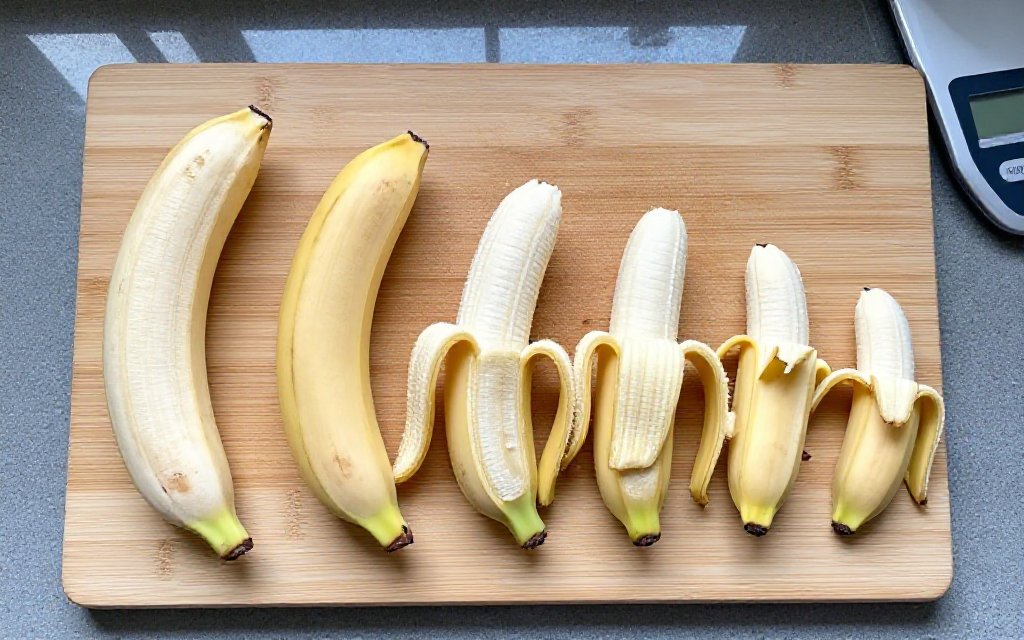
Supermarket bananas vary a lot. An extra small one weighs about 81 grams, while an extra large one tips the scale at 152 grams, nearly double. If you eat one every morning, picking the right size in your log is the easiest accuracy win you'll get all week.
How many calories in a banana, by size
Here's the full spread, using USDA figures compiled by Healthline. Size is defined by length, but the weight column is what actually drives the number. Peel it, weigh it, and you'll know which row you're on.
| Size | Weight | Calories |
|---|---|---|
| Extra small (under 6 in) | 81 g | 72 |
| Small (6 to 7 in) | 101 g | 90 |
| Medium (7 to 8 in) | 118 g | 105 |
| Large (8 to 9 in) | 136 g | 121 |
| Extra large (9 in or more) | 152 g | 135 |
| Sliced, 1 cup | 150 g | 134 |
| Mashed, 1 cup | 225 g | 200 |
Rule of thumb: banana flesh carries about 89 calories per 100 grams. Multiply the peeled weight by 0.89 and you're within a calorie or two of the table.
Small banana calories versus large banana calories
A small banana comes in at 90 calories and a large one at 121, so the gap is 31 calories for what looks like the same snack. Nobody notices that gap at the fruit bowl, which is exactly why it slips past a food log.
Medium banana calories as the everyday default
Most apps and recipe cards assume medium banana calories of 105 when they just say "1 banana". That's fine when your fruit really is 7 to 8 inches long. If yours look bigger, check one against the scale once and adjust.
How many carbs in a banana, and where they come from
Nearly all of a banana's energy comes from carbohydrate. The amount scales neatly with size, so knowing how many carbs in a banana you're eating is as simple as reading the size off the same chart.
Sugar, starch and fiber in a medium banana
A medium banana holds about 14 grams of sugar and 6 grams of starch, plus 3.1 grams of fiber. Fiber is the part that sticks around in your stomach a little longer, so the whole fruit is a different snack from banana-flavored drinks with the same sugar.
Does ripeness change the carbs in a banana?
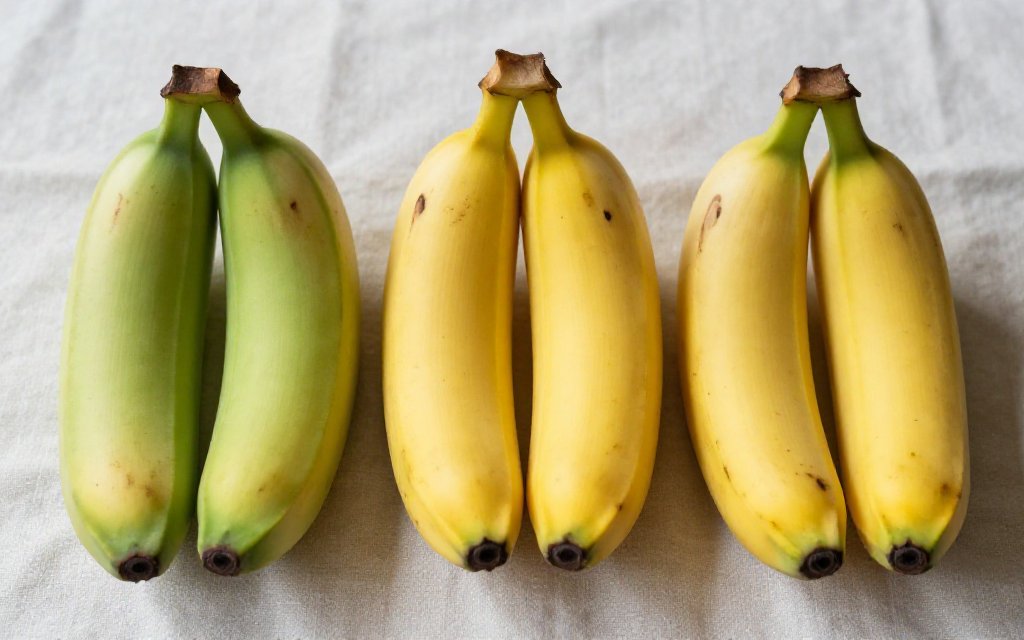
It changes the type, not so much the total. Green bananas hold much more resistant starch, and as they ripen to yellow that starch turns into sugar. Because resistant starch still gets fermented into usable energy in the gut, green and yellow bananas end up with similar calories.
Banana nutrition beyond the calorie count
Calories and carbs get the attention, but the rest of the label is short. The USDA entry for a medium banana lists 1.29 grams of protein and 0.39 grams of fat. That's the nutritional content of banana fruit in a sentence: mostly carbohydrate, a little protein, almost no fat.
Those banana nutrition facts explain how people actually use the fruit. It's quick fuel before a walk or workout, but on its own it won't do much for protein targets. Pairing it with yogurt or nut butter fixes that.
Per the NHS portion guide, one medium banana counts as a full adult portion of fruit, which is set at 80 grams. One banana, one of your five a day.
What the size gap adds up to over a month
Thirty-one calories sounds like nothing, and on any single day it is. Stretch it across a habit, though, and the picture changes. Eat a large banana instead of the small one you logged every day for 30 days and you've added 930 calories you never counted.
Smoothies are where this sneaks up on people most. A cup of mashed banana is 200 calories, and blenders make it easy to add a second fruit without noticing. None of this means bananas are a problem. It just means the label you pick should match the fruit you ate.
The fruit doesn't cause the drift. Logging every banana as medium does, when the ones you buy are mostly large.
Easy ways to log a banana without guessing
You don't need a lab to get this right. A cheap kitchen scale settles it in seconds, and once you know your usual size you can skip weighing. Our guide to reading serving sizes with your hand covers the same idea for other foods.
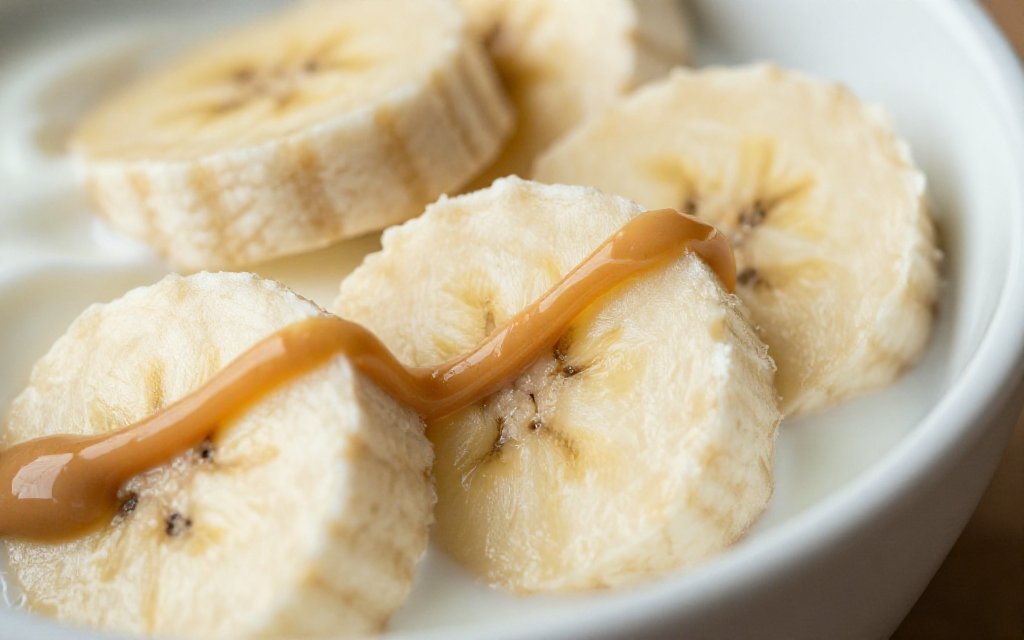
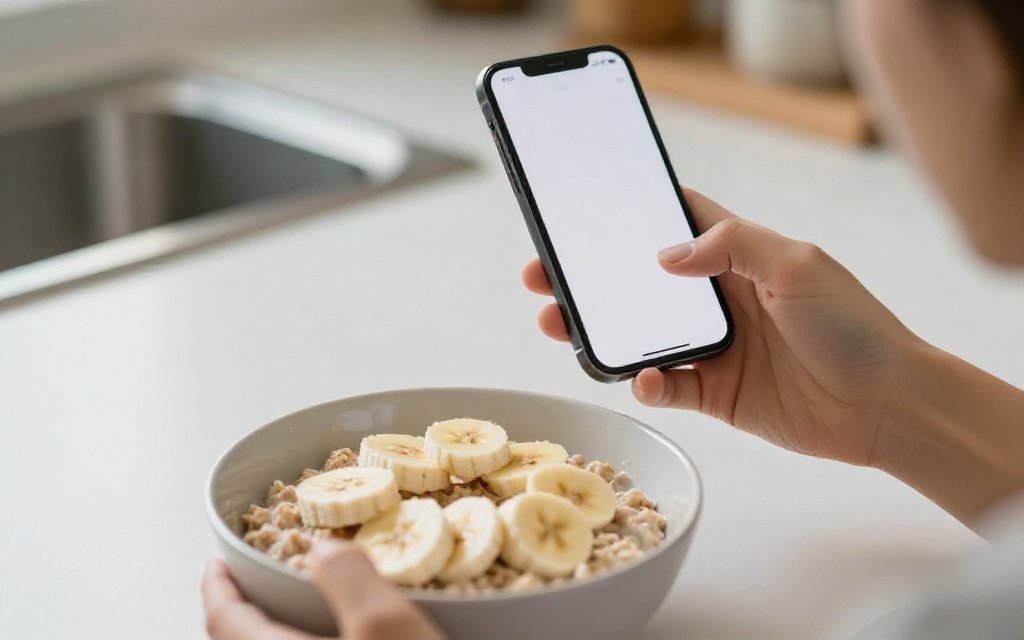
That last step matters for breakfasts. Banana on a bowl of oatmeal or next to a spoon of peanut butter is a classic pairing, and the toppings usually add more calories than the fruit. A photo-based calorie tracker can estimate the whole plate at once.
Banana questions people ask
Is a banana a good snack for weight loss?
It can be. At 90 to 121 calories with 3 grams or so of fiber, it makes a modest, portable snack. Adding protein helps it last longer, and our list of protein rich snacks has easy partners.
Does dried fruit count the same as a fresh banana?
Not gram for gram. The NHS sets a dried fruit portion at around 30 grams, far less than the 80 grams for fresh, because drying concentrates the sugar. It suggests eating dried fruit with a meal rather than as a between-meal snack.
Do green bananas have fewer calories than ripe ones?
Only slightly different, if at all. Green bananas have more resistant starch and less sugar, but that starch is still fermented into energy. For logging, use the same size-based number whether the peel is green or spotty.
Start tracking your nutrition today. Download CalMeal for free, snap a photo of your banana and breakfast bowl, and let AI-powered food recognition handle the size guessing for you. Get the app here: iOS or Android.
Start Tracking Your Nutrition Today
Download CalMeal for free and take the guesswork out of calorie counting with AI-powered food recognition.