Your hand reads serving sizes so you can skip the scale
Your hand is a portion scale you always carry. Learn the palm, fist, and cupped hand cues, what each serving costs in calories, and how to use them for steady portion control without a food scale.
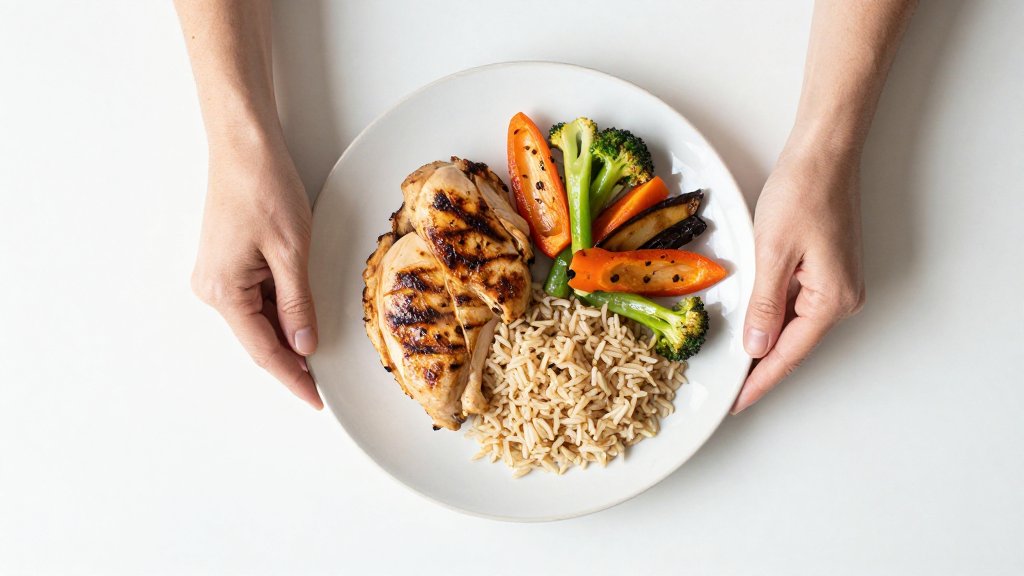
You don't need a food scale to eat the right amount. Your hand goes everywhere you do, and it reads serving sizes closely enough to guide steady weight loss. A palm of chicken, a fist of broccoli, a cupped hand of rice, and you have a plate you can trust.
Nutrition coaches call this the hand portion method, and it turns fuzzy portion sizes into something you can see. It won't replace a lab, but research from Precision Nutrition puts it at about 95 percent as accurate as weighing every gram. For most people chasing fat loss, that is close enough to matter.
How the hand portion method works
The idea is simple. Each part of your hand stands in for one food group, and the size of your hand scales with your body, so a bigger person gets bigger portions automatically. That built in adjustment is why hand portion sizes work without any math.
Stack those together and a woman's plate lands near 400 to 500 calories, while a man's plate lands near 500 to 700 calories. Add a second palm or fist when you're hungrier or training hard.
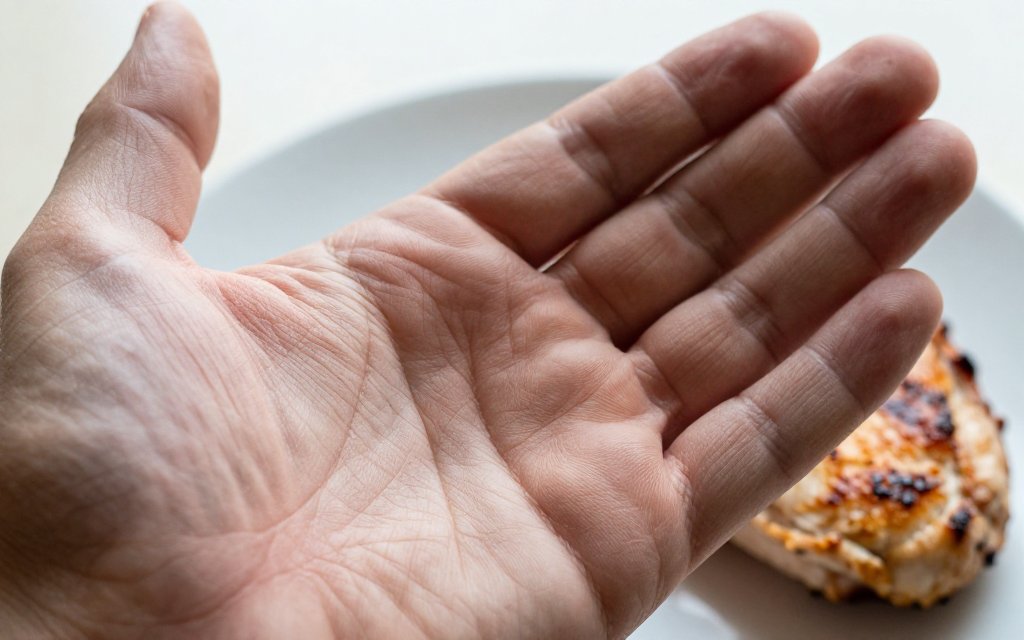
Reading serving sizes for protein, carbs, and fat
Here is where the numbers get useful. Precision Nutrition breaks down what one hand portion delivers, and the calories are steadier than most people expect. People mix up portion size and serving size, but for this method you can treat them as the same thing.
Hand portions are about 95 percent as accurate as carefully weighing and measuring your food, with far less time and effort.
So a palm of grilled chicken runs about 130 to 145 calories and around 22 to 24 grams of protein. A cupped hand of cooked rice adds about 110 to 120 calories. If you want the fuller picture on lean protein, our guide to chicken breast protein lines up neatly with the palm rule.
Everyday objects that match common serving sizes
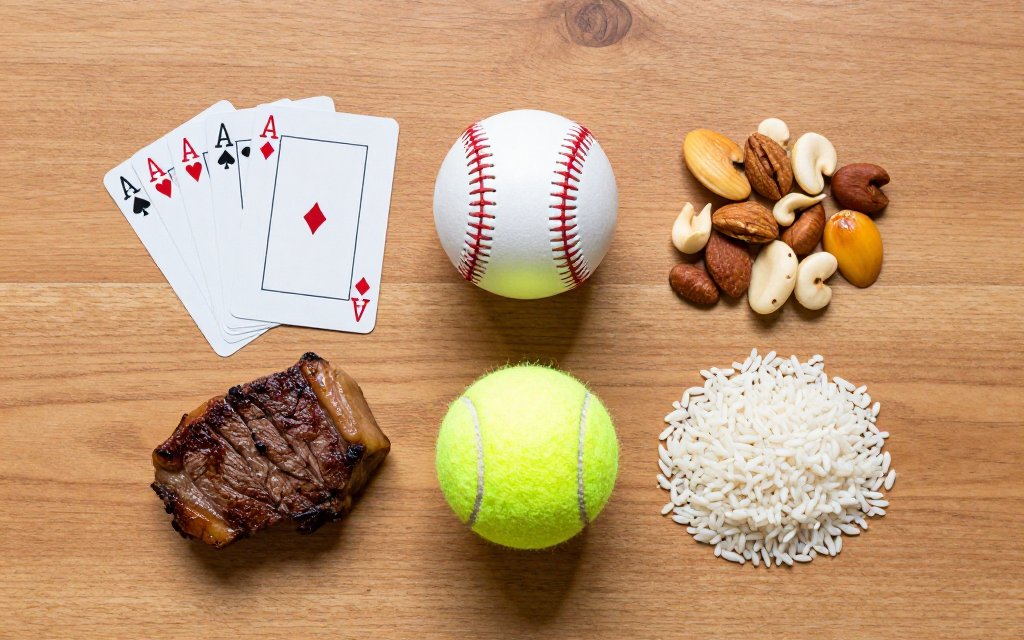
If picturing your own hand feels vague, borrow objects you already know. Health agencies map portions onto everyday things, so a portion stops being abstract. The MedlinePlus guide from the National Library of Medicine is a handy reference.
| Object | Food | Amount |
|---|---|---|
| Deck of cards | Cooked meat | 3 oz |
| Baseball | Chopped fruit | 1 cup |
| Tennis ball | Rice or pasta | 1/2 cup |
| Golf ball | Nuts | 1/4 cup |
| Ping-pong ball | Peanut butter | 2 tbsp |
One palm of protein, one fist of vegetables, one cupped hand of carbs, one thumb of fat. That is a balanced plate in four quick gestures, no scale required.
A deck of cards is three ounces of cooked meat, a baseball is one cup of chopped fruit, and a tennis ball is half a cup of rice or pasta. These object cues and hand portion sizes agree closely, which is why both beat eyeballing a heaping plate. For a protein forward option that fits the palm rule, see our protein rich snacks list.
Portion control for weight loss, by the numbers
Portion control for weight loss is really about the calories you can't see. Portions have ballooned over the past twenty years, and the extra creeps in quietly. The NHLBI, part of the National Institutes of Health, tracked how far portions drifted, and the gaps are large.
A bagel 20 years ago was 3 inches across and 140 calories. Today's 6 inch bagel runs 350 calories, the same food carrying 210 extra calories.
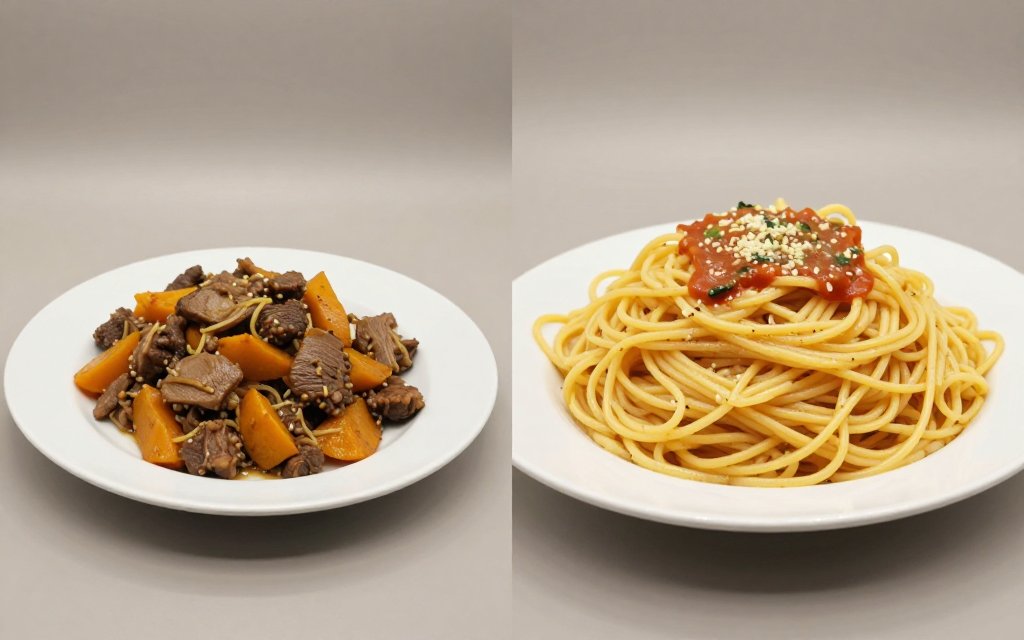
It gets steeper on a plate. A small fries went from 210 to about 610 calories, and a serving of spaghetti and meatballs climbed from 500 to roughly 1,025 calories. Misjudge two portions a day by even 200 calories each and that is 2,800 hidden calories a week, close to a full pound of fat every ten days.
None of that means you can't enjoy the food. It means portion measurements give you a fighting chance, because you can shave a hundred calories here and there without feeling deprived.
Smaller plates and other easy portion tricks
Your environment shapes how much you serve yourself, so a few tweaks make portion control almost automatic. Smaller plates for portion control are the classic move, since the same food looks generous on a nine inch plate and lonely on a twelve inch one.
Keep your anchors simple. A palm sets your chicken portion size, a cupped hand sets your white rice portion size, and a fist covers the vegetables. Lock those three and most meals fall into line, whether you follow a strict portion size guide or just wing it.
Where a food photo beats your best guess
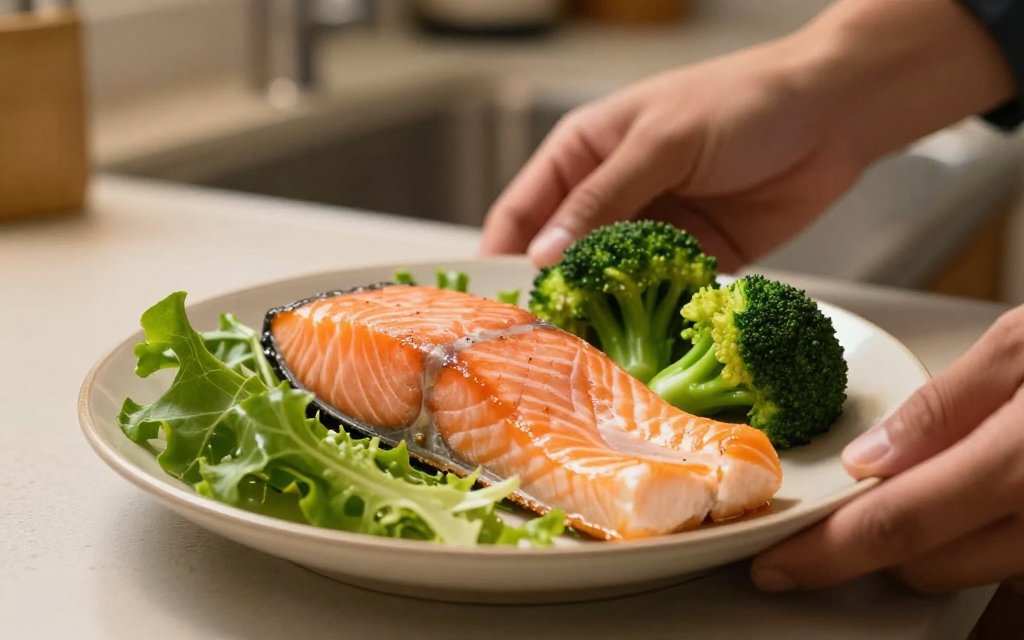
The hand method has limits. Mixed dishes, sauces, and restaurant plates hide their real portions, and that is exactly where a photo helps. Snapping a picture of your plate lets an app estimate the food portion sizes and calories for you, then you adjust from there.
That's the gap CalMeal fills. You photograph the meal and get a calorie and macro estimate in seconds, which pairs well with the hand cues you now know. It also plays nicely with tracking specific foods, like the numbers in our guide to protein in a steak.
Portion questions people ask
How do I measure portion sizes without a scale?
Use your hand as the ruler. A palm is one protein serving, a fist is a cup of vegetables, a cupped hand is a serving of carbs, and a thumb is a serving of fat. It reads your plate fast, and it travels with you to restaurants and hotels.
Is the hand portion method accurate?
It is close. Precision Nutrition reports the method is about 95 percent as accurate as weighing food, which is plenty for steady progress. If you need lab grade numbers for a medical reason, ask a dietitian, but for everyday portions the hand works well.
What is a healthy chicken portion size?
A cooked chicken portion size of about one palm, or three to four ounces, gives you roughly 22 to 30 grams of protein. That also matches a deck of cards. For most meals one to two palms covers it, depending on your size and goals.
How big is a white rice portion size?
One cupped hand is a solid white rice portion size, about half a cup cooked and near 110 to 120 calories. That also matches a tennis ball. Two cupped hands work on a heavy training day, though most people do fine with one.
Start reading your plate today instead of guessing. CalMeal takes the guesswork out of serving sizes by turning one photo into a calorie and macro estimate, so your hand and your phone agree. Get the app here: iOS or Android.
Start Tracking Your Nutrition Today
Download CalMeal for free and take the guesswork out of calorie counting with AI-powered food recognition.