Late Night Snacking Reset: A 3 Step Plan
If nighttime cravings keep blowing up your calorie deficit, you do not need more willpower. You need a simple reset: (1) protect your evening calories and macros, (2) break the craving habit loop, and (3) build a wind-down routine that makes snacking feel unnecessary.
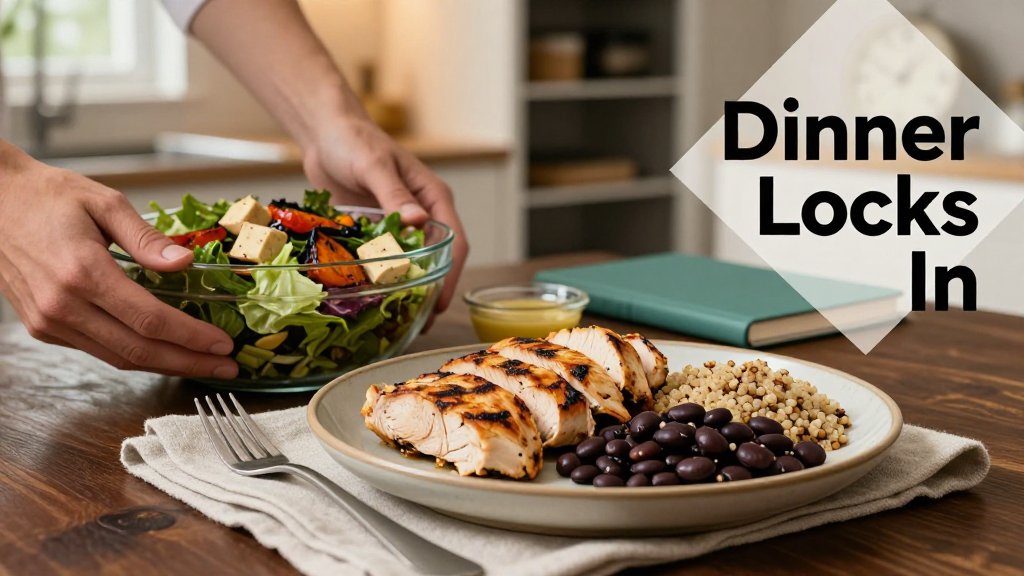
Late-night snacking can quietly erase a full day of good choices, and it is rarely just a willpower problem. Most of the time, it comes from an underpowered dinner, a stimulating evening routine, and a habit loop your brain runs on autopilot. In this 3 step reset, you will learn how to build a satisfying dinner and planned dessert that fit your calorie target, how to handle cravings without white knuckling, and how to create a night routine that makes the kitchen feel optional.
Step 1: Lock in dinner so cravings calm down
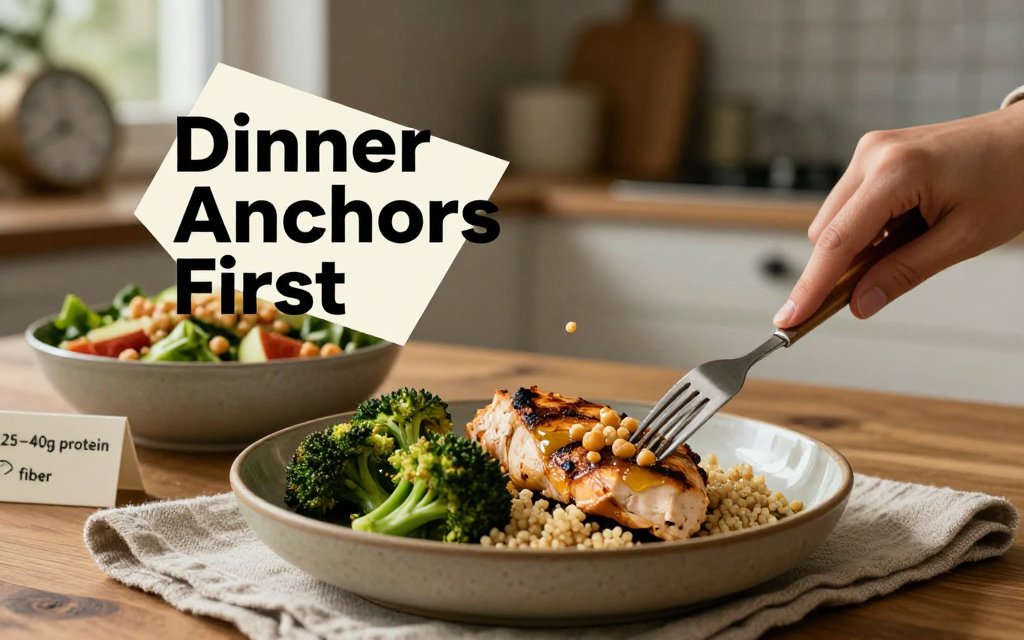
If late-night snacking feels like a willpower problem, try reframing it: for a lot of people, it is delayed hunger finally showing up. Picture a busy workday, a rushed commute, and a quick “healthy” dinner that is actually too small. You feel fine at 7:00 PM, then at 10:00 PM your brain suddenly wants something crunchy, sweet, and immediate. That is not you being broken, it is your body looking for enough energy and satisfaction to end the day. The fix is surprisingly practical: front-load satiety at dinner so cravings calm down naturally. For most adults, that means building dinner around 25 to 40 g of protein and making sure you get at least 8 to 12 g of fiber across dinner plus your usual evening window.
The common mistake: a “light” dinner that backfires
Here is the classic snack-spiral setup: a salad at 6:30 PM, maybe greens, a few tomatoes, a sprinkle of feta, and a light vinaigrette. It looks virtuous, but it is low protein, low volume (once it wilts), and low fiber if it lacks beans or whole grains. At 10:00 PM you are ravenous, so chips happen, then cookies, then a handful of something else “just to finish the bag.” The salad was not the problem, the missing anchors were. A simple fix is to add a protein anchor plus a fiber side. Two easy upgrades you can start tonight: add 5 to 6 oz cooked chicken breast or baked tofu to your salad, and add 2 cups roasted veggies (like broccoli, Brussels sprouts, or zucchini) or a bean-based side (like 3/4 cup black beans).
This also connects to what I call the “calorie deficit at night” trap. If you are aiming for weight loss, you might be in a daily calorie deficit overall, which is fine. The issue is when most of that deficit piles up after dinner because dinner was too small. Your body experiences that big evening gap as a craving trigger, not as a gold star. A more sustainable approach is to spend more of your calories earlier in the evening on a real plate, then let the kitchen close without feeling deprived. And if you do choose a planned evening snack, log it accurately instead of guessing, especially with packaged foods where serving sizes can be sneaky. That is exactly why serving size math for snacks can help you keep your tracking honest without feeling restrictive.
If nighttime cravings keep showing up, do not “try harder.” Make dinner bigger on purpose: hit 25 to 40 g protein and add fiber volume. A satisfied 7:00 PM you makes a calm 10:00 PM you.
Your dinner formula: protein anchor plus fiber volume
Use this repeatable dinner formula so you do not have to reinvent the wheel every night. The goal is satisfaction first, then consistency. Keep the portions simple, then adjust up or down based on your goals and hunger:
- Protein anchor: 1 palm to 1.5 palms (usually 25 to 40 g protein), like chicken, turkey, salmon, shrimp, Greek yogurt sauce, tempeh, tofu, or extra-lean beef.
- Fiber volume: 2 fists of non-starchy veggies (big salads, roasted veg trays, stir-fry veg).
- Smart carbs (optional): 1 cupped hand, like potatoes, brown rice, quinoa, oats, corn tortillas, or beans.
- Fat: 1 thumb, like olive oil, avocado, tahini, nuts, or cheese.
Dinners that fit this pattern include turkey chili with beans, salmon with broccoli and potatoes, or tofu stir-fry with edamame and brown rice. If you want a quick refresher on what counts as a high quality protein choice, the Harvard Nutrition Source has a helpful protein basics overview.
Mindful eating makes this plan work even better because you actually notice when you are satisfied. Try three cues that take almost no extra time: eat seated, take your first 5 minutes without your phone, and aim to stop at “comfortably satisfied” instead of “stuffed.” Comfortably satisfied means you could go for a walk, focus on a show, or start getting ready for tomorrow without hunting for food. If you are still thinking about snacks right after dinner, it often means one of two things: your protein was under 25 g, or your meal did not have enough fiber volume. Adding a big vegetable side (2 cups roasted veggies) plus a fiber-forward carb (beans, lentils, berries, or whole grains) can push you into that calm, done-eating feeling.
Example plate 1 (about 550 to 650 calories): 5 oz grilled chicken breast, 2 cups roasted broccoli and carrots tossed with 1 tsp olive oil, and 3/4 cup cooked quinoa. Approx macros: 45 to 55 g protein, 55 to 70 g carbs, 10 to 15 g fat, and 10 to 14 g fiber (broccoli plus quinoa plus carrots). If you want a sauce, go with salsa, hot sauce, mustard, or a quick yogurt herb sauce so flavor is high without accidentally doubling calories. This is the kind of dinner that makes a 10:00 PM craving feel more like a passing thought than a demand.
Example plate 2 (about 600 to 750 calories): tofu and edamame stir-fry made with 6 oz extra-firm tofu, 1/2 cup shelled edamame, 2 to 3 cups mixed veggies (bell peppers, snap peas, mushrooms), 1 cup cooked brown rice, and 1 tbsp sesame or olive oil for cooking. Approx macros: 30 to 40 g protein, 75 to 95 g carbs, 18 to 25 g fat, and 12 to 18 g fiber (veggies plus edamame plus brown rice). If you tend to want dessert, plan a fiber finish instead of white-knuckling it: 1 cup berries (about 4 to 8 g fiber depending on the berry) or a small pear can help you reach that 8 to 12 g fiber target across dinner plus evening without turning it into a snack free-for-all. If you have any medical conditions or are adjusting your diet significantly, check in with your doctor or a registered dietitian.
Step 2: Use a planned bedtime snack, not grazing
A planned bedtime snack (about 150 to 250 calories) is not “giving in”, it is strategy. The goal is to protect your calorie deficit by choosing a portion you can track, enjoy, and stop after, instead of hovering in the kitchen grabbing “just one more” bite at 10:00 PM. Think of it like budgeting: you are assigning calories on purpose so your day does not get blown up by unplanned extras. If you already know late-night hunger shows up, decide your snack right after dinner, portion it, log it, and put the rest away. The snack is part of your plan, not a detour from it.
Protein is the lever that usually makes a bedtime snack actually feel like a “closing shift” for appetite. Research on pre-sleep protein is mixed depending on the person, dose, and context, but reviews suggest it can support next-morning fullness and appetite control in some settings, especially when the snack is protein-forward, not sugar-forward. For a deeper look at the evidence, this review of pre-sleep casein summarizes trials on appetite, metabolism, and satiety. Practical takeaway: you do not need a giant snack, you need the right macro profile so you are not chasing hunger with random bites.
Planned snacks are easier to stop than unplanned grazing. If you pick one bowl, one plate, or one shake that fits your calories, you can close the kitchen confidently and keep your deficit intact.
A high-protein bedtime snack tends to help most when the hunger is real: you trained in the evening, dinner was early, or dinner was low in protein and you have a long gap until breakfast. If you ate at 6:00 PM and it is now 10:00 PM, your body might simply be asking for something structured. If you are lifting, running, or doing classes after work, a protein-forward snack can also help you hit your daily protein target without stuffing dinner. One simple rule: if you routinely end the day short on protein, fix the morning too. Pairing a solid breakfast with your bedtime plan is powerful, and these 5-minute 30g protein breakfasts can make late-night hunger less intense over time.
Hungry or craving: the 2 minute decision check
Before you automatically snack, do a fast check that separates true hunger from a craving loop. True hunger usually builds gradually, feels physical (empty, growly, low energy), and is satisfied by a normal food. Stress eating often feels urgent, picky, and specific (only chips, only cookies), and it tends to keep going even after you are “full.” Run this quick checklist. If you land on hungry, plan the snack and portion it. If you land on craving, skip the food decision for now and use the Step 3 tools instead (you will still get relief, just without negotiating with the pantry).
If you scored “hungry,” treat your snack like a mini-meal with a clear finish line: sit down, eat it slowly, then brush your teeth or switch to a no-calorie drink. If you scored “craving,” do not try to white-knuckle it with willpower. Instead, change the situation that is fueling the urge: step away from the screen, lower the lights, do a 2-minute kitchen reset, or take a quick shower. Cravings often pass when the cue changes. You can still decide to have the planned snack after 10 minutes, but you will be choosing it calmly, not reacting to a spike of stress.
High-protein, high-fiber snack combos that work
For most people cutting calories, the best bedtime snacks hit two targets: protein for satisfaction, and fiber for staying power. Aim for 15 to 25 g protein, and when possible 5 to 10 g fiber, within roughly 150 to 250 calories. That combo is harder to “accidentally” overeat than snack foods built around fat and sugar. The easiest way to execute is to start with a protein base (Greek yogurt, cottage cheese, kefir, tuna, edamame, a protein shake), then add a fiber booster (berries, chia, psyllium, high-fiber crackers, apple, cucumber). Keep portions boring on purpose so the snack solves hunger without turning into dessert round two.
| Combo | Calories | Protein Fiber |
|---|---|---|
| Greek yogurt, berries | 200 | 20gP 7gF |
| Cottage cheese, peach | 190 | 18gP 5gF |
| Tuna, fiber crackers | 220 | 20gP 6gF |
| Edamame, apple | 230 | 17gP 9gF |
| Protein shake, chia | 240 | 25gP 8gF |
Two common pitfalls can quietly break the plan. First, liquid calories that do not satisfy: a fancy coffee drink, juice, or a “healthy” smoothie can slide down fast and leave you still snacky. If you like shakes, make them thicker (ice, chia, berries) and portion them to a known calorie number. Second, calorie-dense “health halos” like nuts and granola. They can be nutritious, but it is easy to turn a 200-calorie snack into 500 calories without noticing. If you love them, measure once, then keep that portion as your standard. Your goal at night is not perfect nutrition, it is predictable nutrition you can repeat.
Step 3: Break the craving habit loop after dinner
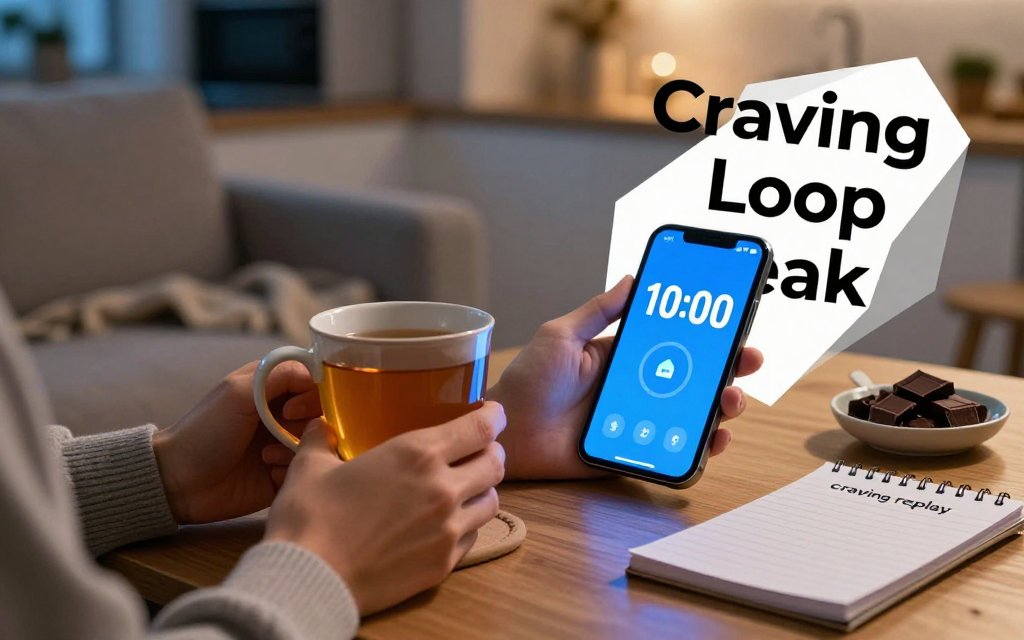
Nighttime snacking rarely happens because you are suddenly starving at 9:30 pm. More often, it follows a habit loop: cue, routine, reward. The cue is the trigger (your couch, Netflix, scrolling, a stressful email, or that “finally me time” feeling). The routine is the behavior (chips, ice cream, leftovers straight from the container). The reward is what you are actually after (comfort, a mental break, something fun, a little sweetness, or a signal that the day is done). The good news is that you do not have to fight the craving head on. If you change the cue or swap the routine, the craving usually loses power fast.
Start with one mindful eating move that works even when motivation is low: pause before you act. Put your hand on your stomach, take three slow breaths, and rate hunger from 0 to 10 (0 is empty, 10 is stuffed). If you are at a 2 or 3, you are probably chasing a reward, not calories. Use a simple script to create space: “If I want something sweet, I will make tea and set a 10 minute timer.” That timer is not punishment. It is a pattern interrupt. If you still choose a snack after the timer, you can do it on purpose, in a portion that fits your calorie target.
Spot your cue: what happens 10 minutes before you snack
Tonight, run a quick “craving replay” like you are watching security camera footage from 10 minutes before the snack. Where are you (couch, bed, kitchen)? What time is it? What are you doing (TV, laptop, dishes, email, doomscrolling)? What do you feel (tired, keyed up, lonely, bored, wired but exhausted)? You are looking for repeatable patterns, not perfection. Three common ones: (1) Work stress, you finish one last task and your brain wants a reward. (2) Boredom, you want novelty and your mouth becomes entertainment. (3) Screen time, your hands are busy but your brain still wants “something.” Beginner tip: for the next 3 nights, open a notes app and log the moment the craving hits with zero judgment, just data.
Also watch for the sneaky cue called fatigue. Short sleep can crank up hunger and cravings the next day by shifting appetite signals and food reward, which makes “I deserve a treat” feel louder at night. If you want the science rabbit hole, this review on sleep and appetite hormones summarizes how sleep loss can influence hormones and brain pathways involved in appetite. Practically, this means your nighttime routine is not just about willpower. It is appetite control for tomorrow. A consistent wind down (dim lights, charger out of reach, same bedtime) can make your evening cravings easier to manage, even before you change food choices.
Swap the routine, keep the reward: 5 realistic replacements
Here is the mindset shift that makes this step work: you are not removing comfort, you are redirecting it. If the reward you want is decompression, pick a routine that still feels like decompression. If the reward you want is sweetness, choose a planned sweet that is satisfying in a known portion. Before you try the swaps, do a 2 minute environment setup: put leftovers into containers right after dinner, set a kitchen close time (example: 8:30 pm), and make the default evening path easy. That can mean brushing your teeth right after dishes, turning off bright kitchen lights, and keeping trigger foods out of sight (top shelf, opaque bin, or not on the counter).
To make these swaps stick, pair them with one clear “if then” plan and one friction rule. The plan is your script. The friction rule is what stops autopilot, like “No eating from the bag” or “All snacks must be in a bowl and logged.” If you do choose food, keep it mindful and measurable: put a single serving on a plate, sit at a table, and eat without your phone for the first five bites. That is often enough to get the reward (taste, comfort) with fewer calories. For macro trackers, this is where a protein forward option (Greek yogurt, a measured protein shake, or a 150 to 200 calorie snack you already planned) beats random grazing. Log it right away in your tracker so the choice stays intentional.
Treat the craving like a wave: label the cue, choose one replacement routine, and wait 10 minutes. If you still want food, plate one portion and sit down. No bag eating, no guilt, just a decision.
Give yourself a full week to practice, because you are rewiring a loop that may have run for years. If you slip and snack, do not “start over tomorrow” in a dramatic way. Just run the replay and adjust one lever: earlier kitchen close time, a stronger cue change (charger in another room), or a better planned sweet that actually satisfies. One of the most effective wins is combining environment design with sleep protection: a calmer wind down makes you less snacky tonight and less hungry tomorrow. If you have medical concerns, sleep disorders, or you are taking medications that affect appetite, check in with a doctor or registered dietitian. Your plan should feel supportive, not like a nightly battle.
Make it stick: an evening routine that protects your deficit
Your fat loss results will come from what you do on the most common nights, not the rare perfect nights. One reason tracking works so well is that consistency drives outcomes. In a technology-based weight loss program, people who were more consistent with self-monitoring dietary intake (and stayed engaged longer) lost more weight, compared with those who logged sporadically, according to research on self-monitoring consistency. Use that idea as your anchor: you are building a repeatable evening, not a willpower battle. Your goal is simple, protect your calorie deficit most nights, and make the default choice the easy choice, even when work runs late or life gets loud.
Win the night by design: eat a real dinner, decide if a snack fits, run your craving protocol, then start your wind-down. Most nights is enough. Consistency beats perfection, and tomorrow you simply repeat it.
Here is a simple routine that ties the whole plan together. Keep it boring on purpose, because boring is repeatable. Start by choosing a dinner that is filling enough to quiet cravings (think: 35 to 45 g protein plus a big veggie side). Then decide, before you are tired, whether a snack is part of tonight’s budget. If you are not hungry, skip it. If you are hungry, eat the planned snack seated, off your phone, and done. After that, run your craving protocol once (brush teeth, herbal tea, 10-minute reset), then go straight into a sleep-first wind-down so you are not negotiating with the pantry at 11:30 p.m.
Busy professional version: plan for the late meeting night. If dinner is pushed late, do not “save up” all day and arrive ravenous, because that is when grazing shows up. Instead, protect a small afternoon bridge snack (for example: a 150 calorie protein bar, or a latte plus a string cheese) so you can still choose a normal dinner portion. If family dinner is non-negotiable, make one plate and add volume with salad or steamed vegetables first. If you want something while watching a show, make it a deliberate snack, like 3 cups air-popped popcorn (about 90 to 120 calories) with a diet soda or tea, not endless handfuls from the pantry.
Macro tracker version: set an evening budget and pre-log it. A lot of night snacking is just unassigned calories. Try this: decide that after-dinner calories are capped at 200, then pre-log a snack you genuinely enjoy. In CalMeal, you can log dinner and your optional snack earlier in the day, then treat that number like a boundary, not a suggestion. If you track protein, aim to “close the day” by hitting your protein floor at dinner or with the snack (for example: 120 to 160 g per day depending on your targets), because protein tends to reduce the urge to hunt for crunchy, sugary extras. If you are low on fiber, add berries, kiwi, or a teaspoon of chia.
Slip-ups are part of the process, so your plan needs a reset rule. If you over-snack tonight, do not compensate tomorrow with aggressive restriction, skipping meals, or punishing cardio. That reaction often backfires and creates a bigger craving wave the next evening. Instead, keep tomorrow normal and return to Step 1 the next night: build a satisfying dinner, decide on an optional planned snack, then run your craving protocol once and transition to wind-down. If you want a quick “repair,” choose one small action that reduces friction, like portioning snacks into single-serve bags, or putting sparkling water and tea at the front of the fridge so it is the first thing you see.
FAQ: How do I stop snacking at night without feeling deprived?
Use the 3-step order: satisfy dinner first, then allow a planned 150 to 250 calorie snack if you are truly hungry, then use your habit-loop tools (tea, brush teeth, 10-minute reset). The deprivation-proof move is to schedule a sweet 2 to 3 nights per week that fits your calories, like 150 calories of chocolate, or a yogurt bowl with cocoa powder and berries. That way you do not feel like treats are “forbidden,” you are just choosing them on purpose. Quote this: “Planned beats impulsive every time.”
FAQ: What is the best high-protein bedtime snack for weight loss?
The best bedtime snack is the one that keeps you satisfied and stays inside your daily target. Aim for 15 to 25 g protein and 150 to 250 calories, then add fiber if you can. Three reliable picks: (1) 3/4 to 1 cup nonfat Greek yogurt plus berries, high protein and high volume; (2) 1 cup low-fat cottage cheese plus pineapple, peaches, or sliced strawberries, slow-digesting and filling; (3) a whey or casein shake blended with ice and frozen berries, which feels like dessert but can stay lean. Portion it, sit down, and treat it like a mini meal.
FAQ: Is late-night eating always bad for fat loss?
Late-night eating is not automatically “bad,” but it is often where mindless, calorie-dense extras sneak in. Timing matters less than total calories and adherence, so if you can plan it, log it, and keep it within your daily target, it can fit. The bigger issue is what it does to appetite and sleep. In a controlled study, late eating increased hunger and influenced energy balance signals, as summarized in the Harvard overview of late eating research. If snacking delays bedtime or worsens sleep, you may feel hungrier tomorrow, even if tonight’s calories were “reasonable.”
Ready to make this reset stick? Start tracking your nutrition today so you know what is actually happening with your calories, especially at night. Download CalMeal for free and take the guesswork out of calorie counting with AI-powered food recognition. Get it on iOS or Android, then log your next meal and see how easy consistency can feel.
Start Tracking Your Nutrition Today
Download CalMeal for free and take the guesswork out of calorie counting with AI-powered food recognition.