Recipe Logging Shortcut: Turn Home Cooking Into Macros
A fast, repeatable way to count calories in homemade food, build accurate recipe macros, and log batch cooking or family-style meals without turning dinner into a math project.
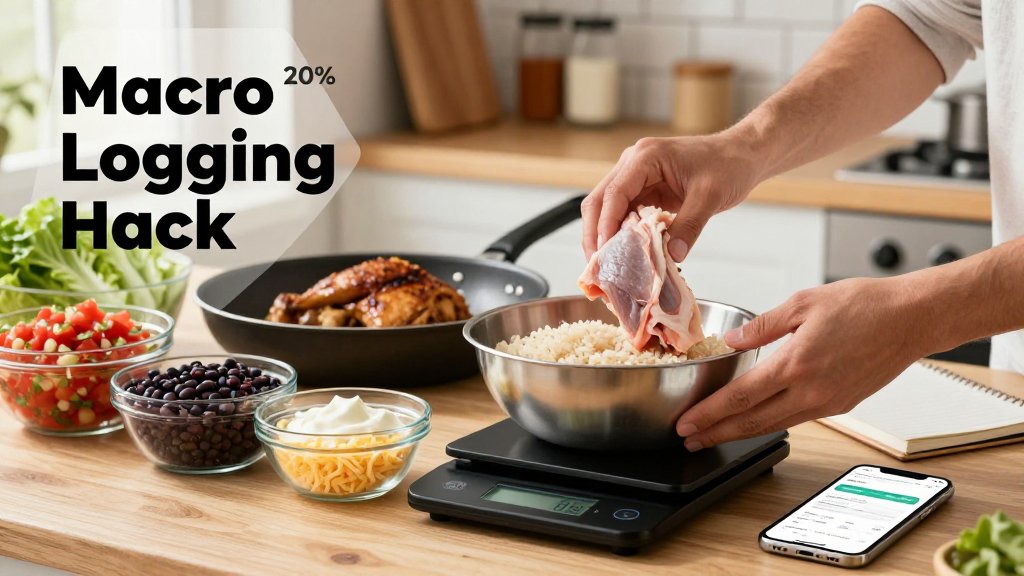
Home cooking is one of the best ways to eat healthier, save money, and control ingredients, yet it is also where calorie tracking often breaks down. Packaged foods hand you a nutrition label, but your chili, stir-fry, and family recipes do not. In this guide, you will learn a simple shortcut: build a one-time recipe entry that works like a mini label you can reuse. We will cover how to calculate calories and macros quickly, portion meals accurately, and log the same dish in seconds next time.
The fastest way to count calories in homemade food
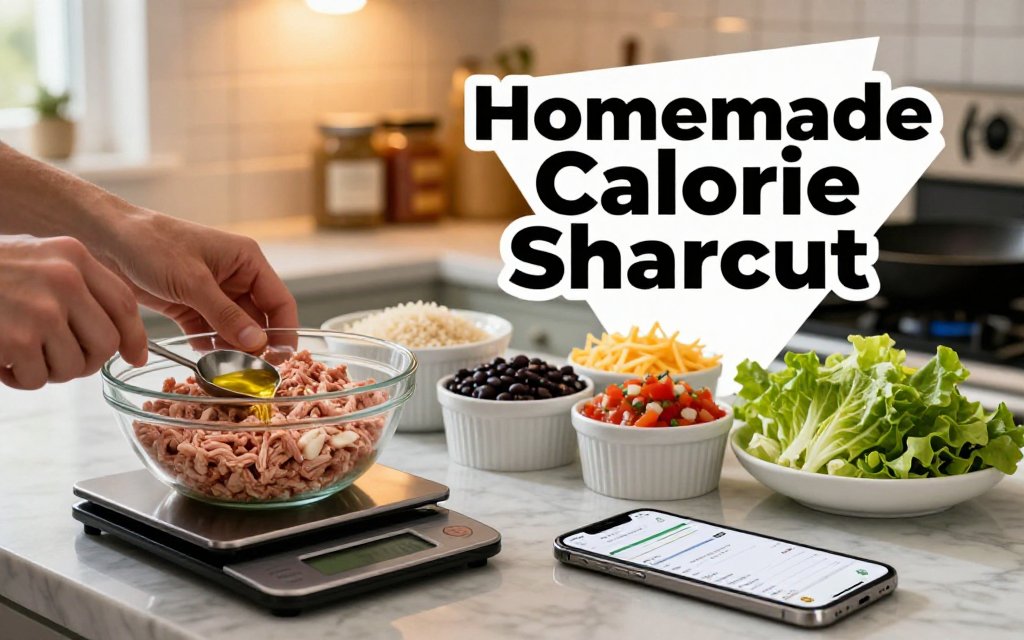
It is 6:45 pm, you are hungry, and dinner is already half done: turkey taco bowls. You browned ground turkey, tossed in taco seasoning, microwaved rice, warmed black beans, chopped lettuce, and set out salsa, shredded cheese, and sour cream. It tastes amazing, but logging it feels impossible. Was that a cup of rice or closer to one and a half? Did you use one tablespoon of oil or more like a heavy pour? And how do you even split the macros when everyone builds their bowl differently? This is exactly where people either skip logging or guess, then wonder why progress stalls.
A simple shortcut you can repeat every week
The fastest repeatable method is boring in the best way: weigh raw ingredients, build one recipe entry once, choose a consistent yield method, then reuse it forever. Think of it like creating a nutrition label for your own cooking. For the taco bowls, you would weigh the raw turkey (say 1 lb), dry rice (say 180 g), beans (say 240 g drained), cheese (say 56 g), and any oil used in the pan. Then you save it as “Taco bowl base.” Next time, logging becomes selecting the recipe and entering your portion, not rebuilding the whole meal from scratch.
Your yield method is the glue that makes the recipe reusable. Option A is portions: decide the pot makes 4 servings, then always log 1 serving when you eat one quarter. Option B is cooked weight: weigh the entire finished pan, for example 1,100 g cooked, then log your bowl as 350 g cooked. Cooked weight is often easier because water loss during cooking changes the final size, especially for chili, stir-fry, or roasted meat. Many tracking apps recommend weighing the final dish for this reason, and the steps for building and saving a recipe look similar across tools, including the create custom recipe steps. (help.macrofactorapp.com)
Your recipe becomes a reusable food label
Here is the rule worth stealing and repeating: If you can list ingredients and a final yield, you can calculate recipe macros accurately enough for fat loss. The big win is that building once beats guessing every night. The first time you create “Weeknight turkey chili” it might take 5 minutes of weighing and typing. After that, logging is closer to 5 to 30 seconds because you are only entering a serving or gram amount. That extra time you save can go toward higher impact habits, like planning a protein-forward breakfast or using track 30g fiber daily as a simple appetite and fullness anchor.
Weigh ingredients raw, then pick one yield method and stick to it. If you record oils and sauces, your saved recipe will be consistent enough to guide fat loss, without turning dinner into a math project.
A practical way to start tonight is to build “recipe templates.” Make one for a taco bowl base, one for a pasta skillet, one for a sheet-pan dinner. Keep toppings separate so you can log them accurately when your plate changes. Example: if your base bowl is 480 calories per serving, adding 28 g shredded cheddar might add roughly another 110 calories, and 30 g sour cream might add about 60 calories, depending on brand. Over a week, those small add-ons can be the difference between a steady deficit and accidental maintenance. This is why the shortcut works: it captures your real patterns, not a perfect Instagram version of dinner.
Common mistakes that make homemade macros wildly wrong
The biggest accuracy trap is forgetting fats that do not look like “food.” One tablespoon of olive oil is about 119 calories, and a heavy pour can easily be closer to 2 tablespoons, which doubles that to about 240 calories. (verywellfit.com) Next is vague measuring: “a handful of cheese” can be 1 serving (28 g) or 3 servings if you are hungry and distracted, which can swing your bowl by 200 to 300 calories fast. Finally, tasting while cooking counts. A few spoonfuls of sauce, some cheese pinches, and a bite of pasta can quietly add another 100 to 300 calories across the cook time. (calvin.vip)
The other mistake that wrecks consistency is mixing raw and cooked weights. If your recipe is built from raw weights (raw chicken, dry rice), then your yield needs to convert that recipe into what you actually eat (cooked weight or portions). If you accidentally log 200 g cooked chicken using a raw chicken database entry, your macros can skew because cooking changes weight through water loss. You do not need perfection, you need repeatability. Pick a method, keep it consistent, and measure the sneaky calorie-dense stuff first: oils, nuts, nut butter, cheese, creamy sauces, and dressings. If you have health concerns or a medical condition, check with a doctor or registered dietitian for personal guidance.
Build recipe macros that match what you actually eat
Recipe macros get “close enough” fast, but portion accuracy lives or dies on two details: ingredient precision and yield. Ingredient precision is the easy part, you just log what went into the pot. Yield is the sneaky part, it decides what “one serving” actually means after simmering, roasting, and evaporation. If you have ever logged chili as 6 servings and then realized your bowls were bigger (or smaller) than that idea, your yield method was the problem, not your discipline. The goal is simple: build one solid recipe entry once, then portion it the same way you actually eat it all week.
Step-by-step: create a recipe in a calorie tracking app
Start your recipe like a data person, not a cookbook person: enter ingredients by weight in grams. In a recipe builder inside a calorie tracking app (including CalMeal), the clean workflow is: add ingredient, choose the closest database match, confirm raw vs cooked, then move on. Prioritize entries that specify “raw” for meats and grains if you are weighing before cooking. Add every calorie carrier, especially oils, butter, sugar, honey, marinades, and sauces, because these are where “missing calories” usually hide. If you used a packaged item, do a quick sanity check by scanning the barcode or matching the Nutrition Facts panel. The interface steps differ by app, but the logic is the same as the create custom recipe steps described by Cronometer: build the ingredient list first, then set the yield.
Concrete example: turkey chili. You brown 93 percent lean ground turkey (680 g raw), add diced onion (200 g), bell pepper (150 g), canned crushed tomatoes (800 g), black beans (drained 480 g), kidney beans (drained 480 g), and corn (150 g). Now add the “easy to forget” items: 1 tbsp olive oil (14 g), plus 2 tbsp tomato paste (30 g), and any sugar added to balance acidity (even 1 tsp is 4 g). If your database entries are reasonable, a batch like this often lands around 2,000 to 2,400 calories total with roughly 150 to 190 g protein, depending on turkey fat level and bean brands. That is enough swing to matter, so do not wing it on the turkey choice or the oil.
Raw vs cooked entries are where most recipe math breaks. If you log “cooked rice” but weighed dry rice, you can be off by hundreds of calories for the batch, because water changes weight without adding calories. Same idea with meat: “chicken thigh, roasted” is not interchangeable with “chicken thigh, raw” when you are building a recipe from raw ingredients. Pick one approach and stay consistent. My practical rule: weigh and log raw ingredients whenever possible, then let yield handle cooking changes. Also watch multi-ingredient products: a jarred stir-fry sauce might be 30 calories per tablespoon, or it might be 70, and the only safe way is to scan or match the label entry to the brand you actually used.
Choose your yield method before you portion
Pick your yield method before you grab a bowl or meal prep container, because you cannot “fix it later” without redoing the math. You have three reliable options: total cooked weight in grams, number of portions, or container count. Total cooked weight is usually the most consistent for soups, chili, shredded meat, casseroles, and anything you scoop, because it matches real-life serving sizes that vary day to day. Portions can work when you truly portion evenly (like 8 muffins). Containers are great if you always fill the same meal prep boxes. If you rely on eyeballing, remember that household measures can be very inaccurate for some foods; research on portion estimation aids has shown large errors for common items (including cases where estimates are off by more than 50 percent), which is why weighing wins for consistency: see portion size estimation accuracy study.
| Method | Best for | How to |
|---|---|---|
| Cooked grams | Soups, chili | Weigh total grams |
| Drained grams | Pasta, stir-fry | Weigh after draining |
| Portions | Muffins, burgers | Count equal servings |
| Containers | Meal prep boxes | Count filled boxes |
| Hybrid check | New recipes | Grams plus portions |
Here is how cooked-weight yield looks in real numbers. Say your turkey chili recipe totals 2,160 calories for the whole pot (after you entered every ingredient, including the oil). After cooking, you put the pot on a kitchen scale and record the net chili weight as 1,850 g (total pot weight minus empty pot weight). Your calorie density is 2,160 divided by 1,850, which is about 1.17 calories per gram. Now your bowl is easy: a 350 g serving is about 410 calories. If you want macros too, the same math works: total recipe protein divided by cooked grams equals protein per gram. This is the fastest way to make “one scoop” mean something repeatable.
Container and portion methods can be just as accurate when they match your routine. If you always meal prep into 5 identical containers, set yield to 5 containers, then log 1 container as your serving. If you sometimes overfill, weigh one filled container once and use cooked grams instead. For foods you cut, like a baked ziti tray, portions work if you cut equal squares, but grams still win if your appetite changes. This planning also helps around training: if your post-workout meal is homemade, you will be much more confident logging it after lifting. Pair this recipe approach with post-workout nutrition logging tips so your calories and macros stay consistent on both busy and high-activity days.
Treat yield like the serving-size truth. Weigh the finished batch once, then log what you eat in grams. If you change the recipe next time, update the ingredients and re-weigh the yield so your macros stay honest.
Two troubleshooting moves make this painless. First, keep a note in the recipe name like “Turkey Chili (cooked 1,850 g)” so you do not forget the yield basis. Second, if you add water or broth during cooking, that is fine, just log it (0 calories) and let the final cooked weight reflect it. For drained foods, weigh after draining, not before, because your plate does not include the liquid. If leftovers get eaten straight from the pot, weigh the serving bowl instead of guessing. If you have health concerns or need a plan tailored to medical conditions, it is always smart to check with a doctor or registered dietitian, but for everyday tracking, this yield-first recipe method is the cleanest shortcut to macros that match real life.
Portion batch cooking and meal prep without guessing
The moment batch cooking gets real is not when you finish chopping onions, it is when you try to log dinner from a shared pot. One person grabs a bigger ladle of curry, someone else “just tastes” the pasta sauce, and suddenly your best guess is a random fraction of a recipe. The fix is not more willpower, it is better math. A $15 kitchen scale and one quick weigh-in turns that pot into simple, repeatable calories per gram. This works for meal prep containers and for family-style meals where you serve from the stove. It also plays nicely with tools that speed up recipe creation, like the Recipe Importer steps, because once the ingredients are in, grams are the fastest way to portion.
The scale method that survives water loss and leftovers
Here is the key trick: portion by cooked grams, not by ladles, cups, or “one bowl.” After the dish is fully cooked (and ideally cooled for 10 minutes so steam is not actively leaving), weigh the whole batch in grams. If your pot of chicken curry weighs 2,400 g cooked and your recipe totals 1,800 calories, then you have 0.75 calories per gram. That means 100 g is 75 calories, 300 g is 225 calories, and 420 g is 315 calories. In CalMeal, you can log the recipe once, then log your serving by entering the grams you actually ate. This stays reliable when the curry thickens overnight (texture changes, grams do not) and it keeps you consistent when your “normal bowl” mysteriously grows on hungry days.
Water changes are where people usually panic, but grams make it easy. If you simmer sauce longer tomorrow, or you add 400 g of broth to loosen shredded chicken, the calories do not magically change, only the total cooked weight changes. Re-weigh the whole pot after the change and update calories per gram. Example: your 1,800 calorie pot was 2,400 g (75 calories per 100 g). You add 400 g broth, the new total is 2,800 g, so now it is about 64 calories per 100 g. That is a big difference, and it is exactly why “one cup” is a trap. Research backs up the problem with estimation aids, since portion estimates using household measures can be very inaccurate, with large errors reported in a hand vs household measures study.
Shared-pot serving is also easier than it sounds. You have two clean options: weigh your bowl, or weigh the pot before and after. For a fast family dinner, I like the pot method. Put the pot on the scale (yes, hot pot is fine if your scale can handle the weight). Tare if you can, or just note the number. Serve yourself, then put the pot back and subtract. If the pot was 3,850 g and after serving it is 3,520 g, you ate 330 g. Multiply 330 g by 0.75 calories per gram, and you are at about 248 calories. This also handles leftovers perfectly. No arguing about “how many servings are left,” because the remaining grams tell you exactly what is in there, even after someone grabs a second scoop.
Weigh the whole cooked batch once, then log by grams. Calories stay the same even if it thickens or you dilute it. Recalculate calories per gram whenever you change the total cooked weight.
Make repeat logging effortless for meal prep weeks
Meal prep containers are where this approach turns into a real shortcut. Pick a default serving weight you actually enjoy eating, like 300 g per container for chili, pasta sauce with turkey, or teriyaki shredded chicken with rice. Using our earlier math, 300 g from that curry is 225 calories. Portion containers by weight, not by eyeballing “about the same.” Then label the lid with the grams (for example: “Curry 300 g”) and snap one quick photo of a finished container next to the label. That photo becomes your future reference when you are tired, hungry, and tempted to call it “one serving” without checking. After two or three days of doing this, the routine becomes automatic and your logs stop feeling like a nightly quiz.
The real win is flexibility. Maybe Monday you eat the planned 300 g container, but Wednesday you come home starving and you scoop an extra 80 g from a leftover tub. That is not a failure, it is exactly what gram-based logging is for. You just log 380 g instead of 300 g. Or you split a container with your partner, weigh what you plated, like 160 g, and log that number. This is also the easiest way to handle mix-and-match meals, like pasta sauce you use on zucchini noodles one day and on regular pasta the next. The sauce entry stays the same, you simply weigh the sauce portion. If you are managing health conditions or have specific goals, check with a doctor or registered dietitian, but for everyday tracking, grams keep it honest without making it complicated.
A quick real-life moment: a CalMeal user told me their “Sunday pot” was shredded chicken for tacos, salads, and wraps. The first week, they logged it as 6 servings and guessed. By Thursday, they were annoyed and stopped tracking. The second week, they weighed the whole cooked batch (1,950 g), knew it was 1,560 calories total, and set a default of 250 g per meal (about 200 calories). On taco night, they ate 310 g and logged 310 g. On salad night, they ate 180 g and logged 180 g. Same recipe, zero guilt, and the log took about 10 seconds: one tap to select the recipe, plus a gram entry. That is the goal, tracking that works even when life is not perfectly portioned.
Log family-style meals and sauces with confidence
Family-style dinners feel hard to log because you are not eating “one serving” that was pre-portioned. The shortcut that stays accurate is simple: log the shared base recipe once, then log your personal extras separately. For example, if the table has a big pot of turkey chili plus toppings, you can save “Turkey Chili (base)” as the recipe (turkey, beans, tomatoes, onions, spices). Then your bowl gets two extra entries: “cheddar cheese, 20 g” and “sour cream, 1 tbsp.” That keeps your numbers honest, even if someone else takes a larger scoop of chili than you do.
Sauces, dressings, and oils are where family-style meals usually blow up calorie estimates. A “healthy salad” can jump fast if you free-pour olive oil or creamy dressing. As a practical reference point, 1 tablespoon of olive oil is about 120 calories, and many regular ranch-style dressings land around 120 to 150 calories for 2 tablespoons. If you drizzle teriyaki, BBQ sauce, or honey mustard, measure once into a spoon so your eyes learn what 1 tablespoon looks like. After that, you can log “BBQ sauce, 1 tbsp” with a lot more confidence than guessing “a little sauce.”
When you cannot weigh the whole dish, track your plate
If you can use a kitchen scale but cannot weigh the entire casserole or pot, weigh your bowl instead. Put your empty bowl on the scale and note the grams. Fill it with what you actually served yourself, then weigh again. Subtract to get the grams of food on your plate. Now you can log a gram amount in CalMeal (or convert to “about 1.5 cups” once you learn your bowl). This method also works for rice, pasta, curry, stew, and even tacos if you weigh tortillas and fillings separately. It is fast, and it removes most of the “I think this was one cup” guesswork.
Pick one bowl, one ladle, and one normal “full” level for soups and stews. If you log that same bowlful the same way each time, your trend stays reliable, even if one serving is not perfect.
No scale at dinner, or you are eating at someone else’s house? Use consistency tools instead of chasing perfection. Serve with the same ladle, the same spoon, or the same measuring cup every time, then calibrate once on a weekend when you have time. Example: you learn that your “usual chili bowl” is 380 g when filled to your normal level, and your “normal rice scoop” is 160 g cooked. From then on, you can log “380 g chili” or “160 g cooked rice” without pulling out the scale nightly. For weight loss, consistency beats perfection because it helps you make repeatable decisions week after week.
How do I count calories in homemade food without weighing every serving?
Build one “base recipe” entry, then reuse it. Start by measuring the ingredients once (even roughly with cups and spoons), save it as a recipe, and log your portion using a consistent bowl, ladle, or “one plate” method. If you can, do a single calibration: weigh your typical bowl of that recipe one time, then keep logging that same bowlful going forward. Add-ons stay separate (cheese, croutons, oil, dressing), since those vary the most from person to person. If you have health concerns, check with your doctor or a registered dietitian for personal guidance.
Should I log ingredients raw or cooked when tracking macros for a recipe?
Pick one approach and stay consistent, because cooking changes weight through water loss or gain, which changes nutrition “per 100 g.” If you are building the recipe from ingredients, logging raw weights is usually simplest (raw chicken, dry rice, uncooked pasta). Then track the finished dish by total cooked weight and your portion grams. If you only know cooked weights (like leftover cooked chicken), log cooked entries instead. The key is matching the database entry to the state of the food, like the listings in USDA FoodData Central. For meats, cooking yield varies by method, which is why tools like the USDA cooking yields table exist.
How do I log family-style dinners and shared dishes accurately?
Treat the meal like two logs: the shared base and your personal choices. Save the base recipe (example: taco meat plus beans) and log the amount you ate using bowl weighing, a consistent scoop, or a “half the pan” estimate if you truly cannot measure. Then log the variable stuff separately: tortillas, avocado, cheese, sour cream, chips, salsa, and cooking oil. If you go back for seconds, log a second portion instead of trying to average it later. This sounds picky, but it is actually freeing, because you can enjoy the same meal as everyone else and still keep your numbers steady.
Ready to start tracking your nutrition today? Download CalMeal for free and take the guesswork out of calorie counting with AI-powered food recognition that makes logging faster, even for homemade meals. Get the app on iOS or Android, then build your first recipe label and reuse it every time you cook.
Start Tracking Your Nutrition Today
Download CalMeal for free and take the guesswork out of calorie counting with AI-powered food recognition.