Sleep Debt Hunger: Adjust Macros After Bad Nights
Slept badly and woke up starving? This guide explains why sleep deprivation spikes hunger and cravings, then gives a simple, trackable macro adjustment plan for the next day so you can stay in a calorie deficit without feeling miserable.
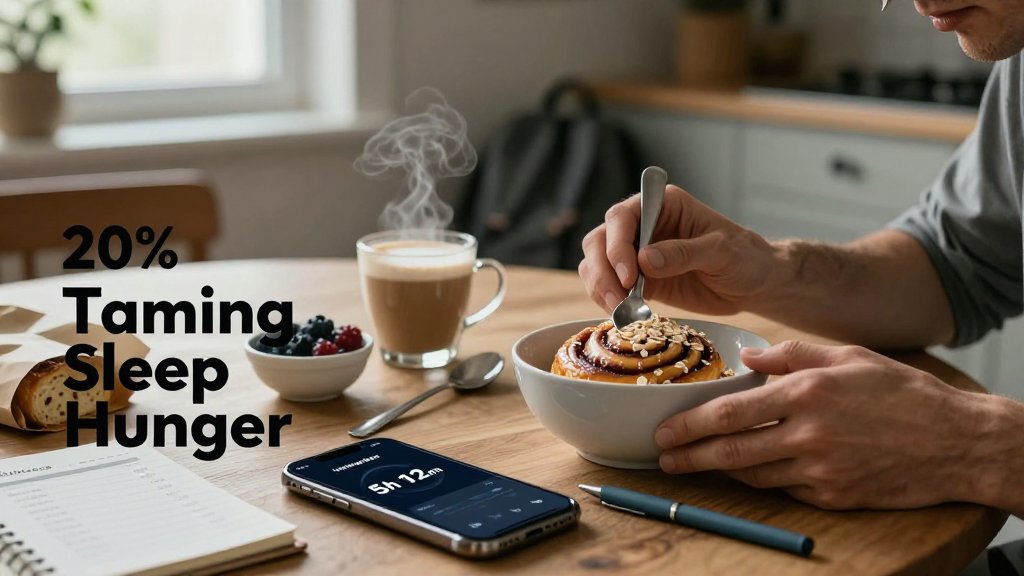
One short night can sabotage your appetite before your day even starts. Sleep debt nudges hunger hormones in the wrong direction, ramps up cravings for sugary, quick-hit foods, and makes mindless snacking feel almost automatic. The good news is that you do not need perfect sleep to stay on plan. In this guide, you will learn how to adjust calories and macros the day after bad sleep, plus simple logging tactics that keep you consistent without white-knuckling your way through cravings.
Why poor sleep makes you hungrier
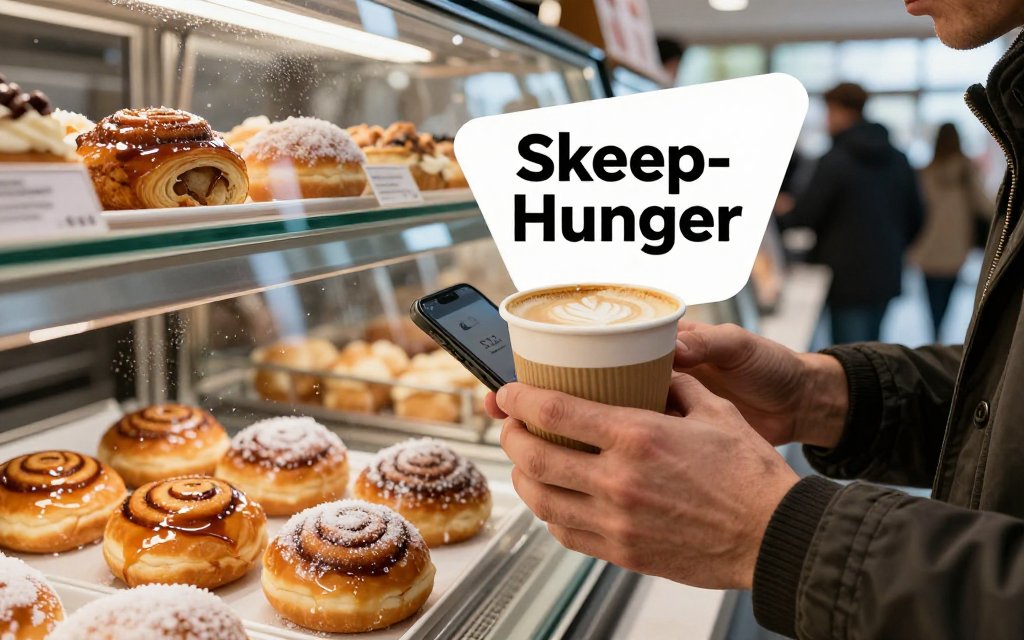
You know that morning-after feeling: you slept 5 hours, you are running late, and suddenly breakfast turns into a “need” instead of a choice. The smell of a cinnamon roll feels magnetic. You add a latte, then tell yourself you will “be good” at lunch. By 10:30 a.m., you are hunting for something sweet again, even though you ate more than usual. This is the frustrating part of sleep debt hunger, your appetite can spike even when your body did not actually burn a meaningful amount of extra calories overnight.
Here is the key idea you can quote: short sleep increases hunger signals and lowers self-control, so cravings feel louder even if you did not burn more calories. After a rough night, your brain is more likely to chase quick energy (usually sugar, refined carbs, or high-fat snacks) because it is tired and looking for an easy win. That is why people often slide into predictable patterns like a bakery breakfast on the commute, “just one” office snack that becomes three, or extra bites after dinner that turn into full-on night grazing.
The 2 hunger levers sleep messes with
Sleep pulls on two big appetite levers: ghrelin (the “go eat” signal) and leptin (the “I am satisfied” signal). When sleep is short, ghrelin tends to rise and leptin signaling can feel weaker, so you feel hungrier and less satisfied by the same meal. In one controlled study of healthy young men, restricting sleep was linked with higher ghrelin, lower leptin, and higher reported hunger and appetite, especially for calorie-dense, carb-heavy foods (see this sleep curtailment hormone study). Practical takeaway: aim for 7 to 9 hours most nights; if you got under 6 hours, plan for cravings to be stronger today.
The other lever is decision fatigue. Poor sleep makes your brain spend more effort on basic tasks, so by the time the afternoon hits, your “pause and choose” button is worn down. That is why late afternoon is the danger zone for mindless calories. You are not usually fantasizing about plain chicken and broccoli at 3 p.m., you want something salty, crunchy, sweet, or all of the above. If you have a history of blowing your calorie budget after a bad night, assume your risk window is 2 p.m. through dinner, and plan food like you would plan meetings, on purpose.
A common mistake: eating like you failed
A common response to a sleepy overeating morning is the all-or-nothing spiral: “I messed up, so I should skip meals.” It often looks like this: skipped breakfast to “make up for it,” then a huge lunch because you are ravenous (think 1,100 calories from a burrito bowl, chips, and soda), then a vending machine hit at 3 p.m. because you are crashing (250 calories of chips plus 200 calories of candy), then a big dinner because you never stabilized (900 calories), and dessert because you feel deprived (300 calories). None of that means you failed. It means your day was set up for rebounds.
Think damage control, not perfection. Your simple rule for the next sections of this article is: do not slash calories aggressively, adjust macros to feel full. On a short-sleep day, you usually do better with slightly higher protein and fiber, plus enough carbs to avoid a crash. For example, instead of “nothing until noon,” try a 350 to 450 calorie breakfast with 30 grams of protein (Greek yogurt plus berries plus a scoop of protein, or eggs with whole-grain toast and fruit). If labels feel like a blur when you are tired, lean on front-of-pack calorie labels so you can log quickly and move on with your day.
One more reality check if the scale stalled after a rough week: it might not be a true fat-loss plateau. Bad sleep often brings more grazing, more sodium, and more impulsive portions, which can erase a carefully planned 300 to 500 calorie daily deficit without you noticing. Also, when you are tired, workouts can feel harder, steps drop, and recovery suffers, which reduces the overall “margin” that usually helps weight loss. Your goal is not to punish yourself the next day. Your goal is to use smart macro adjustments that keep you satisfied, so your calorie target stays realistic and consistent until your sleep gets back on track.
If you slept under 6 hours, assume hunger will be louder today. Keep calories steady, raise protein and fiber, and plan a real afternoon snack. You are not weak, you are managing biology.
A simple macro adjustment plan for tomorrow
Keep your calories roughly the same tomorrow. The win is not “eating less” after a bad night, it is eating in a way that keeps you full and steady so you do not drift into snack mode by 3 p.m. The simplest move is a macro shift: push protein and fiber up, then trim a little fat and/or refined snack carbs to keep calories stable. Think of it like upgrading the same calorie budget into a higher fullness version. If you log food, this is easy to execute because you are swapping items you already track, not guessing.
Use the quick table below to pick a “tomorrow mode” based on how bad the night was. The idea is to add a small, specific amount of protein (and fiber) and pay for it by shaving a small, specific amount of fat or refined snacks. You will notice the numbers are modest on purpose. Even on an all-nighter, you are not trying to overhaul your diet, you are trying to make your next 12 hours easier to stick to.
| Night | Add | Trim |
|---|---|---|
| Slightly short | +10-20g protein | -10g fat |
| Very short | +20-30g protein | -15g fat |
| All-nighter | +30-40g protein | -20g fat |
| Any | +8-12g fiber | Skip refined snacks |
The next-day priority: keep protein high, push fiber up
Protein is your anchor when you are tired because it is the easiest macro to make “automatic.” Aim for 0.7-1.0 g of protein per lb of goal body weight (or 1.6-2.2 g/kg). Example: if your goal weight is 160 lb, target 110-160 g protein for the day. Then spread it across 3-4 eating moments so you are not trying to fix everything at dinner. Practical hits: 0 percent or 2 percent Greek yogurt, eggs plus egg whites, chicken breast, turkey deli slices, canned tuna, tofu, tempeh, lentils, and frozen edamame you can microwave in 3 minutes.
Fiber is the second lever because it adds volume and slows the pace of eating without adding a lot of calories. A good next-day target is 25-35 g per day, or simply add 8-12 g above your usual. That can be as basic as: berries in your yogurt, oats at breakfast, a tablespoon of chia in a smoothie, a big salad kit at lunch, and a side of lentils or black beans at dinner. If you are not sure what “enough” looks like, the Harvard Nutrition Source overview of daily fiber recommendations lines up well with this range and gives food-based ways to get there.
This is not about punishment or “making up” for lost sleep. It is about keeping hunger quieter so your calorie target feels normal again. In a nutrition app, set tomorrow’s protein goal first, then build meals you already like around it. For example, if you need 140 g protein, you can plan four checkpoints of about 35 g each: breakfast yogurt bowl, lunch chicken salad wrap, afternoon cottage cheese or tofu snack, dinner lean protein plus vegetables. If you hit protein and fiber early, you will usually need less willpower later.
What to reduce: fats first, then refined carbs
To keep calories steady while adding protein and fiber, shave fat first because it is calorie dense and easy to overpour when you are sleepy. Trimming 10-20 g fat frees about 90-180 calories, which can “buy” an extra protein serving or a bigger, higher-fiber side without making the day feel restrictive. Easy cuts that still taste good: go lighter on cheese, measure nuts instead of free-pouring, swap mayo or aioli for mustard, choose 93-99 percent lean ground turkey instead of 80 percent beef, pick chicken breast over thighs for one day, and use a spray oil or 1 teaspoon olive oil instead of a heavy drizzle.
Carbs are not the enemy, but refined snack carbs are usually the trigger on low sleep because they are fast, easy, and hyper-palatable. Keep your “real carbs” that come with fiber (oats, potatoes, beans, fruit, high-fiber wraps), then tighten up the snack-y ones (pastries, candy, chips, sweetened coffee drinks). A simple rule: if you want carbs, pair them with protein. Example swaps: a bagel becomes a high-fiber wrap with turkey, chips become an apple plus string cheese, and cookies become Greek yogurt with berries and cinnamon. If you are eating out, you can still stay on plan by using log restaurant meals accurately tactics, then choose the lean protein entree and add a veggie side to protect your targets.
Stop late-day cravings with meal timing tactics
Picture a rough sleep night and a busy next day. Breakfast is a blur, lunch is rushed, and you feel “fine” until about 3 pm. That is when the snack siren turns on: office candy bowl, coffee shop muffin, a handful of crackers that somehow becomes three handfuls. Then you make it to dinner, you eat a normal portion, and the second wave hits after dishes. You are not even sure you are hungry, but you want something crunchy, sweet, or both. On sleep-debt days, the goal is not to white-knuckle cravings. The goal is to time your calories so your body gets predictable fuel before cravings typically spike.
Use a simple, repeatable day structure that you can track even when you are tired: a protein-forward breakfast within 1 to 2 hours of waking, a solid lunch, a planned 3 pm snack, dinner, then a small “craving buffer” you already accounted for. Trackability is your secret weapon here. Pre-log your meals in the morning (or the night before), and build them from templates you can reuse: “yogurt bowl,” “wrap plus fruit,” “chili plus salad.” Image concept: a clean timeline graphic labeled 7:30 am breakfast, 12:30 pm lunch, 3:00 pm planned snack, 6:30 pm dinner, 8:30 pm craving buffer, with protein grams and calories listed under each stop.
Use protein anchors at breakfast and lunch
A “protein anchor” just means you pick one macro to lock in early, even if the rest of the day is imperfect. Aim for 30 to 40 g of protein at breakfast, because starting the day with a real anchor often reduces the urgency to snack later. Three easy breakfast templates: protein oats (1/2 cup oats cooked with milk, mixed with 1 scoop whey, topped with blueberries, about 35 g protein and 450 to 500 calories), eggs plus fruit (3 eggs scrambled with spinach plus a banana, about 30 g protein and 400 to 450 calories), or a Greek yogurt bowl (1.5 cups nonfat Greek yogurt plus berries and 1 tbsp peanut butter, about 35 to 40 g protein and 350 to 450 calories).
Lunch is your second anchor, and it is the one that protects the 3 pm danger zone. Keep lunch protein-forward and fiber-friendly so you do not show up at midafternoon running on fumes. Three lunch templates that log easily: a chicken salad wrap (5 oz chicken, high-fiber tortilla, crunchy veggies, light mayo or yogurt sauce, about 40 g protein and 500 to 600 calories), a tofu rice bowl with extra veggies (7 oz tofu, 3/4 cup cooked rice, double nonstarchy veggies, about 30 to 40 g protein and 550 to 650 calories), or turkey chili (1.5 to 2 cups chili, add a side salad, about 35 to 45 g protein and 500 to 650 calories). If you use caffeine to push through fatigue, set a hard stop 8 to 10 hours before bed, because guidance like avoid caffeine 8 hours can help prevent repeating the cycle tomorrow.
Bad sleep does not require perfect willpower. Front-load protein, schedule a 3 pm snack, and pre-log a 200 calorie craving buffer. If your evening treat is already 'in the plan,' you are far less likely to graze.
Plan a 150-250 calorie craving buffer
A craving buffer is a small calorie pocket you leave on purpose, usually 150 to 250 calories, so nighttime eating does not accidentally turn into a deficit-killer. This is not “extra” food, it is planned food. The tactic is simple: decide your buffer item before the day gets hard, log it early (yes, in the morning), and treat it like any other part of your plan. That early logging cuts decision fatigue, which is a big deal on tired days. Practically, you might plan your day like this: breakfast 450 calories, lunch 600, 3 pm snack 200, dinner 600, buffer 200. Your totals stay predictable, and your brain stops negotiating at 9 pm.
Choose buffer foods that match your macro goals and feel satisfying, not “diet-ish.” If you want higher protein: protein hot chocolate (unsweetened cocoa, milk, and a half scoop whey), cottage cheese with berries, or a mini smoothie with whey plus frozen fruit. If you want volume and crunch: 3 cups air-popped popcorn plus a string cheese, or a bowl of edamame with salt and chili flakes. If you want something grab-and-go: a protein bar that has at least 10 g fiber (check the label) so it is not just candy with protein sprinkled in. The tracking trick is to save these as repeatable entries, and keep the ingredients stocked. When you can tap to log instead of think, you win.
Now for the after-dinner wave: treat it like a scheduled checkpoint, not an emergency. If you are genuinely hungry, eat a normal, logged buffer and move on. If it is more like “I want something,” use a short routine: drink water or herbal tea, wait 10 minutes, then have the pre-logged buffer if you still want it. Avoid roaming snacks that are hard to measure (chips from the bag, spoonfuls of peanut butter, random bites while cleaning up). The whole point is to protect your deficit with guardrails you can follow while tired. You are not failing by needing structure. You are being strategic, and strategic is what keeps progress moving on imperfect days.
Calorie tracking after insomnia without derailing progress
A rough night can make calorie tracking feel unfair, especially if you wake up hungry and snackier than usual. The good news is that one bad night does not “undo” fat loss. What usually derails progress is the pattern, several short nights that quietly push your daily intake up. Research reviews consistently find sleep restriction tends to increase daily energy intake (often by a couple hundred calories) compared to normal sleep, which is enough to blur a deficit over time if it happens often. A meta-analysis in healthy adults reported higher intake under sleep restriction of about 250 calories per day on average, which adds up fast if it repeats. sleep restriction meta-analysis findings
The 48-hour reset that works for most people
For the day after insomnia, your best move is usually boring and consistent: keep your usual calorie target, then make sure your protein and fiber are non-negotiable. If you aim for 1,800 calories, plan something like 130 g protein and 25 to 35 g fiber, then build meals around that. Example: breakfast could be 0 percent Greek yogurt (1 cup) plus berries and 1 tablespoon chia; lunch could be a turkey sandwich on whole grain bread with an apple; dinner could be salmon, microwave rice, and a big salad kit. Add 20 to 40 minutes of easy walking (split into two 15 minute walks if you are wiped). Then prioritize an early bedtime, not “extra cardio.”
If you overate, log it anyway. The goal is accuracy, not perfection. In CalMeal, treat it like a data point: enter what you can remember, pick the closest match, and move on. Then choose the smallest effective correction for the next 48 hours. If you went 400 to 600 calories over, do not crash diet the next day. Instead, shave 100 to 200 calories off for 1 to 3 days (for example, skip the mayo, swap chips for carrots, or drop one sugary drink), or add one extra 20 to 30 minute walk. Also keep water and sodium steady. Poor sleep can increase stress signals like cortisol, and that can nudge water retention, so the scale may jump even if fat did not. sleep deprivation and cortisol research
Track the day after insomnia like a normal day: hit protein, hit fiber, walk a little, and go to bed early. If calories run high, correct gently for a few days, not all at once.
Should I eat more calories the day after bad sleep?
Usually, no. Keep your normal calorie target and focus on making those calories more filling. If you truly cannot concentrate or you feel ravenous, first check basics: did you skip breakfast, under-eat protein, or go too low carb for your workouts? If you still need an adjustment, keep it small and planned, like +100 to 150 calories from a high-protein snack (a 20 g protein shake, or cottage cheese with fruit). Avoid “permission” calories (chips, cookies) that are easy to overshoot. If you have medical concerns about sleep or appetite, talk with your doctor.
What macros help most with hunger when I am tired?
Protein and fiber are your hunger insurance on tired days. Aim for 25 to 35 g protein per meal, plus a fiber anchor (berries, beans, lentils, high-fiber tortillas, or a big salad). Keep fats moderate, not minimal, because a little fat improves satisfaction. A simple macro pattern for an 1,800 calorie day is 130 g protein, 60 g fat, and the rest from carbs. Real examples: a chicken burrito bowl with black beans, fajita veggies, and salsa; or oatmeal with whey mixed in, plus peanut butter and a banana. If cravings hit at 4 pm, plan a 250 calorie snack with 20 g protein and 5 g fiber.
Why does my weight plateau when my sleep is bad?
Two things usually happen at once: you eat a bit more, and you hold more water. Short sleep can increase snacking and reduce decision quality, so your weekly average calories creep up even if your “good days” look fine. At the same time, stress, soreness, and higher sodium convenience foods can all increase water retention, which masks fat loss on the scale. Treat it like a 7 day detective job: keep logging, keep steps consistent, and compare weekly weight averages (not single weigh-ins). If sleep improves and your weekly average intake is on target, the scale often “catches up” within 1 to 2 weeks.
Ready to turn rough nights into manageable days? Start tracking your nutrition today and remove the guesswork from calories and macros. Download CalMeal for free and use AI-powered food recognition to log meals faster, even when your energy is low. Get the app here: iOS or Android. Your next meal is a great place to start.
Start Tracking Your Nutrition Today
Download CalMeal for free and take the guesswork out of calorie counting with AI-powered food recognition.