Those calories burned walking a mile depend on your weight
A mile of walking burns roughly 74 to 113 calories for a 150 pound adult, and the number shifts with your weight and pace. Here is what the calories burned walking really add up to, by the mile and by 10,000 steps.

A 150 pound person burns about 74 calories walking a mile at an easy pace, and closer to 113 if they push to a brisk 15 minute mile. So the calories burned walking a mile aren't one tidy number. They ride on how much you weigh and how fast you actually move.
Most charts hand you a single figure and move on. In real life the calories burned walking swing by half or more between a light adult on a flat path and a heavier one climbing a hill. That gap matters the moment you use a walk to chip into a calorie deficit, so it pays to work from real numbers instead of a rough guess.
What the calories burned walking a mile really come to
Cleveland Clinic puts a 150 pound walker at about 74 calories for a mile at a relaxed 20 minute pace, rising to 113 calories at a 15 minute mile. Harvard Health breaks the burn out by body weight over a set half hour, and the pattern is clear in its published tables. The heavier you are, the more each step costs.
| Weight | Easy pace | Brisk pace |
|---|---|---|
| 125 lb | 107 cal | 135 cal |
| 155 lb | 133 cal | 175 cal |
| 185 lb | 159 cal | 189 cal |
Read that table as a half hour of steady effort, not a full mile. At an easy 3.5 mph a 125 pound walker logs 107 calories in 30 minutes, while a 185 pound walker banks 159 for the same time. Push the pace to 4 mph and both numbers climb by roughly a quarter.
Body weight is the single biggest lever in how many calories you burn on a walk. Move more mass down the road and every stride costs a little more energy.
How many calories does 10000 steps burn
Ten thousand steps is roughly five miles for most people, which is where the round number comes from. For that same 150 pound walker, five miles at an easy pace works out near 370 calories, and closer to 565 at a brisk clip. That is the honest range behind calories burned 10000 steps, and it slides up or down with your weight.

| Steps | Miles | Calories |
|---|---|---|
| 5,000 | 2.5 mi | 185 to 280 |
| 7,500 | 3.75 mi | 275 to 425 |
| 10,000 | 5 mi | 370 to 565 |
Those milestones help you picture the day. A quick lunchtime loop of 2,000 steps is about a mile and 75 to 115 calories, so three short loops quietly cover a third of a typical walk goal without a single trip to a gym.
How many steps a day to lose weight
Here is the part that decides your results. Losing a pound of fat means running a shortfall of roughly 3,500 calories, and a 500 calorie daily gap adds up to about a pound a week. The CDC calls a steady 1 to 2 pounds a week the pace most likely to stay off. To see where a walk fits, start from your total daily burn and treat the steps as a bonus on top.
Walking alone rarely carries the whole load. A brisk 8,000 to 9,000 step day might cover 400 to 500 calories, which is real, but it is easy to eat back in one snack. Pair the steps with a plan for how your meals stack up and the deficit holds. This is also why walking to lose weight works best as a habit, not a one off.

Walking off a pound of fat takes roughly 3,500 calories, so a daily walk chips away at the total rather than erasing it in one afternoon.
Why body weight changes the calories burned walking
The reason is plain physics. A heavier body needs more energy to move the same distance, so two friends on the same route can log very different numbers. That is why every honest calculator asks for your weight before it estimates a thing.
What raises the number on any given walk
Speed and slope do the heavy lifting after weight. A brisk pace or a steady hill can lift the burn by 15 to 30 percent over the same flat stroll. Your baseline matters too, which is tied to how your metabolism sets the pace even before you lace up.
How to count walking calories without guessing
You have three decent options for pinning down walking calories. A steps to calories calculator turns your daily count into a rough figure in seconds, a fitness watch reads your pace and heart rate, and a food app closes the loop by tracking what you eat against what you move. The trick is to log your meals honestly, because the walk only counts if the plate does too.
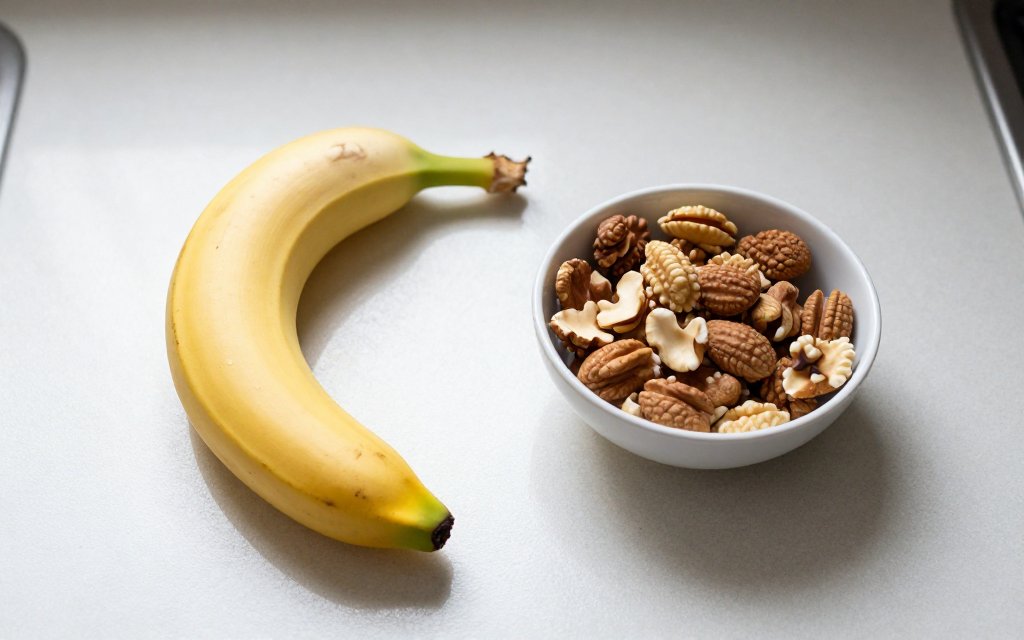
The quickest way to cancel a walk is to eat back every calorie it burned before you even get home.
Common questions about walking and calories
How many calories does walking burn per mile?
For a 150 pound adult, a mile runs about 74 calories at an easy pace and 113 at a brisk one. Lighter walkers burn a bit less, heavier walkers a bit more. As a rough rule, figure near 80 to 100 calories a mile and adjust for your own weight.
How many steps to burn 500 calories?
At an easy pace, a 150 pound walker needs somewhere around 13,000 to 14,000 steps to reach 500 calories. Pick up the speed or add a hill and that can drop toward 9,000. Your weight moves the target, so treat these as ballpark figures rather than a fixed count.
Is walking to lose weight actually enough?
It can be, if the food side lines up. Walking builds a real calorie burn and protects the habit of moving daily, but most lasting weight loss comes from the gap between what you eat and what you spend. Use the steps to widen that gap, not to earn a bigger dinner.
Do calories burned walking 30 minutes add up?
They do, faster than most people expect. A brisk half hour burns roughly 130 to 190 calories depending on your weight, and five of those a week lands near 750 to 950. Over a month that is a meaningful slice of a pound or two, which is why the calories burned walking 30 minutes are worth logging.
Steps tell half the story, and the plate tells the rest. CalMeal takes the guesswork out of calorie counting with a quick photo of your meal, so you can see how a day of walking and a day of eating actually balance out. Start today for free. Get the app here: iOS or Android.
Start Tracking Your Nutrition Today
Download CalMeal for free and take the guesswork out of calorie counting with AI-powered food recognition.