Avocado Calories, Carbs and Protein: Full Macros Guide
A whole medium avocado has about 240 calories, mostly heart-healthy fat. See avocado calories by serving, the full fat, carb and protein macros, and how to log every half without guessing your daily total.
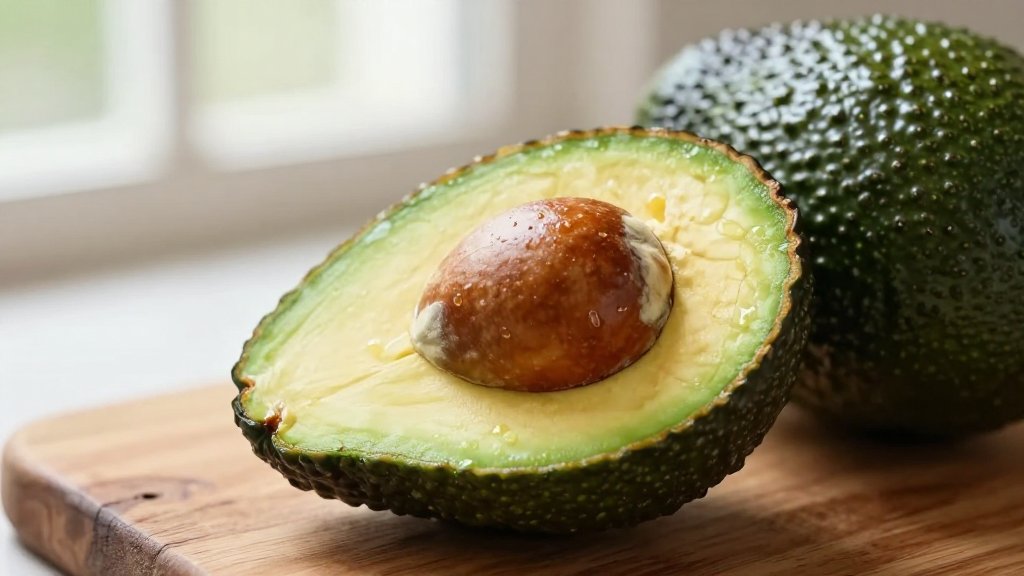
An avocado looks like a modest piece of fruit, but it packs more energy than almost anything else in the produce aisle. A whole medium Hass avocado holds about 240 calories, which means avocado calories climb faster than the calories in an apple or a banana. Nearly all of that energy comes from heart-friendly fat, paired with fiber that helps you feel full for hours.
This guide lays out avocado calories by serving size, breaks down the full split of fat, carbs and protein, and shows how to log the fruit accurately. Every figure below comes from the USDA, Harvard, and the California Avocado Commission, so the numbers hold up when you plan your meals.
Avocado Calories by Serving Size
How many calories in an avocado depends entirely on how much you eat. Most people never finish a whole one in a single sitting, so serving size is where tracking goes right or wrong. A one-third serving, the amount the California Avocado Commission prints on its label, is 80 calories from 50 grams of fruit.
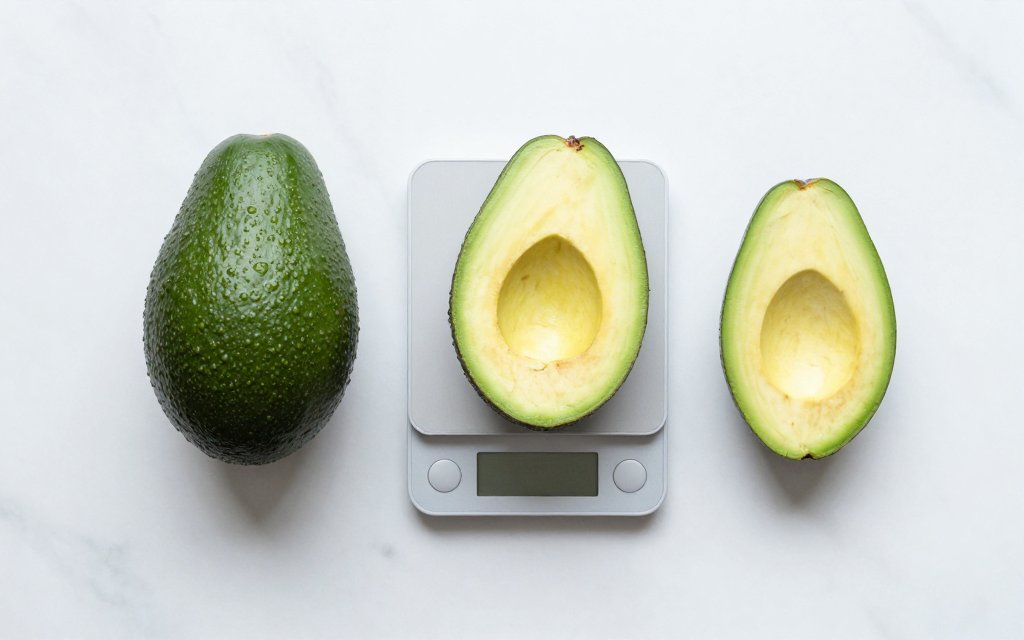
Scale that up and the pattern is easy to follow. Half a medium avocado, close to 68 grams, lands near 120 calories. The whole fruit reaches roughly 240 calories, and per 100 grams the USDA lists 167 calories. Weighing your portion on a kitchen scale beats eyeballing it every time.
How Many Calories in an Avocado Half?
Half avocado calories sit around 120 for a standard medium fruit, though a large Hass can push that closer to 160. That half also delivers 487 milligrams of potassium, more than a medium banana at 422 milligrams. Log the weight, not the count, because avocados range from 100 to 200 grams each.
Half a medium avocado carries about 120 calories and 487 mg of potassium, beating a medium banana's 422 mg.
The avocado nutrition chart below shows how calories and total fat climb with each serving size, from a small third all the way to the whole fruit.
| Serving | Calories | Total Fat |
|---|---|---|
| 1/3 medium (50g) | 80 kcal | 8 g |
| Half medium (68g) | 120 kcal | 11 g |
| Whole medium (150g) | 240 kcal | 22 g |
| Per 100 grams | 167 kcal | 15 g |
Avocado Macros: Fat, Carbs and Protein
Avocado macros are unusual for a fruit. Instead of sugar, the bulk of the energy is fat, followed by fiber-rich carbs and a small amount of protein. A whole medium avocado carries 22 grams of fat, 13 grams of carbs and 3 grams of protein, according to Harvard.
Avocado Fat Content and the Good Fats
Avocado fat content is where the fruit earns its reputation. Of the 22 grams of fat in a whole avocado, about 15 grams are monounsaturated, the same type found in olive oil. Only 3 grams are saturated, and Harvard links two servings a week to a 16 percent lower risk of cardiovascular disease.
Avocado Carbs, Fiber and Net Carbs
Avocado carbs look higher than you might expect at 13 grams per fruit, but 10 of those grams are fiber. That leaves only about 3 grams of net carbs, which is why avocado fits low-carb and keto plans. The fiber also slows digestion and helps steady blood sugar.
Avocado protein is modest at 3 grams per whole fruit, so it is not a protein source on its own. Pair it with eggs, chicken or Greek yogurt when you want a meal that keeps you full and hits your daily target.
Avocado Nutrition Facts Beyond the Macros
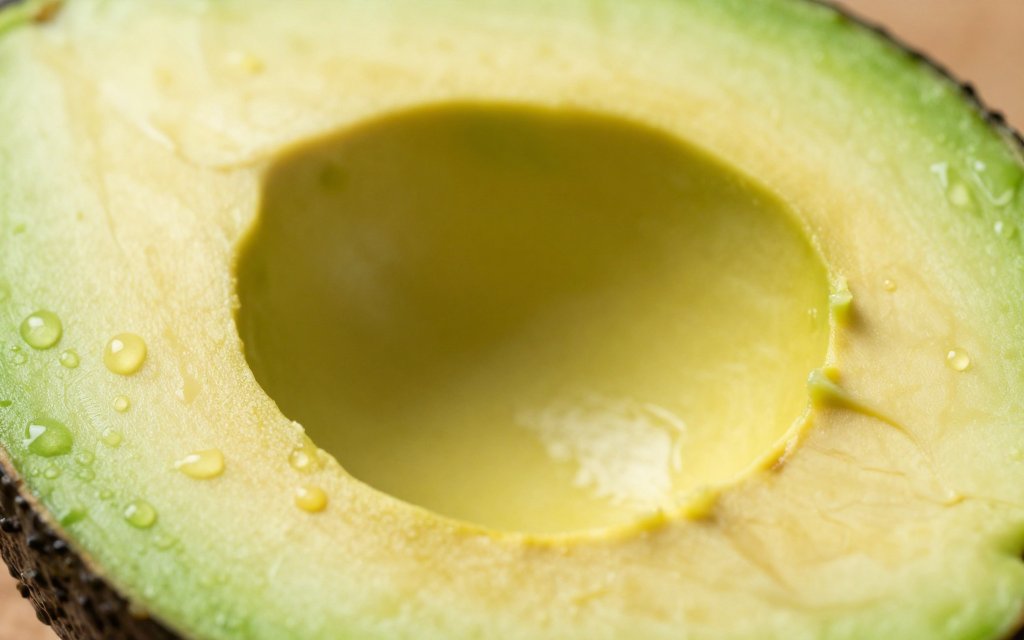
Avocado nutrition facts go well past calories and fat. One third of a medium fruit supplies nearly 20 vitamins and minerals, including vitamin K, folate and vitamin E. That density is why dietitians treat the avocado as a whole food rather than a treat.
The standout mineral is potassium. A 100 gram Hass avocado holds 507 milligrams, while a one-third serving still provides 250 milligrams. Avocado nutrition also includes lutein and zeaxanthin, two carotenoids tied to eye health.
One third of a medium avocado has 80 calories and contributes close to 20 vitamins and minerals.
Is Avocado Good for Weight Loss?
Is avocado good for weight loss? The fat makes it calorie-dense, but research suggests the fruit helps with appetite. In a study of 26 overweight adults, adding half an avocado to lunch cut the desire to eat by 40 percent over three hours.
That same study, reported by researchers at Loma Linda University, found satisfaction rose 26 percent even though the avocado added only about 112 calories. Fat and fiber together slow digestion, which is why a small portion can support a calorie deficit.
The catch is portion size. Because avocado calories are dense, an untracked half here and a whole one there can quietly erase a deficit. Weigh it, log it, and the fruit becomes an ally rather than a hidden cost.
Adding half an avocado to lunch cut the desire to eat by 40 percent over three hours in a controlled study.
How to Track Avocado Without Guessing
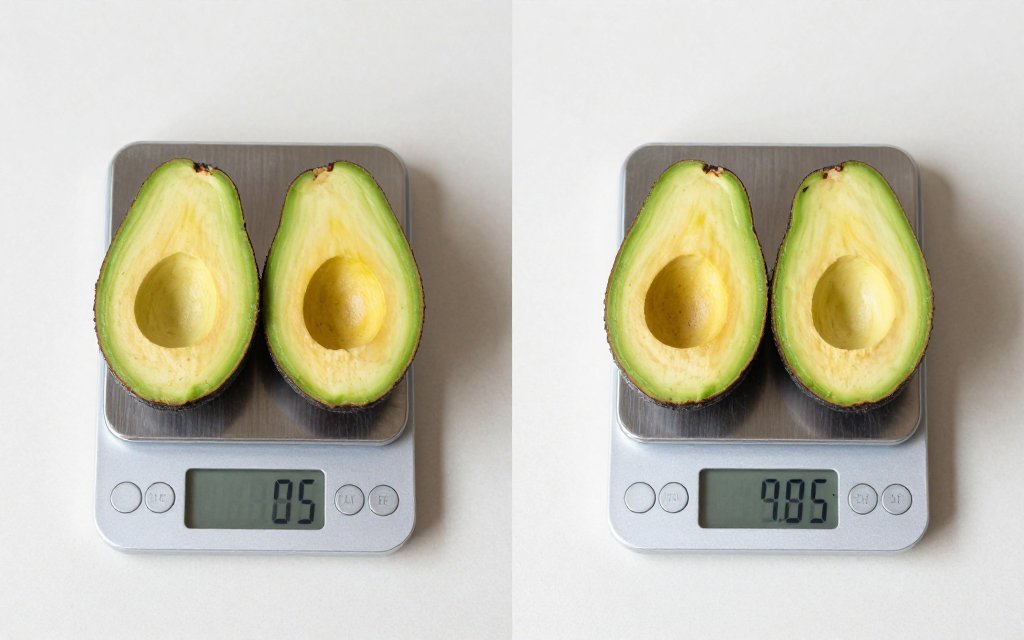
Tracking avocado is simple once you weigh it. Set the fruit on a scale, note the grams, and multiply by 1.67 to estimate the calories. A photo-based tracker can do the same work from a picture of your plate, which removes the mental math.
If you log other high-fat foods, our guide to peanut butter calories follows the same weigh-and-log habit. To see how a leaner staple compares, check how egg calories stack up, then set your daily target with a maintenance calorie calculator.
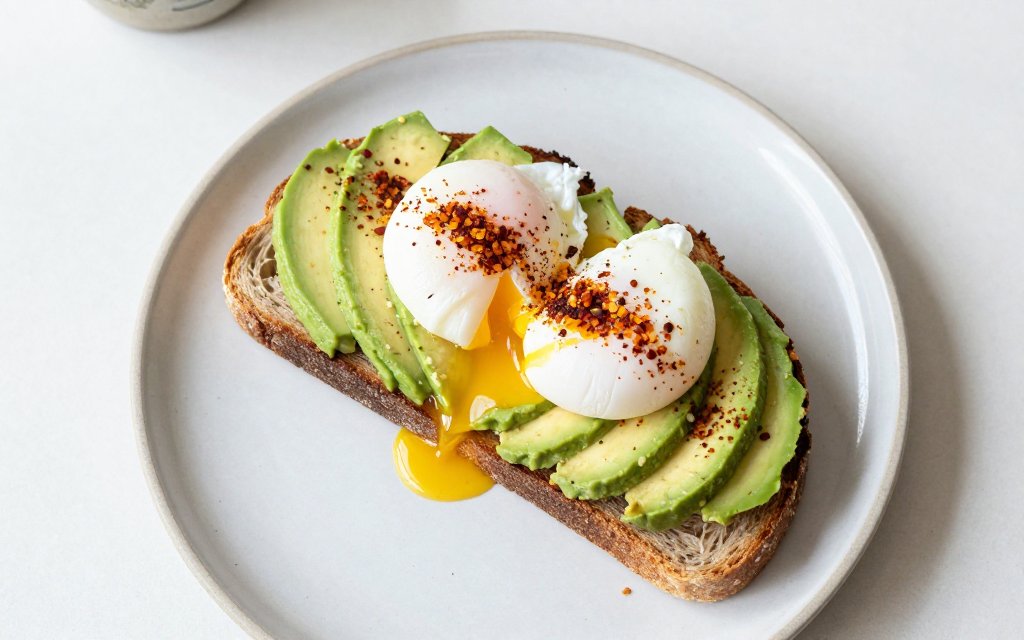
You can also snap a photo of your avocado toast and let our photo calorie counter estimate the calories and macros for you.
Avocado Calories: Quick Answers
How many calories are in a whole avocado?
A whole medium avocado has about 240 calories, based on Harvard's nutrition data. Larger Hass fruit can reach 300 to 320 calories, so weigh yours if it feels heavy. Per 100 grams, the USDA lists 167 calories.
Does avocado have more fat than protein?
Yes, by a wide margin. A whole avocado carries 22 grams of fat against just 3 grams of protein. The fat is mostly monounsaturated, the kind linked to better heart health.
Can I eat avocado on a calorie deficit?
You can, as long as you weigh and log it. A half or one-third serving fits most deficits and helps you stay full. Because the fruit is dense, tracking the portion is what keeps you on target.
Ready to take the guesswork out of tracking avocados? Start logging your meals today and let AI food recognition handle the math, so you can enjoy the fruit without second-guessing your macros. Get the app here: iOS or Android.
Start Tracking Your Nutrition Today
Download CalMeal for free and take the guesswork out of calorie counting with AI-powered food recognition.