BBQ Plate Formula: Stay in Deficit at Cookouts
Use a simple BBQ plate formula to build a satisfying cookout meal that still fits your calorie deficit. Get quick portion estimates for burgers, hot dogs, sides, and sauces, plus a logging checklist you can reuse for Memorial Day, July 4th, and tailgates.
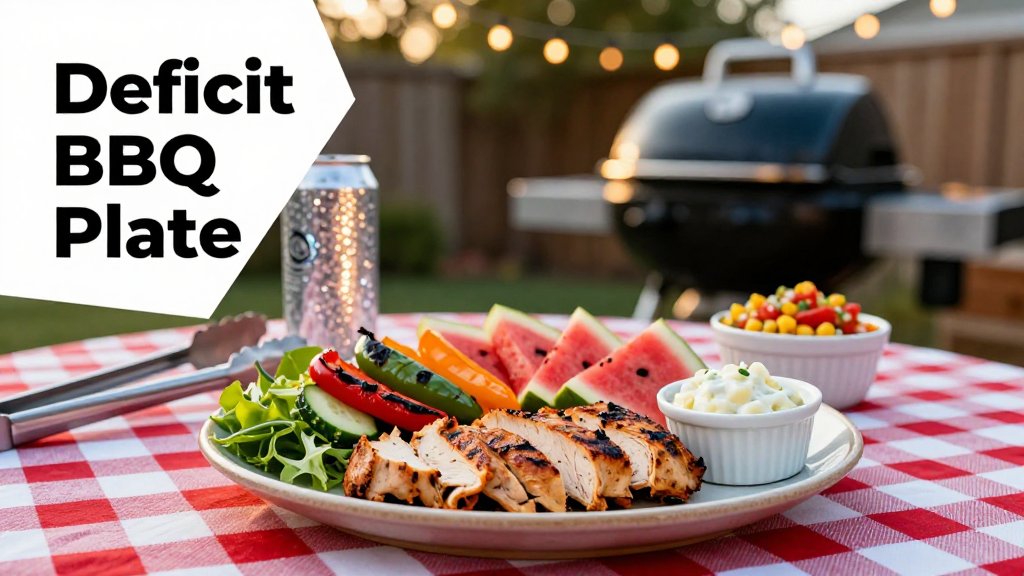
Cookouts can wreck a calorie deficit fast, not because you are weak, but because the food is deceptively dense and portions creep up. A bun here, a scoop of mayo salad there, and suddenly you are way off plan. In this article, you will learn a simple BBQ plate formula you can build in under a minute, plus easy portion anchors for common trouble spots like buns, sauce, and sides. You will leave with a repeatable approach that still feels normal.
The BBQ plate formula that keeps you in deficit
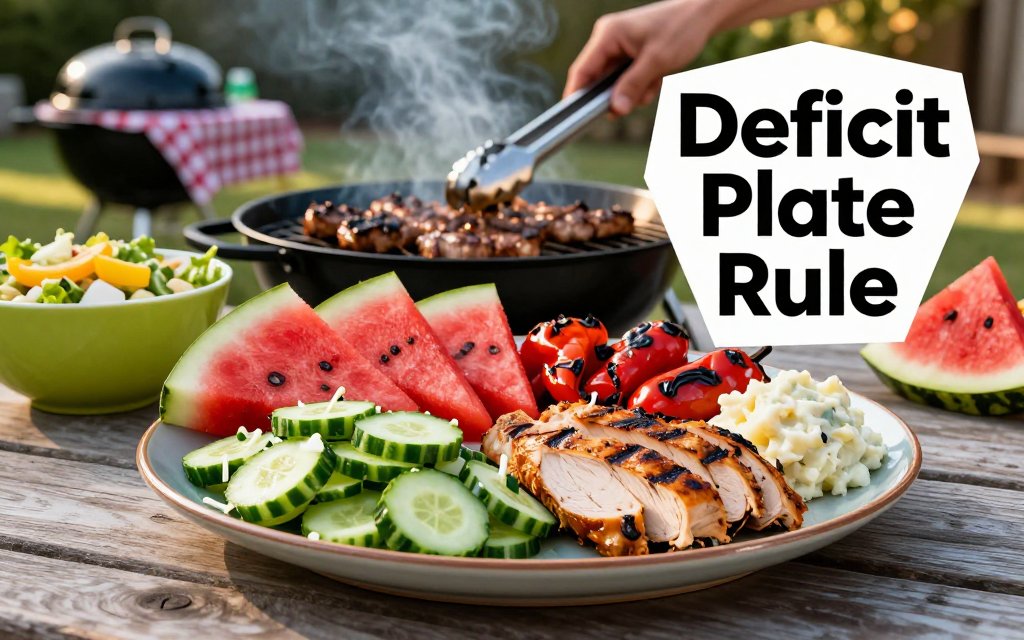
Here is the simplest way to stay in a calorie deficit at a cookout without weighing anything or interrogating the host about recipes: pick a protein as your base, cap the calorie “extras” (bun, chips, mayo-heavy sides, sugary drinks), then load the rest of the plate with high-volume produce. That is it. Most BBQ blowups happen because the “extras” stack up fast, not because the grilled meat is magically fattening. If you build the plate in this order, you can eat normal BBQ food, feel satisfied, and still keep your daily target intact.
The 3 part plate: Protein, produce, and one fun item
Use this repeatable formula every time you reach the table: fill about half your plate with produce (salad greens, watermelon, grilled peppers, cucumber salad, corn and tomato salsa, roasted zucchini), reserve roughly a quarter to a third for a lean-ish protein, then choose one “fun” add-on. For protein, aim for about 30 to 45 g, which is often 4 to 6 oz of grilled chicken or turkey, 1 to 2 sausages depending on size, 1 burger patty plus a little extra lean meat, or a generous scoop of pulled pork. For the fun item, keep it around 200 to 350 calories when you are cutting: bun OR chips OR potato salad OR dessert. One, not a sampler flight.
The reason this works is practical, not fancy. Protein plus high-volume produce buys you fullness, so you are less likely to circle back for “just a little more.” In controlled research, higher-protein intake has been linked with increased satiety and lower spontaneous calorie intake, which is exactly the advantage you want in a buffet-style environment. If you want the science citation to keep in your back pocket, skim the high-protein satiety study and focus on the real-world takeaway: start with protein, and you reduce the odds of mindless add-ons later. At a cookout, willpower is nice, but a smart plate is better.
A simple calorie budget you can do in your head
Think of your plate like a budget with three envelopes. Envelope 1 is the “anchor,” your protein (often 250 to 450 calories depending on cut and portion). Envelope 2 is the “fun,” your single add-on (200 to 350 calories). Envelope 3 is “volume,” your produce sides (50 to 200 calories unless they are drenched in oil or cheese). Example: you are aiming for 1,800 calories for the day and you want this cookout meal to land around 650. You might spend 350 on two pieces of grilled chicken, 250 on a scoop of potato salad, and keep the rest as watermelon plus a big serving of grilled veggies. That meal feels like BBQ, but it behaves like a deficit meal.
The most common mistakes that blow up totals are predictable. Double starch is number one: a bun plus chips plus potato salad can quietly add 600 to 900 calories before you even count the meat. Sauce creep is next: BBQ sauce, ranch, and aioli taste light, but a few extra pours can turn into several tablespoons, and that is where “I only had one plate” becomes a surprise. Mindless seconds usually happen when your first plate was built around extras, not protein and produce. Fixing this is not about being perfect. It is about making the high-calorie foods intentional, choosing one, portioning it, and moving on.
Build your plate in this order: protein, then produce, then one fun item. If you cannot name your one fun item, you picked three. That is usually the whole difference between “on track” and “how did this happen?”
Two quick swaps that save 300 to 500 calories
Swap 1: go open-faced (or bunless). Keeping the burger but dropping the bottom bun is an easy win because you still get the “burger experience” with fewer calories. If you are also skipping chips, you can keep the top bun and feel normal at the table. Swap 2: put sauce on the side and dip, do not pour. A poured sauce often turns into several big squeezes, while dipping naturally limits the amount you use. Combined, these two changes can realistically save 300 to 500 calories across a plate that includes a burger, chips, and sauce, without touching the actual protein.
One more common win that keeps you in deficit without feeling deprived: choose vinegar slaw, pickles, fruit, or a simple side salad instead of mayo-based sides like macaroni salad or creamy coleslaw. You still get a side, you still get that BBQ contrast, and you leave room for the fun item you actually care about. If you notice certain packaged snacks and sauces are your personal trigger foods, pair this plate formula with a fast scan using ultra-processed foods logging checklist habits, so your “extras” stay visible instead of sneaking in. For any medical or health concerns, check with your doctor or a registered dietitian.
Quick calorie estimates for common BBQ foods
Cookouts are tough for calorie counting because you rarely have a food scale, labels, or measured servings. Your best move is to estimate consistently using hand anchors, then log a reasonable middle number instead of a perfect number. A palm of cooked meat (your palm, not your whole hand) is usually about 3 to 4 oz. A fist of most sides is roughly 1 cup, and a cupped handful of chips is usually 1 oz. For calorie-dense add-ons, use thumbs: one thumb of mayo, ranch, butter, or BBQ sauce is about 1 tablespoon. The most common “hidden” calories at BBQs come from buns, cheese, creamy sides, sugary drinks, and pasta salads that were mixed with plenty of oil.
Burgers, hot dogs, chicken, and pulled pork
Start with the main protein because it usually decides whether your plate feels “worth it” on calories. A quarter-pound burger patty (4 oz raw, about a palm cooked) typically lands around 280 to 320 calories for standard 80-20 beef, while a leaner patty can be closer to 200 to 260. A thicker “pub” burger (6 to 8 oz raw) can jump to 400 to 600 calories before the bun and toppings. Hot dogs are smaller, but not always lighter. A regular frank is often 150 to 200 calories, and the protein is modest. If you want a reality check for typical frankfurter nutrition, the USDA hot dog report lists frankfurter entries around 223 calories per 100 g, so “two dogs” can quietly rival a burger.
| Food | Calories | Protein |
|---|---|---|
| Beef patty, 4 oz | 280-320 | 25-30 g |
| Hot dog + bun | 250-330 | 10-15 g |
| Chicken breast, palm | 120-200 | 25-35 g |
| Chicken thigh, palm | 180-260 | 20-28 g |
| Pulled pork, palm | 250-350 | 20-30 g |
Chicken is usually the easiest “high protein, lower calorie” BBQ pick, as long as the skin and sugary glaze do not take over. A palm of grilled chicken breast often fits in the 120 to 200 calorie range, with protein that can hit 30 g or more. Chicken thighs are still great, but they are the calorie wildcard compared with breast, especially if the skin is on or if they are cooked with extra oil, so estimate 180 to 260 calories per palm. Pulled pork is filling, but portions balloon fast. One palm (about 3 to 4 oz) commonly lands around 250 to 350 calories depending on fat and sauce, and a “heaped” sandwich portion can double that. If you are building a high protein BBQ plate, choose chicken breast, turkey burgers, or a single normal burger patty first, then add sides after.
The bun, the sides, and the sauce problem
Buns and toppings are where “one burger” turns into a 700 to 1,000 calorie situation. A standard hamburger bun is often 120 to 180 calories. Add one slice of cheese and you are usually stacking another 70 to 110 calories. Mayo and aioli are sneaky because they look like “just a little,” but 1 tablespoon is roughly 90 calories, and it is easy to use 2 to 3 tablespoons across a burger and sides without noticing. If you are estimating, log the patty, then decide if you are logging the bun (often worth it), and finally log toppings in tablespoons. A good default when you cannot measure is 1 tablespoon each for mayo type spreads and 1 tablespoon for ketchup or BBQ sauce, then adjust if you know you went heavier.
Build your first plate around protein and produce. Add one carb you truly want, then stop. Seconds are for lean protein or salad, especially at cookouts, not extra bun, chips, or creamy sides.
Creamy sides can match the calories of the main, which is why they are so often the deficit-breaker. A fist of potato salad, macaroni salad, or creamy coleslaw (about 1 cup) can easily run 300 to 500 calories, and even a half-fist (about 1/2 cup) is often 150 to 300. Pasta salad is the same story, plus it is frequently oil-heavy, so treat it like a “main side,” not a freebie. Baked beans are a little more variable: 1/2 cup is commonly 150 to 250 calories depending on sugar and pork. Chips are deceptively fast calories too, since a couple of casual handfuls can be 200 to 300. If you want a simple rule that works at almost any BBQ, pick one higher calorie side (like beans or potato salad) and keep the rest of your plate to lower calorie volume (watermelon, cucumber salad, veggie tray) if it is available.
Sauce deserves its own plan because it is both sugar-heavy and easy to double. BBQ sauce often lands around 30 to 70 calories per tablespoon, and pouring can turn “one tablespoon” into four without trying. Track sauces in tablespoons using your thumb as the visual anchor. If you dip, estimate how many thumb-sized dips you did, then log that number. Drinks are the other silent add-on: a 12 oz regular soda is often around 140 to 160 calories, lemonade can be similar or higher, and some sweet teas climb quickly too. Swapping to diet soda, sparkling water, or water with lime can save 150 to 300 calories without touching your food. If you are taking appetite-affecting medications and want a simple way to prioritize what matters most at BBQs, this pairs well with tracking protein and fiber on GLP-1 so your plate stays filling while calories stay predictable.
Build a high-protein low-calorie BBQ plate
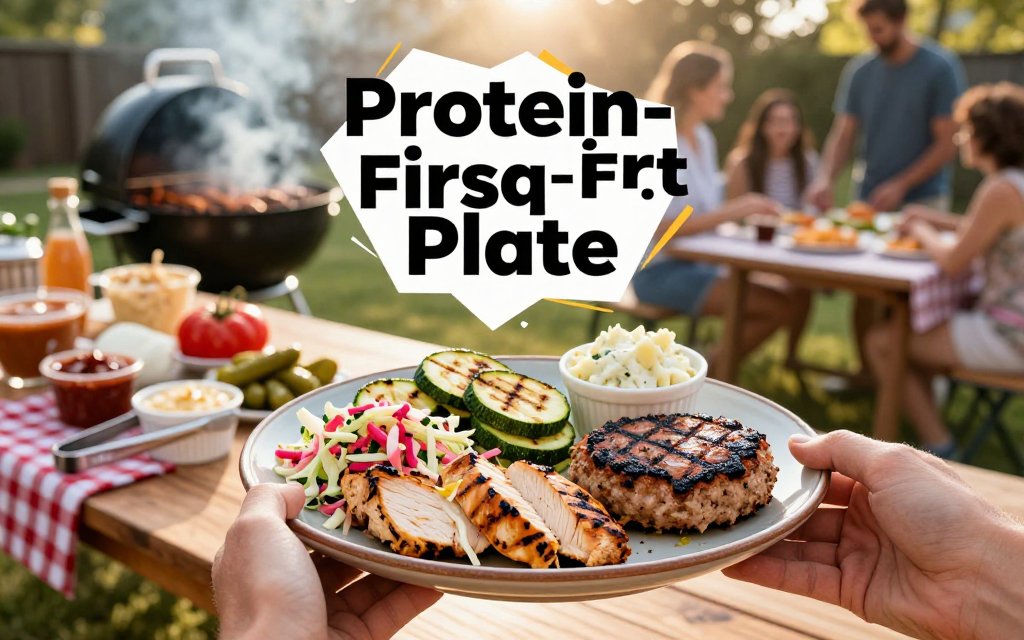
Picture us standing at the cookout table, plate in hand, trying to leave satisfied while still protecting your calorie deficit. The move is simple: build your plate around protein first, because it is usually the most filling part of the meal for the calories. Research reviews consistently find higher-protein meals tend to increase satiety and can help reduce later calorie intake, which is exactly what you want at a buffet-style BBQ where seconds are easy to grab. One easy starting point is a review on protein satiety. At the table, scan for the cleanest protein option you genuinely like: grilled chicken, turkey burgers, leaner beef patties, pulled pork with sauce on the side, or sliced brisket. Then decide what your one fun add-on is going to be so you do not accidentally stack bonuses all night.
Plate templates you can repeat all summer
These templates are meant to feel like shortcuts, not rules. Think of them as “default plates” you can build in 30 seconds, then adjust based on hunger and training. If you are logging, this is where CalMeal shines: take a quick photo, estimate portions, and you are done. The key is that protein stays steady across templates, and your calorie swing comes from extras like buns, creamy sides, chips, and desserts. Decide your template before you start grazing, because once you are nibbling chips while waiting for the burgers, it is easy to forget what you intended. Pick the template that matches your goal today, and then choose foods that fit it from whatever the host is serving.
Here is how it looks in real BBQ scenarios. Burger night: start with a single patty (many homemade 4 oz patties land around 250-350 calories depending on fat %) and decide if your splurge is the bun (often 120-200 calories) or the creamy side. If you pick the bun, go open-faced or skip cheese and keep sides veggie-heavy. Hot dog spread: hot dogs plus buns can be sneaky because they feel “small” but stack fast, so make your template limit you to one dog with a bun, then build bulk with slaw, pickles, and watermelon. Backyard smoked meats: brisket and pulled pork are delicious but can swing calorie-dense, so anchor your plate with a measured portion (start with about a deck-of-cards thickness), keep sauce on the side, then choose either mac and cheese or potato salad, not both.
If you want an easy “splurge rule” that works almost everywhere, use this: one bun, or one creamy side, or one dessert, or one alcohol drink. You can absolutely fit fun foods into progress, but most BBQ calorie blowups come from stacking: burger with bun plus chips plus potato salad plus a brownie plus two drinks. That is not a willpower problem, it is a buffet problem. Make your choice early: if dessert is non-negotiable, go bunless and have the brownie later. If the host’s potato salad is legendary, take a real scoop and skip the chips. You will feel more satisfied and your log will make more sense at the end of the night.
Common mistakes that spike calories without filling you up
Sauce creep is the fastest way to turn a reasonable plate into a surprise surplus. BBQ sauce, mayo-based slaw dressing, ranch, and aioli are easy to pour, hard to eyeball, and not very filling per calorie. Ask for sauce on the side, then dip your fork or use a spoon so you control the dose. Liquid calories are the next big one: a regular 12 oz soda is often about 140 calories, many beers are around 140-200 calories, and sweet cocktails can be much more. If you want a drink, make it your one splurge and keep the rest of your plate cleaner. Otherwise, go with sparkling water, diet soda, or unsweet tea so you “spend” calories on food you can chew.
Start by claiming your protein, then pick one starch or dessert, not all of them. Build volume with veggies, and put sauces on the side so you control the pour and the calories.
The sneakiest calories often come from “just a bite” grazing. One chip here, half a hot dog while you talk, a few spoonfuls of mac and cheese while you wait for brisket, and suddenly you are 300-600 calories in before you even build a plate. Give yourself a simple boundary: no snacks until your protein is on the plate. Double starch is another classic BBQ trap, and this is where the counterintuitive tip helps: if you really want potato salad, skip the bun. For most people, a creamy side feels more satisfying and special than bun calories, and it pairs better with protein anyway. Bunless burger plus potato salad is often a better “calorie happiness” trade than burger-on-a-bun plus no side.
To make this feel effortless, here are three quick plate builds you can copy. Cutting: 5 oz grilled chicken or turkey burger patty, a heap of vinegar slaw or salad, pickles, and a measured 2 tbsp sauce, plus either half a bun or a small scoop of potato salad. Maintenance: single burger with bun, skip or split the cheese, add watermelon and grilled veggies, and keep chips to a small handful. Higher-calorie day (training hard, long week, special occasion): brisket plus chicken (protein stays high), one real side you love (mac and cheese or potato salad), and a small dessert, then call it. If you have health concerns or specific dietary needs, it is always smart to check with a clinician or dietitian for personal guidance.
How to track a cookout meal in real time
Open your tracker before you grab a plate, not after you sit down. That one move keeps a cookout from turning into a memory test. If you can, snap a quick photo of your plate and your drink, it gives you a visual receipt for portions and seconds later. Then log what you know immediately: “burger,” “bun,” “potato salad,” “beer,” even if the exact brand or recipe is unclear. This is also where a little structure helps: mentally separate the meal into protein, carbs, creamy sides, and drinks. Food logging is a skill, not a morality test, and evidence reviews from the USDA note that self-monitoring strategies tend to support better weight outcomes in behavioral programs, even when the data is not perfect. See the USDA evidence summary.
At cookouts, recipes are often unknown, which is normal. If someone else cooked and there is no label, choose the closest match in your app and use a conservative portion. For example, log “pulled pork sandwich” instead of trying to build a homemade recipe on the spot. Or log components if that feels easier: “pulled pork, cooked, 4 oz,” “hamburger bun,” “coleslaw, 1/2 cup,” then add “BBQ sauce, 1 tbsp” and adjust later if you went heavy. The goal is consistency rather than perfection. If you always log your aunt’s potato salad as 1/2 cup (even if it might be 2/3 cup), you can still trend your weekly calories and see what works for your deficit.
Buffet-style eating is where people accidentally under-log, because bites do not feel like “a serving.” Your calm fix is to log by rounds: first plate, second plate, dessert, drinks. After each round, do a 10-second check-in: Did I have a second burger patty, extra chips, or a refill? If you are hovering near the table, pre-log a “snack buffer” like 150 calories for chips, a cookie, or a handful of candy, then delete it if you do not use it. Drinks matter more than people think at summer gatherings: a 12 oz regular soda is often around 140 to 160 calories, and many beers land around 120 to 180 calories depending on style. Logging the drink early keeps you honest without killing the vibe.
The 60 second logging method: log anchors first, details later
Give yourself 60 seconds and log only the anchors, which are the big-ticket items that swing your total the most. Think: the protein, the bun or main carb, the mayo-based side, and the drink. Example: “hamburger patty, 1,” “hamburger bun, 1,” “potato salad, 1/2 cup,” “beer, 12 oz.” If you are having ribs, log “pork ribs, 3” and add a quick note like “with sauce.” If your app offers photo recognition, use it for speed, then correct it later. This method works because you capture the highest-calorie choices first, before conversation and seconds blur the details.
After you eat, circle back for details later, ideally within the next hour. This is when you refine portions: change 1/2 cup potato salad to 3/4 cup if it was a big scoop, switch “burger” to “80% lean beef patty” if you know it, add “cheddar slice” if you forgot it. For homemade foods, pick a close match and stick with it across the summer so your data stays useful. If you had a tasting plate, do not chase every bite, just log the category: “chips, 1 oz,” “cookie, 1,” “watermelon, 2 cups.” Your trend line cares more about repeatable honesty than perfect math.
If the cookout is chaotic, aim for “good enough” tracking. Log the anchors first, take a plate photo, and adjust later. A rough log done today beats a perfect log you never do.
If you overshoot, do “damage control” without turning it into punishment. Keep logging anyway, because stopping the log is how one high-calorie meal becomes a high-calorie weekend. Drink water, then make your next meal boring on purpose: lean protein plus produce, like a big chicken salad with light dressing, or Greek yogurt with berries. If you want to tighten calories, trim 200 to 300 calories for the next day or two (skip liquid calories, choose a thinner sauce, or swap chips for fruit), rather than trying to “make up” 1,000 calories in one day. A relaxed walk after the cookout can help you feel better and supports your routine. For health concerns, check with your doctor.
FAQ: cookout calorie counting questions people ask
How do I log BBQ sauce calories if I did not measure it?
Use tablespoons as your default unit and estimate by coverage. A light brush on chicken is usually about 1 tbsp, a “nice drizzle” on a sandwich is closer to 2 tbsp, and dipping can add up fast. Many sauces sit around 30 to 40 calories per tbsp; for example, a listing for Kraft BBQ sauce calories shows about 39 calories per tablespoon. If you are unsure, log 2 tbsp (around 80 calories) and move on. Consistency matters more than nailing the exact number once.
What is the easiest way to track calories at a Memorial Day cookout?
Decide your “main plate” before you arrive, then log it as soon as you serve it. Example: 1 burger with bun, 1/2 cup potato salad, 1 cup fruit, 1 drink. Take a photo, then enjoy the party. If you go back for seconds, treat it like a new mini meal and log immediately: “extra patty,” “chips, 1 oz,” “cookie, 1.” If you want a simple holiday guardrail, save 300 to 500 calories earlier that day by choosing a lighter breakfast and lunch, so the cookout fits your weekly deficit without stress.
Are potato salad and coleslaw always “bad” for weight loss?
Not automatically. The calorie swing comes from the dressing, not the potatoes or cabbage. A mayo-heavy potato salad can hit 200 to 300 calories per 1/2 cup, while a vinegar-based slaw can be much lower. You do not have to ban them, you just have to portion them like “condiments in a bowl.” Try logging 1/3 to 1/2 cup as your default serving, then load the rest of your plate with protein and high-volume sides like watermelon, corn on the cob, or a simple green salad. If you love the creamy sides, keep them and reduce something else, like skipping the chips.
Want to make this even easier the next time you are at a cookout? Start tracking your nutrition today. Download CalMeal for free and take the guesswork out of calorie counting with AI-powered food recognition. Snap your plate, log faster, and stay consistent without overthinking every bite. Get the app here: iOS or Android.
Start Tracking Your Nutrition Today
Download CalMeal for free and take the guesswork out of calorie counting with AI-powered food recognition.