Ultra Processed Foods: A Logging Checklist That Works
A practical, label-based checklist to spot ultra-processed foods fast, log them accurately (including hidden calories), and swap in lower-processed options without derailing your macros or your schedule.
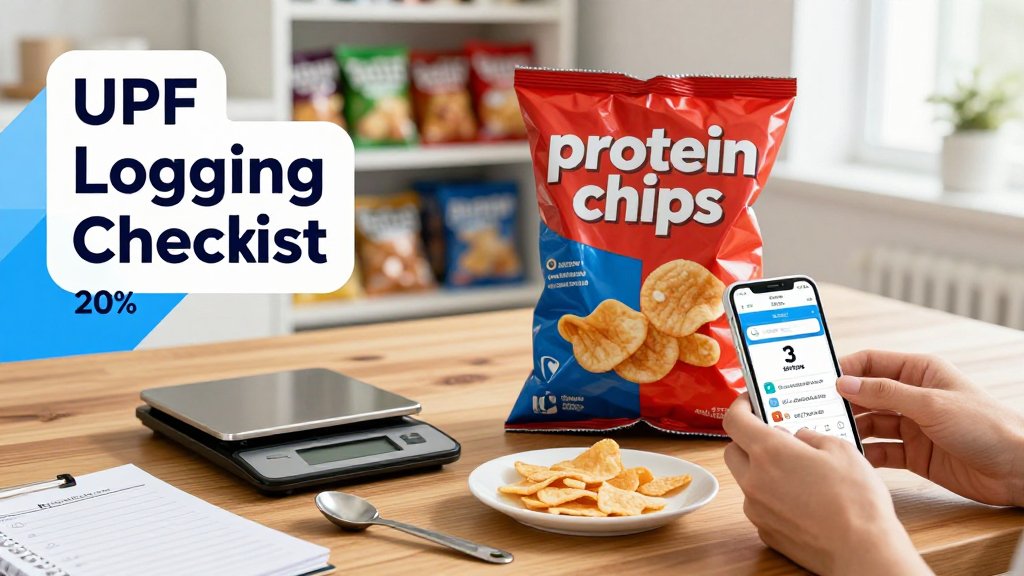
You can meal prep, hit your protein, and still wonder why fat loss has stalled. Ultra-processed foods often slip in because they look harmless, come in confusing portions, and hide added sugar and sodium in plain sight. This article gives you a simple, repeatable logging checklist that exposes the usual tricks quickly. You will learn what to scan on labels, which phrases to watch for, how to spot calorie-dense “small servings,” and how to make easy swaps without overhauling your whole pantry.
What counts as ultra-processed foods in real life
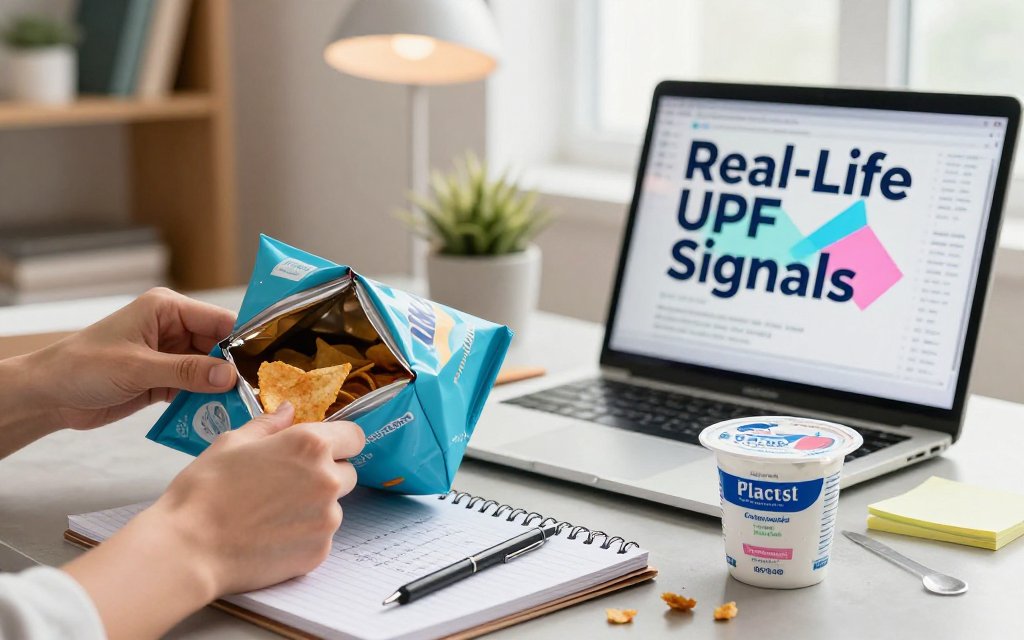
Picture this: you grab a “healthy snack” between meetings. It is a single-serve flavored yogurt drink (190 calories) and a bag of “protein chips” that looks like one portion. Later, you log it and notice the chips are 140 calories per serving, with 3 servings per bag. That is 420 calories from the chips plus 190 from the drink, and your quick snack is now 610 calories. Nothing about it felt huge, and the marketing sounded macro-friendly, but the calories stacked up fast because the portions were small, the flavors were intense, and it was easy to keep going without noticing.
That “calories add up in small portions” effect is a big reason ultra-processed foods (UPFs) can quietly blow past your target, even if you are trying to make smart choices. In a controlled inpatient study, people ate about 500 more calories per day on an ultra-processed diet versus a minimally processed diet, even though meals were matched for presented calories and key nutrients, according to the NIH ultra-processed diet study. You do not need to fear every packaged item, but you do need a reliable way to spot the products that are engineered to be easy to overeat, and to log them with precision.
Ultra processed foods definition, without the jargon
In plain English, UPFs are usually industrial “formulas,” not simple foods. In the grocery aisle, you can often recognize them by 3 to 5 practical signals: (1) ingredients you would not cook with at home (protein isolates, maltodextrin, modified starches), (2) additives that manage texture and shelf life (gums, emulsifiers, anti-caking agents), (3) flavor systems that imitate real foods (natural flavors, colors, flavor enhancers), (4) a strong “designed” taste that makes stopping hard, and (5) a nutrition profile that looks fine at a glance but is portion-tricky. Examples: a flavored yogurt drink, protein chips, a frozen “low-calorie” bowl, sweetened coffee creamer, and packaged pastries.
Not all packaged foods are UPFs, and this detail helps you shop and log without getting overwhelmed. Plain frozen vegetables are typically just vegetables, they are processed for storage, not reformulated for cravings. Canned beans can be a minimally processed staple if the ingredients are basically beans, water, and salt. Plain Greek yogurt (especially unsweetened) is often just milk and cultures. These foods can still support weight loss and macro goals because they behave like “real food” in your appetite and portions. The UPF problem usually starts when a product is rebuilt into a snackable formula, like beans turned into crunchy chips with starches, flavors, and oils, or yogurt turned into a sweetened drink with stabilizers and added sugars.
The 60-second UPF logging checklist
Here is the one-page checklist you will use for the rest of this article. Run it before you hit “save” in your tracker, especially for snacks, coffee add-ins, frozen meals, and “diet-friendly” packaged foods. Your goal is not perfection, it is fewer hidden calories and fewer “close enough” entries that quietly erase your deficit. This takes about 60 seconds once you get used to it, and it is the fastest way to catch the common traps: serving-size math, multiple servings per container, added sugars that are easy to miss, and label claims that make a high-calorie-density food feel “light.”
Now apply the checklist as a quick logging routine: (1) Confirm serving size in grams or pieces, then compare it to what you actually ate. (2) Check calories per serving and servings per container, then do the multiplication before you log. (3) Scan for added sugars on the label, because “healthy” snacks can hide a dessert-level sugar hit. (4) Sanity-check protein and fiber, since many UPFs are low in fiber, and “high protein” can still be easy to overeat if fat and starch are doing the heavy lifting. (5) Spot UPF ingredient patterns (isolates, gums, emulsifiers, flavor systems), because that is your cue to measure once, then log accurately every time.
“A common mistake is logging the brand name and assuming the calories are close enough. With UPFs, the difference between one serving and what you actually ate is often 150 to 300 calories, and it adds up daily.”
If you want a practical visual for this section, imagine a split photo: on the left, a snack label zoomed in on serving size, servings per container, calories, and added sugars; on the right, the same food logged in your app with the correct servings entered. That is the skill you are building. In CalMeal, this gets much easier once you commit to logging the serving math first, then choosing the closest database match, then adjusting portions to what you ate. If you are also managing appetite changes or prioritizing fullness, pair this checklist with tracking protein fiber calories so your entries reflect both energy and satiety. For any health concerns or medical conditions, check in with a clinician for personalized advice.
Label math that prevents hidden calories
Most logging errors with packaged foods come from three places: serving size confusion, calorie density you do not notice, and nutrition panels that look fine until you do the math on the whole package. A classic example is a “130 calories per serving” snack where the serving is 28 g (about 1 ounce) and the bag is 84 g. If you eat the whole bag, that is 390 calories, not 130. Another common one is cereal or granola: the label says 200 calories per 55 g, but your bowl is 110 g because it is easy to pour double. These are simple arithmetic mistakes, but they create big hidden calories in packaged foods over a week.
CalMeal coach rule: always confirm (1) serving size in grams, (2) servings per container, then multiply calories and macros by what you actually ate. If it came in one package, assume you might eat more than one serving.
Use the table below as a quick “where people get tricked” map. The goal is not to fear packaged foods, it is to log them accurately. Once you know which label field is most likely to mislead you for that category, you can slow down for 10 seconds and make the math match reality. That one habit improves meal logging accuracy tips more than almost anything else because it fixes the biggest calorie gaps: extra servings, extra bites, and “I thought that was the whole package” moments.
One label move that catches calorie density fast is calories per gram. You already have both numbers: calories per serving, and serving size in grams. Divide calories by grams. If a snack is 180 calories per 30 g, that is 6 calories per gram, which is very energy dense. Compare that to a Greek yogurt cup that is 140 calories per 170 g, which is about 0.8 calories per gram, far easier to feel full on. Granola, trail mix, chips, and many protein bars often land in the 4 to 6 calories per gram range, so a “small handful” can quietly become 300 to 500 calories. If you see a high calories per gram number, weigh your portion once and save it as a custom serving.
Added sugar vs total sugar, what to log and why
Total sugars include naturally occurring sugars plus added sugars, while added sugars are the sugars manufacturers add during processing (think cane sugar, syrups, and many concentrates). The Nutrition Facts label splits them out, and the FDA added sugars explainer shows how added sugars are counted inside total sugars. Logging rule of thumb: track calories first (that drives weight change), but use added sugar as a red flag for “easy to overeat” foods. Example: a flavored oatmeal packet might look like a smart breakfast, but if it has 10 to 12 g added sugar, it tends to eat like dessert.
Put this into practice with three common items. (1) Flavored oatmeal packet: log it as one full packet, then decide if you want to add protein (stir in 170 g plain Greek yogurt after cooking, or add a scoop of whey) to make it stick. (2) Sweetened granola: do not log “1 cup” unless you measure it, because 1 cup can swing from 90 g to 140 g depending on brand and pour, which can be a 150 to 250 calorie difference. (3) “Healthy” smoothie bottle: lots of bottles are 12 to 16 oz, and the label may say 2 servings. If you drink it all, you log all servings, and you treat high added sugar as a cue to pair it with something chewy and higher fiber.
Sodium, fiber, and protein checks that reveal UPFs
A fast scan for fullness is protein and fiber per serving relative to calories. If a snack is under 3 g fiber and under 8 to 10 g protein per serving, it often leaves people hunting for more food an hour later, even if the calories looked “reasonable.” Think 160 calorie crackers with 1 g fiber and 2 g protein, that is basically a starch delivery system. Flip the script with swaps that keep logging simple: 200 calories of roasted edamame (higher protein and fiber) or 200 calories of cottage cheese with berries. Now add the sodium cue: savory UPFs often jump into the hundreds of milligrams per serving, and frozen meals can stack up quickly if you eat the whole tray.
Health halo packaging is where all these checks come together. “Gluten-free,” “made with whole grains,” “keto,” and “plant-based” can still be high in calories per gram, low in fiber, and easy to finish without noticing. Your safest routine is consistent label math: log the amount you actually ate, then sanity check with protein, fiber, and sodium so the food matches your goal. If you want a simple way to build meals that feel bigger for the same calories, pair this label routine with energy density hacks to eat fewer. If you have a medical condition that requires specific sodium or sugar targets, check with your doctor or a registered dietitian for personalized guidance.
UPF ingredient cues and a short avoid list
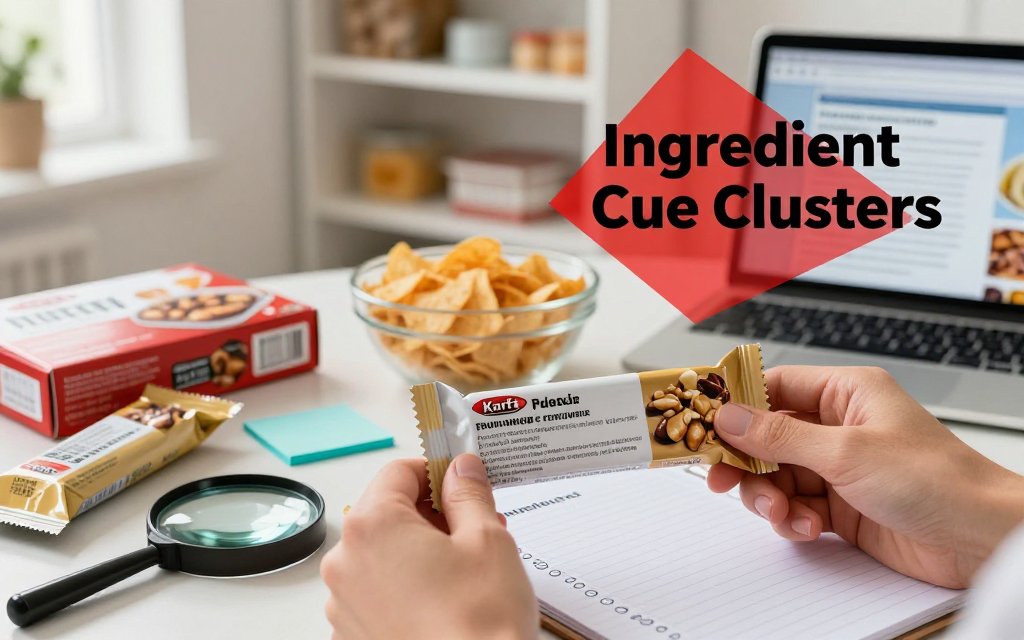
You do not need to fear every additive. The goal is simpler: build a repeatable way to spot foods that are engineered to be “too easy” to eat and “too easy” to under-log. Ingredient lists help because they reveal patterns that show up in foods people tend to over-portion, like bars, chips, pastries, and many frozen convenience meals. In a tightly controlled NIH inpatient study, people ate about 500 extra calories per day on an ultra-processed diet compared with an unprocessed one, despite the menus being designed to match key nutrients on paper. That makes ingredient pattern recognition a practical skill for anyone trying to keep calories and macros honest, especially on busy days. You can read more in the NIH randomized trial summary.
How to identify ultra processed foods by ingredient patterns
Think clusters, not single “bad” words. One sweetener in a yogurt is common, but three sweeteners plus a fiber syrup plus flavor systems often signals a product designed for maximum craveability with minimum chewing. For example, many protein bars stack sugar, brown rice syrup, dextrose, honey, or tapioca syrup, then add glycerin (for softness) and “natural flavors” (to keep the taste loud). Flavored chips often pair refined starches with multiple oils, powdered seasonings, and flavor enhancers. Plant-based nuggets frequently combine protein isolates with starches and gums so they still feel “meaty.” Shelf-stable pastries commonly layer refined flour, added sugars, emulsifiers, and stabilizers so the texture stays soft for weeks.
Stealth sugar is usually about repetition and disguise. If you see sugar plus a syrup plus something like dextrose, maltodextrin, fruit juice concentrate, or “evaporated cane juice,” the food is often being sweetened in layers to hit a specific “always tasty” point. The logging risk is real because sweet foods are easy to nibble while distracted, and small bites are hard to count. A 160 calorie serving of cookies can quietly become 320 calories if you double it without noticing. Watch for refined starches that act like fast carbs too, such as modified food starch, potato starch, tapioca starch, and enriched wheat flour. They can make texture airy and easy to chew, which can speed eating.
Texture systems are another big cue, especially when you see several in the same ingredient list. Gums (xanthan gum, guar gum), emulsifiers (soy lecithin, mono and diglycerides), and stabilizers can be totally normal in tiny amounts, but a cluster often means the manufacturer is rebuilding mouthfeel that whole ingredients would normally provide. That matters because texture affects pace and portioning. Creamy, smooth, and uniformly crunchy foods are easy to eat fast. “Natural flavors,” “flavoring,” “spices,” and “seasoning” can be fine too, but repeated flavor terms often indicate an industrial flavor system designed to keep each bite punchy, even after the bag has been open for days.
“If the first bite tastes amazing and the tenth bite still tastes amazing, pay attention. That is often the point of ultra-processing, and it is exactly when accurate logging matters most because portions drift upward.”
Your UPF list of ingredients to watch most often
Use this as a watch list, not a panic list. The moment you spot a few of these categories in one product, do two quick actions before you eat: (1) check the serving size and servings per container, (2) decide whether this is a “log carefully” food (fine to eat, but measure it) or a “swap when possible” food (easy to overeat, better replaced most of the time). This mindset keeps you out of all-or-nothing thinking. You are not banning foods. You are predicting two things that matter for results: overeating risk and logging error risk. Both are what derail calorie deficits and macro targets in real life.
Here is what “log carefully” looks like in practice. If you eat a protein bar that is 200 to 260 calories, log the whole bar, not “half now, half later,” unless you physically cut it and put the other half away. For chips, log by weight when you can: 28 g is often about 150 to 170 calories, and pouring “a handful” can easily become 2 servings. For plant-based nuggets, scan the package for serving size, then weigh the cooked portion once or twice so you learn what 4 nuggets versus 8 nuggets looks like on a plate. CalMeal-style logging works best when the portion is a number you can repeat, like grams, pieces, or a full package.
“Swap when possible” does not have to mean “never again.” It usually means picking a version with fewer engineered layers most days, then enjoying the UPF version intentionally. Examples: swap a 300 calorie shelf-stable pastry for a 250 calorie plain Greek yogurt bowl (170 g nonfat Greek yogurt, berries, and 10 g honey), swap flavored chips for air-popped popcorn with seasoning, or swap a candy-like protein bar for a simple combo like a whey shake plus a banana. If you have health concerns or need a medical diet, talk with a doctor or registered dietitian. For everyone else, this ingredient checklist is a calm, repeatable way to protect your calorie budget without obsessing over every label.
Logging UPFs accurately and making easy swaps
The fastest way to reduce ultra-processed foods (UPFs) without burning out is simple: do not overhaul your whole menu. Keep your routine meals that already work (your usual eggs and toast breakfast, your go-to salad lunch, your normal chicken and rice dinner). Instead, get more accurate with the packaged and restaurant-like items you tend to under-log, then swap only the snack and convenience foods that are quietly costing you the most calories. That order matters because “healthier choices” do not help much if your tracking is off by 200 to 400 calories per day from chips, sweet coffee add-ins, and second servings you forgot you had.
Meal logging accuracy tips for packaged and restaurant-like foods
Use a high-precision method for UPFs, especially on busy days when your appetite is fine but your portions drift. Here is a repeatable process you can apply to almost anything in a wrapper: (1) Log by barcode scan or a verified entry whenever possible (generic entries can be off). (2) Weigh or measure once for your most common UPF snack so you know what a normal bowl looks like in grams. (3) Log the whole package when you finish it, not the “serving size” on the label. (4) Build a “frequent foods” list of your typical items so you are not searching from scratch every time.
Real-world examples make this click. A single-serve chip bag might be 150 to 170 calories, but a family bag is usually 8 to 11 servings, and “one serving” is easy to turn into two without noticing. Frozen grain bowls are another classic: many are labeled “2 servings,” so the full bowl can be 500 to 700 calories, not the 250 to 350 you thought you logged. Coffee add-ins are sneakier. A “quick pour” of flavored latte creamer can be 2 tablespoons (70 to 90 calories) or 6 tablespoons (200 plus). The most common mistake is logging before you eat, then forgetting the extra handful, the second serving, or the final bites.
Healthy swaps for ultra processed snacks that still hit macros
Swap by craving type, not by making a huge “good foods” list. If you want crunch plus salt, try popcorn you season yourself and measure (for example, 3 cups air-popped plus 1 teaspoon olive oil is roughly 150 calories), or portion crackers into a bowl and pair with a tuna packet for protein. If you want sweet plus creamy, use 0 percent or 2 percent Greek yogurt (170 grams is often 90 to 150 calories) plus fruit, or cottage cheese with cinnamon and berries. For grab-and-go, pre-portion nuts into 100 to 170 calorie baggies, keep dark chocolate squares (about 50 to 70 calories each), or build a frozen fruit smoothie with measured add-ins like 1 scoop protein and 1 tablespoon peanut butter. Adherence tip: keep one intentional UPF treat you genuinely love (a candy bar, a protein cookie, a flavored chip), and commit to logging it accurately instead of “banning” it.
FAQ: Are ultra-processed foods always bad for weight loss?
No. Weight loss still comes from a calorie deficit, but UPFs can make that deficit harder because they are easy to overeat and easy to under-log. In a controlled NIH trial, people ate about 500 more calories per day on an ultra-processed diet than on a minimally processed diet, even with the menus matched for several nutrients, as described in the NIH summary of the trial. Practical guideline: make most meals minimally processed, then treat UPFs as “log with precision” items. Example day: oatmeal and eggs for breakfast, chicken salad for lunch, and one 160 calorie single-serve chips with dinner, logged after you finish it.
FAQ: How can I tell if a food is ultra-processed quickly?
Use a quick 3-check rule: (1) A long ingredient list with multiple additives (colors, flavors, emulsifiers, gums) suggests it is ultra-processed. (2) Multiple sweeteners or refined starches (corn syrup, dextrose, maltodextrin, modified starch) usually means it is engineered for easy eating. (3) The macros look “light” for the calories, meaning low protein and low fiber for a high calorie count. Reality check: one additive does not automatically make a food a problem, and some convenient foods can fit fine. Watch the overall pattern and how often those foods lead to unplanned snacking.
FAQ: What is the best way to log snacks with unknown portions?
Pick a method that matches the messiness of the snack. For high-calorie, easy-to-overeat foods (chips, nuts, trail mix), portion once into a bowl or plate, then log that amount, and do not eat from the bag. If you can, weigh the container before and after, the difference in grams is your real portion. If it is a single-serve package, default to logging the full pack because “half a bag” rarely stays half. Busy day fallback: take a quick photo, estimate in the moment so you do not forget, then refine later using the label and a measured reference portion you trust.
If you want logging to feel effortless, let CalMeal do more of the heavy lifting. Download CalMeal on iOS or Android, then use smart food recognition to capture what is actually on your plate, plus barcode scanning for packaged UPFs and snacks. The goal is not perfection, it is fewer “invisible calories” from second servings and casual pours. Log it accurately first, then swap the one or two convenience foods that hit your calorie budget the hardest, and you will see progress without rebuilding your whole routine.
Ready to put the checklist into action today? Download CalMeal for free and start tracking your nutrition without the hassle. With AI-powered food recognition, you can log meals faster, reduce guesswork, and stay consistent even on busy days. Grab CalMeal on iOS or Android, then take the next step toward clearer calorie counting and better results.
Start Tracking Your Nutrition Today
Download CalMeal for free and take the guesswork out of calorie counting with AI-powered food recognition.