On GLP-1 Meds? Track Protein, Fiber, Calories
GLP-1 meds can make weight loss easier by shrinking appetite, but that also makes it easier to under-eat protein and fiber, feel weak, or stall progress. This guide shows simple protein and fiber targets, a portion-size strategy that works with small meals, and how to track calories and macros without turning it into a second job.
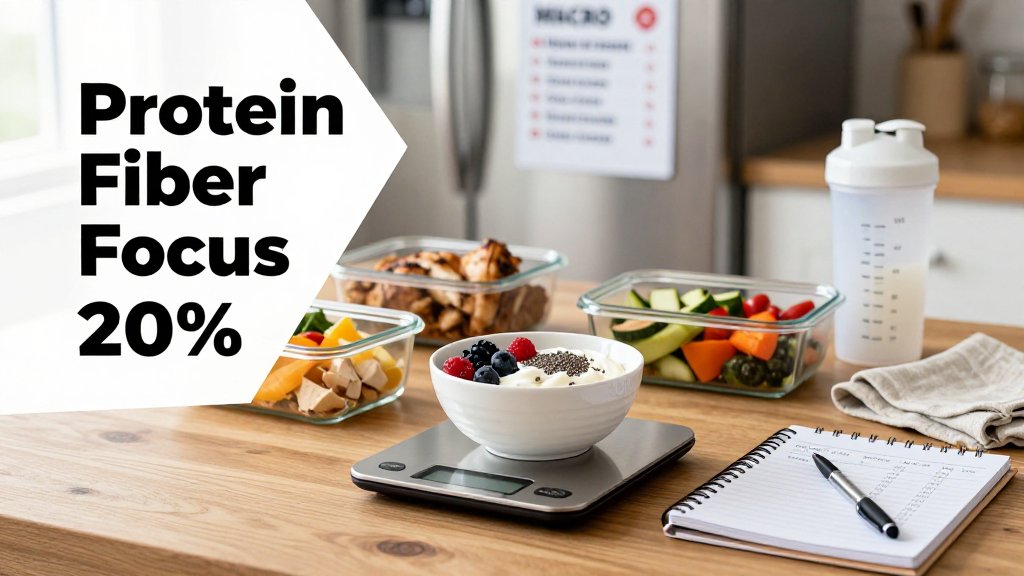
GLP-1 medications can make fat loss feel simpler, but they also change the rules of eating. When your appetite drops, it gets easier to under-eat protein, miss fiber, and feel lousy, even if the scale is moving. This guide shows you a practical, beginner-friendly way to track protein, fiber, and calories without turning meals into math class. You will learn what to prioritize first, how to set simple daily targets, and how to keep progress steady while managing common side effects.
Why GLP-1 users stall without protein and fiber
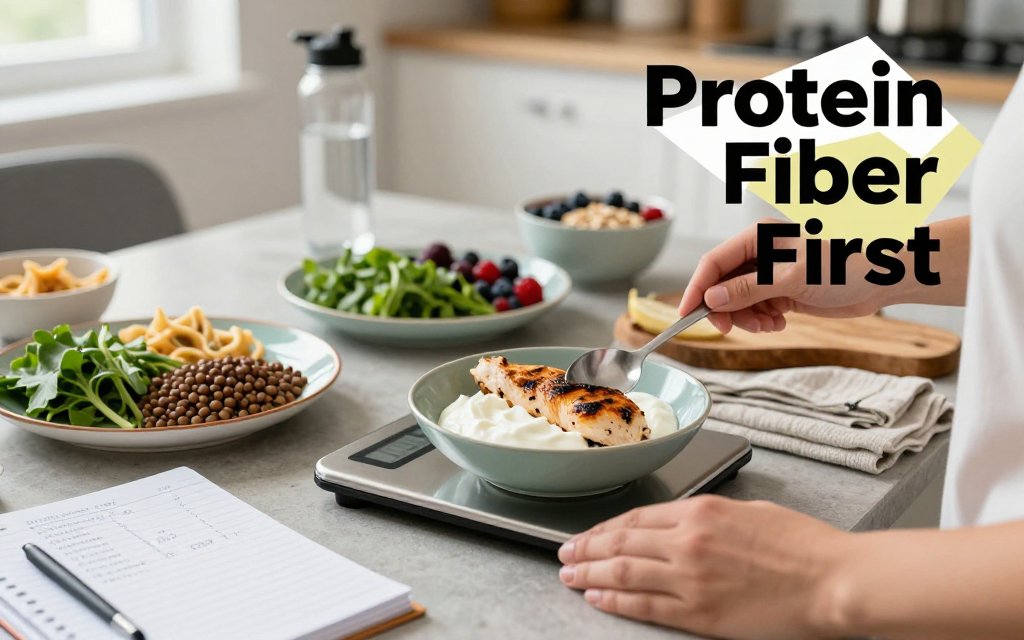
A really common GLP-1 pattern looks like this: the medication does its job, appetite drops fast, and portions shrink to “a few bites.” At first, the scale moves. Then a couple weeks later, progress slows, workouts feel harder, and your body starts sending mixed signals (tired, cold, cranky, constipated). The tricky part is that nothing feels “wrong” with your food choices, you are just eating less of everything, including the stuff that protects your results. If you want one simple rule to remember, it is this: prioritize protein and fiber before chasing a very low calorie number.
The hidden downside of a small appetite
Picture a busy professional on semaglutide: breakfast becomes coffee, lunch is half a salad, dinner is three forkfuls of pasta because nausea is lingering. They are “being good,” but by the end of the week they feel flat in the gym, their normal walks feel like a chore, and their weight loss stalls. That stall often gets misread as, “I need to eat even less.” In reality, the new problem is under-fueling. Less food automatically means fewer vitamins, minerals, and electrolytes, and it usually means protein drops first because protein foods can feel heavy when your stomach is sensitive.
Fiber tends to drop right after protein. Many high-fiber foods are bulky (beans, lentils, vegetables, oats, berries), and bulky foods can feel unappealing when you get full quickly. So people unintentionally drift toward “easy calories” like crackers, toast, or a few bites of whatever the family is eating. Those foods are not bad, but when they crowd out protein and fiber, your body pays for it. Another common mistake is treating nausea as a signal to eat almost nothing all day. If nausea is persistent, talk with your prescriber, but do not let it become a daily excuse to skip protein and skip produce.
Here is why that matters for results and how you feel. Protein is your main raw material for maintaining muscle while you lose fat, especially if you do any strength training. If protein stays low for weeks, you can lose more lean mass than you intended, which often shows up as weaker workouts and a “soft” look even if the scale drops. Fiber is your best friend for keeping digestion moving, and constipation is a well-known issue for many GLP-1 users. In the clinical trial labeling for Wegovy, constipation was reported more often with the medication than placebo (24% vs 11%). See the FDA Wegovy label for details. Low total calories can also backfire by increasing fatigue and making you less active without noticing, which can quietly shrink your daily calorie burn.
A simple priority order that actually works
If tracking feels overwhelming, flip the order most dieters use. Do not start by obsessing over the lowest calorie number you can tolerate. Start by hitting a protein target, then a fiber goal, and only then use calories as a guardrail. For many people, a practical protein target is 25 to 35 grams per meal (or roughly 90 to 130 grams per day, depending on body size, age, and activity). A realistic fiber goal is 25 to 35 grams per day. Once those are in place, calories become easier to manage because protein and fiber naturally steer you toward filling, nutrient-dense choices. This priority order also cuts decision fatigue: you can look at any meal and quickly ask, “Where is the protein, and where is the fiber?”
One mini rule that works especially well on GLP-1 days is: if you can only eat a little, make it count. Build “small but mighty” meals. Examples: 1 cup nonfat Greek yogurt (about 20 g protein) plus raspberries and chia; 3 to 4 oz rotisserie chicken plus a microwaved steam-in-bag veggie; 1 cup cottage cheese plus cherry tomatoes and everything bagel seasoning; a tofu scramble with spinach; or a half-cup of lentils stirred into soup for fiber and protein. Tracking in a calorie counter can help you notice patterns fast, like two low-protein days in a row. If nausea, constipation, or fatigue is strong, loop in your clinician so your plan fits your medication and your body.
On GLP-1s, the goal is not to eat the least. First, lock in protein and fiber, then choose a calorie range you can live with. If your meal is small, make it nutrient-dense.
Protein, fiber, and calorie targets you can use today
If your appetite is noticeably lower on GLP-1 meds, the simplest win is to make your smaller portions count. Three numbers cover most of the “what should I eat?” stress: protein, fiber, and calories. A solid starting target is protein at 0.7 to 1.0 grams per pound of your goal body weight, fiber at 25 to 35 grams per day, and a modest calorie deficit (not a crash diet). Those targets are easy to log, easy to adjust, and they keep you from accidentally drifting into “I barely ate today” territory, which can backfire with fatigue, constipation, and stalled progress.
Personalizing this does not require fancy math. Pick a goal body weight you would be excited to maintain for a year, then build targets from that number. If you lift weights, walk a lot for work, or do higher volume workouts, you will usually feel better closer to the top end of the protein range. If nausea or early fullness is your main issue, start with the low end and work up as tolerance improves. In a tracker like CalMeal, aim to hit protein first, then fill in fiber foods, then check that your calories are not chronically too low.
Protein targets for fat loss on GLP-1 meds
Most people do well with 0.7 to 1.0 grams of protein per pound of goal body weight, especially while losing weight. That is higher protein density than many people are used to, and it is extra helpful on GLP-1 because total food volume often drops. If you prefer a simpler rule, aim for 25 to 40 grams of protein per meal if you eat 2 to 3 meals per day. For an evidence-based reference point, the ISSN protein position stand discusses protein ranges that support training and lean mass, which is the outcome you want while the scale is moving down.
Make protein “easy to win” by keeping a few high-protein, lower-effort options around for days when solid food feels like a lot. Examples that tend to work well: 170 g (about 6 oz) nonfat Greek yogurt (often 15 to 20 g protein), 2 whole eggs plus 1 cup liquid egg whites (roughly 35 to 40 g), 4 oz cooked chicken thigh or breast (about 25 to 35 g), a can or pouch of tuna (about 20 to 25 g), and firm tofu (about 15 to 20 g per 7 oz, brand-dependent). If meals are tiny, a ready-to-drink protein shake can be a practical bridge, not a “failure.”
On days nausea hits, treat protein like a prescription: get a small dose every 3 to 4 hours. Even 15 g from a shake, yogurt, or tuna packet moves you forward.
Fiber and calories as the appetite control combo
Fiber is the “steadying” nutrient that helps meals feel more satisfying, and it can be especially useful if GLP-1 side effects include constipation. Aim for 25 to 35 g per day, but earn it gradually. If your gut feels sensitive, start at 15 to 20 g and add 3 to 5 g every few days. Soluble, gentler options often include oats, berries, chia, beans, lentils, and cooked vegetables (raw salads can feel like too much volume for some people early on). A simple combo that logs well is oatmeal plus chia plus blueberries at breakfast, then a half cup of lentils or beans at lunch or dinner.
Calories are the guardrails that keep the whole plan from tipping into extreme under-eating. Many GLP-1 users lose best with a modest deficit, often around 250 to 500 calories below maintenance, because it is easier to sustain and less likely to drag down your training, sleep, and mood. If you are regularly skipping meals, struggling to reach even 60 to 80 g protein, or feeling weak and lightheaded, treat that as a sign to raise intake and talk with your prescriber. Clinicians can help adjust dose timing, manage side effects, and set safe calorie targets for your body and medical history.
Adjustments should be small and based on what you can actually tolerate this week. If you strength train, push protein toward the top of your range and keep it spread across meals so you are not trying to “catch up” at night. If constipation is the issue, add fiber slowly, increase fluids, and keep at least one daily fiber anchor (like oats, berries, or beans) before adding more volume. If nausea is the issue, choose lower-fat proteins (Greek yogurt, egg whites, turkey, tofu), go with smaller portions more often, and use a shake or soup-style meal temporarily. Start today by setting a protein goal in your tracker, then build one fiber-focused meal.
Small meals that hit macros without side effects
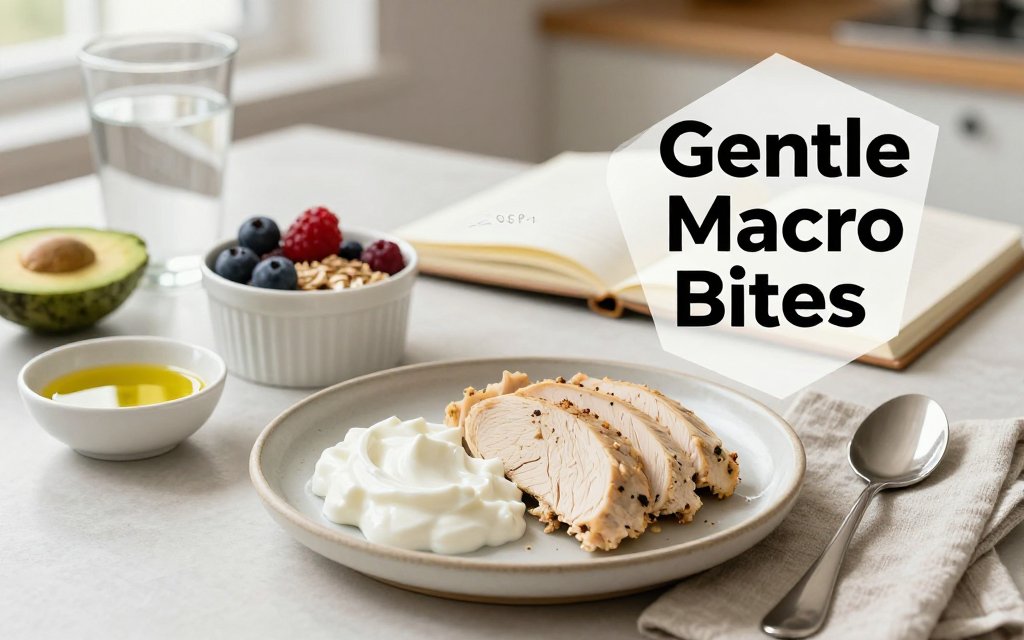
If your appetite is tiny on a GLP-1, you are not “doing it wrong”, you are working with a different set of constraints. The goal shifts from big, balanced plates to small, strategic bites that still deliver protein, fiber, and enough calories to keep energy steady. Many people also deal with nausea, reflux, and constipation, especially during dose increases. In the Wegovy clinical trials, nausea (44%) and constipation (24%) were among the most common side effects, according to the FDA Wegovy label. That is exactly why “macro-friendly” has to also mean “stomach-friendly.” Think softer textures, lower fat per sitting, slower eating, and spreading food out so your gut is not forced to process a full day of nutrition at dinner.
The portion size strategy for GLP-1 meals
Use a simple visual method that prioritizes what is hardest to “catch up” later: protein first, then fiber, then fats. On a normal plate, aim for about half the space as protein (chicken, fish, tofu, eggs, Greek yogurt), then add a smaller portion of fiber-rich carbs (berries, beans, oats, sweet potato, whole grain toast), and finish with fats in the smallest amount (1 to 2 teaspoons of olive oil, a few slices of avocado, a sprinkle of nuts). If your portion is truly tiny, switch to the “protein anchor plus fiber booster” approach: anchor the meal with 20 to 30 grams of protein, then add 5 to 10 grams of fiber in the gentlest form you tolerate.
Timing matters as much as food choice. Many people feel best when they get protein earlier in the day, because waiting until dinner can turn “catch-up eating” into nausea, reflux, or a too-full feeling that lasts for hours. Instead of cramming 60 to 90 grams of protein at night, aim for three smaller protein hits, like 25 grams at breakfast, 25 grams at lunch, and 20 to 30 grams at dinner, with a protein-forward snack if needed. If reflux is an issue, keep your last meal smaller, eat slowly, and try to finish eating 2 to 3 hours before lying down. Also keep drinks separate from meals if liquids make you feel overly full.
Build tiny meals in two steps: start with a protein anchor you can finish comfortably, then add a gentle fiber booster. If nausea or reflux shows up, reduce fat at that sitting, slow down, and shift calories earlier in the day.
Nutrient-dense food ideas when you can only eat a little
Start with breakfast options that feel light but deliver real numbers. Try 3/4 cup low-fat cottage cheese (about 150 calories, roughly 20 grams protein) topped with 1/2 cup berries (about 40 calories) plus 1 tablespoon chia seeds (about 60 calories and around 5 grams fiber). That lands near 250 calories with protein and fiber in a small bowl, and the soft texture is often easier during nausea days. If dairy is hit or miss, do a high-protein shake (look for 25 to 30 grams protein) and blend in 1/2 banana plus 1 tablespoon ground flax or chia for a gentle fiber boost. If you are sensitive to volume, keep it to 8 to 10 ounces and sip slowly over 15 to 20 minutes.
For lunch or dinner, lean on “assembly meals” that do not require big portions. Grab rotisserie chicken and pair 3 to 4 ounces with a microwave bag of frozen vegetables (aim for 2 cups cooked if you can, but even 1 cup helps). Add a small carb that sits well, like 1/2 cup cooked rice or a small sweet potato, and keep added fats minimal if reflux is flaring. Other high-comfort options: turkey chili with beans (start with 3/4 cup if you are cautious, it can be very filling), tofu stir-fry with extra veggies (use a light sauce and go easy on oil), or salmon (3 ounces) with a small sweet potato and a side of cooked zucchini. These meals are easy to scale up later without changing the ingredients.
If constipation is your main battle, think “gentle fiber” before you think “more fiber.” Cooked vegetables, oats, chia pudding, kiwi, berries, and beans in smaller portions are often better tolerated than a giant raw salad. Soups can be a secret weapon: lentil soup, blended vegetable soup, or chicken and bean chili let you get fiber and fluids together, which can help stool move more comfortably. Hydration is non-negotiable when appetite is low, because it is easy to under-drink without noticing. A practical target is to drink 16 to 24 ounces of water before noon, then repeat that in the afternoon. If you are barely eating and feel lightheaded, an electrolyte packet or a low-sugar sports drink can be useful, especially if it provides sodium and potassium, but check with your clinician if you have blood pressure or kidney concerns.
A simple swap rule can prevent side effects without wrecking your macros: keep protein steady, swap the “rough” parts of the meal for “soft” parts. Instead of a greasy burger, do a turkey burger patty with a few bites of bun and add cooked carrots on the side. Instead of a big Caesar salad, do chopped romaine in a smaller portion, add grilled chicken, and switch to a yogurt-based dressing with less oil. Instead of nuts as your main snack (easy to overdo fat), try edamame plus a protein shake, or Greek yogurt with a few crushed crackers for crunch. If nausea spikes, choose cooler foods and blander flavors for a day or two, and consider smaller, more frequent mini-meals until things settle.
How to track macros on GLP-1 without burnout
Tracking on a GLP-1 can feel like overkill because your appetite is quieter, portions are smaller, and some days food just is not that interesting. The trick is to track the few inputs that drive results and energy, not every gram forever. For most people, that means you start with protein and fiber first (they protect muscle, keep you regular, and make meals feel more satisfying), then you use calories as an occasional guardrail so a few sneaky habits do not cancel out your deficit. Think of it like driving with GPS: you do not stare at the map every second, but you check it often enough to stay on route.
A low-friction tracking routine for busy days
Use a minimalist routine that is hard to mess up: track protein and fiber daily, then track calories only 3 to 5 days per week as a quick check-in. In CalMeal, that can look like snapping a photo of your plate at breakfast and dinner, then barcode scanning anything packaged (Greek yogurt, tortillas, protein shakes). Pre-log your “usuals” before the day gets busy, for example: 1 Oikos Triple Zero, 1 banana, and 1 tbsp peanut butter. If you tend to forget to eat enough, set a minimum protein alert (example: 90 g) so you do not reach 6 pm with only coffee and a handful of crackers logged.
Repeating meals is your secret weapon. Pick 2 breakfasts and 2 lunches you can rotate all week, then vary dinner. Example lunch: a 6 oz rotisserie chicken bowl with microwave rice, bagged salad, and salsa (around 35 to 45 g protein, 4 to 8 g fiber depending on the salad and rice). If weight loss stalls for 2 to 3 weeks, troubleshoot in this order: protein too low, fiber too low, weekends untracked, liquid calories (creamer, alcohol, juice), and under-eating that leads to fatigue and fewer steps. If you want reassurance that tracking matters, a 2023 meta-analysis found that using self-monitoring apps (especially paired with coaching) improved weight outcomes versus comparison groups in people with overweight or obesity, which supports the idea that consistent logging is not busywork when it is targeted and sustainable (2023 systematic review on self-monitoring).
Do I really need to track calories on Ozempic or Wegovy if my appetite is low?
Not always, but calorie check-ins are helpful. If appetite is low and weight is steadily trending down, you can focus on protein and fiber most days and only log calories a few days per week to confirm you are in a reasonable range. Calories become more important when loss stalls, weekends are different, or you are eating out often. A simple rule: if your weekly average weight is unchanged for 2 to 3 weeks, log calories for 7 straight days, including sauces, drinks, and bites, then adjust with your clinician if needed.
What if I cannot hit my protein goal because I feel too full?
Shrink the serving, not the protein density. Aim for 20 to 30 g per eating moment instead of giant portions. Use “small but strong” options like 1 scoop whey in water (about 25 g), a 5.3 oz high-protein yogurt (15 to 20 g), 3 to 4 oz deli turkey, or 1 cup cottage cheese (about 25 g). If nausea is an issue, try colder foods, bland proteins (egg whites, yogurt), and slower eating. If you still cannot meet targets, talk with your prescriber or dietitian, especially if fatigue is rising or strength training performance is dropping.
How do I increase fiber on GLP-1 meds without bloating or constipation?
Go gradual, and pair fiber with fluids. Add about 3 to 5 g fiber per day for a few days, then step up again, instead of jumping from 10 g to 30 g overnight. Start with cooked veggies, berries, oats, chia, beans, and a small serving of high-fiber cereal, and keep portions modest. If you add a fiber supplement, introduce it slowly and drink more water the same day. The Academy of Nutrition and Dietetics highlights that fluids matter when increasing fiber, because low fluid intake can worsen constipation (dietitian tips for constipation relief). If constipation is persistent or severe, check in with your clinician.
A practical plan for this week is to keep it simple and consistent, then tighten only if progress stalls. Your goal is not perfect logging, it is enough information to make one smart adjustment at a time. If you want a script to follow, do this for the next 7 days, then review your weekly averages (protein, fiber, and weight trend) on the same day of the week. If the scale is flat, fix the most likely leak first (often weekends or liquid calories) before cutting portions again, since under-eating can backfire by lowering energy and daily movement.
Ready to make tracking simple and consistent? Start today with CalMeal and take the guesswork out of calorie counting using AI-powered food recognition. Log meals faster, spot protein and fiber gaps, and stay on track even when appetite is low. Download CalMeal for free on iOS or Android, then set your targets and start logging your next meal.
Start Tracking Your Nutrition Today
Download CalMeal for free and take the guesswork out of calorie counting with AI-powered food recognition.