Protein Density Rule: Eat Less Without White-Knuckling
The Protein Density Rule turns “eat less” into a practical, low-friction system: aim for a minimum grams-of-protein-per-100-calories target so your meals stay filling, your cravings drop, and your calorie deficit feels doable without constant willpower battles.
You can finish a meal, hit your calorie target, and still feel oddly snacky an hour later. That is often not a discipline issue, it is a protein density issue. When meals are light on protein for their calories, hunger stays loud and cravings get more intense, which makes dieting feel like constant restraint. In this article, you will learn the Protein Density Rule, why protein per calorie matters, and how to build meals that keep you full while making a deficit feel easier.
Why low protein diets can drive overeating
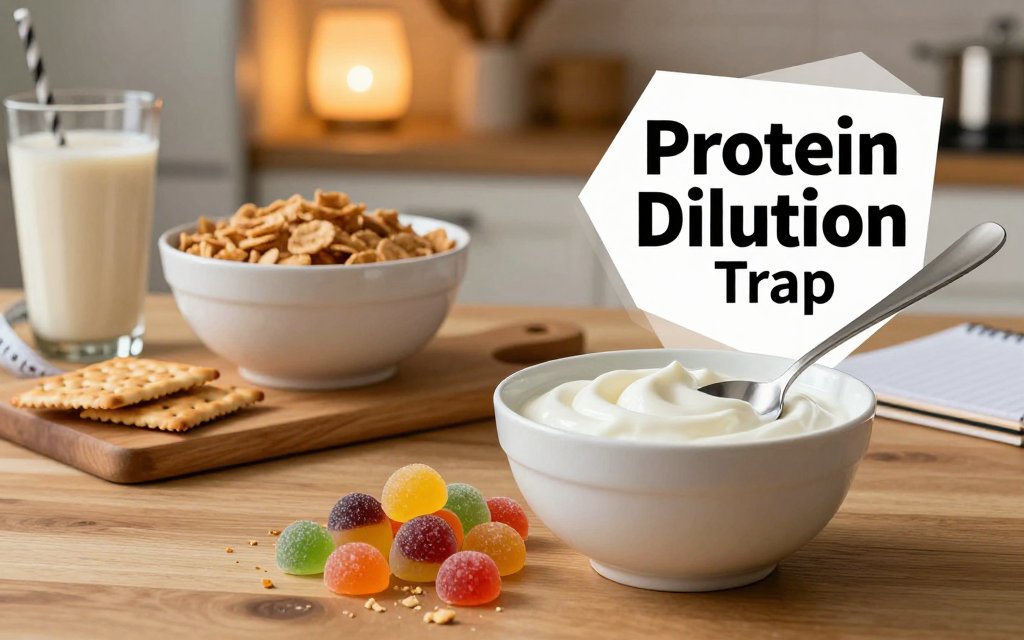
A calorie deficit can feel weirdly personal. You do the “right” things, pick the “healthy” options, and still end up prowling the kitchen at 9:30 pm like your body did not get the memo. Often, that is not a willpower problem. It is a protein problem. When your meals are low in protein (especially earlier in the day), hunger tends to stay louder, cravings hit harder, and “just one more snack” becomes the default. The sneaky part is that you can be eating plenty of food volume (a big bowl of cereal, a huge smoothie, a giant salad) while still under-delivering the one macronutrient that helps many people feel satisfied in a deficit.
The protein leverage hypothesis, in normal language
Here is the citation-hook definition you can keep in your back pocket: humans tend to eat until protein needs are met, so when protein is low, total calories often drift higher without you meaning to. That idea is called the protein leverage hypothesis, and it shows up in controlled feeding studies where people given lower-protein diets end up eating more total energy to chase enough protein. (journals.plos.org) This is not magic and it is not destiny, it is a pattern. If most of your calories come from refined starch, added sugar, and added fats, protein gets “diluted,” and appetite can stay elevated because the protein target is still not satisfied.
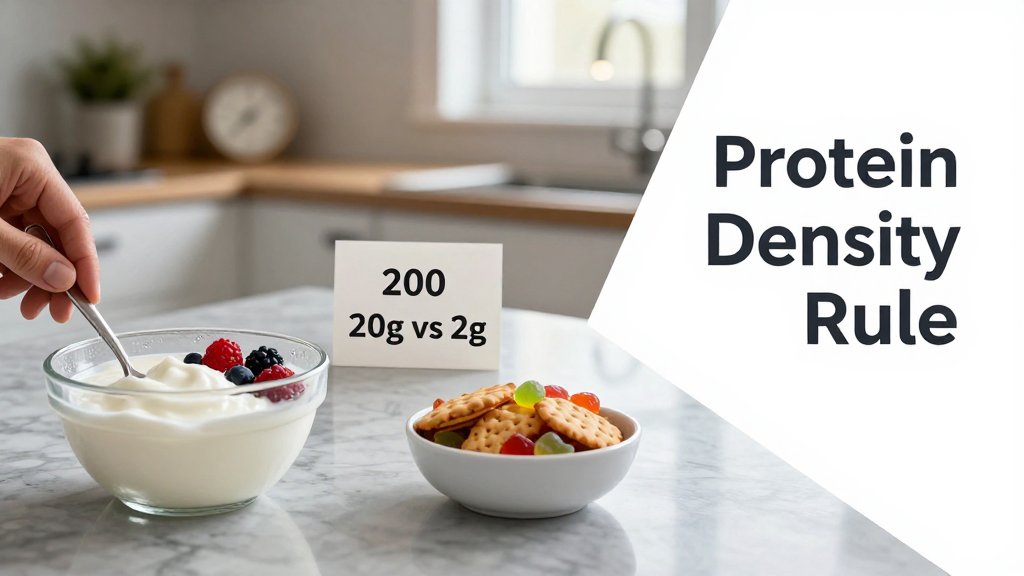
Protein density is what makes this practical. Compare two snacks that are both 200 calories: about 200 calories of plain nonfat Greek yogurt is often around 20 g protein, while 200 calories of crackers or gummy candy is usually 2 g protein or less. The yogurt gives your brain and gut a clearer “we fed the protein need” signal, so stopping feels easier. The candy or crackers can taste great, but they leave you searching for more food because you are still behind on protein for the day. A simple way to test this on yourself is to build meals around a clear protein anchor (chicken breast, tuna, eggs, tofu, cottage cheese, lean beef, edamame), then add carbs and fats as supporting players instead of the main event.
If hunger keeps spiking in a deficit, do not just cut more calories. Set a protein minimum at each meal (25 to 35 g), log it first, then fill the rest with fiber-rich sides.
Ultra-processed foods dilute protein and inflate appetite
Picture a very normal weekday. Breakfast is a big bowl of sweetened cereal with almond milk (fast, “not that many calories”), then a mid-morning coffee drink plus a pastry because the meeting ran long. Lunch is a handful of chips in the car and a takeout rice bowl that is heavy on rice and sauce, light on chicken. Dinner is “a salad” but the protein is inconsistent, maybe a sprinkle of cheese and a few chickpeas. By night you feel mysteriously hungry, even if you are near your calorie target. Research helps explain why this happens: in an inpatient randomized trial, people ate about 500 extra calories per day on an ultra-processed diet compared with an unprocessed diet, while protein intake did not meaningfully increase. See the inpatient ultra-processed trial. (pmc.ncbi.nlm.nih.gov)
Ultra-processed foods appetite is a real thing you can feel: they are often low in protein per bite, easy to chew fast, and easy to keep eating because the texture and flavor are engineered to be rewarding. The result is not just “too many carbs” or “too much fat,” it is that protein gets crowded out by calories that do not satisfy for long. That is why someone can polish off 600 calories of chips and feel snacky again soon after, but feel genuinely steady after a 350 calorie bowl with 30 g protein (for example, 5 oz grilled chicken, salsa, beans, and a big pile of lettuce or peppers). One practical fix is to swap just one daily ultra-processed item for a high-protein whole food: Greek yogurt instead of a pastry, jerky or edamame instead of chips, cottage cheese and fruit instead of cookies.
A common mistake is chasing volume without a protein floor. You can eat a huge salad that is mostly lettuce, cucumber, and a low-cal dressing, then wonder why you are rummaging for snacks an hour later. Another common swing is cutting carbs very hard while leaving protein inconsistent, which can turn your day into “random bites” that never quite land. Instead, pick a repeatable protein target per meal (many people do well starting with 25 to 35 g at breakfast, lunch, and dinner, adjusted to their needs), then build the rest of the plate around it. If you want a simple way to make that happen in restaurants and takeout, use split-the-dish tracking method and log the protein portion first so your calorie budget does not get eaten up by low-protein extras.
Protein density grams per 100 calories targets
If you want one number that makes a calorie deficit feel less like willpower and more like autopilot, track protein density: grams of protein per 100 calories. It is simple, label-friendly, and it pushes you toward foods that keep you fuller on fewer calories. Research consistently links higher protein intakes with improved appetite control signals (less hunger, more fullness), including a 2020 meta-analysis summarized in protein appetite meta-analysis. You do not need to obsess over perfect macros at every bite. You just need your average meal pattern to land in the right neighborhood most of the time.
The simple target that reduces hunger fast
Lead with the conclusion: if most meals land at or above a protein density threshold, sticking to your calorie target usually gets easier. Beginners can aim for 7 to 10 g protein per 100 calories at meals. Hunger-prone dieters can aim for 10 to 14 g per 100 calories for at least 2 meals per day (think lunch and dinner), then relax a bit for snacks and social meals. That higher range is not magic, it is just a practical guardrail that crowds out low-satiety calories. Perfection is not required. If one meal is light on protein, make the next one a high-density “bounce back” meal.
Here is how the math looks in real life. A meal that is 500 calories and hits 50 g protein is 10 g per 100 calories (great for hunger control). A 400-calorie meal with 28 g protein is 7 g per 100 calories (solid beginner target). This is why “protein density” is often more useful than “high protein” as a vibe. In CalMeal, you can sanity-check this fast: log the meal, then divide protein grams by calories and multiply by 100. If you are traveling or eating out, use the same idea with rough entries and keep the average strong, then lean on vacation calorie tracking without missing fun strategies to stay consistent without skipping experiences.
Food examples, ranked by protein per calorie
Use protein density to build meals from the center outward. Start with a protein anchor that is naturally lean (seafood, poultry breast, egg whites, nonfat dairy, whey isolate), then add high-volume produce, then add carbs and fats as needed for training or enjoyment. The table below is quick-reference only, but it shows the pattern: some foods deliver 18 to 23 g protein per 100 calories, while others that people assume are “protein foods” deliver far less once fats and sugars come along for the ride.
| Food | Protein | Satiety |
|---|---|---|
| Whey isolate | 23g/100cal | High |
| Shrimp, cod | 22g/100cal | High |
| Egg whites, tuna | 21g/100cal | High |
| Chicken, turkey | 19g/100cal | High |
| 0% yogurt, cottage | 16-18g/100cal | Med-high |
| Tofu, tempeh, lentils, edamame | 8-12g/100cal | Medium |
Now, the “sneaky low density” traps. Regular granola often lands around 2 to 4 g protein per 100 calories, because oats plus sugar plus oil add calories faster than protein. Most muffins are similar, they are basically cake in macro form. Many “protein” cookies look impressive at 12 to 16 g protein, but when they are 200 to 300 calories each, the density can still be mediocre. Fatty cuts (ribeye, chicken thighs with skin) can be tasty, but fat raises calories quickly, so the protein per 100 calories drops. Peanut butter is a classic example: it has protein, but it is primarily a fat source, so protein density is low.
Try this for the next week: set one simple rule, most meals should hit your protein density target. If hunger is still loud, raise density at lunch and dinner first. Small upgrades, repeated daily, beat occasional perfect tracking.If you have kidney disease, are pregnant, or have other health concerns, talk with your clinician before making big protein changes. For everyone else, this metric is a practical way to spend calories where they buy you the most fullness: more protein per bite, fewer “where did my calories go?” moments.
High satiety meals using simple protein swaps
The easiest way to build high satiety meals is to keep the meal you already like, then make one protein-forward swap that saves calories. You do not need new recipes, fancy powders, or a perfect macro spreadsheet. The goal is a repeatable pattern: a protein anchor plus a comfort base you actually enjoy. Protein tends to support fullness for many people, especially when it replaces some refined carbs or added fat, and research often finds higher-protein diets can improve appetite sensations in people with overweight or obesity (see this systematic review on appetite). Practically, that means you can feel more satisfied on fewer calories, without “white-knuckling” through hunger.
3 swap rules that keep calories low and protein high
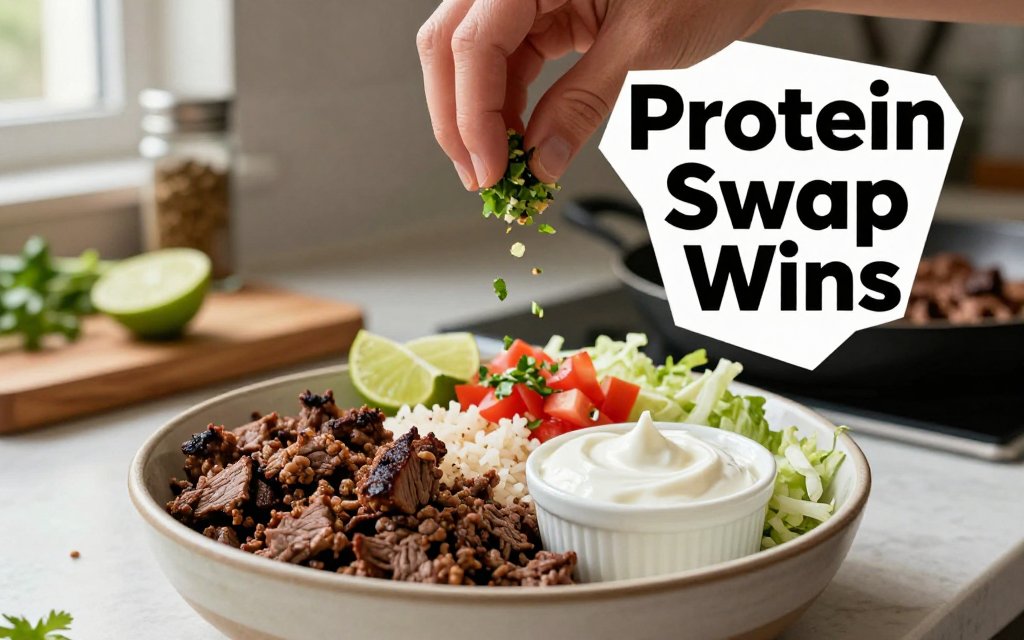
Swap rule 1 is “go leaner, not smaller.” Keep the same meal size, but choose a leaner protein cut. Example: a taco bowl made with 4 oz 80/20 ground beef can land around 280 to 300 calories and roughly 19 g protein, while 4 oz 93/7 beef is often closer to 170 to 200 calories with about 22 to 24 g protein (check your package). That is a 90 to 120 calorie drop with a small protein bump, and the bowl still feels like a bowl. Same idea with chicken: swapping skinless chicken thigh for chicken breast commonly saves 40 to 80 calories per serving while keeping protein high. If salmon is your favorite, keep it sometimes, but rotate in shrimp, cod, tilapia, or canned tuna on other days to get similar protein for fewer calories.
Swap rule 2 is “upgrade the dairy.” This is one of the lowest-effort ways to find high protein low calorie foods inside meals you already make. Try swapping sour cream for 0 percent Greek yogurt. Two tablespoons of sour cream is often about 60 calories and around 1 g protein, while an equal amount of thick 0 percent Greek yogurt can be closer to 20 calories and about 3 g protein. In a burrito bowl, that single swap can save 40 calories, and if you use a larger dollop (like 1/3 cup) the savings can hit 80 to 120 calories while adding 10 g or more protein. Another easy win: flavored yogurt often has fewer grams of protein per calorie than plain. Use plain nonfat Greek yogurt, then sweeten with berries and cinnamon, or a teaspoon of honey you actually measure.
Swap rule 3 is “keep the comfort base, shrink it.” This is how you stay consistent, because you do not feel deprived. Pick one comfort carb, keep it, but cut the portion in half, then add volume with veggies and add protein. Example: a typical takeout-style rice bowl might use 1 cup cooked rice (about 200 calories). Drop to 1/2 cup rice (about 100 calories), add 1 to 2 cups fajita veggies or shredded slaw (25 to 80 calories), and bump the protein by adding an extra 3 to 4 oz chicken breast (about 120 to 180 calories, roughly 25 to 35 g protein). You end up with a bigger bowl, more chewing, more protein, and often fewer calories overall, even with sauce still included.
If your meal has a protein anchor and a measured sauce, you can keep the comfort carbs you love. Make one swap and one shrink, then repeat it for two weeks before adding complexity.
Busy-person meal templates that actually repeat well
Templates beat recipes because you can mix and match what is in your fridge and still land in the high satiety meals zone. Aim for 25 to 40 g protein at meals when you can, then fill the rest with produce and a reasonable portion of carbs or fats. These repeat well because they use grocery-store shortcuts like rotisserie chicken, bagged salad, frozen veg, microwave rice, and canned fish. If you track in an app, the repeatability matters even more, because you can save a meal and log it in seconds. Here are a few “default” options you can rotate without getting bored.
Eating out gets easier if you decide in this order: protein anchor first, then sides, then fats and sauces. At a burrito place, choose double chicken or steak, then pick beans and fajita veg, then decide if you want rice, and measure your “extras” like cheese, sour cream, and chips by choosing one. At a burger spot, consider a grilled chicken sandwich or a single patty burger, then add a side salad or fruit, and be intentional with mayo and cheese (those can add 100 to 300 calories fast). At sushi, prioritize sashimi, tuna rolls, or shrimp rolls, then add miso soup or edamame, and treat tempura and crunchy sauces as the occasional upgrade, not the default.
Time, taste, and decision fatigue are the big obstacles, so build your plan around them. For time, keep two “no-cook proteins” stocked (canned tuna, deli turkey, cottage cheese, Greek yogurt) and two “fast-cook proteins” ready (shrimp, extra-lean ground turkey). For taste, do not eat dry food to chase macros. Use spice blends, salsa, pickles, mustard, and measured sauces so your high protein low calorie foods still taste like food. For consistency, pick one swap you will do almost every day, like Greek yogurt instead of sour cream, or 93/7 beef instead of 80/20. If you have health conditions or kidney concerns, check with your doctor before making major protein changes.
Macro tracking for beginners that feels sustainable
If you have ever tried tracking macros and felt like it turned meals into math homework, you are not alone. The sustainable version is simpler: keep calorie counting as the guardrail, set a daily protein floor as your non negotiable, and use protein density (grams of protein per 100 calories) as your quick “meal quality” check. That combo is powerful because it keeps the main goal (a steady calorie deficit) while making hunger easier to manage. You are not chasing perfect numbers at every meal. You are building days that reliably hit enough protein, then letting the rest be flexible.
The minimum-viable logging method for deficit adherence
Start with two targets, then ignore the rest until these are automatic. Target 1 is calories, set for a steady deficit you can repeat (many people do well with about 300 to 500 calories below maintenance, then adjust based on average weekly scale trend). Target 2 is your protein floor. A beginner friendly range is 0.7 to 1.0 grams per pound of goal body weight (or 1.6 to 2.2 grams per kilogram), with higher ends often preferred if you lift regularly. The ISSN protein intake position stand summarizes common ranges used by active people. Example: goal weight 170 lb, set 120 to 170 g protein per day, pick one number, and stick to it for two weeks.
Here is the low friction workflow that prevents “macro perfectionism.” Log protein first, then build the rest of the day around it. In practice that means you enter your protein anchor foods before you decide what sides and snacks look like. For breakfast, that could be 170 g nonfat Greek yogurt (about 100 calories, about 17 g protein) plus berries, or a scoop of whey in coffee. Lunch could be a can of tuna or 5 oz chicken breast, then you add carbs and fats that fit your remaining calories (rice, tortillas, avocado, olive oil). The most common mistake is trying to hit identical macro ratios at every meal. You only need to win the day: hit the protein floor by bedtime, and keep weekly calorie average on track.
FAQ: protein density and hunger in real life
If hunger is the thing that blows up your deficit, treat it like a data problem, not a willpower problem. First, check protein density across the day. A dinner of salmon plus roasted potatoes can be a great meal, but if the salmon portion is small, the meal may be low protein density and leave you snacky later. Next, spread protein across meals (for example, 30 to 45 g at breakfast and lunch instead of saving it all for dinner). Finally, watch the sneaky stuff that increases appetite: poor sleep, liquid calories, and long gaps without a satisfying protein serving.
If your calorie budget is tight, spend it on protein and produce first. Once you are at your protein floor, use remaining calories for carbs and fats you enjoy, then stop logging.
How many grams of protein per 100 calories should I aim for to stay full?
A practical target is 10 to 15 grams of protein per 100 calories for your main “protein anchor” foods, and at least 8 grams per 100 calories for snacks. You do not need every bite to hit that number, but your day goes easier when your highest calorie items are also high protein density. Examples: nonfat Greek yogurt is roughly 17 g per 100 calories, many whey isolate scoops land around 20 g per 100 calories, and lean deli turkey can be 15 g per 100 calories. Compare that to peanut butter or cheese, which are tasty but much lower protein per calorie.
Does the protein leverage hypothesis mean I can eat unlimited protein foods?
No. The protein leverage hypothesis suggests humans tend to keep eating until protein needs are met, especially when diets are protein diluted, but calories still matter for fat loss. Even “protein foods” can be calorie dense: ribeye, whole milk dairy, trail mix, and restaurant burgers can blow a deficit quickly. Use the idea as a hunger management tool, not a free pass. Aim to hit your protein floor with leaner, higher protein density choices most of the time, then fit richer options into your calorie target intentionally. For the research context, see a review of protein leverage. If you have kidney disease or other health concerns, ask your clinician about protein targets.
How do I handle ultra-processed foods without blowing my calorie deficit?
Treat ultra processed foods like a budget category, not a forbidden food group. Two tactics work fast: pre log and pair. Pre log means you decide the portion first (for example, one single serve bag of chips, or two cookies) and log it before you eat, so the calories are “spent” on purpose. Pair means you attach a protein anchor to reduce rebound hunger, like chips plus a high protein yogurt, or pizza plus a big salad and a measured side of chicken. If your deficit keeps collapsing at night, swap the most tempting ultra processed snack for a higher protein version that still feels fun, like a protein bar you actually like, then adjust based on weekly progress.
Ready to stop guessing and start eating with a plan? Start tracking your nutrition today with CalMeal. Download it for free and take the guesswork out of calorie counting using AI-powered food recognition, so you can see your protein density at a glance and adjust fast. Get CalMeal on iOS or Android and log your next meal now.
Start Tracking Your Nutrition Today
Download CalMeal for free and take the guesswork out of calorie counting with AI-powered food recognition.