Vacation Weight Loss: Track Calories Without Missing Fun
A practical travel playbook for staying in a calorie deficit or maintenance without turning vacation into a food math marathon. Use default orders for airports and gas stations, simple hotel breakfast rules, chain nutrition info, and an 80-20 logging approach that stops the all-or-nothing spiral.
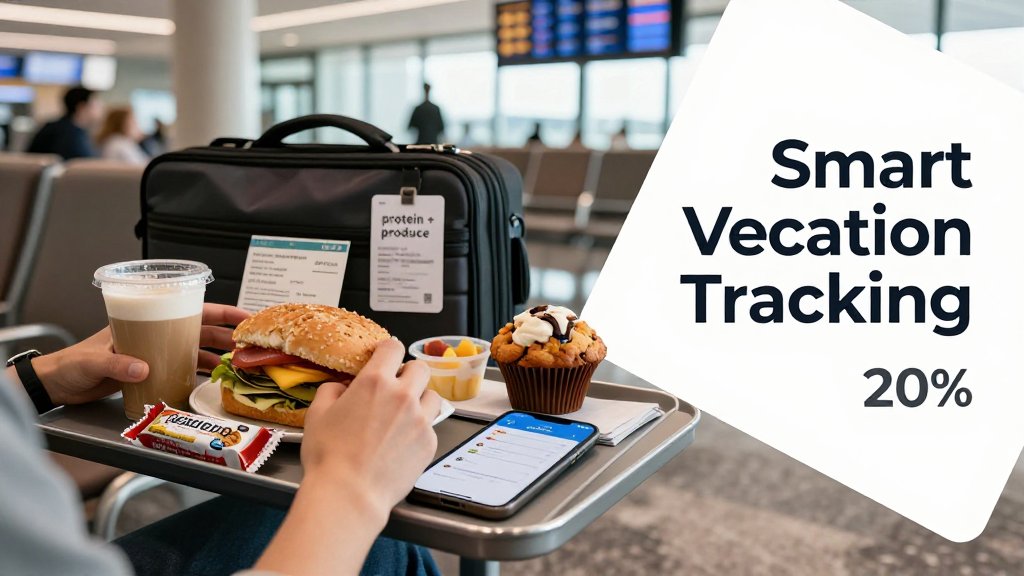
Vacation should leave you refreshed, not stressed about what you ate. The problem is not willpower, it is that travel wipes out your normal routines, portions change, and restaurant meals make calories feel impossible to estimate. In this guide, you will learn a simple way to track without obsessing, including practical decision rules, easy default orders, and an 80-20 approach that keeps you consistent. You will enjoy the food, stay on course, and return home feeling good.
Set a vacation calorie plan in 10 minutes
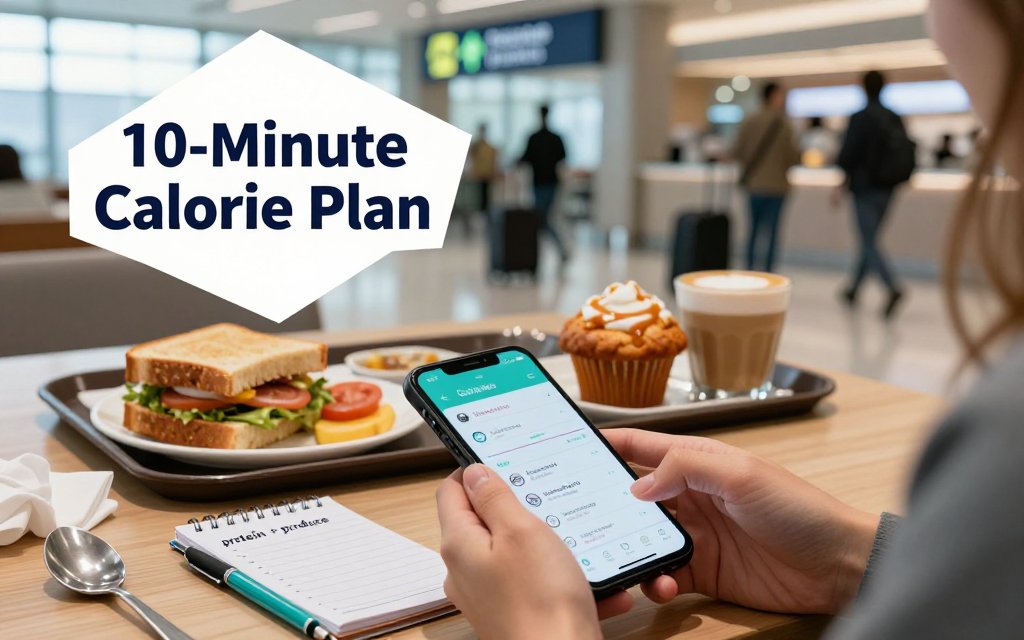
You are at the airport, hungry, and the only options look like a breakfast sandwich, a muffin the size of your head, and a caramel latte. Later it is hotel appetizers, a big dinner, and maybe a cocktail because you are finally off work. This is exactly why your vacation goal should be simple: either maintain your weight, or run a small, flexible deficit. Going aggressive (like trying to cut 700 to 1,000 calories per day) often backfires on trips because hunger climbs, sleep gets weird, plans change, and the first big restaurant dinner can turn into an all-or-nothing spiral. A 10-minute setup gives you structure without killing the fun, even when meals are unpredictable.
If your plan survives airport food, restaurant portions, and late nights, it is a good plan. Pick maintenance or a small deficit, log the big-ticket calories, and keep protein plus produce steady so one meal never turns into a lost day.
Pick your target: maintenance or small deficit
Two targets work best on vacation. Maintenance is great for shorter trips (a long weekend), trips with lots of walking, or trips where your schedule is packed and you do not want food math taking over. A small deficit fits longer trips (a week or more), especially if you know restaurant meals will be frequent. Keep it realistic: aim for 0 to 300 calories below maintenance, not a dramatic cut. Then anchor your day with protein and produce: target 25 to 40 g protein per meal (think eggs plus Greek yogurt at breakfast, chicken or tofu at lunch, fish or lean steak at dinner), and eat at least one fruit or vegetable at two meals per day. The common mistake is dieting like it is a normal workweek, then rebounding hard at dinner because you arrive starving.
To set maintenance fast, use a quick estimate and then let your app refine it. A decent travel-friendly starting point is body weight in pounds times 14 to 16 for many moderately active adults. Example: if you weigh 170 lb, maintenance often lands around 2,400 to 2,700 calories, depending on steps and training. If you pick a small deficit, set a range like 2,200 to 2,500 instead of one perfect number. Ranges reduce stress when meals run big or small. Also set one non-negotiable that protects your hunger and cravings: get your protein at most meals, and get produce at least twice daily. If you are using appetite-changing meds, keep the basics extra consistent with GLP-1 protein fiber tracking.
Use the 80-20 logging method that actually sticks
The 80-20 method is your vacation safety net. The 80 percent is what moves your weekly calorie average the most: your main meals, your protein source, cooking oils, creamy sauces, added cheese, and all drinks (including juice, lattes, cocktails, and beer). If you log those, you will capture the majority of your intake without obsessing. The 20 percent is the travel fuzz: a bite of your partner’s fries, the hotel lobby cookie, the mystery oil on restaurant vegetables, the sample at a food market. You can ignore most of that, or drop a simple note like tasted fries plus cookie, 150 calories, and keep moving. This approach prevents the classic spiral where one unlogged snack turns into quitting for the rest of the day.
When you cannot weigh food, use the hand method to stay consistent. Aim for a palm of protein, a fist of carbs, and a thumb of fats. A palm of chicken, fish, or lean meat is often about 25 to 30 g protein. A fist of rice, pasta, potatoes, or bread is a reasonable carb portion when you are eating out. A thumb of fat is your oil, butter, mayo, or nut butter, and it adds up fast. Quick example: hotel breakfast could be a 2 egg omelet with veggies (protein plus produce), a fist-sized portion of potatoes, and coffee with a splash of milk. Log it as best as you can, then stop. On vacation, consistency beats precision every time.
Alcohol and desserts are where guilt logging usually shows up, so build a simple rule before you arrive. First, remember that alcohol carries real energy (it is not free), and alcohol has calories at about 7 per gram, plus whatever sugar or juice is in the drink. Strategy that works: pre-decide your max number of drinks (often 1 to 2), pick lower-friction options (wine, light beer, spirits with soda water), and alternate with water. For dessert, choose one: split a gelato, share a slice of cake, or order your favorite and eat it slowly. Log a rounded estimate (like dessert, 250 to 400) and move on without trying to compensate by starving the next morning.
Your goal is not perfect tracking, it is a plan you can repeat tomorrow. If today ends up higher calorie than expected, the fix is boring and powerful: return to your next normal meal with protein plus produce, and keep the 80 percent items logged. That might look like a turkey salad at lunch, a protein-forward dinner, and one planned treat instead of grazing all night. If you have any health concerns, dietary restrictions, or a medical condition, check with your doctor before changing calories or macros. Otherwise, give yourself permission to be human on vacation, and let the simple plan do the heavy lifting while you enjoy the trip.
Airport and gas station default orders that work
Travel days rarely go off the rails because of one big dinner. What usually sneaks in is the “invisible” stuff: a 16 oz flavored latte, a smoothie that drinks like dessert, a couple handfuls of trail mix here, a bag of chips there. Research on liquid calories suggests they can be easier to overconsume because they do not always trigger the same satiety response as solid food, which is why drinks can quietly push your daily total up fast. liquid calories and satiety (pubmed.ncbi.nlm.nih.gov)
The fix is boring on purpose: build default orders you can repeat in any airport or convenience store, so you are not negotiating with hunger while standing in a line. Think in “anchors.” Your anchor is a protein you can count on (20 to 40 g is the sweet spot for most people), then you add one high-volume side (fruit, veggies, broth soup, or a salad). That simple combo keeps calories predictable and helps you feel satisfied. If you want extra help staying full on fewer calories, pair this section with energy density hacks for fullness to get more volume per bite.
Coach note: if you wait until you are “airport starving,” you will buy whatever is fastest and biggest. Pre-decide two to three orders you actually like, then treat your food choice like a boarding pass, not a debate.
Healthy airport food ideas you can find anywhere
Start with grab-and-go proteins that are common in most terminals: Greek yogurt cups (often 150 to 200 calories with 15 to 20 g protein), hard-boiled eggs (about 70 calories each), deli turkey packs (often 80 to 120 calories with 12 to 20 g protein), or a simple sushi roll (many are 300 to 450 calories, higher if it is fried or mayo-heavy). Then add your high-volume side: a banana, apple, baby carrots, a side salad, or a broth-based soup cup. If the only “healthy” option is a salad kit, use the dressing on the side and start with half (you can always add more).
Hot-food counters can work too if you order like you are building a bowl. Oatmeal is a great base if you treat it as a vehicle for protein, not just carbs: plain oatmeal (roughly 150 to 200 calories) plus a Greek yogurt on the side, or oatmeal plus a milk carton and a banana. For burrito bowls, aim for a protein-forward build: chicken or steak, fajita veggies, salsa, and beans if you want them, then go easy on cheese, sour cream, and chips. Watch liquid calorie traps that feel “vacation-normal,” like flavored lattes (often 250 to 450 calories), smoothies (commonly 300 to 600), and airport cocktails (often 150 to 300 before mixers). If you want one, budget it by skipping the pastry and keeping your meal simple and protein-anchored.
Road trip snacks: low-calorie, high-protein picks
Gas stations and convenience stores are surprisingly workable once you stop thinking “snack aisle” and start thinking “mini meal.” Your goal is 15 to 30 g protein for 200 to 350 calories, and you want it portioned so you can log it quickly and move on. Look for single-serve protein: ready-to-drink protein shakes, jerky, tuna or chicken pouches, cottage cheese, string cheese, or a yogurt cup. Add a high-volume side that does not crumble into constant grazing: an apple, grapes, baby carrots, snap peas, or a small bag of microwavable edamame if the store has a cooler section.
| Combo | Calories | Protein |
|---|---|---|
| Greek yogurt + berries | 200 | 18g |
| Jerky + apple | 220 | 20g |
| Tuna pouch + crackers | 240 | 17g |
| Cottage cheese + carrots | 210 | 23g |
| Protein shake + banana | 250 | 30g |
To beat “snack drift,” use a timer-based plan instead of willpower: eat one planned protein snack every 3 to 4 hours, then close the loop by drinking water and putting the food away. That rhythm prevents the classic pattern where you take 6 bites every 20 minutes and still feel unsatisfied. If you know you will stop twice, pack two combos before you leave and treat any extra purchases as optional, not automatic. One easy rule: if it is going to be eaten with your fingers while driving, it should be pre-portioned and logged first. That makes it much harder for a 160-calorie “small” bag of nuts to turn into 600 calories by accident.
Fast food defaults and nutrition info before you arrive
Fast food gets easier when you pre-choose an order at home using the chain’s nutrition menu, then you just repeat it on the road. Quick method: search your destination plus “nutrition” in your browser, pick one meal under your calorie target, then screenshot it. Strong defaults that usually land in a weight-loss-friendly range are a grilled chicken sandwich (often 350 to 500 calories) plus side salad, a bunless burger plus apple slices, a taco or burrito bowl with extra lettuce and salsa, or a kids meal with grilled nuggets and fruit. The point is not perfection, it is removing decision fatigue so hunger does not make the call.
Hotel breakfast decision rules for weight loss
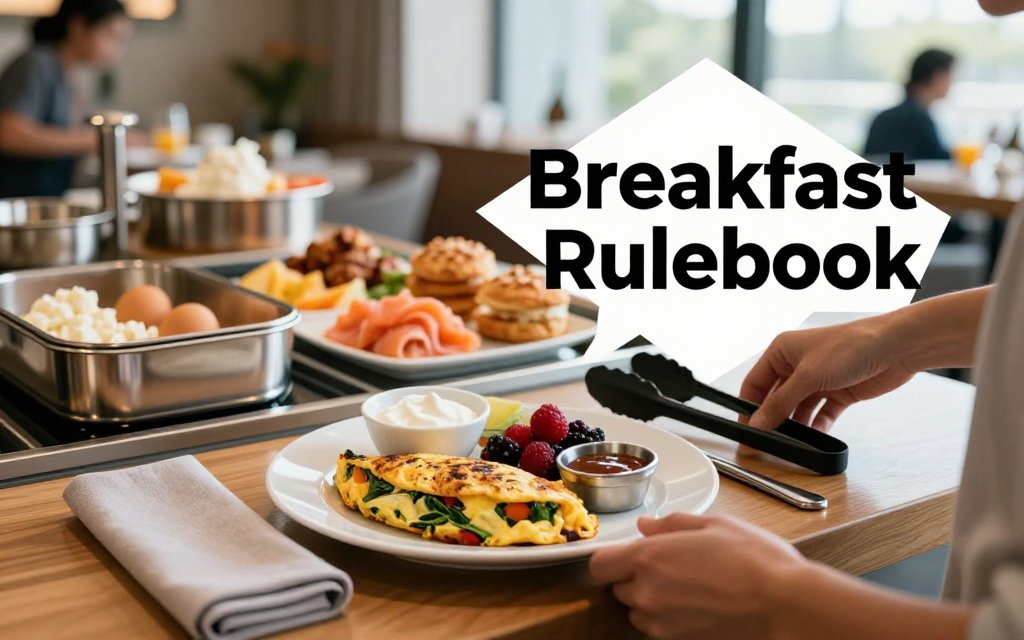
Hotel breakfast is either your easiest win or your fastest calorie leak, and the difference usually happens in the first 4 minutes. You walk in hungry, you smell waffles, you see pastries stacked like a celebration, and your brain quietly says, “Vacation rules.” The good news is that one simple choice, prioritizing protein early, can make the rest of the day feel easier. In a controlled study on adding a protein rich breakfast, higher protein in the morning improved appetite control and reduced later food cravings and snacking compared to a normal protein breakfast (protein rich breakfast trial). You do not need perfection, you need a repeatable plan.
Start with a quick decision rule based on the setup. If it is made to order, your best move is to “buy” protein with your first order: a 2 egg veggie omelet, a scramble with extra egg whites, or a Greek yogurt bowl plus eggs on the side. Ask for cheese, butter, and sauces on the side so you control the pour, not the kitchen. If it is a buffet, do not negotiate with yourself while holding a plate. Walk the line once, spot the protein options (eggs, yogurt, cottage cheese, smoked salmon), then commit. Your goal is to leave breakfast comfortably full, not food hungover by 10:30 a.m.
The 3-part hotel breakfast formula
Use this as your default template no matter the city, time zone, or buffet size. It works because it keeps protein high enough to blunt cravings, gives you fiber for fullness, and still leaves room for “vacation foods” on purpose. Think in hand portions, not perfect grams, because you are traveling. If you track, this often lands around 350 to 550 calories depending on add ons, which fits most fat loss plans without making you feel like you are dieting in public.
Here is what this looks like in real hotel breakfast numbers. Option A: 2 eggs (about 140 calories) plus a cup of egg whites (about 120) with spinach and mushrooms, then a fist of fruit (like 1 cup berries, about 80). That is a high protein plate that still feels like brunch. Option B if you are rushing: plain Greek yogurt (about 150 to 180) mixed with fruit, plus a hardboiled egg or two. If pastries are calling your name, do not pretend you “will not.” Instead, set a boundary: pick one small pastry or take 2 to 3 bites of the best looking one, then pair it with protein so it does not turn into an all morning snack hunt.
If it is a buffet, use one plate and one upgrade
Buffets win by offering unlimited variety, which quietly turns into unlimited portions. Your simplest defense is the one plate rule. Build one normal plate, sit down, and actually eat it before you decide anything else. Then allow exactly one intentional upgrade if you are still hungry, like one extra egg, extra fruit, or another scoop of veggies. This keeps you from doing five tiny “just one more” loops that add up to 800 to 1,200 calories. A counterintuitive tip that works: start eating your protein first. Halfway through, check in. If you still genuinely want the waffle, you can have part of it without turning breakfast into a free for all.
Walk the buffet once with empty hands. Build protein first, then fruit or veggies, then decide on one treat. If you still want it after you sit down, enjoy it slowly and stop at satisfied.
If breakfast ends up low protein (for example, the buffet only has toast, cereal, and fruit), shift from “I failed” to “I will rebalance.” Grab what you can: milk instead of juice, a double serving of Greek yogurt if it exists, or even two cartons of milk plus a banana. If there is literally no protein, go carbs but control the portion: one fist of oatmeal, add peanut butter if you have a packet, and skip the second starch. Then set a lunch default: a big salad bowl with double chicken, or a burrito bowl with extra meat and beans. That way your daily protein target still gets hit even if breakfast was basically bread.
Image concept: a hotel breakfast plate shown from above on a small plate. Half the plate is veggie scramble (2 eggs plus egg whites with spinach and peppers), one quarter is fruit (berries and melon), and one quarter is a small oatmeal bowl. On the side: plain Greek yogurt and black coffee. Caption idea: “One plate, high protein, one planned carb.” If you want to track macros on the road, snap a quick photo before you eat and log it in your calorie tracker while you wait for coffee. The act of logging is not punishment, it is a pause button that keeps vacation choices intentional.
Chain nutrition info and macro tracking while traveling
If you already know where you are likely to eat (airport Starbucks, a highway Chipotle, a hotel-area Panera), you can pick a meal that fits your macros before hunger makes the decision for you. That is not “being strict,” it is removing friction. Most big chains make this easy because calorie info is required for many restaurants that are part of a chain with 20 or more locations, and the basics of what must be posted are outlined in the FDA’s menu labeling requirements. Your job is to use that info to choose one solid default order, then enjoy the rest of your day.
Pre-pick your order in 60 seconds using nutrition info
Open your phone, type the restaurant name plus “nutrition pdf” or “nutrition calculator,” and you will usually find a downloadable chart or a build-your-meal tool. If you are ordering ahead, the chain’s app often shows calories as you customize, which makes macro-friendly swaps obvious. Then pre-log it in CalMeal before you arrive, so you are not estimating while the line moves. Choose based on protein and calories first. A simple main-meal guardrail that works for most travelers is 30 to 45 g of protein, then set calories based on your plan (many people do well with a 450 to 700 calorie main meal on vacation days, depending on size and activity).
Keep added fats in check because they stack calories fast and are easy to miss on vacation. Swap creamy sauces and “special” dressings for salsa, mustard, hot sauce, or vinegar-based options, and ask for sauces on the side so you control the amount. Use portion tactics that do not feel like dieting: order the regular item and box half first, or split fries and add a side salad. Example wins: a burrito bowl with double chicken, fajita veggies, and tomato salsa (skip queso) gets you protein without the surprise fat calories; a burger can stay in plan by choosing single patty, extra pickles, and mustard instead of mayo; at a sandwich shop, go for turkey or roast beef, load vegetables, and choose mustard over aioli.
Build flexible templates so you can “translate” your macro targets to any cuisine without obsessing over perfect tracking. My favorite is: lean protein plus produce plus one carb you actually want. Tacos: grilled chicken or steak, extra cabbage or pico, beans if you want a carb, and keep crema minimal. Pizza night: two slices plus a big side salad, or one slice plus wings, then stop there. Asian fast-casual: teriyaki chicken can be great if you go light sauce, pick extra vegetables, and choose rice based on hunger (half rice is an easy compromise). Evidence suggests calorie labeling can nudge people toward slightly lower calorie choices, and the Cochrane summary on calorie labeling effects supports that the change is usually modest, which is perfect for vacation consistency.
Finish the day with a realistic vacation deficit strategy: aim small, not heroic. A 200 to 400 calorie daily deficit is plenty for many people, especially if you are walking more than usual. If a celebration dinner is coming (steakhouse, tapas, birthday dessert), do not “save up” by starving. Instead, keep earlier meals protein-forward and boring on purpose (for example, 35 g protein breakfast and a 450 to 550 calorie lunch), then enjoy the dinner without guilt. If alcohol is part of the night, decide your cap in advance (example: 2 drinks), and alternate with water. If you have health concerns, medications, or a history of disordered eating, check in with your doctor or a registered dietitian before using deficits or strict targets.
How do I count calories on vacation without tracking every bite?
Use “bookend tracking.” Log one anchor breakfast and one anchor snack every day, then only track your main restaurant meal if it is easy (chain nutrition info, order-ahead apps, or a clearly listed menu). Keep the anchors consistent: for example, a 300 calorie Greek yogurt plus fruit breakfast (20 g protein), and a 200 calorie protein bar or jerky pack. That gives you a predictable 500 calories and about 30 g protein, which makes the rest of the day easier to steer without logging every bite.
What should I do the day after a big restaurant meal or drinks?
Treat it like a normal day, with two small adjustments: hydration and protein. Start with 16 to 24 oz of water, then hit a 30 to 40 g protein breakfast (egg sandwich, cottage cheese bowl, or a protein shake plus fruit). Keep sodium reasonable, but do not try to “detox.” Add steps early (even 20 minutes) to reduce the all-day sluggish feeling. For calories, do not slash hard. If you want to tighten up, trim 200 to 300 calories by skipping one liquid calorie item or sharing dessert, not by skipping meals.
What are the best travel meal prep cooler snacks for a calorie deficit?
Pack snacks that are high-protein, portioned, and not crumbly. Great cooler options: 2 hard-boiled eggs (about 140 calories, 12 g protein), single-serve cottage cheese (80 to 120 calories, 12 to 18 g protein), deli turkey roll-ups, pre-cut veggies plus salsa, grapes, and light string cheese (50 to 80 calories). Add one “carb you chose” like a 100 calorie bag of pretzels or a banana for driving energy. Build two snack kits at 250 to 350 calories each so you can skip random gas-station grazing.
Ready to stay consistent on your next trip? Start tracking your nutrition today with CalMeal. Download it for free and take the guesswork out of calorie counting using AI-powered food recognition that makes logging faster wherever you are. Get CalMeal on iOS or Android, then log your next meal in seconds.
Start Tracking Your Nutrition Today
Download CalMeal for free and take the guesswork out of calorie counting with AI-powered food recognition.