Protein Per Meal Targets: Hit the Leucine Threshold
If you are dieting and trying to keep your muscle, your daily protein total matters, but your per-meal protein matters too. This guide gives a simple per-meal target that reliably hits the leucine threshold, explains why protein distribution beats random snacking, and shows easy meal templates you can repeat in a calorie deficit.

You can hit your daily protein goal and still leave muscle gains on the table. The reason is timing and dosing, not motivation. Muscle protein synthesis turns on when a meal provides enough of a key amino acid, leucine, to cross a simple threshold. In this guide, you will learn an easy protein per-meal target, what the leucine threshold means in plain English, and how to spread protein across the day with practical food examples so fat loss does not cost you hard-earned muscle.
What is the leucine threshold, and why it matters

Here is the plain-English version: the “leucine threshold” is the idea that your muscles respond best when a single meal contains enough of the amino acid leucine to flip the “build and repair” signal on. If your meal is too small in protein, your body still uses those amino acids, but you are less likely to get a strong muscle-protein-building response from that meal. A simple rule of thumb you can actually use is this: aim for a real protein dose at each meal, not just “some protein somewhere” across the day.
This matters a lot during weight loss. When calories drop, many people accidentally under-eat protein at breakfast and lunch, then try to “make up for it” at dinner. On paper, the daily total can look fine. In practice, those light meals often mean more mid-afternoon snacking, stronger late-night cravings, and a higher chance of losing lean mass along with fat. Protein is also the most filling macro per calorie for many people, so front-loading it earlier can make a calorie deficit feel more doable, especially on busy workdays.
The simple rule most people can use
Most adults can start with about 25 to 40 g of high-quality protein per meal to reliably reach the leucine threshold. Smaller people often do well nearer 25 to 30 g; larger people, leaner athletes, and anyone lifting seriously often feel better nearer 35 to 45 g. Older adults often benefit from aiming toward the higher end because muscles can be a bit less responsive to smaller protein doses with age. This per-meal target lines up with the ISSN protein position stand, which discusses per-meal protein doses (often 20 to 40 g) and notes that a meal’s leucine content is part of what makes it “count.”
Think of it like flipping a light switch, not filling a gas tank. If you sprinkle protein in tiny amounts, like a splash of milk in coffee and a few almonds at lunch, you might never hit the “on” point for that meal. Quick examples: two eggs alone is about 12 g protein (roughly 140 calories), and many people still feel hungry an hour later. Compare that to 1 cup nonfat Greek yogurt (about 130 calories, about 23 g protein) plus a scoop of whey stirred in (about 120 calories, about 25 g protein). That easy bowl lands around 48 g protein and can keep you satisfied through meetings.
If weight loss is your goal, do not save all your protein for dinner. Build each meal around a “real dose” (roughly 25 to 40 g). Hitting that dose two to three times daily is the habit that adds up.
Common mistake: protein drips all day, no real dose
A very common pattern looks like this: coffee breakfast, light salad lunch, then a huge protein-heavy dinner. It can add up to a decent daily total, but the distribution is lopsided. For example, 12 g at breakfast plus 15 g at lunch plus 65 g at dinner is not the same as 30 g plus 35 g plus 35 g. With the first approach, you spend most of the day under-dosing protein, so hunger builds and you are more likely to roam for snacks. With the second approach, you give your muscles multiple chances to get the signal to maintain themselves, which can help preserve lean mass while dieting.
In real life, hitting the threshold does not have to mean “bodybuilder meals.” At breakfast, a simple 350 to 450 calorie option is a whole-wheat English muffin sandwich with 3 egg whites plus 1 whole egg and a slice of reduced-fat cheese, which usually lands around 30 to 35 g protein. At lunch, a 450 to 600 calorie “threshold meal” can be a salad that actually has a protein anchor, like 5 oz rotisserie chicken (around 40 g protein) or a tuna pouch plus a cup of cottage cheese (often 35 to 45 g combined). If you prefer plant-forward meals, you may need a larger serving or a protein add-on, like edamame or a soy protein shake.
A practical way to make this automatic is to track protein by meal, not only by day. In CalMeal, look at breakfast, lunch, and dinner like three separate “protein checkpoints.” If one checkpoint is under 25 g, plan a simple fix you can repeat all week, like adding a ready-to-drink shake (typically 150 to 250 calories for 25 to 30 g protein) or swapping a light lunch for a higher-protein bowl. This is especially useful if you are using appetite-changing medications and want structure; see GLP-1 protein tracking tips. If you have kidney disease, are pregnant, or have other health concerns, talk with your clinician about the right protein target for you.
How much protein per meal should you target
A per-meal protein target is the easiest way to make the leucine threshold practical. Instead of trying to “win” protein with one giant dinner, aim for 3 or 4 repeatable protein hits across the day. Each hit is a real serving, not a tiny sprinkle of shredded cheese or a splash of oat milk. For most adults, a useful starting point is 25 to 45 g of protein per eating time, adjusted for body size, training, and age. In CalMeal, this is simple to track: set a daily protein goal, then build meals that reliably land near your per-meal number. Consistency matters more than perfect math.
Pick your target using body weight and goals
Start with a daily protein goal, then divide it into 3 or 4 hits. For fat loss with muscle retention, many people do well with about 0.7 to 1.0 g per pound of goal body weight (about 1.6 to 2.2 g per kg), depending on hunger, training, and how aggressive the calorie deficit is. Next, divide by 3 meals, or by 3 meals plus 1 snack. A helpful check is whether each hit is large enough to likely support muscle protein synthesis, many researchers discuss per-meal targets around 0.4 g per kg per meal spread across multiple meals in the protein per meal review. You do not need perfection, you need repeatability.
Use this quick decision tree once, then keep the same target for 2 weeks before you tweak it. Adjust upward if you lift, if you are older, or if you are dieting hard and want extra insurance against muscle loss. Adjust downward if higher protein makes your calories hard to control.
Beginners often get overwhelmed trying to “optimize” every meal. A calmer approach is to lock in breakfast and lunch first, because those two meals control your whole day. Example: a 400 to 500 calorie breakfast could be 2 eggs plus 1 cup egg whites (about 38 g protein) with salsa and spinach. A 500 to 650 calorie lunch could be a big salad with 6 oz chicken breast (about 45 g protein) plus a tablespoon of olive oil. Once those are steady, dinner can be flexible. If fat loss is your main goal, pairing per-meal protein with energy density hacks for fullness makes it much easier to stay in your calorie range without feeling like you are “dieting” all day.
Pick a number you can repeat. If you hit your per-meal protein target at breakfast and lunch most days, dinner gets easier, snacking drops, and your weekly average improves even when one meal is imperfect.
Table: per-meal targets that usually work
Use the table as a quick-start, then personalize. If you strength train 3 or more days per week, choose the top of the range. If you are 60+, recovering from time off, or you notice you “miss” protein most days, choose 4 hits (3 meals plus a snack) to make the target easier to execute. Round to the nearest 5 g so you can eyeball portions without stress. Also remember protein quality matters: lean meat, dairy, eggs, soy, and whey generally deliver more leucine per gram than lower-leucine plant-only mixes, so they often require fewer total grams to feel like a true protein hit.
| Weight | 3 meals | 3+snack |
|---|---|---|
| 120-140 lb | 25-35 g | 20-30 g |
| 140-160 lb | 30-40 g | 25-35 g |
| 160-180 lb | 35-45 g | 30-40 g |
| 180-200 lb | 40-50 g | 30-45 g |
| 200-220 lb | 45-55 g | 35-45 g |
Here is what distribution looks like in real meals. If your goal body weight is 170 lb and you aim for 0.8 g per lb, that is about 136 g protein per day. Option A (3 meals): 45 g breakfast, 45 g lunch, 45 g dinner (close enough). Option B (3 meals plus snack): 35 g breakfast, 35 g lunch, 35 g dinner, plus a 25 to 30 g snack. Easy snack ideas that “count” include a whey shake mixed with water (about 25 g), 1 cup low-fat cottage cheese (about 25 to 30 g), or a 5.3 oz nonfat Greek yogurt plus a scoop of whey stirred in (often 40 g+). Log the meal once in CalMeal, then reuse it.
Finally, treat your per-meal protein target like a speed limit, not a test you pass or fail. If one meal is low, just make the next hit solid, not enormous. Over a week, the people who get results are the ones who hit “good enough” most days. A practical rule: aim to land within 5 to 10 g of your target at 2 meals per day, then let the other meal be flexible based on schedule and appetite. If you travel or eat out, scan the plate for an obvious protein anchor (chicken, fish, lean beef, tofu, eggs), estimate the portion, and keep moving. Your streak of consistent hits beats perfect numbers once a month.
Protein distribution and meal timing for fat loss
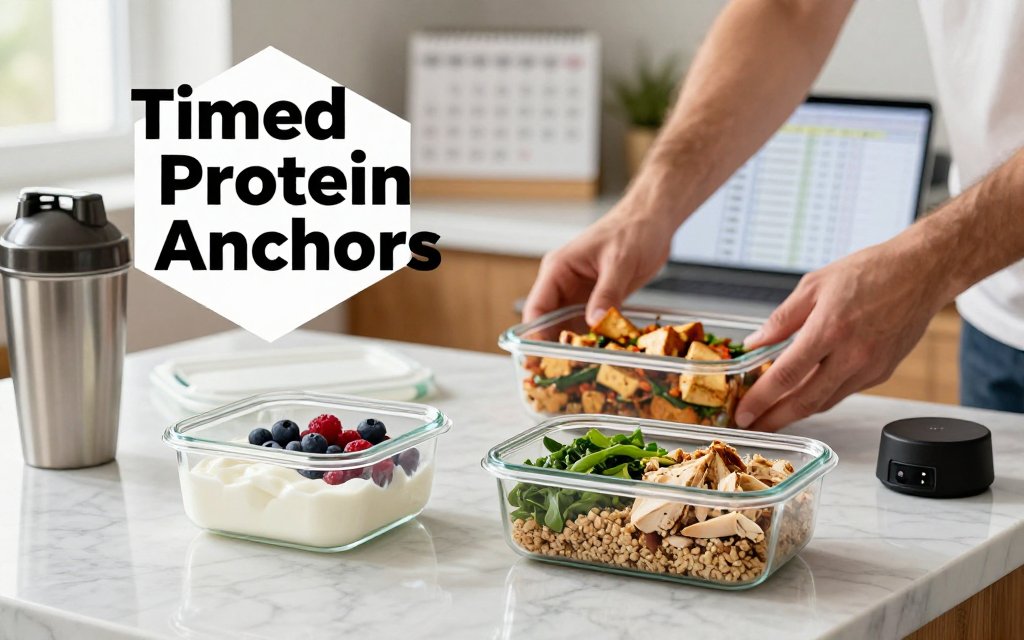
A calorie deficit is great for fat loss, but it can be rough on muscle if your protein shows up in one big dinner and a few random bites the rest of the day. Spreading protein across meals gives your body multiple chances to “turn on” muscle repair, which matters when you are training, dieting, or both. It also helps hunger. Most people notice a simple pattern: when breakfast is mostly carbs (think muffin and coffee), cravings and snack grazing creep in by midafternoon. When breakfast includes a real protein dose, appetite is steadier and it is easier to stick to your calorie target without feeling like you are white knuckling it.
The two-anchor strategy for busy days
Here is the simplest distribution plan I have seen work for real life: lock in two “anchor” meals that each hit the leucine threshold (the per meal protein dose that strongly supports muscle protein synthesis). For many adults, that looks like roughly 30 to 50 g of high-quality protein in a meal, depending on body size and protein source. Pick two meals you can control most days, usually breakfast and dinner or lunch and dinner. If each anchor meal has 35 to 50 g protein, you have already banked 70 to 100 g before you even think about snacks.
Picture a busy professional on a 1,700 calorie cut aiming for about 130 g protein. The day starts with a 9:00 a.m. meeting, then a commute, then a working lunch. If breakfast is an anchor (for example, 0 percent Greek yogurt plus a scoop of whey), that is about 350 calories and roughly 40 to 50 g protein in under 3 minutes. Lunch can be flexible: maybe a salad kit upgraded with chicken, or a burrito bowl where you prioritize the protein portion. Dinner is the second anchor: a chicken bowl, tofu stir-fry, turkey chili, or cottage cheese plus fruit if you are wiped out.
The biggest hidden benefit of anchoring earlier is appetite control later. A protein forward first half of the day tends to reduce “I need something sweet” moments that show up after 3:00 p.m., especially in a deficit. If mornings are chaotic, treat your first anchor as a “non negotiable” protein packet you can repeat without thinking. Keep it boring on purpose. Then you can spend your decision energy on the rest of your calories, like choosing a dinner out or deciding whether that afternoon snack is worth 150 calories.
Once your two anchors are set, everything else becomes “fill in based on calories.” That might mean a 150 calorie protein hot chocolate made with skim milk, a 200 calorie jerky and apple combo, or a bigger carb portion at dinner on leg day. If you use a tracker like CalMeal, this is where it shines: log your anchors first, then see how much protein and calories you have left for lunch, snacks, and any extras. You are not trying to eat perfectly, you are trying to make the day hard to mess up. If you have health concerns or a history of disordered eating, check in with a clinician before changing your diet.
Pick two meals you never skip and make them protein anchors: 35 to 50 g each. If the day gets messy, those anchors still protect muscle, keep hunger calm, and make the rest of your calories easier to manage.
Workout timing: what matters, what does not
Protein timing matters, but not in the “you have 20 minutes to slam a shake” way that fitness myths love. A practical target is to get one leucine threshold meal within about 2 to 3 hours before lifting or within about 2 to 3 hours after. If you prefer training fasted, prioritize the post workout meal. If you train after work, your dinner anchor often covers it automatically. This flexible approach lines up well with the research summary in the ISSN protein position stand, which notes benefits from protein taken either before or after training and suggests typical per serving amounts in the 20 to 40 g range.
A common fat loss mistake looks like this: you train hard, then “eat clean” with a low protein smoothie (mostly fruit) or a big salad with only a sprinkle of chicken. Calories stay low, but recovery lags, soreness feels worse, and hunger rebounds later that night. Quick fixes are simple and still deficit friendly. Aim for 30 to 50 g protein with modest carbs and low to moderate fat: whey mixed with milk plus a banana; a ready to drink protein shake plus a bagel thin; rotisserie chicken with microwavable rice; tofu and frozen veggie stir-fry over rice; or cottage cheese with cereal and berries. No perfection required, just a real protein dose.
High-protein meal templates that hit the threshold
A simple way to hit the leucine threshold consistently is to stop “guessing” and start rotating a few meals that reliably land in a protein sweet spot. For most omnivore meals, that is often about 25 to 35 g of high-quality protein. For plant-forward meals, it is often safer to aim higher, more like 35 to 45 g, because leucine density and digestibility can be lower. If you are in a calorie deficit, these templates help you keep portions predictable, so your protein goes up without your calories quietly doubling from extra oils, cheese, and snack creep.
Use a “protein anchor” at every meal, then build around it: pick one main protein (one to two palms), add two fists of produce, then choose one cupped hand of carbs (or skip it if calories are tight) plus a thumb of fats. Blending proteins is the cheat code for beginners because it smooths out gaps. Think: yogurt plus whey, tofu plus edamame, chicken plus beans. > Research on protein dosing and timing suggests muscle protein synthesis responds to a meaningful per-meal dose, and that spreading protein into moderate servings across the day can outperform the same total eaten in bigger, less frequent boluses. If you track in CalMeal, log the protein first, then “spend” the rest of your calorie budget on color, crunch, and flavor.
3 go-to templates you can rotate all week
These are designed to be boring in the best way: easy to shop for, easy to portion, and easy to repeat in a deficit. The protein and calories are rough, but close enough to keep you consistent. If your usual meal is low-protein (like oatmeal, salad, or a small sandwich), keep the base and add one “protein booster” from the notes in each template. That is often all it takes to turn a 12 g meal into a 35 g meal without blowing up calories.
A quick upgrade rule for almost any meal is “add 120 calories of protein.” That usually looks like one scoop of whey (about 20 to 25 g protein), one cup of egg whites (about 25 g protein), a single-serve cup of skyr or Greek yogurt (about 15 to 20 g protein), or 3 oz of deli turkey (about 15 to 20 g protein). If you are plant-forward, reach for extra-firm tofu, tempeh, edamame, or a soy and pea protein blend. If you want a science-backed benchmark for a meaningful per-meal dose, a classic dose-response study found muscle protein synthesis in young men was maximally stimulated at about 20 g of high-quality protein post-workout in that setting (with more leading to more oxidation), which is why many people build meals at 25 g plus for a buffer (see this protein dose-response study). (academic.oup.com)
Eating out gets easier if you order like you are building a template, not chasing “perfect macros.” Start by picking the protein-first entree (grilled chicken sandwich, burrito bowl, sashimi or poke, steak salad, egg-based breakfast). Then use two simple levers: (1) ask for double protein or add a side protein, (2) choose one calorie knob to turn down, like half rice, no chips, sauce on the side, or swapping fries for a salad. If you only remember one trick, make it this: get the protein you wanted, then adjust carbs and fats to fit your calorie target. Research on distribution also supports the idea that moderate protein doses spaced across the day can be effective. In one well-known design, spreading 80 g whey as 4 servings of 20 g every 3 hours outperformed larger, less frequent boluses for myofibrillar protein synthesis during recovery (see this protein distribution trial). (pmc.ncbi.nlm.nih.gov)
Do I need leucine supplements to hit the leucine threshold?
“Most people do not need leucine supplements if they regularly eat protein-rich meals.” If you are already hitting your per-meal protein target with foods like Greek yogurt, eggs, chicken, fish, tofu, tempeh, and protein powder, you are almost certainly getting plenty of leucine along with the full amino acid package. Supplements can be a convenience tool when a meal is low-protein (like toast or fruit), but the practical fix is usually simpler: add one protein booster that gives 20 to 30 g protein without many extra calories.
What if I only eat two meals a day, can I still distribute protein well?
“Yes, but you will want each meal to be more protein-dense, and a small protein snack can help.” With only two meals, the easiest approach is to build both meals around a larger protein anchor (often 40 to 60 g protein each, depending on your daily goal). If that feels too big, add a simple third “micro-feed,” like a shake, skyr, or edamame, that contributes 20 to 30 g protein for 150 to 250 calories. Takeaway: keep two main meals, but give yourself one planned protein bridge.
Are plant-based proteins enough to reach the leucine threshold per meal?
“Yes, plant-based meals can work, you just need slightly bigger portions and smarter combinations.” Aim for 35 to 45 g protein at a meal, and use mixes like tofu plus edamame, beans plus soy yogurt, or pea plus rice protein to improve the amino acid profile. Also pay attention to total calories because plant proteins often come packaged with extra carbs or fats (nuts, oils, large grain portions). Takeaway: pick one concentrated plant protein (tofu, tempeh, seitan, protein powder), then add legumes or grains as support, not the main event.
Ready to make your per-meal protein targets automatic? Start tracking your nutrition today with CalMeal, a free app that takes the guesswork out of calorie counting using AI-powered food recognition. Log meals faster, spot gaps in your protein distribution, and stay consistent without overthinking it. Download CalMeal now on iOS or Android and start building better meals today.
Start Tracking Your Nutrition Today
Download CalMeal for free and take the guesswork out of calorie counting with AI-powered food recognition.