Boiled egg calories run lower than a fried egg
A large egg is about 72 calories and 6 grams of protein, but the way you cook it moves the total. Here is how boiled, fried, and scrambled eggs compare, plus what the white and the yolk each add.
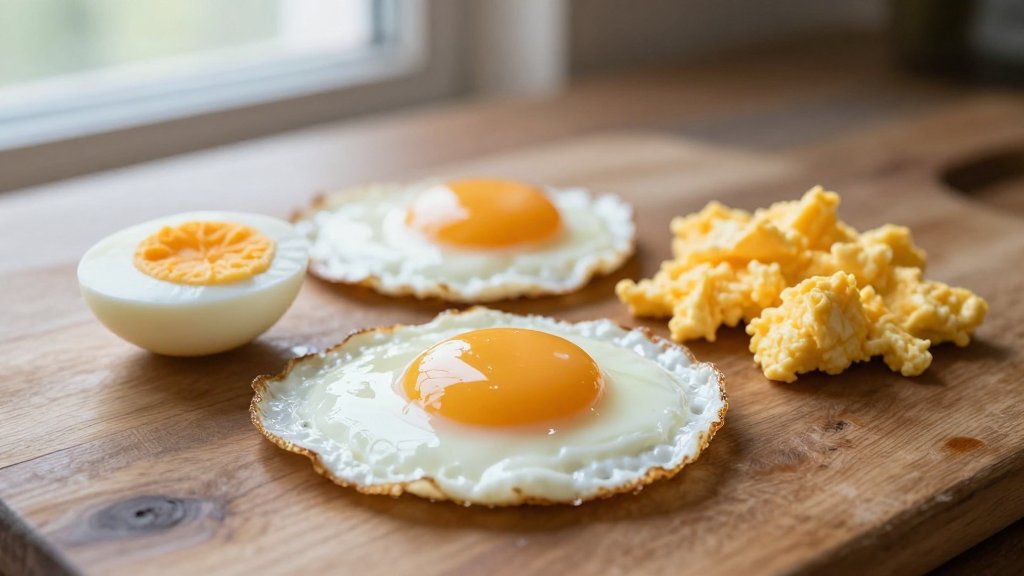
A large egg carries about 72 calories before it touches the pan, and that number barely moves when you boil it. Egg calories only climb once you add fat, so a hard boiled egg sits near 78 calories while a fried one pushes past 90. Protein holds steady at roughly 6 grams whichever way you cook it.
Most people typing how many calories in an egg really want to know if breakfast fits their day. It does, easily. Two eggs run about 144 calories and hand you close to 13 grams of complete protein, which is why they anchor so many weight loss plates. If you want the full label breakdown, our guide to reading a nutrition facts label walks through the same numbers.
A large egg scores a biological value of 100, the top mark for how completely your body can use a protein. Very few foods manage that.
How many calories in an egg by cooking method
The cooking method is the only thing that shifts the total, and it shifts it through fat, not the egg. A plain boiled or poached egg stays close to its raw 72 calories. Fry it in oil or fold it into buttery scrambled eggs and you can add 20 to 50 calories per egg, according to egg calorie data from Egg Info.
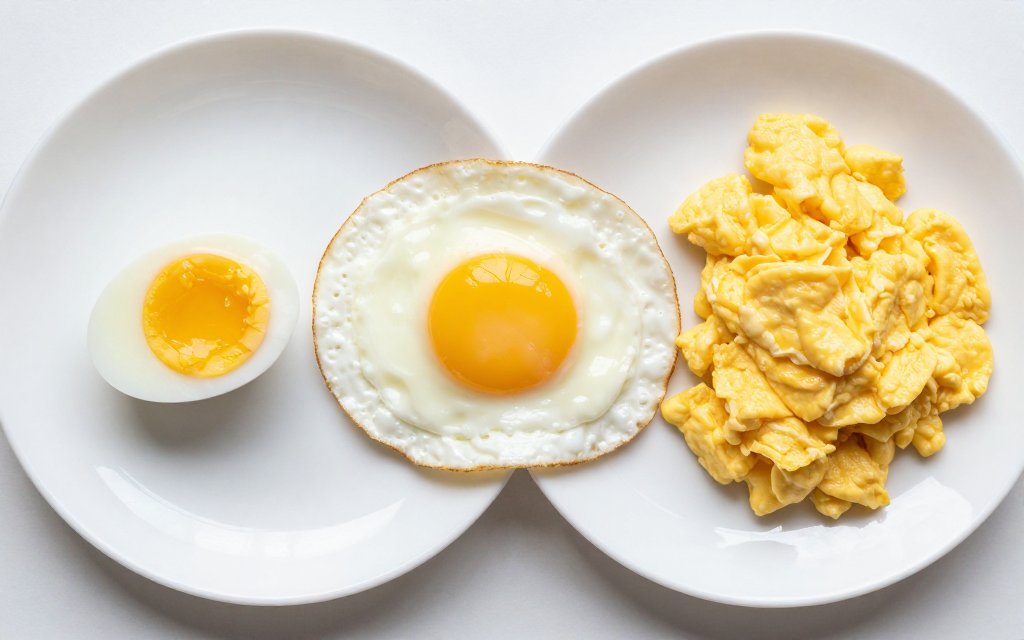
Here is the short version before the detail. The egg itself is fixed, so your real job is watching the oil, butter, or milk you add. That is also where a photo based food log earns its keep, since it catches the tablespoon of oil you would otherwise forget.
| Cooking method | Calories | Protein |
|---|---|---|
| Raw large egg | 72 kcal | 6.3 g |
| Hard boiled | 78 kcal | 6.3 g |
| Poached | 72 kcal | 6.3 g |
| Fried in oil | 90 kcal | 6.3 g |
| Scrambled | 100 kcal | 6.3 g |
Boiled egg calories and why they stay low
A boiled large egg lands around 78 calories, and nothing you do to the water changes that. There is no oil, no butter, and no milk, so the count is simply the egg. A hard boiled egg and a soft boiled egg carry the same calories, since the only difference between them is time in the pot.
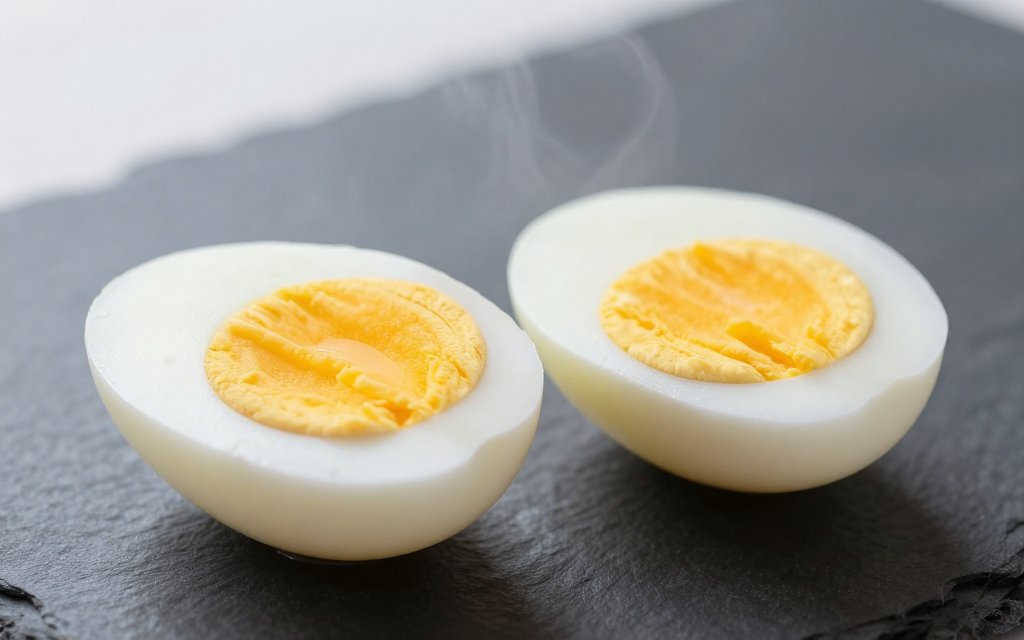
Boiling and poaching add zero calories. Every extra calorie in a cooked egg comes from the fat you cook it in.
Poaching works the same way. A poached egg holds near 72 calories because the water does the cooking, not fat. That makes boiled and poached eggs the leanest options on the plate, and an easy swap when you are trimming calories without cutting protein. For a lean protein to pair them with, compare the numbers in our breakdown of chicken breast calories.
Fried egg calories depend on the pan
Frying swings the total more than any other method, and the pan decides the range. A fried egg can be as low as 85 calories with a quick spray of oil, or as high as 120 if you fry it in a pool of butter and never drain it. The egg is still only 72 of those calories.
Cut the fat and you cut the gap. A non stick pan with a light spray keeps a fried egg near 90 calories, close to a scrambled one. The yolk stays runny either way, so you lose nothing but the extra grease.
Scrambled egg calories and the milk and butter tax
Scrambled eggs depend on what you whisk in. Eggs alone scramble to about 90 calories each, but the classic splash of milk and knob of butter pushes two eggs into the 200 to 245 calorie range, or roughly 100 to 120 per egg.
You can keep scrambled eggs light without losing the soft texture. Swap butter for a spray oil, use a splash of water instead of milk, and stir over low heat. That keeps a two egg scramble near 180 calories, while the egg nutritional information stays the same on protein.
How much protein in an egg, white versus yolk
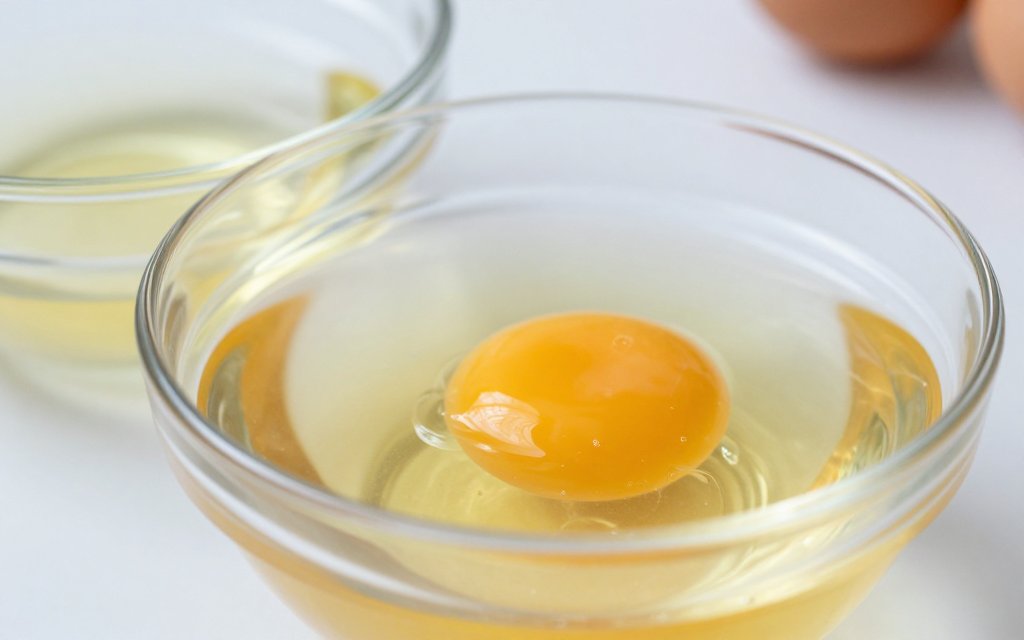
How much protein in an egg comes down to a simple split between the two parts. A whole large egg holds about 6.3 grams of protein. The white carries roughly 3.7 grams of that, and the yolk adds about 2.7 grams along with the fat and most of the vitamins.
| Egg part | Calories | Protein |
|---|---|---|
| Whole egg | 72 kcal | 6.3 g |
| Egg white | 17 kcal | 3.7 g |
| Egg yolk | 55 kcal | 2.7 g |
How many grams of protein in an egg
How many grams of protein in an egg is easy to scale. One large egg is about 6 grams, two eggs give roughly 13, and a three egg omelette lands near 19 grams before any cheese or fillings. That puts eggs in the same league as a small chicken breast for protein density, without the prep. If you track protein daily, our list of high protein foods ranked by calorie shows where eggs sit against the rest.
Egg protein compared with other foods
Egg protein is complete, meaning it holds all nine essential amino acids in the ratio your body wants, which few foods match. Gram for gram it costs fewer calories than most cheese and rivals dairy like Greek yogurt. If yogurt is your other go to, see how it stacks up in our Greek yogurt protein guide.
In one eight week study, people who ate eggs for breakfast lost 65 percent more weight than those who started with a bagel of the same calories.
Egg calories in your weight loss maths
Here is where the cooking fat matters in money and outcomes, not just macros. Say you eat two eggs a day. Boiled, that is about 156 calories. Fried in butter, closer to 220. Over a month that swing is near 1,900 calories, or more than half a pound of fat, from nothing but the fat in the pan.

None of that means you should skip the yolk or fear a fried egg. It means the fat you cook in is the lever, so log it. A quick photo of your plate keeps the oil honest and the total real, which is the whole point of tracking instead of guessing.
Common questions about egg nutrition facts
How many calories in 2 eggs?
Two large eggs come to about 144 calories raw or boiled, with roughly 13 grams of protein. Fry them in oil and expect closer to 180, or up to 240 if butter is involved. The protein stays near 13 grams no matter how you cook them, so the calories in 2 eggs move only with the fat.
Are hard boiled egg calories different from raw?
A hard boiled large egg is almost identical to raw, around 72 to 78 calories. Boiling adds no fat and no calories, so the small difference comes from water weight, not cooking. That makes boiled eggs one of the most predictable snacks you can log.
How many calories in a scrambled egg with milk?
A scrambled egg with a splash of milk and a little butter runs about 100 to 120 calories, versus 90 for eggs scrambled dry. Two of them with the usual add ins land near 220. Using spray oil and water instead keeps the calories in a scrambled egg closer to the plain number.
Eggs are one of the easiest wins in a food log, but only if you count the fat you cook them in. Take the guesswork out of tracking eggs and every other meal by snapping a photo and letting the app do the maths. Start tracking your nutrition today for free. Get the app here: iOS or Android.
Start Tracking Your Nutrition Today
Download CalMeal for free and take the guesswork out of calorie counting with AI-powered food recognition.