CGM and Calorie Tracking, Eat For Stable Glucose
A practical guide to using CGM patterns plus calorie and macro tracking to build meals that keep glucose steady, reduce post-meal crashes, and support fat loss. Includes real food examples, a simple spike-prevention checklist, and meal ideas you can rotate all week.
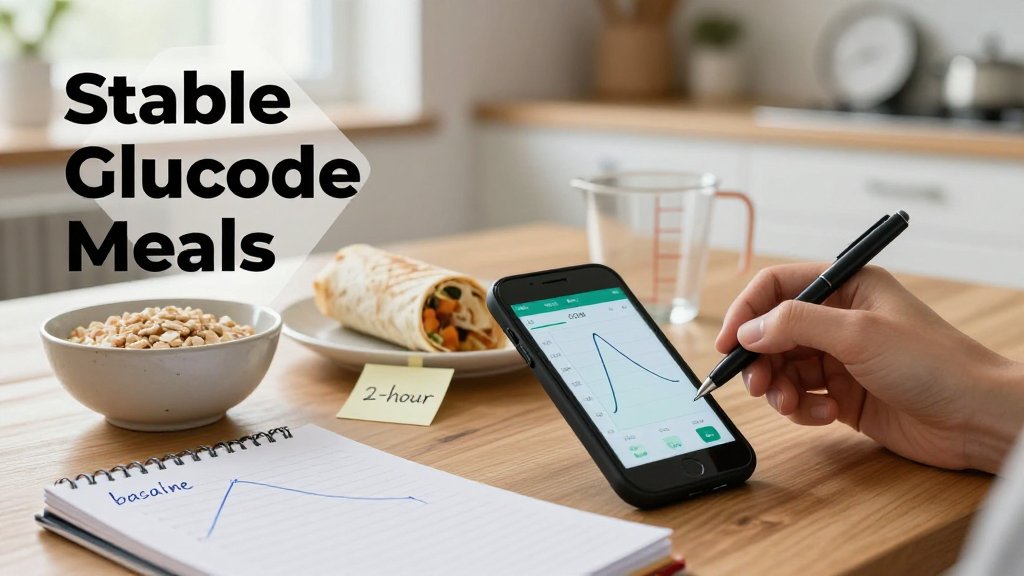
You can hit your calorie target and still feel wiped out by midafternoon, hungry again an hour after lunch, or foggy after a “healthy” snack. A continuous glucose monitor (CGM) reveals the missing piece: different foods can drive very different glucose spikes, crashes, and cravings, even when calories look identical. In this guide, you will learn how to interpret your post-meal CGM patterns, identify trigger meals, and combine that data with calorie and macro targets so you can lose fat while staying steady, focused, and fueled.
How to read CGM patterns after meals
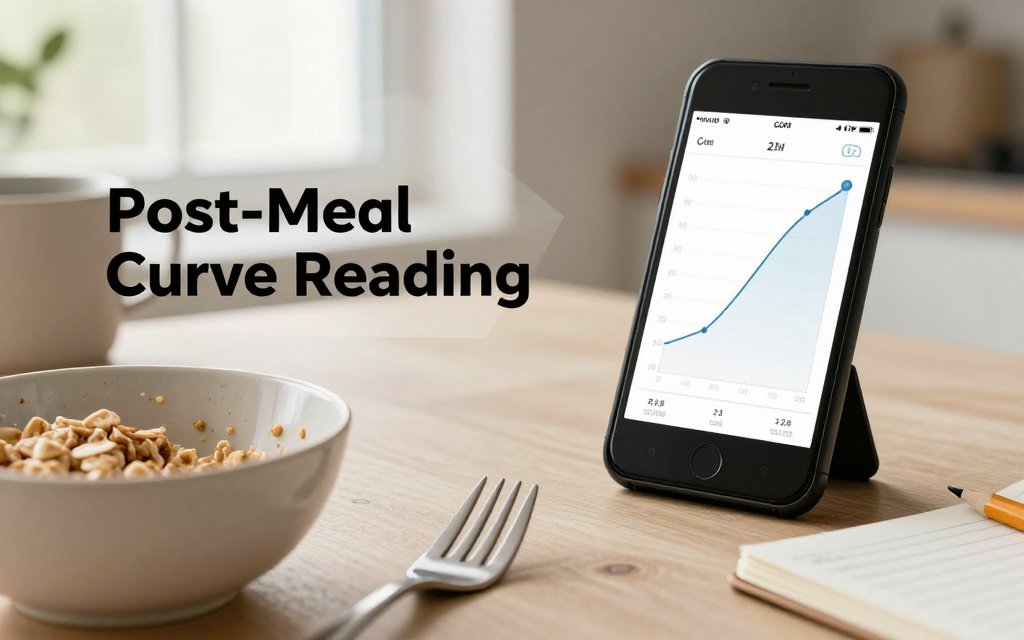
The simplest CGM skill is not “fixing” your numbers, it is noticing your repeatable patterns. After you eat, your glucose line usually rises, peaks, and then settles back down over the next 2 to 3 hours. Your job is to learn what a “normal-for-you” rise looks like, and what a “that meal did not work for me” curve looks like. This is also where calorie tracking keeps you grounded. A big spike after a 650 calorie restaurant burrito means something different than a similar spike after a 280 calorie bowl of oats, because the portion size, fat, and overall day’s intake change what you should adjust next.
Your 2-hour post-meal snapshot, what to look for
Use a practical “2-hour snapshot” so you do not get lost in minute-by-minute noise. First, glance at your baseline, ideally 10 to 15 minutes before the first bite, then notice when you hit your peak, and how quickly you drift back toward where you started. Many people peak somewhere around 1 hour after eating, but the timing can shift with meal composition and digestion speed. In one study of healthy adults without diabetes, average post-meal peaks were typically in the 120 to 130 mg/dL range depending on the meal, showing that some rise can be normal even in healthy people (healthy adult meal peaks). If your CGM consistently stays elevated past 2 to 3 hours after similar meals, that is a useful pattern to discuss with a clinician, especially if you have diabetes or use glucose-lowering medication.
Next, watch the “come-down,” because a fast drop is often what people feel, even if the peak was not extreme. If you spike hard and then feel hungry, irritable, or snacky soon after, the meal likely needs more protein, more fiber, or fewer fast carbs. Example: a breakfast of a plain bagel (about 270 calories) plus 2 tablespoons of jam (about 100 calories) and a 12 oz orange juice (about 160 calories) is roughly 530 calories, but it is mostly fast-digesting carbs. Many people see a quick rise, then a noticeable slide that lines up with cravings by late morning. Try keeping calories similar while changing the structure: swap juice for a whole orange, add 2 eggs (about 140 calories) or 3 to 4 oz turkey (about 120 to 160 calories), and add berries or veggies for volume and fiber. Also remember that sleep, stress, and a tough workout the day before can shift the exact curve, even for the same meal.
One reason the same meal affects people differently is that your baseline is not always the same. If you start the meal already running higher (poor sleep, high stress, an earlier snack you forgot about, or a sedentary morning), your peak can look “worse” even if the meal is identical. If you took a brisk walk before lunch, you might see a smaller rise from the same sandwich. That is why logging context matters as much as logging food. Calorie tracking adds another layer: if you react strongly to 60 g carbs at dinner, that does not mean you need to slash carbs to 10 g. It might mean you do better keeping carbs moderate, like 35 to 50 g, then pairing them with 25 to 35 g protein and a high-fiber side, while keeping total dinner calories aligned with your goal.
Make patterns obvious by tagging just a few things right after you log the meal. Keep it simple and consistent for 7 days: tag the carb type (rice, bread, fruit, sweets), your best estimate of protein (under 20 g, 20 to 35 g, over 35 g), and whether you moved after eating (no walk, 10-minute walk, workout). Add one “life” tag when it applies: poor sleep, high stress, or late meal. This habit takes 10 seconds, but it turns your CGM graph from a mystery line into a repeatable story. After a week, you can filter and see, for example, that “cereal + poor sleep” spikes higher than “oatmeal + 30 g protein,” or that “pasta + 10-minute walk” returns to baseline faster than “pasta + couch.”
Pick one meal you eat often, log it the same way for 3 days, then compare the curves. If you see a sharp peak plus an early hunger dip, add 20 to 30 g protein or 5 g fiber first.
The common mistake, chasing perfect flat lines
A common trap is trying to force a perfectly flat line by eliminating anything that causes a rise. That approach often backfires because it can push you toward overly restrictive eating, and it can make your plan hard to sustain. Some rise after meals is expected, the goal is fewer big spikes and fewer big crashes. If you only chase the lowest possible curve, you might start fearing fruit, oats, potatoes, or beans, even though they can fit well in a calorie-controlled, high-fiber plan. If you want a clinician-grounded overview of how CGM is used alongside nutrition choices, the ADA resource CGM nutrition guidance PDF is a helpful reference. For any health concerns, especially if you have diabetes or a history of hypoglycemia, it is smart to review CGM patterns with your doctor.
Calories still matter for weight loss, even if your glucose looks “stable.” You can build a very flat CGM curve with calorie-dense foods by accident: a “healthy” snack plate of 2 oz cheese (about 220 calories), 2 tablespoons peanut butter (about 190 calories), and a handful of almonds (about 170 calories) can hit 580 calories quickly. Your CGM might look calm because the meal is higher fat and lower carb, but your weekly calorie average can creep up and stall fat loss. This is where pairing CGM with calorie tracking is powerful: CGM helps you tune meal composition, and calorie tracking helps you tune portion size. Together, they keep you from overcorrecting by cutting carbs too hard, while still protecting your deficit.
A simple, sustainable target is to keep your favorite carbs, but change the “company” they keep on your plate. If you love a 60 g carb bowl of rice (about 1.5 cups cooked, roughly 300 calories), try a smaller portion like 3/4 cup (about 150 calories), then add 5 oz chicken breast (about 230 calories) and 2 cups roasted broccoli (about 100 calories). You still get a satisfying carb, your protein and fiber go up, and the total meal can land around 480 calories with better hunger control. If you prefer sweet breakfasts, a high-protein bowl is an easy win. You can start with ideas from cottage cheese calorie bowls, then watch how adding 25 to 35 g protein changes both your 2-hour curve and your late-morning cravings.
Combine calorie tracking with CGM for fat loss
Fat loss is still mostly about energy balance: if your average intake is lower than what you burn, your body has to make up the difference, often by using stored energy. A CGM does not replace calorie tracking, but it can make a calorie deficit feel easier. Big glucose spikes and hard drops can line up with “snack attacks,” afternoon brain fog, and the kind of hunger that makes your planned 500-calorie dinner turn into 900. If you are new to CGM basics, this continuous glucose monitoring guide explains what the sensor is actually measuring and why food timing and meal makeup matter.
The sweet spot is pairing both tools: use calorie tracking to set the budget, then use CGM feedback to choose meals that keep you full and steady inside that budget. Practically, that means you do not need “perfect” glucose to lose fat, you want predictable glucose. Start with a modest deficit you can repeat (many people do well around 250 to 500 calories per day), then clean up the meals that consistently create big peaks for you. If your logs are full of “mystery bites” from packaged snacks, the ultra-processed foods logging checklist can help you tighten accuracy without turning meals into a math project.
Macros for blood sugar control that still feel doable
If you want one simple rule that works for both stable glucose and fat loss, try this meal order: protein first, fiber second, carbs third. For most adults, a doable protein target is 25 to 40 g per meal (think: 5 to 7 oz chicken breast, a can of tuna, 1 cup cottage cheese, or 1.5 to 2 cups nonfat Greek yogurt). Daily protein lands well for many people in the 100 to 140 g range, or roughly 0.7 to 1.0 g per pound of goal body weight (ask your clinician if you have kidney concerns). Aim for 25 to 35 g fiber per day, and you will often see smoother CGM curves plus better fullness.
Carbs tend to spike higher when they are liquid (soda, juice, sweet coffee drinks, many smoothies), low-fiber starches (white bread, crackers, pretzels, rice cakes), or sweets eaten on an empty stomach (candy before lunch, pastries as breakfast). Fiber is the easy lever because it adds volume for low calories: add 1 to 2 cups of vegetables, a piece of fruit, beans, or lentils. Protein is the other easy lever because it is filling and “anchors” the meal. Fat can blunt a spike for some people, but it can also quietly blow up calories, so measure it at first: 1 tablespoon olive oil is about 120 calories, and 2 tablespoons peanut butter is about 190 calories.
| Meal | CGM | Fix |
|---|---|---|
| Sweetened latte | Quick rise | Pair protein |
| Bagel + jam | Big spike | Add eggs |
| Sushi roll | Spike then dip | Edamame side |
| Chicken salad wrap | Small bump | Extra veggies |
| Oatmeal + berries | Moderate rise | Add Greek yogurt |
Think of your CGM like a speedometer. You are not trying to drive at zero mph, you are trying to avoid flooring it and slamming the brakes. Smooth, repeatable meals usually feel easier to stick with.
Use CGM to find your best carbs, not to fear carbs
Your CGM is most helpful when you run small, fair tests. Keep calories and protein similar, then swap the carb source and compare your peak and how you feel two hours later (energy, cravings, focus, workout readiness). Example lunch template: 500 to 650 calories, 35 g protein, 10+ g fiber. Day 1: 5 oz chicken plus 1 cup cooked white rice plus veggies. Day 2: same chicken plus 1 cup beans or lentils plus veggies. Day 3: same chicken plus 10 oz potato plus veggies. Many people discover they do fine with potatoes or oats, but white rice or cereal is their “fast spike” carb, especially when portions creep up.
This is also where “protein first” has real, repeatable value. Research on pre-meal protein has found lower post-meal glucose in some settings, including studies using whey protein before a higher-carb meal, likely through digestion and hormone effects. If you want to nerd out, this protein preload and glycemia study is a solid example. You do not need supplements to apply the idea: try a starter like 2 eggs, a string cheese, or a half cup cottage cheese, then eat the carbs. For workouts, carbs can be useful, just pick the versions that give you energy without a crash, and log portions so the deficit stays intact.
Meal planning rules to prevent glucose spikes
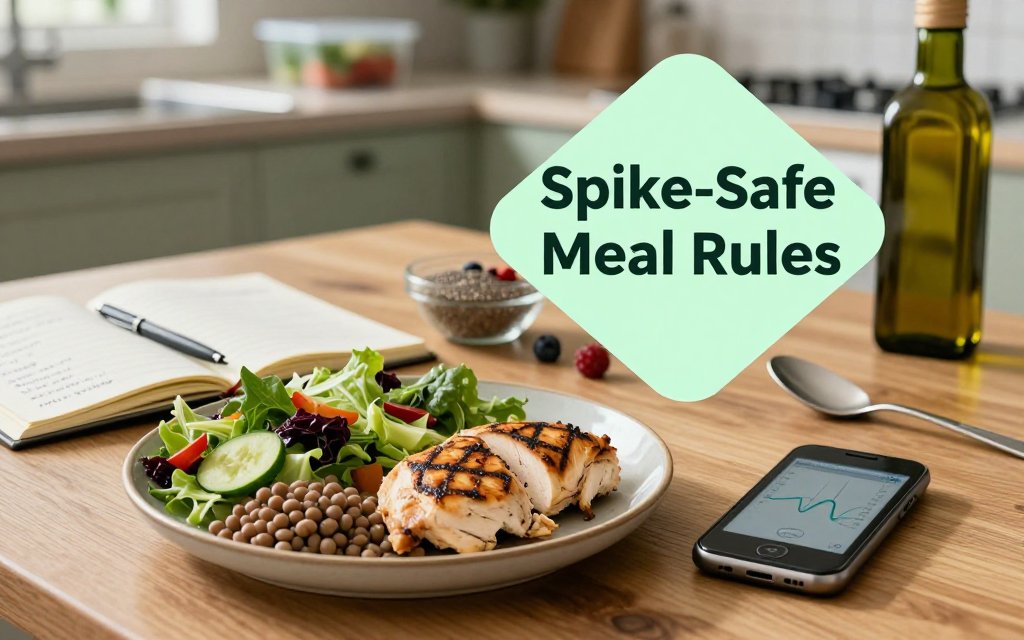
Your CGM is basically a real-time “yes or no” test for your meals, but the win is turning those readings into a repeatable plan you can use on busy weekdays. The fastest way to learn is to run simple experiments, then write down what you did so you can repeat the meals that kept your curve calmer. If you use a CGM app, make the habit easy by using in-app logging so your glucose line has a clear story behind it (meal, timing, walk, stress, sleep). Here is exactly what that looks like in practice: log food, activity, notes right after you eat, then compare your next two hours to the meals that worked.
The stable plate template, protein, fiber, smart carbs
Use this as your default plate, then adjust only one knob at a time based on your CGM: (1) lean protein, (2) high-fiber plants, (3) a “smart carb” portion that you earn with good CGM response. For many people targeting fat loss, a solid main meal lands around 450 to 650 calories with 30 to 40 g protein. Example dinner: 5 oz grilled chicken breast (about 230 calories), a big salad with cucumber, tomatoes, and 1 tbsp olive oil (about 150 calories), plus 3/4 cup cooked lentils (about 170 calories). If your CGM stays steady, keep the template and rotate flavors, not the structure.
Protein and fiber are your “speed limits” for glucose. Protein tends to slow how quickly a meal leaves your stomach, and it also boosts fullness, which makes it easier to maintain a calorie deficit without white-knuckling hunger. Fiber does a similar job by slowing carbohydrate absorption and adding volume for very few calories. A simple target is 8 to 12 g fiber at each main meal. Real-life combos that work well: nonfat Greek yogurt plus berries and chia; tofu stir-fry with broccoli and snap peas; turkey chili loaded with beans; or eggs with sautéed spinach and a side of raspberries. If a meal spikes you, check if it was low-protein or low-fiber first.
Now the “smart carbs” part: you do not need to ban carbs, you need to pick the ones your body handles well and control the portion. Great CGM-friendly starters include lentils, beans, oats, and intact whole grains like barley. Another surprisingly helpful trick is leftover starch: potatoes (or rice) cooked, cooled in the fridge, then reheated can be easier on some people’s CGM curve than the same food eaten piping hot, and it often feels more filling. If you want a simple carb test, keep everything else the same, then compare 1 cup cooked white rice versus 1 cup cooked lentils. Your CGM will tell you which one you “pay less glucose” for.
Tiny tactics that change your CGM curve fast
If you only change one thing this week, change the order you eat. Start with salad or veggies, then protein, and save bread, rice, or dessert for last. That one tweak often softens the peak and makes it show up later and lower on a CGM graph. Next, move a little after you eat. Even a short walk helps your muscles use circulating glucose, especially after dinner. In a small randomized crossover study in older adults at risk for impaired glucose tolerance, three 15-minute postmeal walks improved 24-hour glucose control, and the post-dinner window stood out as particularly important. For busy days, set a timer for 10 minutes and just start.
Build your plate in the same order every time: vegetables first, protein second, carbs last. Then watch your CGM. If the curve still jumps, shrink the carb portion and add a 10-minute walk.
A few more fast wins: choose whole fruit over juice (an orange or apple is usually 60 to 100 calories, while a large juice can be 200 to 300 calories and hits faster). If vinegar or fermented foods work for your stomach, try a simple side like a quick cucumber salad with vinegar, or add kimchi with a rice bowl. Keep it food-based and modest, and skip it if it aggravates reflux. Finally, if you spike even on “good” meals, look beyond the plate: caffeine can push some people higher, and stress can do it even without carbs. Try a smaller coffee, drink it after breakfast, and add a two-minute slow-breathing reset before eating.
Here are three plug-and-play meals that often create steadier CGM lines while still fitting calorie goals. Breakfast (400 to 500 calories): 1 cup nonfat Greek yogurt, 1 cup berries, 1 tbsp chia, plus 1 oz walnuts. Lunch (500 to 650 calories): tofu or chicken veggie stir-fry over 3/4 cup cooked barley, with extra broccoli and mushrooms. Dinner (500 to 700 calories): salmon, roasted Brussels sprouts, and a measured serving of reheated potatoes with a side salad. If your CGM shows a spike, do not blame willpower. Reduce the carb portion by one-third, add more vegetables, and retest. For any glucose concerns or medication questions, check in with your clinician.
Stable blood sugar meal ideas you can rotate
If you want smoother CGM lines and steady fat loss progress, the biggest win is having a short list of meals you actually like, and repeating them. Rotation beats reinvention. A practical target for many busy adults is 350 to 500 calories at breakfast, 450 to 650 at lunch, 500 to 750 at dinner, plus one planned snack around 150 to 250. That creates a predictable daily calorie range, and it makes your CGM data easier to interpret because you are not changing ten variables at once. Track the meal in CalMeal, note what your CGM does 60 to 120 minutes later, then keep the meals that feel filling and give you a gentler rise.
Metabolic health meal ideas for real life schedules - Outline 2 breakfast options, 2 lunches, 2 dinners, and 2 snacks with approximate macro callouts and easy swaps. Include at least one vegetarian option and one “eating out” option. Add quick portion guidance like palm-sized protein and a fist of high-fiber carbs.
Use this simple plate template for most meals: 1 palm-sized protein (about 25 to 35 g protein), 1 to 2 fists of non-starchy veggies, 1 fist of high-fiber carbs (often 25 to 40 g carbs), and 1 thumb of fats (about 8 to 12 g fat). If your CGM tends to climb fast, keep carbs closer to one fist at that meal and push veggies up to two fists. If you train hard or walk a lot, you may tolerate a slightly bigger carb portion without a big spike. The goal is not perfection, it is consistency and portion repeatability so your CGM feedback is actually useful.
Two small habits can make the same calories look better on your CGM: protein and fiber first, then starchier carbs; and a 10 to 15 minute walk after meals. Research on food order suggests that eating vegetables and protein before carbohydrates can lower post-meal glucose excursions in people with prediabetes and related groups, even when the foods are the same. If you want the nerdy details, see the full text in this food order study. You can apply it at home by starting with salad, veggies, or your protein, then finishing with rice, bread, or fruit.
To make this rotation feel effortless, pick one breakfast and one lunch you can repeat Monday to Friday, then rotate dinners. For home meals, build your grocery list around a few anchors: a family pack of chicken, a bag of frozen veggies, microwave rice or quinoa, Greek yogurt, eggs, and a high-fiber wrap. For eating out, the same template works: order a bowl or plate with double protein, add vegetables first, and keep rice, fries, or bread to a fist-sized portion. If a sauce is sweet, ask for it on the side and use 1 to 2 tablespoons. Log it once in CalMeal, then save it as a repeat meal.
A single “spike” is just a data point, not a grade. Look for patterns across 3 to 5 repeats: portion size, sleep, stress, and timing. Use your next meal to experiment with protein first and a short walk afterward.
FAQ: CGM and calorie tracking for stable glucose
CGMs are awesome for feedback, but they can also feel confusing at first. A good beginner approach is to keep your calories consistent, keep your protein steady (many people aim for 25 to 40 g per meal), and only change one lever at a time, like swapping white rice for quinoa or reducing a carb portion from two fists to one. Also remember that CGMs measure interstitial glucose, not a fingerstick blood sample, so short delays and small differences are normal. If you have diabetes, are pregnant, or take glucose-lowering meds, talk with your clinician about what targets make sense for you.
What should I eat to avoid glucose spikes after meals?
Start with a high-protein, high-fiber base and keep carbs measured. A simple rule is: palm of protein, 2 fists of veggies, and one fist of carbs. Examples: chicken salad plus a small baked potato; salmon, broccoli, and quinoa; Greek yogurt with berries and chia. If you want an easy CGM hack, eat veggies or protein first, then carbs last, since food order can reduce post-meal glucose rises for some people (see the study on meal order).
Can I lose weight if my CGM spikes sometimes?
Yes. Weight loss is driven mostly by sustained calorie balance, not having a perfectly flat CGM line every day. Spikes happen because of normal life: a bigger carb serving, a higher intensity workout, poor sleep, or a more processed meal. Use your CGM as coaching, not judgement. If you see a bigger rise, check the basics: did protein drop below 25 g, did fiber drop below 6 to 8 g, or did carbs double? Adjust one thing next time, log the change in CalMeal, and look for a better pattern across repeats.
Why does the same meal spike my glucose on some days but not others?
Your glucose response is not only about the meal, it is also about the day. Poor sleep, stress, illness, menstrual cycle phase, dehydration, and even how active you were before eating can shift your curve. Timing matters too: the same bowl of oatmeal may look gentler after a morning walk, and sharper after a long meeting with lots of coffee. If a reading seems weird, wait for a second data point: compare the next 2 to 3 times you eat it, keep portions consistent, and note sleep and steps. For medical concerns, ask your doctor.
Ready to stop guessing and start tracking your nutrition today? Download CalMeal for free and simplify calorie counting with AI-powered food recognition, fast logging, and clear macro totals that pair perfectly with CGM insights. Build meals that keep you satisfied and stable, then stay consistent without the mental math. Get CalMeal now on iOS or Android.
Start Tracking Your Nutrition Today
Download CalMeal for free and take the guesswork out of calorie counting with AI-powered food recognition.