Cottage Cheese Calories: High Protein Bowls That Fit
Cottage cheese is one of the easiest high-protein, low-calorie staples. This guide breaks down cottage cheese calories and macros by serving size, then shows you how to build viral-style bowls, whipped cottage cheese spreads, and meal-prep combos that actually fit your calorie budget.
Cottage cheese is everywhere right now, and for good reason. It is one of the easiest ways to add protein to a meal without cooking. The problem is that a “simple” bowl can swing from a light snack to a 700-calorie surprise once toppings pile up. In this guide, you will learn cottage cheese calories and macros by serving size, how different fat levels compare, and foolproof high-protein bowl formulas that taste like the viral versions while still fitting weight loss and macro tracking.
Cottage cheese calories and macros by serving
Your calorie tracker is only as calm as your baseline. Cottage cheese is a perfect example because two tubs that look almost identical can be 80 calories or 110 calories per “scoop,” and both can still be high protein. The biggest driver is milkfat percentage (fat free, 1%, 2%, 4% and up), then what gets mixed in (extra cream dressing, fruit, honey, granola, nuts). Serving sizes also vary by brand, with many labels calling 1/2 cup anywhere from about 110 g to 120 g. That is why a bowl logged by volume can drift fast, even when you feel like you are eating the same thing every day.
For an anchor number, creamed cottage cheese (often around 4% milkfat) comes in at roughly 98 calories and about 11 g protein per 100 g, per USDA FoodData Central. Translate that to real life: if your brand’s 1/2 cup serving is 110 g to 113 g, you are usually looking at about 105 to 111 calories before toppings, with protein still landing around the low teens. Low-fat 2% options commonly sit around 90 calories per 1/2 cup with similar protein, while fat free versions are often around 80 calories per 1/2 cup but may vary more in protein depending on how “dry” or “dressed” the curds are.
Your cheat sheet: calories and protein per scoop
If you build bowls, these are the portions worth memorizing: 1/2 cup, 3/4 cup, and 1 cup. Think of 1/2 cup as the standard label serving (often 110 g to 120 g). A practical range for that “scoop” is 80 to 95 calories for fat free, 85 to 105 for low-fat 1% to 2%, and 105 to 125 for 4% creamed versions. Protein stays impressively steady: most plain options land around 10 to 14 g protein per 1/2 cup, then scale up with volume. For 3/4 cup, you are usually at 120 to 170 calories and 15 to 21 g protein. For 1 cup, plan on roughly 160 to 230 calories and 20 to 28 g protein, depending on fat level and brand.
The clean takeaway is simple: the protein stays high across versions, and most of the “extra” calories come from fat and toppings. Example: a 2% bowl might be 90 calories before add-ins, then 1 tablespoon honey adds about 64 calories, 2 tablespoons peanut butter adds about 190 calories, and 1/4 cup granola often adds around 110 to 140 calories. That is how a tidy 90 calorie base quietly turns into a 350 to 450 calorie snack. If you want a low-calorie, high-protein bowl, go savory (cucumber, tomato, chives, salsa, cracked pepper), or go sweet but measured (berries, cinnamon, a zero-calorie sweetener, and a weighed sprinkle of nuts).
If you want cottage cheese to stay a reliable macro hack, pick a brand and fat level, weigh one typical bowl once, and always log toppings. Most surprise calories come from cream, nuts, honey, and granola.
Why brands differ (and why your app number might not match)
Brand differences are not random, they are recipe choices. Curd size (small curd vs large curd) changes how much liquid sits between curds and how densely it packs into a measuring cup. Milkfat percentage is obvious, but added cream dressing is the sneaky one, because it raises calories without changing the “cottage cheese” name on the front. Sodium can swing a lot too: one plain tub might be around 330 mg sodium per 1/2 cup, another can be closer to 380 mg, and single-serve cups can be higher. Even protein can differ: for example, one 2% brand’s 1/2 cup might list 14 g protein at 90 calories, while another 2% lists 13 g protein at 90 to 100 calories because the serving weight and dressing differ.
The accuracy rule that saves the most frustration is boring but effective: track the exact label for your exact brand, then weigh once to learn what your “usual bowl” really is. Measuring cups are fine for consistency, but they are not great for accuracy because cottage cheese is lumpy and holds liquid. If you eat it drained, log it drained, since pouring off whey reduces grams and can slightly change calories for the same looking scoop. Also avoid logging “2 scoops” unless you know the grams, because scoop size changes with spoon shape and how tightly you pack it. If you are trying to be extra consistent (especially with appetite changes), build the habit of track protein fiber calories the same way each day, and check with your clinician for personalized targets if you have health concerns.
Low fat vs full fat cottage cheese calories
The biggest “hidden” variable in cottage cheese calories is the milkfat percentage. Protein stays fairly steady across most tubs because the curds are still curds, but fat adds calories fast (9 calories per gram). That is why a 4% cottage cheese can feel like the same food as a 2% version on your spoon, yet it can be noticeably higher in calories by the time you finish a bowl. If your goal is weight loss, this is good news because you can keep the high-protein vibe and simply choose a lower fat percentage to free up calories for bigger portions, fruit, or crunchy add-ons.
To make this comparison actually useful, keep your serving size consistent. Most labels use 1/2 cup (often around 110 to 113 g), and that is the easiest way to compare tubs quickly. Also watch for brand-to-brand differences: some “low-fat” products are 1% milkfat, some are 2%, and some brands tweak texture by changing how much cream dressing is mixed in. The practical takeaway is simple: if you are choosing cottage cheese mainly for protein, fat percentage will change the calories more than it changes the protein, so your bowl can swing from “light snack” to “mini meal” without looking different.
Calories shift more than protein
Here is a quick, real-world snapshot using common brands and a consistent 1/2 cup serving. Notice how protein clusters around 13 to 14 g, while calories climb as you move toward whole milk versions. This is exactly why “I eat cottage cheese every day” can mean very different calorie intakes depending on the tub you buy. The numbers below are pulled from a consumer-friendly label comparison in the CSPI cheese chart, which lines up multiple products side by side.
| Option | Calories | Protein |
|---|---|---|
| Good Culture low-fat | 80 | 14g |
| Daisy 2% low-fat | 90 | 13g |
| Breakstone’s 2% | 100 | 13g |
| Good Culture whole | 110 | 14g |
| Daisy 4% | 110 | 13g |
Run the math on your usual routine and the difference becomes concrete. If you eat 1/2 cup daily, moving from a 110 calorie option to an 80 calorie option saves about 30 calories a day, which is about 210 calories a week without touching protein much. If you often do a “double scoop” (1 cup), that gap can be closer to 60 calories per day. Over time, those small swaps can give you room for toppings that add volume and micronutrients, like berries, diced cucumber, tomatoes, or a handful of high-fiber cereal for crunch. The win is not that full-fat is “bad,” it is that you get to choose where your calories go.
The simplest decision rule for your goal
If you are in a calorie deficit, low-fat cottage cheese often gives you more volume per calorie, which can make daily tracking easier. If hunger is your biggest problem, a moderate or full-fat portion can feel more satisfying, especially if you tend to snack at night or your meals run long between breaks. A practical middle ground that works surprisingly well is mixing half low-fat and half full-fat in the same bowl, so you keep the richer taste while controlling calories. For extra help building bigger-looking bowls without blowing your budget, pair this section with energy density hacks for fewer calories and you will have a simple system you can repeat on busy weekdays.
Quick label check: if two tubs have similar protein but one has double the calories, fat is usually the reason. Pick your fat level first, then use toppings like fruit or crunchy veg for volume.
For weight loss, my favorite default is 1% or 2% because it still tastes creamy, but it is easier to fit into a day where you also want peanut butter, olive oil, or a restaurant meal. For maintenance, choose based on preference and meal timing: low-fat works great in a big lunch bowl with lots of produce, while full-fat can be a smart smaller snack that holds you over. For muscle gain, full-fat can help you hit higher calories and fat macros without adding a ton of food volume, especially if you are already eating plenty of carbs around training. If you go full-fat, keep it portion-aware, like 1/2 cup plus fruit, instead of mindlessly polishing off the tub.
Sodium and digestion notes people do not expect
Cottage cheese can be saltier than people expect, and on high-sodium days some people feel “puffy” or see a higher scale weight the next morning from water retention. That is not fat gain, but it can be annoying if you are tracking progress closely. The fix is practical: compare labels across brands, consider lower-sodium versions if you eat cottage cheese daily, and keep your bowl balanced with potassium-rich produce like tomatoes, cucumber, berries, or melon. Those additions also add fluid and fiber, which can help digestion feel smoother. If dairy tends to bother your stomach, try smaller servings, eat it with a full meal, or choose lactose-free options when available. For any ongoing digestive or medical concerns, check in with a clinician you trust.
High-protein low-calorie cottage cheese bowl formulas
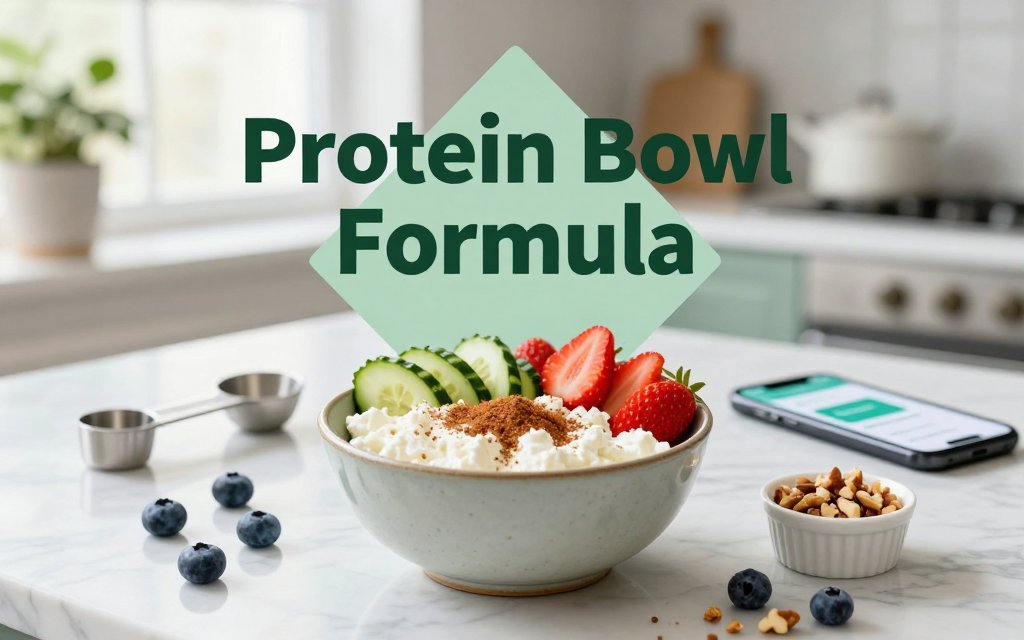
You can make cottage cheese bowls feel like the viral versions and still keep calories predictable by treating them like a formula, not a free-for-all. The goal is a bowl that lands in a repeatable range (often 250 to 350 calories) while still delivering 20 to 30 grams of protein. Start by picking a base portion you can memorize: for many people, 3/4 cup of low-fat cottage cheese is the sweet spot. It is filling, quick, and easy to log. From there, you build volume with fruit or vegetables, layer in flavor with seasonings or sauces, and then add crunch in a measured amount so the calories do not quietly double.
The 4-part bowl formula that stays on budget
Nutrition databases make the pattern pretty clear: a bowl stays low-calorie when most of the volume comes from cottage cheese plus fruit or vegetables, and the calorie spike usually comes from nuts, granola, honey, and peanut butter. For example, USDA FoodData Central entries for low-fat cottage cheese commonly land around 70 to 80 calories per 100 g, which is a lot of protein for not many calories. So keep the base generous, then cap the high-calorie toppings with measured spoonfuls. A practical rule: stick to 1 tablespoon nuts, 2 tablespoons granola, 1 teaspoon honey, or 1 teaspoon nut butter at a time, not all four in the same bowl.
Use this repeatable 4-part method: (1) Base portion, (2) Fiber, (3) Flavor, (4) Controlled crunch. Base is usually 3/4 cup cottage cheese; if you prefer full-fat, keep the base closer to 1/2 cup and rely on produce for volume. Fiber means fruit or vegetables that add chew and help you feel satisfied, like 1 cup strawberries, 1/2 cup blueberries, shredded carrots, bell pepper strips, or roasted zucchini. Flavor is where you get the “viral” vibe without many calories: cinnamon, cocoa powder, lemon zest, salsa, everything-bagel seasoning, dill, or a no-calorie sweetener. Crunch is your calorie guardrail: pick one crunchy item and measure it.
Here are three reliable builds you can rotate without guessing. Sweet: 3/4 cup low-fat cottage cheese (about 120 calories), 1 cup strawberries (about 50), cinnamon and vanilla extract (basically zero), plus 1 tablespoon sliced almonds (about 45) for a bowl around 215 calories that still feels like dessert. Higher-fiber sweet: same base, 1/2 cup blueberries (about 40), plus 1 tablespoon chia (about 60) and cocoa powder, landing near 220 to 260 depending on portions. Savory: 3/4 cup cottage cheese, 1/2 cup roasted peppers and onions, lemon juice, black pepper, and 2 tablespoons crushed pita chips for crunch, usually 250 to 320 calories based on the chips.
If you are trying to keep protein high while cutting calories, swap “fat-based add-ons” for “lean-protein add-ons.” Nuts and nut butter are healthy, but they are calorie dense, so they need tight portions. If you want the bowl bigger, add volume with vegetables or fruit first, then add a lean topper like 2 oz smoked salmon, deli turkey, or diced chicken breast. That move usually adds a strong protein bump without the same calorie jump you get from a heavy drizzle of honey or a big spoon of peanut butter. One tip that helps fast: use the same bowl and the same measuring spoon every time, then log it once in your tracker as a saved meal.
If your bowl calories keep jumping, keep the base the same and only change one topping at a time. Pre-portion crunch in small containers so you can sprinkle, log, and stop.
Meal prep bowl strategy: what to prep, what to add later
For busy weeks, meal prep works best when you prep the parts that stay stable and delay the parts that get soggy. A simple schedule: on Sunday, portion 3 bases into containers (each with 1/2 to 3/4 cup cottage cheese), then prep 3 “fiber packs” and 3 “crunch packs.” Keep fiber packs mostly low-water items like berries, shredded carrots, roasted vegetables, or chopped bell peppers. Keep crunch packs dry: nuts, roasted chickpeas, high-fiber cereal, or a measured portion of granola. In the morning, grab one of each and assemble at your desk in about 60 seconds. This keeps your calories consistent because the crunchy add-on is already pre-measured.
Some ingredients release water fast and can make the bowl thin if they sit overnight: cucumbers, tomatoes, watermelon, pineapple, and salty sauces like salsa or soy sauce. If you love those, store them separately and add right before eating, or put them on top with a paper towel tucked under the lid to catch condensation. Ingredients that hold up better for 3 to 4 days include blueberries, strawberries, roasted broccoli, roasted cauliflower, sautéed mushrooms (cooled), and pickled onions. Apples and bananas brown, so either add them fresh, or toss slices with lemon juice and keep them in a separate container. If you have any health concerns or need a personalized calorie target, check with a registered dietitian or your doctor.
Whipped cottage cheese and sweet bowl calories
Whipped cottage cheese is basically cottage cheese that has been blended until smooth, so it feels more like a thick yogurt or cheesecake filling. That texture upgrade can make sweet bowls feel like dessert, even if your calorie target is tight. The key thing for calorie counting is this: blending does not magically change the calories in the dairy itself. What changes your totals is everything you mix in and how you measure it (cups versus grams). If you want the “sweet treat” experience without the surprise calorie spike, plan the base first, then treat mix-ins like a budget you spend on purpose.
Whipped cottage cheese calories: what whipping really does
Whipping (blending) changes texture, not nutrition. If you blend 220 g (about 1 cup not packed) of lowfat 2% cottage cheese, it still has about the same calories and macros before and after blending. For example, a 1 cup (220 g) reference serving of lowfat 2% cottage cheese is about 185 calories and roughly 24 g protein, and blending it does not change those numbers. (getfoodfacts.com) The only time “whipped cottage cheese” looks lower calorie is when you measure by volume after whipping, because air can increase volume a bit. Tracking tip: weigh your portion in grams, then whip it.
The calorie swing comes from what you blend in. A drizzle of maple syrup or honey can be 50 to 65 calories per tablespoon, nut butter can add about 90 to 100 calories per tablespoon, and chocolate chips can climb fast if you pour freely. Protein powder can be helpful, but it still counts, often 100 to 140 calories per scoop depending on brand. If you want a lean sweet bowl, build flavor with low calorie “big impact” add-ons first: cinnamon, vanilla extract, lemon zest, instant espresso powder, and a pinch of salt. For sweetness, try blended strawberries, mashed raspberries, or a zero calorie sweetener if you use one. The bowl will taste dessert-like without needing a heavy topping load.
For “cottage cheese ice cream-style” blends, think of it as a frozen high protein smoothie bowl that happens to be creamy. A simple fat-loss friendly version is: 220 g lowfat cottage cheese, 140 g frozen strawberries, vanilla extract, and a little sweetener. Blend until smooth, then freeze 30 to 60 minutes for a scoopable texture. Calories stay mostly anchored by the cottage cheese, and the fruit adds volume for relatively few calories. If you want it more dessert-like, add 1 tablespoon cocoa powder and a few drops of peppermint extract. If you want it more filling, top with 10 g crushed graham crackers or 15 g granola, but log the topping separately so you do not accidentally turn a snack into a full meal.
FAQ: quick answers people search for
Use these as quick “plug and play” answers, then dial them in with your exact brand and serving size. Cottage cheese nutrition varies a lot between fat-free, 1%, 2%, and 4% milkfat, and brands also differ in curd size and added cream. When you log in CalMeal (or any tracker), the fastest accuracy boost is choosing the right fat percentage and then entering grams from the label. If you are unsure which entry matches, compare calories per 100 g on the label to the database entry. For the most reliable reference data, the USDA FoodData Central listing is a solid starting point.
How much protein is in cottage cheese per cup?
Most cottage cheese lands around 20 to 28 g protein per cup, depending on the fat level and brand. A common reference point is lowfat 2% cottage cheese, where 1 cup (about 220 g) is roughly 24 g protein. (getfoodfacts.com) Tracking tip: “1 cup” is a squishy measurement because curds and air pockets change the fill. For consistent macro tracking, weigh your bowl. If you want a high protein snack that stays under 250 calories, start with 200 to 230 g cottage cheese, then add fruit and spices instead of heavy mix-ins.
How many calories are in whipped cottage cheese?
Whipped cottage cheese has the same calories as the cottage cheese you started with, as long as you did not add anything. Blending changes texture, not energy. For example, if you whip 220 g (about 1 cup not packed) of lowfat 2% cottage cheese, you are still at about 185 calories total. (getfoodfacts.com) The main tracking “gotcha” is volume: after whipping, the same amount might look like more in a measuring cup because it is smoother and can trap a little air. Weigh first, whip second, and log the grams.
How many calories are in cottage cheese ice cream?
“Cottage cheese ice cream” calories depend entirely on the recipe. A simple base of 220 g lowfat 2% cottage cheese is about 185 calories, then everything you add stacks on top of that. (getfoodfacts.com) Add a medium banana and you can be closer to a 280 to 320 calorie pint-style blend; add peanut butter or chocolate chips and it can jump another 100 to 300 calories fast. For weight loss, keep the base protein-forward, use frozen fruit for sweetness and volume, and portion toppings (like 10 g chocolate chips) instead of free-pouring them.
Ready to stop guessing and start hitting your targets? Start tracking your nutrition today with CalMeal, a free app that takes the guesswork out of calorie counting using AI-powered food recognition. Snap a photo, log your bowl, and stay consistent without overthinking portions. Download CalMeal now on iOS or Android and make every high-protein meal fit.
Start Tracking Your Nutrition Today
Download CalMeal for free and take the guesswork out of calorie counting with AI-powered food recognition.