Creatine During Fat Loss: Stop Fearing Scale Spikes
Creatine can make the scale jump, especially in the first 1-3 weeks, but that is usually water stored in muscle, not fat gain. This guide explains what is happening, how much weight to expect, and how to track real fat loss while taking 3-5 g creatine monohydrate daily in a calorie deficit.
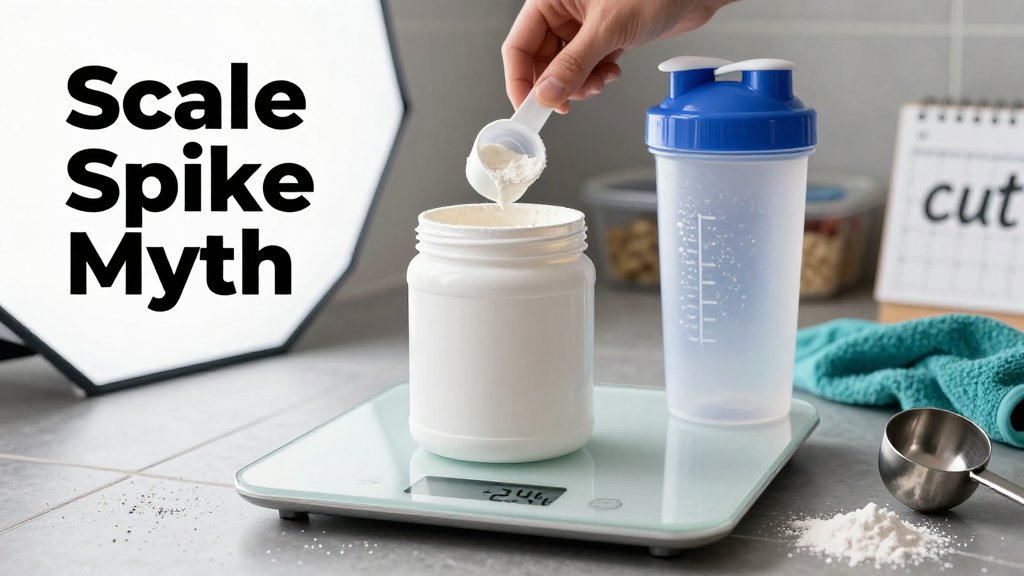
You start a cut, tighten your meals, hit your steps, and the scale should go down. Then you add creatine and the number jumps, which can wreck motivation fast. Before you ditch a supplement that could protect your strength, learn what is actually happening. In this guide, you will see why the early increase is usually water stored in muscle, how to estimate when it will show up, the biggest tracking mistakes that make it look worse, and smarter ways to measure fat loss.
Why creatine can raise scale weight fast
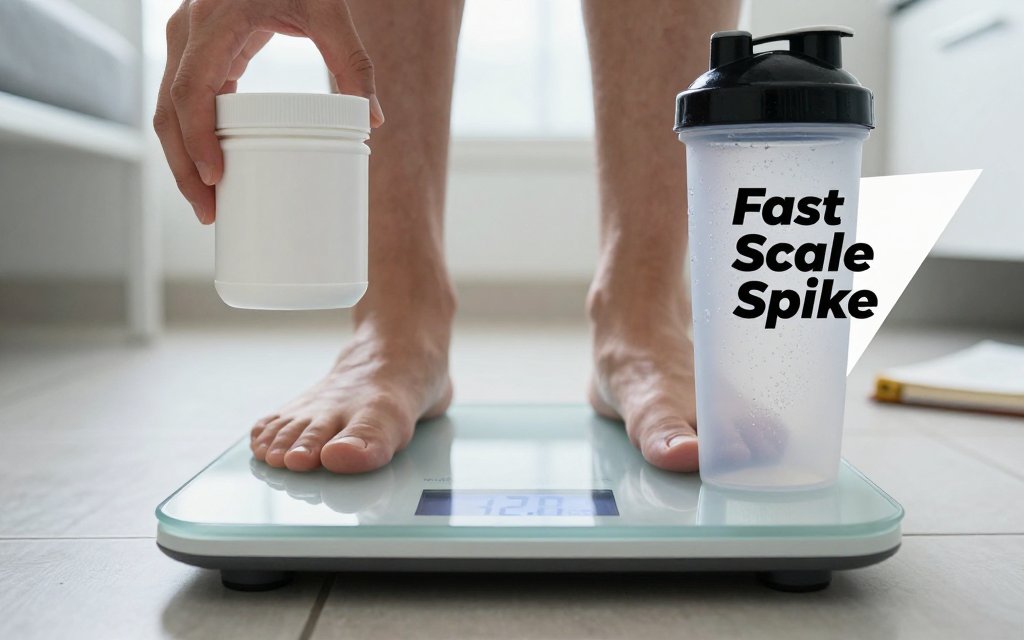
You start a fat loss phase, you are nailing your calories, and then the scale jumps up 1 to 3 pounds. It feels personal. The fear is simple: “If I gained weight, I must be gaining fat.” Creatine can make that fear louder because the timing is so fast. The good news is that fast scale changes are usually not fat changes. Fat gain is slow math that needs a real calorie surplus over time. Creatine-related scale gain is often a fast water shift that can show up in a few mornings, even while your calorie deficit is working exactly as planned.
Creatine pulls more water into your muscle cells as muscle creatine stores rise, which can increase scale weight without adding body fat. In fact, research summaries often report about 1 to 2 kg of body mass increase in the first week when people use a loading phase, which is commonly explained by water retention linked to higher creatine inside muscle. That “scale spike” is why creatine has a reputation for weight gain, even among people dieting. If you want a credible deep dive on the mechanism and typical early weight changes, the ISSN creatine position stand is a solid reference.
The short answer: water in muscle, not fat gain
Here is the clean, quotable version: creatine-associated weight gain is usually water stored with creatine in muscle, not body fat. Compare the timelines. To gain 2 pounds of fat, most people would need roughly a 7,000 calorie surplus across days or weeks (because 1 pound of fat is commonly estimated around 3,500 calories). Creatine water shifts can happen in days because your muscles are changing how much water they hold while creatine stores build. Many people see roughly 1 to 4 pounds added within 1 to 3 weeks, and bigger, faster jumps are more likely if you do a loading phase (like 20 g/day split into doses for 5 to 7 days).
The part most people miss during a cut is this: the scale can temporarily hide fat loss. Example: you are in a steady 400 calorie deficit and losing about 0.8 pounds of fat per week. If creatine adds 2 pounds of water early on, your scale might look “stuck” for 2 weeks even though you are doing everything right. This is why I like weekly averages, plus one or two extra data points, like waist measurement or how your jeans fit. Also, creatine can make training feel better: stronger reps, better pumps, and less drop-off across sets, which helps you keep lifting hard while dieting. If you want an easy way to keep your cut enjoyable without guessing portions, build a high-protein dessert routine and track Ninja Creami protein pints accurately.
If the scale spike messes with your head, set a simple expectation window: the first several days through about 2 to 3 weeks is the “noise zone.” Keep logging like normal. Keep your sodium and carbs fairly consistent day to day, because big swings there can stack even more water changes on top of creatine. Practically, this is a good time to tighten the things that actually drive fat loss: hit your calorie target, prioritize 25 to 35 g protein per meal (chicken bowl at lunch, Greek yogurt and berries, eggs plus toast), and keep your daily movement steady. Then let time do its job.
If the scale jumps after starting creatine, keep eating in your planned deficit for 2 to 3 weeks and track weekly averages. The extra pounds are usually water stored in muscle, not stalled fat loss.
What "bloating" feels like, and when it is actually GI trouble
“Water in muscle” usually does not feel like a puffy belly. Intramuscular water is stored inside muscle cells, so a lot of people notice fuller muscles or a better pump, not a swollen midsection. True bloating is different: stomach pressure, gassiness, cramping, or an urgent bathroom situation. If that is what you feel, it is more likely a dosing or digestion issue than the “water weight” people talk about. Common mistakes include taking too much at once (like 10 g in one shot), dry-scooping, not drinking enough water with it, switching to a flavored blend with sugar alcohols or extra ingredients, or taking it on a totally empty stomach right before training.
Quick fixes are boring, and they work. Use plain creatine monohydrate, aim for 3 to 5 g per day, and mix it into a real volume of liquid (at least 8 to 12 oz of water, or stir it into a protein shake). If your stomach is sensitive, split the dose, for example 2 g with breakfast and 2 g with dinner, and take it with food for a week. Give your gut 7 to 10 days to adapt before deciding creatine “doesn’t agree with you.” If GI symptoms are severe, persistent, or you have kidney disease or other health concerns, it is smart to check in with your clinician before continuing.
How much weight gain on creatine is normal
Most “creatine weight gain” during fat loss is normal, fast, and mostly water inside muscle, not body fat. A realistic, data-based expectation is about 1-2 kg (2.2-4.4 lb) of scale increase during the first week if you do a loading phase, with smaller or slower bumps if you skip loading. That early jump lines up with the widely cited observation that proper creatine monohydrate loading tends to increase body mass about 1-2 kg in week 1, mainly from fluid shifts, as summarized in the ISSN creatine position stand. Practically, if you start creatine on Monday and you are up 2-4 lb by Friday while your calories and steps stayed consistent, that is usually the expected response, not a sign your cut “stopped working.”
Loading phase vs 3-5 g daily: what changes on the scale
With a loading phase (commonly 20 g/day split into 4 doses of 5 g for 5-7 days), scale weight usually changes faster. Many people notice a bump within 3-7 days, often in the 2-5 lb range, sometimes a little more if they also increase training volume, carbs, or sodium at the same time. The mechanism is simple: muscle creatine storage rises quickly, and water follows into the muscle cell. People with more muscle mass, lower baseline creatine intake (for example, you rarely eat red meat), and people new to resistance training often see a bigger, faster swing than someone already eating a high-protein omnivore diet and lifting consistently.
If you go with 3-5 g/day (no loading), you still reach saturation, it just happens more gradually. Instead of a 2-5 lb jump in a single week, many people see something like 0.5-3 lb spread across 2-4 weeks, with some weeks flat and other weeks popping up overnight. Your baseline diet matters here too. If you already eat beef, salmon, and other creatine-containing foods regularly, the scale change can be smaller. Training status matters as well because hard sessions can increase inflammation and glycogen storage, both of which pull in water, so the “creatine bump” can blend with normal training-related water shifts.
Creatine is like adding extra storage space inside the muscle cell. You fill the tank, water comes with it. Your scale can jump even while your calorie deficit is working, so zoom out.
Use this table to predict the spike and stay calm
The easiest way to stay calm is to predict the “boring” causes of a spike before you assume fat gain. Use the table below as a quick reference, then rely on your 7 day average, not a single weigh-in. If you want one simple rule: day-to-day scale noise is often water, week-to-week averages are what you manage with calories. Creatine usually changes the day-to-day number, not the underlying trend, especially if your deficit is consistent and your protein intake is steady.
After you spot the likely cause, keep your calorie target steady for at least 10-14 days before making changes, unless your weekly averages clearly trend up. Example: if you are cutting at 1,800 calories/day and the scale jumps 3 lb three days after starting creatine, that does not automatically mean you should drop to 1,600. Instead, tighten up tracking details that quietly add up, like oils, sauces, and “zero calorie” sprays. If you cook a lot, the easiest win is learning how to log it consistently, start with track 0 calorie cooking spray, then watch your 7 day average while you keep training performance front and center.
Decision framework: ignore, adjust, or troubleshoot
Use a simple decision framework so you do not overcorrect. First, ask: did my weekly average actually increase, or did I just see a few heavier mornings? Creatine, a hard leg day, and a salty dinner can all add water fast. Second, check adherence: are you truly hitting your calorie target (including weekends), protein, and steps? Third, look at trend length. One week is often noise. Two full weeks of rising weekly averages, with solid adherence, is when you consider a calorie adjustment (or confirm portions again). If you have any health conditions, medications, or kidney concerns, talk with a clinician before supplementing.
Troubleshooting is usually where the answer is. A higher-carb day can refill glycogen, and glycogen pulls water with it, so the scale can jump even if you stayed in a deficit. Sodium can do the same, especially after restaurant meals like a burrito bowl, ramen, pizza, or deli sandwiches. Poor sleep and stress can push water retention up, and they also make cravings louder, which is why the best “fat loss supplement” is often a boring bedtime routine. For menstrual cycle effects, compare this week to the same cycle week last month, not to last Saturday. If your waist measurement and weekly averages are improving, you are on track, even if creatine makes the daily weigh-in look dramatic.
Creatine in a calorie deficit: keep or quit
Keep it, for most people cutting fat, creatine is more helpful than harmful. The scale might wobble, but your training quality matters more than a one to three pound water shift. Creatine supports short, hard efforts in the gym, like heavy sets of squats, repeated sprint intervals, or pushing the last few reps on a dumbbell bench press. During a calorie deficit, your recovery and performance often take a hit, so anything that helps you keep strength and training volume can make the cut look better in the mirror, even if scale weight is being stubborn for a week.
The main reason people quit is anxiety about “gaining weight” while dieting. If you are in a real deficit, you are not gaining fat from creatine, you are mostly seeing extra water stored inside muscle. The practical fix is to treat the scale like a trend tool, not a daily verdict. Weigh yourself under the same conditions (after the bathroom, before breakfast), then compare weekly averages. If your weekly average is still drifting down while your lifts stay steadier, that is a win. If health concerns apply (kidney disease history, medications, pregnancy, or anything your clinician monitors), check in with your doctor before supplementing.
Why stronger workouts help fat loss look better
A calorie deficit is great for fat loss, but it can feel like someone quietly turned the “power” knob down on your workouts. Lower carbs, lower glycogen, and less overall energy can mean fewer reps at the same weight, shorter sessions, or skipping accessories because you are wiped. Creatine can help buffer that dip in repeated high intensity efforts, which often shows up as keeping one or two reps you would otherwise lose, or holding your usual load for more sets. That sounds small, but across a month of training, it is the difference between maintaining your best work and slowly sliding backward.
Maintaining performance matters because the goal of a cut is not just “weigh less,” it is “look leaner.” Preserving lean mass helps your body composition improve as the deficit does its job. If creatine helps you keep training volume, you give your body a stronger reason to hold onto muscle while weight drops. That can also indirectly support fat loss habits: stronger sessions usually feel more rewarding, you are more likely to hit your step goal after work, and your day has fewer “I am too tired” decisions. Example: if you usually leg press 3 sets of 10 at 270 lb, keeping that closer to normal is a better signal for muscle retention than drifting to 2 sets of 8 at 225 lb all cut.
> If your weekly calorie target is on point but the scale jumps after starting creatine, do not panic quit. Keep your dose steady, track weekly averages, and judge progress by measurements, photos, and gym performance for 14 days.
The simplest creatine plan for cutters (no overthinking)
Use creatine monohydrate, 3 to 5 g daily, every day. That is it. Most people do not need cycling, “detox” breaks, or a loading phase. Consistency matters more than timing, and a steady daily dose keeps muscle creatine stores topped off. If you want a credibility check, the ISSN creatine position stand summarizes why monohydrate is the most studied form and why typical maintenance dosing is widely used in research and sports nutrition practice. Buy a basic powder, use a small scale or a measured scoop, and make it boring.
Timing is mostly about adherence, so pick the moment you will remember on busy days. Three easy options: stir it into your breakfast (overnight oats, Greek yogurt, or a protein shake), take it post workout with your usual protein, or mix it with your biggest meal so it becomes automatic. Creatine is not a stimulant, so it is fine at night too. If you track macros, it is basically “free” from a calorie perspective, so do not waste energy trying to subtract calories. Focus on the big levers: your deficit, protein, steps, and progressive training.
To minimize water noise anxiety and the “bloated” feeling some people report, keep your routine consistent. If your stomach is sensitive, split the dose into 2.5 g twice daily. Also keep sodium and fiber steady week to week. Do not start creatine on the same weekend you do a huge carb refeed (like going from 150 g carbs daily to 350 g at a sushi dinner plus dessert) and then blame creatine for the Monday scale spike. Use one extra data point besides weight, like waist measurement at the navel, a weekly progress photo, or how your jeans fit. If those are improving while your weekly average weight trends down, creatine is doing its job during the cut.
Track fat loss correctly while taking creatine
If the scale jumps right after you start creatine, you do not need a new diet, you need a better scoreboard. Creatine can increase body water (often inside muscle), and short studies have shown measurable increases in total body water alongside about 1 kg (2.2 lb) body weight change after a week of loading. (pubmed.ncbi.nlm.nih.gov) That is exactly why “scale weight today” is a noisy metric during a cut. Your job is to track trends that reflect fat loss, not fluid shifts from creatine, sodium, carbs, stress, or poor sleep. The biggest mistake I see is people panic-cutting calories the first week, then ending up under-fueled, less consistent, and more likely to quit.
A simple 14-day check-in that ignores water noise
Run this like a 14-day experiment and repeat it every two weeks. Weigh yourself daily, same conditions (after the bathroom, before food, similar clothing). Log it, then ignore the single number and compare your 7-day average to last week’s 7-day average. Pair that with waist measurements 1 to 2 times per week (tape at the navel, relaxed, after exhaling). Finally, track one gym performance benchmark, like your best set of 5 on squat, bench, or a machine press, plus one endurance marker like a 10-minute incline walk pace. Creatine can support hard training, so strength holding steady is a green flag during a deficit. (link.springer.com)
Here are the decision rules that keep you from overreacting. If your 7-day average is flat for 14 straight days and your waist is not moving, adjust one lever only: reduce calories by about 100 to 200 per day, or add 1,500 to 2,500 steps per day. Keep protein steady (for many adults, that means something like 120 to 170 g per day, depending on body size) and do not slash carbs just because the scale jumped. A salty dinner, a higher-carb day, a stressful week, or short sleep can swing scale weight several pounds even when fat loss is happening.
If you started creatine this week and the scale rose 1 to 4 lb, treat it like “weather,” not “fat.” Keep calories consistent for at least 14 days, then decide using the 7-day average plus waist trend.
Add two more tools that make water weight basically irrelevant. First, progress photos: front, side, back every 2 weeks, same lighting, same time of day, same distance from the camera. Second, adherence tracking: aim for 12 to 14 “on-target” days per two weeks before you change your plan. If your target is 1,800 calories, being at 1,800 for 10 days and 2,400 for 4 days can erase your weekly deficit. A real-food example that keeps cuts simple is a 500-ish calorie lunch like a chicken burrito bowl (5 oz chicken breast, 1 cup cooked rice, salsa, lettuce, 1 oz cheese). Log it consistently, then let the averages do the talking.
Does creatine cause bloating, or is it just water retention?
Most of the early “bloat” people notice is water retention, often intracellular (inside muscle), not a sudden gain of body fat. A loading phase can increase total body water measurably within a week in some athletes, which is why the scale can rise quickly. (pubmed.ncbi.nlm.nih.gov) If your stomach feels puffy, check the basics first: sodium intake, high-carb meals, constipation, and alcohol can all add temporary puffiness. Action step: hold your creatine dose steady, drink to thirst, and use waist trend plus weekly scale averages instead of day-to-day weight.
Should I stop creatine when dieting if the scale goes up?
Usually, no. If you stop every time the scale bumps up, you lose the consistency that makes tracking work. Instead, commit to a 14-day “no panic” window after starting creatine: keep calories, protein, and steps consistent, and judge progress by the 7-day average and waist. If, after 2 to 3 full weeks, your 7-day average is not trending down and your waist is flat, adjust by 100 to 200 calories per day or add 1,500 to 2,500 steps. Talk with your clinician if you have kidney disease, take related medications, or have any health concerns.
How do I tell scale weight vs fat loss while on creatine?
Use a “3-signal rule”: weekly scale averages, waist measurements, and performance. Water noise can mask fat loss on the scale, but it rarely masks all three signals at once. If your 7-day average is flat but your waist is down 0.25 to 0.5 inches over 2 weeks and your main lifts are stable, you are very likely leaning out, even if the scale looks stubborn. If all three are flat for 14 days and you have at least 12 on-target calorie days, make a small change only (100 to 200 fewer calories, or a daily step bump). Big cuts usually backfire by hurting training and adherence.
Want less guesswork while you cut, especially when creatine makes the scale noisy? Start tracking your nutrition today with CalMeal. Download it free and use AI-powered food recognition to log meals faster, stay consistent, and keep your calorie targets clear. Grab CalMeal on iOS or Android, then take control of your data and your progress.
Start Tracking Your Nutrition Today
Download CalMeal for free and take the guesswork out of calorie counting with AI-powered food recognition.