Ninja Creami Protein Ice Cream, Track Pints Accurately
Ninja Creami protein ice cream can be a high-protein, low-calorie dessert, but most calorie logs are off because of mix-ins, respins, and serving-size math. This guide shows exactly how to calculate macros per pint, avoid common tracking mistakes, and log homemade and store-bought pints accurately while staying in a calorie deficit.
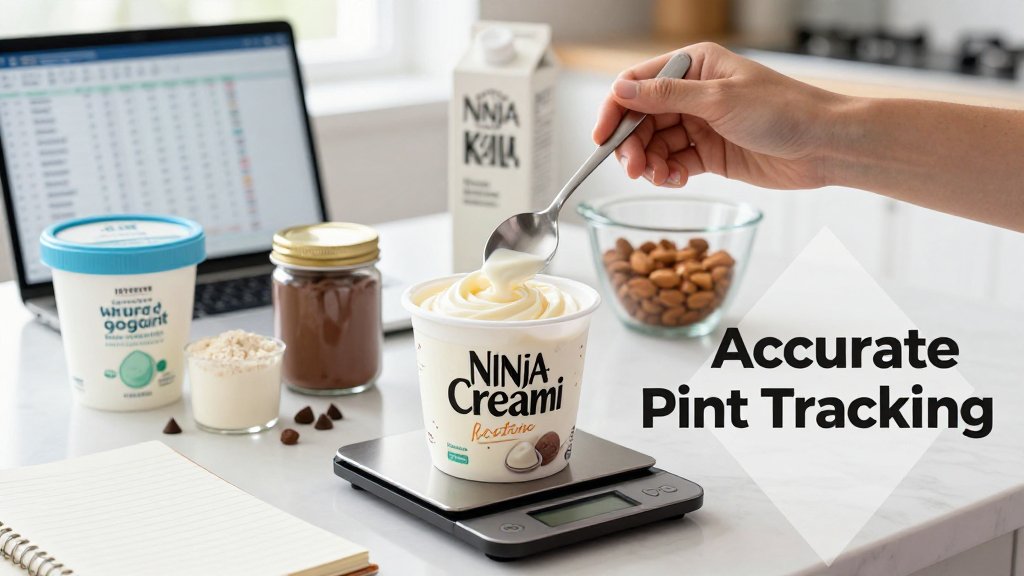
Protein ice cream can look like a perfect diet hack, until you log it and your progress stalls. With a Ninja Creami, it is easy to undercount without realizing it because the finished volume is not always a true pint, mix-ins can double the calories fast, and respins change how much you actually eat. In this guide, you will learn a practical, repeatable way to calculate calories and macros per pint, adjust for add-ins, and log each serving accurately so your deficit stays on track.
How many calories are in a Ninja Creami pint
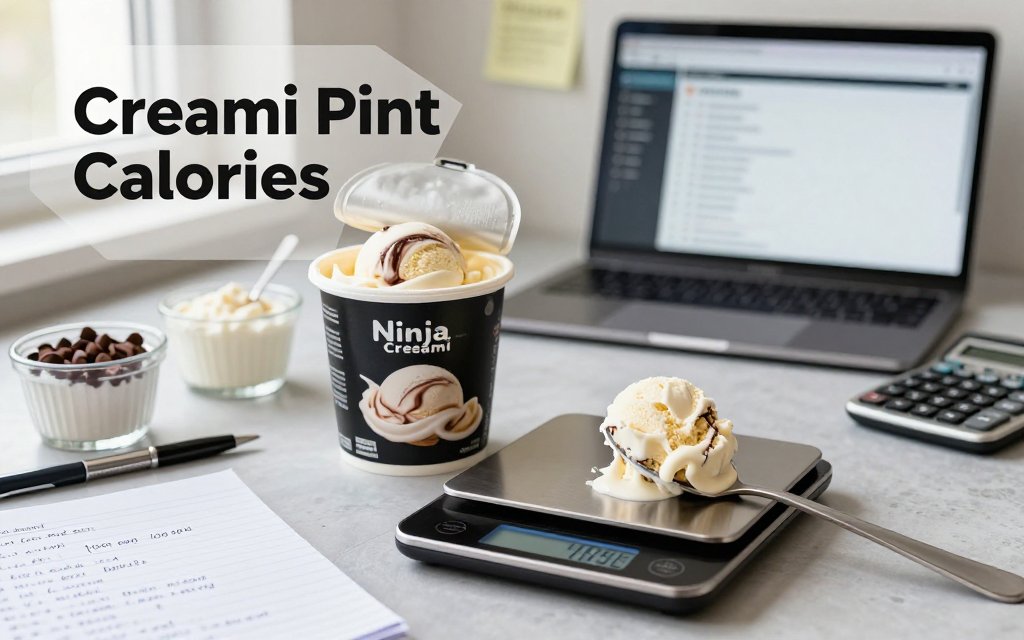
Here is the quotable rule that keeps homemade Creami calories honest: your pint calories equal the sum of the ingredients you froze, divided by what you actually ate. Not what the recipe “serves,” not what the container is called, and not what looks like “a normal bowl.” If you blended 350 calories of ingredients and ate half of the finished pint, you ate about 175 calories. If you ate the whole thing, you ate about 350 calories. Simple, but it is also the step most people skip when they are tired, hungry, and the pint is sitting in the freezer calling their name.
“Per serving” guesses fail with homemade ice cream because a Ninja Creami is not a factory line. You freeze a base, spin it, sometimes respin it, and often add mix-ins. All of that changes density and portions, which changes how much you scoop and how quickly you finish it. A fluffy, perfectly spun pint is easier to eat than an icy one, so you may unintentionally eat more, even if the ingredients are identical. Mix-ins add another twist: one tablespoon of mini chocolate chips can be 70 to 80 calories, and it is easy to forget when you are focused on protein numbers.
The one rule that keeps you accurate every time
“If you track the frozen base ingredients, you can track the pint.” That is the mental model. Ingredients in, calories in. Portion out, calories out. Spinning and respinning do not create calories or remove them, they just change the texture. Think of it like stirring a pot of oatmeal: it can look bigger, smoother, and more scoopable, but the energy in the pot is still the energy you put in. In CalMeal, the easiest workflow is to log each ingredient (for example, 240 ml unsweetened almond milk, 170 g nonfat Greek yogurt, 1 scoop whey, 5 g cocoa), then save it as a reusable meal so your next pint takes 20 seconds to track.
Texture changes can still change your behavior, which is why people feel “tricked” by their own pints. Quick story: Jordan makes a chocolate protein Creami base that totals 410 calories (yogurt, milk, whey, cocoa, banana). After a spin and one respin, it turns into a thick, soft-serve style pint. Jordan eats until satisfied, eyeballs it as “about one serving,” and logs 200 calories. Later, curiosity hits and Jordan checks the container level, it is exactly half the pint. That 200-calorie log was not wrong because of the Creami, it was wrong because it was half the recipe. Half of 410 is 205. The fix is not willpower, it is measurement.
Common mistake: calling it a pint when it is not
A lot of people say “I ate a pint,” but what they really mean is “I ate whatever fit in my container.” Some bases are underfilled because you stop at the max fill line, or because you left room for a splash of milk before spinning. Other bases are overfilled after you add mix-ins, which can push the volume up without changing what you tracked earlier. On top of that, not every Creami container is the same size. The Deluxe tub is larger (you will even see retailers list a 24-ounce Deluxe tub), so using a “pint” shortcut can quietly turn your log into a guessing game.
The practical fix is boring, which is why it works: weigh the base before freezing, then decide whether you log per container or per gram. Example: you pour in 420 g of base that totals 380 calories. That is 0.905 calories per gram (380 divided by 420). If you eat 210 g after spinning and mix-ins, you log about 190 calories. This approach stays accurate even when you change brands, swap sweeteners, or add strawberries. It also helps you catch “hidden” calorie bumps like flavored syrups, honey, or chocolate sauce. If sweet add-ons are your weak spot, keep your margins tighter with added sugar tracking tips before you freeze your next batch.
Track what goes into the frozen base, then measure what you actually ate. Spinning changes texture and portion ease, not energy. If you can weigh the base and the leftover, your Creami logs stay accurate every time.
Once you adopt ingredient math plus real portions, you do not have to stress when your recipes vary. Some days your base is 250 calories (almond milk, yogurt, zero-cal sweetener). Other days it is 650 calories (whole milk, peanut butter, cookies). The method stays the same. In the next parts of the guide, we will walk through (1) ingredient math that is fast enough for busy nights, (2) how to estimate your pint yield by weight so “half a pint” means something, and (3) logging habits that make protein ice cream a reliable tool for fat loss. If you have medical conditions or you are using nutrition targets for health reasons, check in with your clinician for personalized guidance.
Protein ice cream macros per pint, step-by-step math
Accurate Creami tracking starts with one habit: weigh everything in grams. Cups and scoops are fine for taste-testing, but they are noisy for calorie math because powders pack differently, yogurt mounds in the spoon, and “fill to the max line” depends on foam and air. Grab a $10 to $15 kitchen scale, place your pint container on it, hit tare (zero), and add ingredients one by one. If you want next-level accuracy, also weigh the final spun pint before you eat. That last number becomes your “true yield,” which matters if you top off with extra liquid, add a splash to respin, or leave a little stuck to the blade.
Formula you can reuse for any Creami recipe
Here is the mini-formula worth saving: Total calories and macros = the sum of each ingredient’s calories and macros. Per pint (if you eat it all) = totals. Per serving = totals multiplied by the fraction you ate. That fraction can be “half the pint” or, better, grams eaten divided by grams in the finished pint. Two easy tracking paths: (1) build one custom food called “Creami Protein Pint” and log 1 serving when you finish it, or (2) log by grams for maximum accuracy, which is perfect if you eat a few bites after dinner and the rest tomorrow. If you are also dialing in your training days, pair this with post-workout nutrition logging tips so your totals stay consistent.
To calculate each ingredient fast, convert labels into “per gram” numbers. Example: if a whey label says 120 calories per 31 g serving, that is 120 ÷ 31 = 3.87 calories per gram. If it has 24 g protein per 31 g, that is 0.77 g protein per gram. Then you multiply by the grams you actually used. This is also why the metric weight on packages matters, the label’s grams are the anchor for accuracy, as explained in FDA serving size guidance. Once you do this conversion for your go-to ingredients (milk, yogurt, protein, pudding mix), you can reuse the same per-gram numbers every time and just change the weights.
Realistic macro-friendly base example (one pint yield): 300 g skim milk, 150 g plain nonfat Greek yogurt, 30 g whey protein powder, 7 g sugar-free instant pudding mix, 5 g unsweetened cocoa, and zero-cal sweetener to taste. Using common label values, the totals come out to about 343 calories, 49 g protein, 32 g carbs, and 2 g fat for the whole pint. Half a pint is simply half the totals: about 172 calories, 25 g protein, 16 g carbs, and 1 g fat. If you want the “I ate 230 g” version, weigh the pint before and after, then multiply totals by (grams eaten ÷ total grams). This method works even when your spoonfuls are not perfectly even.
| Serving | Calories | Macros |
|---|---|---|
| Whole pint | 343 | P49 C32 F2 |
| Half pint | 172 | P25 C16 F1 |
| One-third | 114 | P16 C11 F1 |
| 100 g | 70 | P10 C7 F0 |
Logging tips that stay accurate even when life is messy: if you usually eat the entire pint, create a custom food once and save it, then log 1 serving whenever you finish it. If you sometimes split it, log by grams instead. In CalMeal, that means you save the recipe totals and the total yield weight (example: 492 g mix). Then you can log “Creami Base, 250 g” and your calories and macros will scale automatically. This also makes mix-ins painless: if you add 14 g (1 tablespoon) peanut butter, weigh it and log it separately, because your base might be 343 calories, but the add-in can turn it into a 430 to 450 calorie pint quickly.
Weigh your empty pint, then weigh it filled. The difference is your true "recipe weight." If you eat half, do not guess. Weigh the pint again and log exactly what disappeared.
Protein powder and sweetener label traps
The biggest trap is treating “1 scoop” like a measurement. Many tubs literally say “about 1 scoop,” and scoop volume changes depending on how settled the powder is. If your label’s serving is 31 g but your scoop today weighs 38 g, you just added 7 g extra powder. That can be roughly 25 to 30 extra calories and 5 to 6 g more protein, which is not “bad,” but it breaks your consistency if you are cutting and trying to hit a precise deficit. Solution: put your pint on the scale, tare, pour protein until you hit your target grams, and ignore scoop lines. Second trap is label rounding, especially for small add-ins. A “0 g fat” or “0 calories” claim can still mean a small amount per serving, so keep an eye on serving size when you stack multiple “zero” items.
Sweeteners and low-impact ingredients are where people overthink. A pinch of stevia, a few grams of cocoa, or a small amount of sugar-free pudding mix typically moves totals by tens of calories, not hundreds. The sneaky calorie multipliers are fat-dense mix-ins: nut butters, regular chocolate chips, cookie pieces, and full-fat coconut. For reference, 1 tablespoon peanut butter is about 90 to 100 calories, and 1 tablespoon chocolate chips is often about 70 calories. Two tablespoons of either can erase the “high protein, low calorie” vibe fast. If you want crunch without a calorie surprise, weigh 5 to 10 g of mix-in, not a “handful,” and consider berries, crushed high-fiber cereal, or a few grams of chopped nuts instead of a full scoop of chips.
Calorie tracking dessert mistakes with Creami mix-ins
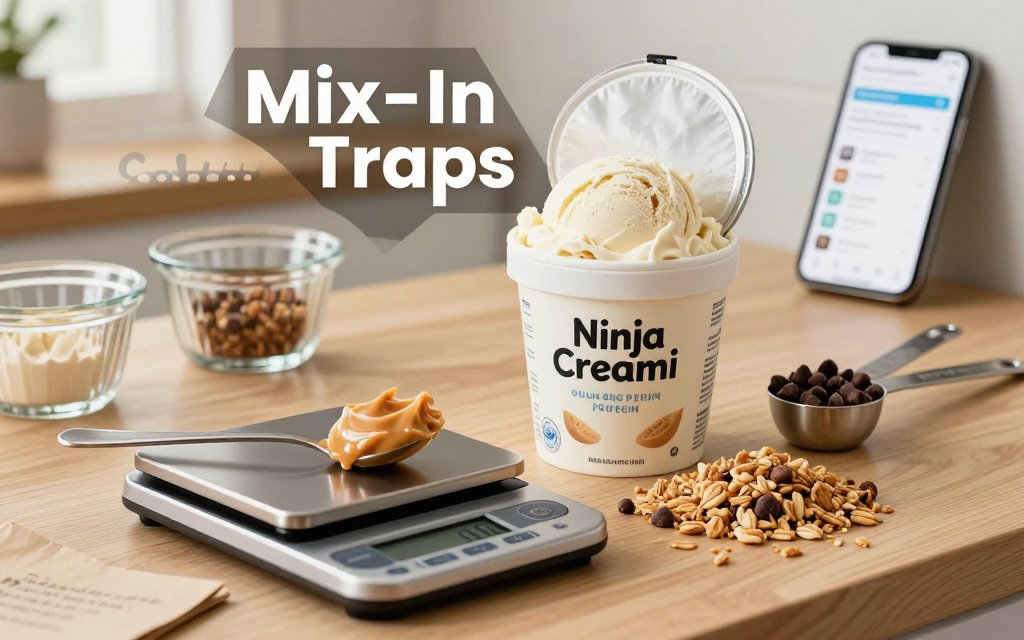
Most “mystery calories” in a Creami pint do not come from the base you carefully measured, they come from the fun stuff you add after the base is already perfect. A protein base might be 220 to 300 calories for the whole pint, then you toss in a few spoonfuls of peanut butter, cereal, chocolate, or a quick drizzle of syrup. Suddenly the pint is 450 to 700 calories and it feels like calorie tracking is broken. It is not broken, it just hates vague amounts like “a handful” and “just a splash.” The fix is simple: treat extras as real ingredients, measure them once, and log them the same way every time.
Mix-ins are where the pint blows up
If your pint is supposed to be 250 calories but tastes like a Blizzard-style treat, the mix-ins did it. A single tablespoon of peanut butter is commonly around 95 to 100 calories (check your jar), 1 ounce of granola is often 120 to 150 calories (brand dependent), and a tablespoon of chocolate chips is about 50 calories according to this tablespoon calorie guide. Now stack them: 250 (base) + 100 (peanut butter) + 140 (granola) + 50 (chips) = 540 calories. That is before cookie pieces, sprinkles, caramel, or whipped topping. The math adds up fast because “small” dessert portions are dense: fats and sugary crunchies pack a lot of calories into a tiny volume.
The most common logging mistake is double counting. It usually happens like this: you build a saved “Protein Vanilla Base” recipe that already includes mix-ins (like 20 g crushed Oreos), then you also log “Oreos, 20 g” as a topping when you eat it because you remember adding them. Pick one method and stick to it. If you run the Creami Mix-in cycle, I recommend logging mix-ins inside the recipe for that pint, since they are distributed through the pint and you will probably eat them across multiple bites. If you top the bowl after spinning, log toppings separately as a “serving-time add-on,” because you might only use them on half the pint, or you might eat all the toppings in the first few spoonfuls.
“Just a splash” add-ons are sneaky for the same reason: you do not notice them as ingredients. A splash of heavy cream, coffee creamer, sweetened condensed milk, maple syrup, or chocolate syrup can turn a lean base into a much richer dessert. Even milk can matter if you are adding multiple splashes across a couple respins. Practical tip: decide what you are using to fix texture, then measure it with either a tablespoon or grams. For example, if you add 1 tablespoon chocolate syrup, log it as 1 tablespoon. If you free-pour it, put the bottle on a kitchen scale, pour, and log the grams. This keeps “one quick drizzle” from becoming three drizzles across the whole pint.
Treat every mix-in like its own snack. Measure it, log it once, and decide your portion before you make it extra creamy. Your base may be 250 calories, but the add-ons can quietly double that.
Respins do not change calories, but they change behavior
A respin does not add calories, but it can absolutely change how many calories you eat. The first spin might be thick and icy enough that you stop at half a pint without trying. After a respin (especially with a splash of milk), the texture gets softer and more “ice cream shop” creamy, so finishing the whole pint feels effortless. That is a behavior trap, not a math trap. Simple rule: decide your portion before you respin. If you planned half, weigh out half into a bowl right after the first spin, then respin only what is left in the container. Or respin, scoop your planned portion immediately, and put the rest back in the freezer before you start eating.
For accurate tracking, use one consistent “pint math” method. Option A: make the full pint a recipe, then log by fraction (half pint, one third pint) based on how much you actually ate. Option B: weigh what you eat in grams and log that amount, which is the easiest when you are not sure if you ate 45 percent or 60 percent of the container. Mix-ins make weighing even more helpful because distribution is rarely perfect. If all the chocolate chips end up near the top, “half the pint” might not equal half the mix-in calories. A quick weigh after spinning and another weigh after eating gives you the cleanest answer with the least stress.
Image concept for this section: show one pint split into two labeled sides. On the left, “Base” with a clean ingredient list and a big number like 250 calories. On the right, “Extras” with small callouts such as “1 Tbsp peanut butter: +100,” “1 oz granola: +140,” and “1 Tbsp chocolate chips: +50,” then a bold “New total: 540.” The visual lesson is that your base can be dialed in, but the add-ons control the final calorie outcome. If you want the pint to stay in a specific calorie target, choose one high-impact mix-in (like peanut butter) and keep the rest as low-calorie flavor boosters (cinnamon, cocoa powder, vanilla, or a few berries).
How to log homemade and store-bought pints correctly
Accurate pint tracking is mostly about picking the right entry, then matching the serving size to what you actually ate. The fastest way to stay consistent is to use a simple “do this, not that” rule: log what you can verify in 30 seconds, and only estimate when the alternative is skipping the log entirely. For store-bought pints, that means barcode first, label second. For homemade Ninja Creami protein ice cream, that means ingredients first, then portion by weight, not by “it looked like half.” Your goal is not perfection, it is repeatable accuracy so your weekly calorie average makes sense.
For packaged pints like Halo Top, the most common mistake is “label math drift.” You see a serving like 2/3 cup, you eat straight from the container, and your log accidentally captures only 1 serving instead of the full pint. Fix it by verifying two things every time: (1) servings per container and (2) calories per serving. Then decide how you are logging: either “1 container” if you finished it, or grams if you ate a bowl. If your app entry has both options, grams is the most foolproof. Also remember labels can be rounded, the FDA allows calorie rounding in specific increments, so tiny differences between a computed total and the label are normal. The rounding table in the FDA Food Labeling Guide explains why a serving can look off by a few calories. (hhs.gov)
Homemade pints are easier to eat mindfully, but harder to log unless you track the base like a recipe. The most accurate method is: add every ingredient to a single recipe (for example, 240 mL 1 percent milk, 30 g whey, 7 g sugar-free pudding mix, 1 g salt), freeze, then weigh the finished contents once (total grams). If your whole base weighs 430 g and your bowl portion is 160 g, your portion is 160 divided by 430, or about 37 percent of the batch. Multiply calories and macros by 0.37 and you have an accurate log even if the pint texture changes. This also makes mix-in days easy, because you can weigh and add 10 g mini chocolate chips or 16 g peanut butter as separate items instead of “guessing a spoonful.”
Halo Top vs homemade protein ice cream calories, which logs easier
Packaged pints win on convenience because the label is consistent and a barcode scan usually pulls the exact flavor. The tradeoff is that serving sizes can be confusing (per serving versus per container), and brands vary by line and flavor, so you still need a 5 second label check. Homemade wins on customization: you can push protein higher, keep fat lower, and often make a pint for less than a store price if you already buy protein powder and milk. A simple decision rule: if you want near-perfect accuracy with minimal effort, packaged wins. If you want the best macros per pint for your calories, homemade usually wins, as long as you track ingredients. For context, Healthline notes Halo Top pints commonly run about $4 to $6, and some labels highlight low total calories per pint for certain flavors. (healthline.com)
FAQ: Ninja Creami protein ice cream tracking
These are the pint-math questions that trip people up most often, especially if you are trying to maintain a calorie deficit while still hitting protein goals. Use the answers below as your default system, then adjust based on your hunger, training day, and results on the scale over 2 to 4 weeks. If you have diabetes, kidney disease, an eating disorder history, or any medical concern, check with a clinician before making big changes to calories or protein.
How do I calculate homemade ice cream calories if I do not eat the whole pint
Start with total batch nutrition, then portion it by weight. Add up all ingredient calories in your base recipe (example: milk + protein powder + sweetener + pudding mix), then weigh the whole finished pint contents in grams. Weigh your bowl portion too. Formula: (portion grams divided by total grams) times total calories (and repeat for protein, carbs, fat). If weighing feels like too much, pre-portion the pint into 2 or 4 equal containers right after spinning, then log 1 of 2 or 1 of 4 consistently.
Does the Ninja Creami Mix-in setting change calories or macros
The setting itself does not add calories, it only changes the texture by mixing what is already in the pint. Calories and macros change only when ingredients change. That means crushed cookies, cereal, chocolate chips, sprinkles, honey, peanut butter, and even an extra splash of milk during a respin all count. A practical habit: log mix-ins separately before you add them (example: 14 g chocolate sandwich cookies or 10 g mini chocolate chips), then run Mix-in. You get the fun texture, and your numbers stay honest.
What is a realistic high-protein low-calorie dessert macro target per pint
A realistic target that still tastes like dessert is 250 to 400 calories per pint with 25 to 45 g protein, under 10 to 15 g fat, and carbs that fit your day (often 15 to 35 g). If you want an easy benchmark, aim for at least 0.10 g protein per calorie (30 g protein in a 300 calorie pint is a strong ratio). Packaged pints may land closer to moderate protein, while homemade can push higher by using more whey or casein and a higher-protein milk base. Your best target is the one you can repeat 3 to 5 nights per week without feeling deprived.
Ready to stop guessing and start tracking your nutrition today? Download CalMeal for free and take the guesswork out of calorie counting with AI-powered food recognition, faster logging, and clearer totals for meals and homemade recipes. Get the app here: iOS or Android. Log your next Creami pint with confidence.
Start Tracking Your Nutrition Today
Download CalMeal for free and take the guesswork out of calorie counting with AI-powered food recognition.