Sauce Calories Are Stealing Your Deficit, Fix It
If your weight loss progress feels slower than your meal logs suggest, sauces and dressings are a common culprit. This guide shows the real calorie math behind “just a little,” how to track condiments accurately (tablespoons vs grams), and simple habits that stop under-logging without killing flavor.
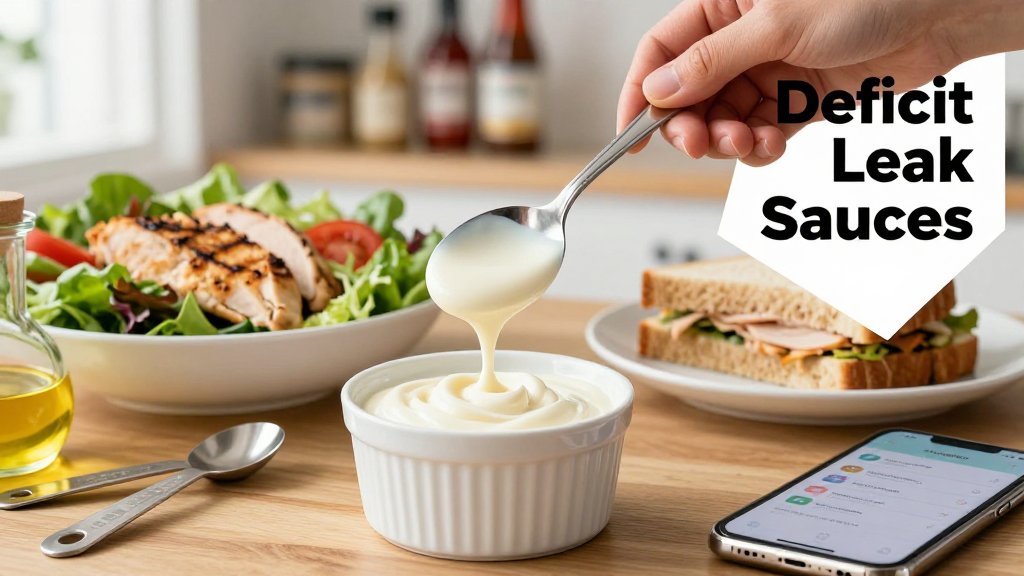
You can nail your meal prep, hit your protein, and still wonder why the scale will not budge. Often, the culprit is hiding in plain sight: sauces and condiments that feel too small to matter. Many are fat-based, which means a quick pour can quietly add hundreds of calories. In this article, you will learn simple rules for tracking sauces, the most common restaurant portion traps, and a fast checklist to keep your deficit real without giving up flavor.
Why sauce calories blow up a calorie deficit
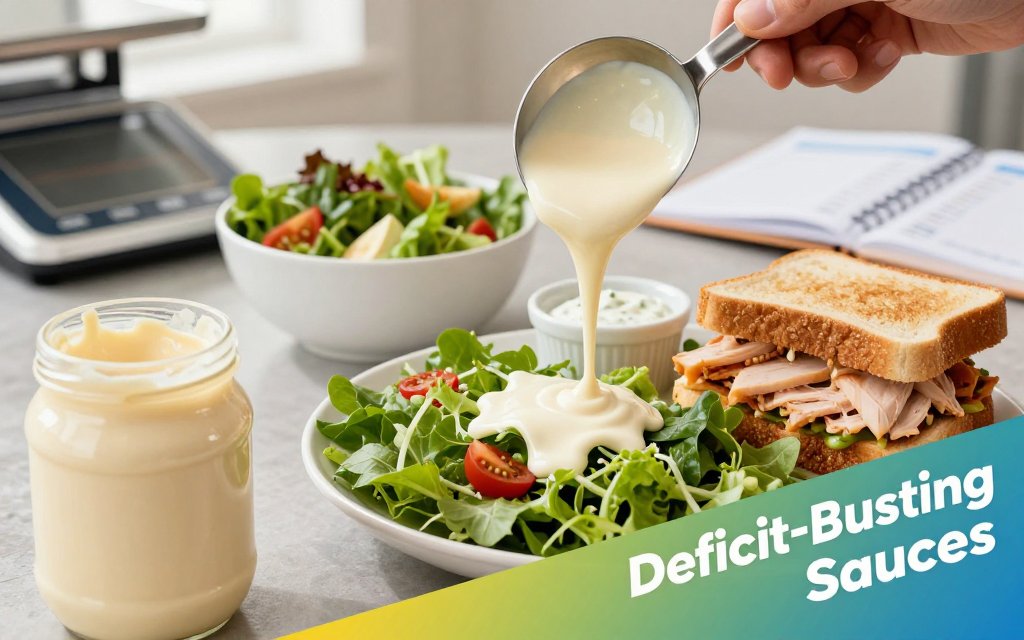
You build the perfect “healthy” plate: grilled chicken on a big salad, or a turkey sandwich with veggies, or a rice bowl loaded with lean protein and greens. You log it and feel good, because the main ingredients are genuinely solid. Then you add a swipe of mayo, a generous pour of dressing, and a couple dips of sauce because, honestly, plain food is sad. Nothing looks outrageous, but your “500 calorie lunch” quietly becomes a 750 calorie lunch. If your plan was a 300 to 500 calorie deficit for the day, that gap can vanish without you changing a single bite of chicken, bread, or rice.
The calorie density problem in plain English
Most sauces are either fat-based (oil, mayo, creamy dressings) or sugar-based (teriyaki, sweet chili, honey mustard). That matters because fat is extremely calorie-dense at 9 calories per gram, so a small volume can carry a big calorie load. One tablespoon does not look like much in a bowl, but it can be the difference between “I’m in a deficit” and “I’m basically at maintenance.” For example, many ranch dressings land around 120 to 150 calories per 2 tablespoons. Healthline pegs an average at 129 calories per 2 tablespoons in its ranch dressing calories breakdown, which means 1 tablespoon is roughly 65 calories, and that is before you add any other condiments.
Now stack the usual suspects. Mayonnaise is mostly oil, so 2 tablespoons on a sandwich can easily run about 180 to 200 calories depending on brand and how heaped the spoon is. Caesar dressing is commonly in the same ballpark as ranch, and sometimes higher, because it is also oil-forward. A “light drizzle” of olive oil on a rice bowl or roasted veggies can be around 1 tablespoon if you are free-pouring, which is about 120 calories that many people forget to log. None of these are “bad foods.” The issue is pure math: sauces add a lot of calories with almost no chewing time, little stomach volume, and usually not much protein to help keep you full.
Tablespoons are also a sneaky trap. A real level tablespoon from a measuring spoon is consistent, but the way most of us use the word “tablespoon” is not. A spoonful scraped along the side of a jar, a “rounded” spoon, or a quick squeeze from a bottle can turn 1 tablespoon into 1.5 or 2 without you noticing. Another common issue is timing: people weigh the chicken, weigh the rice, log the vegetables, then add sauces after the scale is put away. The food log looks accurate, but the total meal is not. Rule of thumb you can steal: If you did not measure it, assume it was double.
Track sauces like you track snacks: measure once, log once, and move on. If you are chasing a 300 to 500 calorie deficit, even “small” condiments can erase it faster than an extra cookie.
The hidden deficit killer: unmeasured pours and double dips
The behavior traps are almost boring, which is why they work. You free-pour ranch until the salad looks “properly dressed.” You add ketchup after the first few bites because it tastes better. You dip, take a bite, dip again, and suddenly that little ramekin is half gone. Or you use multiple condiments without thinking: mayo on the sandwich, mustard on top, a side of ranch for fries, plus a sweet sauce for the chicken. Each one feels too small to matter, so it never gets measured. If you are logging the main meal but eyeballing the extras, you are basically giving your calorie target a blindfold.
Here is a realistic “sauce-only” add-on for one day that can happen without any wild eating: 2 tablespoons mayo on a lunch sandwich (about 180 to 200), 2 tablespoons ranch on a dinner salad (about 120 to 150), plus a couple tablespoons of sweet sauce with a rice bowl (often 60 to 100). That is roughly 360 to 450 calories, and you can do it while still choosing chicken breast, vegetables, and whole grains. If your daily deficit target is 400 calories, condiments alone can cancel the entire plan. This is why you might feel like you are “doing everything right” but your weekly average is not matching your expectation.
The fix is simple and not obsessive: portion sauces once, then eat from the portion. Pour dressing into a tablespoon or a small cup, log it, and keep the bottle off the table. If you love creamy flavors, try mixing a smaller amount of the real thing into plain Greek yogurt to stretch volume without stretching calories. Also consider where you want your “fun calories” to live. Many people would rather spend 150 calories on something that feels like a treat, like a measured dessert, than on accidental dressing. (If you do dessert at home, you will like this mindset for pints too: track Ninja Creami pints so your weekly totals stay honest.) Takeaway you can remember: Sauces count as much as snacks because they add calories just as fast. If you have health conditions or specific dietary needs, check with a doctor or registered dietitian for personal guidance.
How to track sauces and dressings accurately
Sauces are tricky to track because they behave like “invisible calories.” A salad can look the same whether it has 1 tablespoon of dressing or 3, and most of us drizzle more generously when we are hungry, distracted, or eating straight from the bottle. Add in brand differences and it gets messier. One ranch can be 120 to 140 calories for 2 tablespoons, while another “light” version might be closer to half that. That is why the most reliable habit is to track sauces by weight, not by vibes. Even the FDA points you in this direction because the serving size on a Nutrition Facts label includes a household measure and the metric weight in grams. See the FDA’s serving size in grams guidance for the plain-English explanation.
Tablespoon vs grams: the accuracy upgrade
A tablespoon sounds precise, but it is surprisingly inconsistent in real life. A “tablespoon” of mayo can be level, heaping, or smashed into the spoon. A tablespoon of vinaigrette can be mostly oil in one pour and more vinegar in the next. Thickness, bottle opening size, and how hard you squeeze all change the amount, even if your brain insists it was “about a tablespoon.” Grams cut through that noise because they measure what actually landed on your plate. Bonus: most labels quietly assume you will use grams anyway, like “2 tbsp (30 g).” If you remember one line, make it this: “If it pours, weigh it. If it spreads, weigh it. If it comes in packets, log the packet.”
The easiest home method takes about 10 seconds and works for ketchup, barbecue sauce, ranch, teriyaki, and any squeeze bottle. Put your plate or bowl on a kitchen scale, hit tare to zero it out, then add the sauce directly onto the food and read the grams. If you do not want to dirty the scale, do the “bottle method”: put the bottle on the scale, tare, squeeze onto your food, then put the bottle back down. The scale shows a negative number, and that is exactly how many grams you used. Now match it to the label. Example: your mayo says 1 tbsp is 14 g. If the scale says you used 28 g, log 2 servings, not “2 tablespoons” guessed with a spoon.
Oil-based sauces deserve extra attention because most of their calories come from fat, and fat is calorie dense. A “quick drizzle” of olive oil or a creamy chipotle-style sauce can quietly add the same calories as an extra snack. For homemade sauces, you have two good options. Option one: weigh the finished sauce, log the ingredients as a recipe, then weigh your portion in grams. Option two (fastest): weigh only the part that moves the calories most, usually the oil or mayo. For example, if you mix Greek yogurt with a spoon of mayo and spices, weighing the mayo you add keeps the log honest. If you train, this same precision helps your post-lift routine too, especially with add-ons like dressings and dips in bowls. Pair it with post-workout nutrition logging checklist so your “healthy meal” stays aligned with your goal.
A simple rule keeps you consistent: measure the thing that can run away. Sauces, oils, dressings, nut butters, and mayo are easy to underestimate. Weighing them in grams once or twice teaches your eyes what “normal” really looks like.
Quick reference: common condiment calories you are likely undercounting
Use the table below as a reality check, not a perfect label copy. The point is that 1 tablespoon is not “free,” and the gram weight behind that tablespoon varies by sauce style and brand. Creamy dressings often pack most of their calories into a small gram amount because they are oil or mayo based. Sweeter sauces (ketchup, barbecue, teriyaki) usually weigh more per tablespoon because of water and sugar, so the calories per tablespoon can be lower, but they can still pile up fast if you use a few “glugs.” One more warning: restaurant sauces are frequently higher than grocery store versions because kitchens often boost flavor with extra oil and sugar. When in doubt, pick a “restaurant” entry in your tracker and weigh what you used.
How to use this without overthinking: pick the closest match in your tracker, then adjust the portion by grams. If you have Hidden Valley Ranch, log that brand, then type in the grams you weighed. If you are eating out and the app has “ranch dressing, restaurant,” use it as your starting point and still log grams if you can. If you cannot weigh, ask for sauce on the side and use a consistent visual unit like “half the ramekin” or “one packet,” then tighten it up next time by weighing at home to calibrate your eyes. That calibration step matters because many people are shocked the first time they weigh a “quick squeeze” and see it is 25 to 40 g instead of the 14 to 15 g they assumed.
Make it automatic by building a mini sauce system: keep a scale on the counter, default to grams in your tracker, and save custom entries for your top three sauces (like “spicy mayo,” “Caesar,” and “teriyaki glaze”). After a week, you will stop feeling like you are “dieting” and start feeling like you are simply collecting accurate data. If you want the simplest rule for busy days, choose one: sauce on the side, then dip with intention. That single tweak can cut surprise calories without banning your favorite flavors. If you have health conditions or are making major diet changes, check in with a doctor or registered dietitian for personalized guidance.
Restaurant portions and oil-based sauces: log smarter
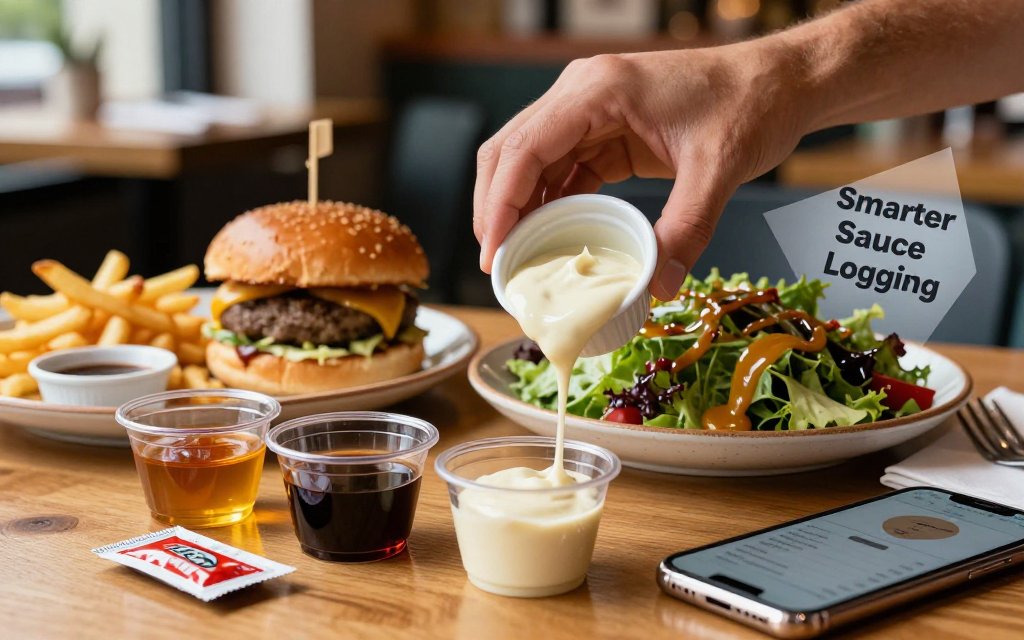
Restaurants almost never serve “one tablespoon” of anything. The salad arrives already glossed in vinaigrette, the burger has a thick swipe of aioli, and the bowl is finished with a “drizzle” that turns into a puddle by the time you are halfway done. That does not mean you cannot log it. It means you need restaurant math: simple anchors, one decision, then move on. Your goal is not perfect measuring, it is reducing the error that quietly stacks up over weeks. The easiest win is behavioral, not mathematical: ask for sauces and dressings on the side whenever you can, so you control how much actually lands on your food.
How to log dipping sauces when you cannot measure
Start with a visual “container guess,” because that is what restaurants hand you. Plastic portion cups and ramekins are your best friends here. One tablespoon is 0.5 fl oz, so a 2 oz cup is roughly 4 tablespoons, and a 4 oz cup is roughly 8 tablespoons. Packets are also useful: a ketchup packet is close to a tablespoon in real life, and soy sauce packets are often close to a tablespoon too. This matters for wings, fries, sushi, and even burgers, because dipping is repetitive, and repetition is what turns “just a little” into a few hundred calories.
Next, turn that visual guess into something your tracker can use. Pick a food entry (for example, “ranch dressing” or “chipotle aioli”), then look at how it defines a tablespoon. Many entries show tablespoons and grams side by side, so you can log in grams even without a scale. A practical default is: creamy sauces are often close to 15 g per tablespoon, and oils are closer to 13 to 14 g per tablespoon. Decide how many tablespoons you really used (not what was served), multiply by the grams-per-tablespoon shown in your entry, and log that total. One calm estimate beats three emotional edits later.
Here is how fast it adds up in the real world. Wings plus ranch: if your ranch is about 60 to 75 calories per tablespoon, 2 tablespoons is roughly 120 to 150 calories, and 4 tablespoons is roughly 240 to 300. Fries plus aioli is even sneakier: aioli is basically a flavored mayo, often around 90 to 100 calories per tablespoon, so 2 tablespoons can be 180 to 200 calories, and 4 tablespoons can be 360 to 400. Combine “a little ranch” plus “a little aioli” in one meal, and you are easily in the 200 to 600 calorie range, without touching your main entree.
Treat restaurant sauce like a separate side dish. Estimate the cup size, decide how much you actually used, log that amount once, then stop thinking about it. Consistency beats perfect measuring, especially when you eat out.
Oil-based dressing math: the salad that is secretly a pasta dish
Oil is calorie dense, and many restaurant dressings are mostly oil. That is why vinaigrettes, pesto-style sauces, and glossy “finish” drizzles can hit like a heavy carb side, even when the base is greens. A concrete anchor helps: olive oil nutrition facts list about 119 calories per tablespoon. If a salad gets 3 tablespoons worth of oil-based dressing (very common when it is tossed), that is about 360 calories from oil alone, before cheese, nuts, croutons, or a sugary glaze.
The habit that works in restaurants is simple and boring, which is exactly why it works: always request dressing on the side. Then dip your fork tines into the dressing, and spear the salad. You get the flavor on every bite, but you control the dose. For logging, choose a conservative portion you can repeat, like 1 to 2 tablespoons, and call it done. The same strategy applies to bowls (teriyaki, spicy mayo, sesame dressings), burgers (special sauce, aioli), and sushi (spicy mayo, eel sauce). If you are unsure, log the higher-fat version, and move on.
Watch out for menu words that signal “invisible calories.” Glaze, drizzle, lacquered, sticky, and finished with are often sugar plus oil, which means calories add up quickly even when the portion looks thin. For wings, ask for sauce on the side and dip, instead of having them fully tossed. For fries, portion your dip by putting one or two spoonfuls on your plate, and do not keep dunking straight into the cup. For sushi, use a small soy sauce pour, and count each dunk as a teaspoon-level choice. Simple rule to close this out: if it is shiny, assume more calories and log it. For personal health concerns, check with your doctor or a registered dietitian.
Fix under-logging with a simple condiment system
If sauce calories keep sneaking past your log, do not fight it with willpower. Fix it with a system you can repeat on autopilot: (1) pick default condiment entries you will use most days, (2) standardize serving sizes you can picture, and (3) set a simple “sauce budget” that protects your deficit while keeping meals fun. The goal is not perfect tracking, it is consistent tracking. Consistency is what reveals patterns like, “I am always 150 to 250 calories higher on sandwich days,” so you can adjust with confidence instead of guessing.
Start with a sauce budget that fits your day. A practical range for many deficit diets is 100 to 200 calories per day for condiments, or 50 to 100 per meal if you prefer meal-level boundaries. This is not a rule, it is a guardrail. Example: if lunch is a turkey sandwich, you might “spend” 1 tablespoon mayo (about 94 calories) and still have room for mustard and pickles. If dinner is a big salad, you might spend 2 tablespoons vinaigrette (often 100 to 160 calories depending on oil content) and skip the extra drizzle. You stay satisfied, and your weekly average stays predictable.
Build your personal sauce defaults in two minutes
Open your tracker and save a few “favorites” you can reuse without thinking. Pick the condiments you actually eat: mayo, ranch, vinaigrette, ketchup, barbecue sauce, sriracha, soy sauce. Then assign each one a default portion that matches how you normally serve it, like 15 g mayo (about 1 tablespoon) or 30 g dressing (about 2 tablespoons). From there, you only do one quick adjustment, half for a thin spread, double for a heavy pour. That tiny habit prevents the classic accidental 200 calorie add-on, like turning “a little ranch” into 4 tablespoons without realizing it.
If a sauce touches your food, it counts. Use your default entry first, then adjust. If you are unsure, log the higher option. That one decision protects your deficit more than perfect math.
Quick FAQ rules can save you from decision fatigue. For most people, the biggest win is using the same baseline every time, then changing it only when you have a clear reason. Think in “units” you can repeat: 1 tablespoon mayo on sandwiches, 2 tablespoons dressing on salads, 1 packet of sauce at fast food, 1 tablespoon ketchup on a plate. If you treat condiments like a planned part of your meal, you will stop feeling like tracking is restrictive. It becomes more like budgeting, you can spend more in one place by spending less somewhere else, without derailing the day.
How many calories are in one tablespoon of mayonnaise?
A level tablespoon of regular mayonnaise is about 94 calories. That number comes from USDA-based nutrition data for a 1 tablespoon serving, roughly 13.8 g, which you can see in this USDA-based mayonnaise nutrition entry. Two common tracking mistakes are (1) using “1 tbsp” when the spoon is actually heaping, and (2) forgetting the mayo in chicken salad, tuna salad, or coleslaw. If you want fewer calories, light mayo can be closer to 35 to 50 per tablespoon, but check your label and save that specific entry as a second default.
How do I track salad dressing calories at restaurants?
Ask for dressing on the side, then log what you actually use. A simple approach is to assume 2 tablespoons used if you dip your fork and lightly coat leaves, and 4 tablespoons used if you pour freely or the salad arrives already tossed and glossy. If it is a chain restaurant, use their posted nutrition for the exact sauce when possible. For example, one packet of McDonald’s Creamy Ranch Sauce is listed as 110 calories on the McDonald’s ranch sauce nutrition page. If you cannot verify, choose the higher dressing type (creamy over vinaigrette) and move on.
What is the easiest way to log dipping sauces and condiments every day?
Make logging the default, not the exception. Save your “daily drivers” as favorites with standard portions, then tap once and adjust with 0.5x, 1x, or 2x. If you tend to forget dips, create a single catch-all entry like “Dipping sauce budget” set to 100 calories, then swap it for the real sauce later only if you have time. Another easy trick is to log sauces while you plate the meal, not after you eat. If you use a photo-based logger, snap the plate with the sauce visible so it does not vanish from memory. For health concerns, check with your doctor or a registered dietitian.
Ready to stop guessing and start tracking with confidence? Download CalMeal for free and take the friction out of calorie counting with AI-powered food recognition, including the sauces that usually slip through the cracks. Build smarter habits, stay consistent, and protect your deficit without overthinking every bite. Get CalMeal now on iOS or Android.
Start Tracking Your Nutrition Today
Download CalMeal for free and take the guesswork out of calorie counting with AI-powered food recognition.