Thermic Effect of Food: Does Protein Burn Calories?
Protein does raise the thermic effect of food, but it is not a magic calorie eraser. This guide explains TEF, realistic calorie ranges for protein vs carbs vs fat, whether calorie trackers include TEF, and simple rules for adjusting targets when you go higher-protein without overthinking your log.
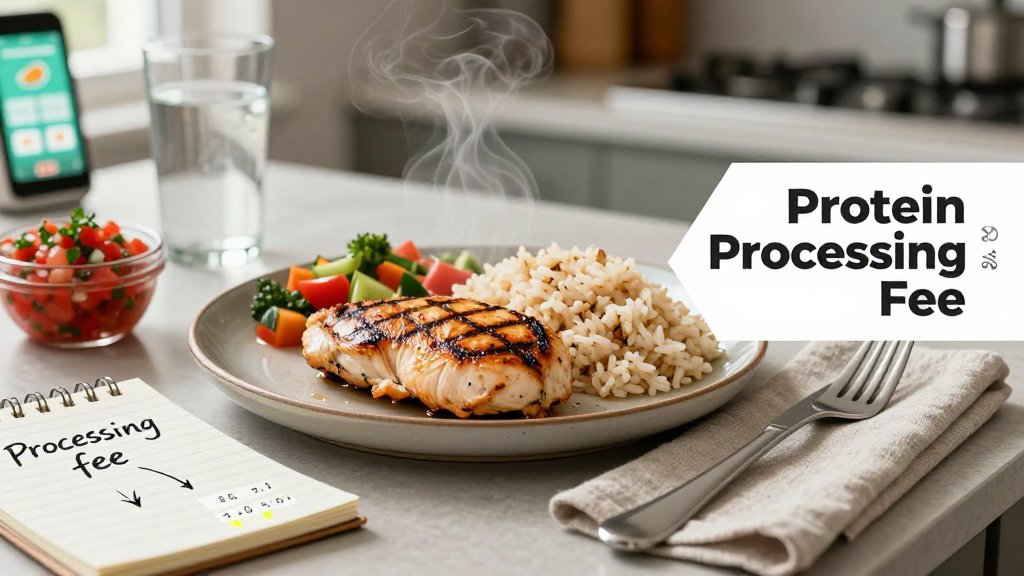
You have probably heard the claim that “protein burns calories,” and it sounds like a shortcut to fat loss. The truth is more nuanced, and it comes down to the thermic effect of food (TEF), which is the energy your body uses to digest, absorb, and process what you eat. In this article, you will learn what TEF means in plain English, realistic TEF ranges for protein, carbs, and fat, plus when TEF is worth considering and when accurate tracking and consistency matter far more.
What TEF is and why protein feels special
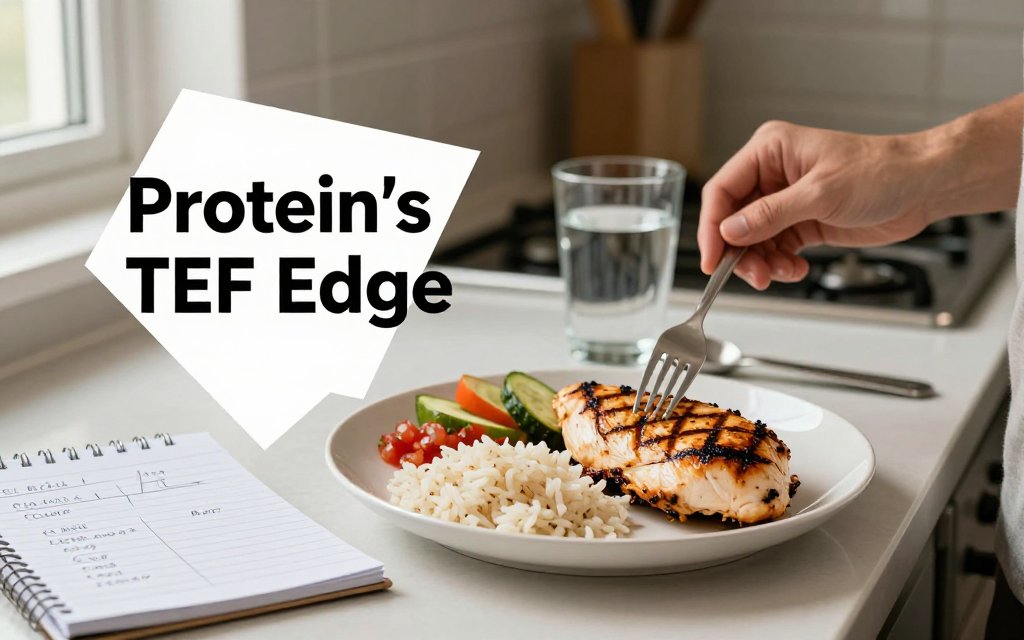
Protein really does “burn” more calories during digestion than carbs or fat, because it takes more work for your body to break it down and handle what comes next. That said, it is a modest advantage, not a free pass. Think of thermic effect of food (TEF) like a small processing fee your body pays to use the calories you eat. Protein’s processing fee is higher, but it still comes from the same overall energy budget. If your goal is fat loss, TEF can help a little at the margins, yet your total intake, your protein target, and consistency with tracking still do most of the heavy lifting.
(pmc.ncbi.nlm.nih.gov)Here is a relatable example that shows why people overestimate the “burn.” Imagine a 500 calorie lunch: a grilled chicken breast (about 250 calories), a cup of cooked rice (about 200 calories), and a side of salsa and veggies (about 50 calories). If that meal contains roughly 50 to 55 grams of protein (200 to 220 calories from protein), and protein costs about 15% to 30% to process, you might “spend” around 30 to 65 calories on the protein portion. Add some TEF from the rice too, and the whole meal’s TEF might land around 40 to 80 calories depending on the exact foods and your body. Helpful, yes. Magical, no.
(pmc.ncbi.nlm.nih.gov)The simple definition of TEF in one sentence
TEF is the calories your body spends processing food. Those calories get used during practical, everyday steps: chewing and swallowing, churning food in your stomach, releasing digestive enzymes, absorbing nutrients through the gut, and then packaging those nutrients for use or storage. Protein feels “special” because amino acids (protein building blocks) often need extra handling before they are used, including converting them into forms your body can use right away and managing the leftovers. Research reviews commonly report that protein has the highest diet-induced thermogenesis (roughly 15% to 30%), compared with carbs (about 5% to 10%) and fat (about 0% to 3%).
For tracking, the key mindset is simple: TEF happens automatically. You do not need to do anything fancy to “activate” it. Your job is choosing foods that support your goals and logging them honestly.
(pmc.ncbi.nlm.nih.gov)So where does CalMeal style tracking fit in? TEF is one reason higher-protein meals can feel easier to diet on, since you get a small calorie advantage plus better hunger control for many people. A practical starting point is aiming for 25 to 35 grams of protein at breakfast and lunch (examples: 1 cup Greek yogurt plus berries, or a turkey sandwich with a high-protein bread), then building dinner around a clear protein anchor like salmon, chicken, tofu, or beans. If you also like time-restricted eating, keep expectations grounded: TEF is not a shortcut around portions, it is just one small lever. For that bigger picture, check out intermittent fasting without calorie tracking and how it tends to work in real life.
Common TEF misconceptions that mess up calorie tracking
Most TEF confusion comes from treating it like a coupon you can redeem, instead of a background process your body already does. Yes, protein costs more energy to process. No, you cannot turn that into a precise subtraction for every meal, and you definitely do not want to “spend” your attention budget trying. If you are curious about the science ranges (and why protein is higher), this open-access review summarizes commonly cited TEF estimates in one place: protein TEF percentages. Use it to set expectations, then go back to simple habits you can repeat.
(pmc.ncbi.nlm.nih.gov)These are the mistakes I see most often when TEF derails calorie tracking:
The reframe that keeps you on track is: TEF is already part of how your body uses calories, not a bonus you can double-count. In practice, you will get more reliable results by logging the meal as-is, then focusing on controllables that move the needle: hit a daily protein target, keep fiber consistent (veggies, fruit, beans, whole grains), and watch calorie-dense add-ons that sneak in fast (oils, creamy dressings, handfuls of nuts). If you want a simple action step today, build one repeatable high-protein meal you actually like and can make in 10 minutes, then log it the same way each time. Consistency beats precision here.
Aim for protein at each meal, but treat TEF as a small nudge, not a magic trick. Track your calories normally, then let higher-protein choices help you feel full and stay consistent.
One last helpful perspective: TEF varies with meal size, food choices, and even individual differences, so it is not something you can calculate perfectly from an app screen. Your best use of the idea is strategic, not mathematical. Choose protein more often (chicken, tuna, eggs, cottage cheese, edamame, lentils), spread it across the day, and keep your overall calories aligned with your goal. If you have a medical condition, are pregnant, or are managing kidney-related concerns, talk with your clinician or a registered dietitian before making big macro changes, especially higher-protein targets.
How many calories does TEF really burn
If you have ever heard that protein "burns calories" during digestion, that is the thermic effect of food (TEF) in action. The realistic takeaway is simple: TEF can help, but it is usually a modest helper, not a huge shortcut. For most people eating mixed meals, TEF often lands around roughly 5% to 15% of daily calorie intake, depending on your macro split and food choices. On a 2,000 calorie day, that is commonly something like 100 to 300 calories used for digestion, absorption, and processing. Useful, yes. Life changing by itself, no. That is why you can eat higher protein and still need consistency with portions, activity, and overall calories to see results.
Typical TEF ranges for protein, carbs, and fat
Here are the quotable ranges that are easy to remember: protein is highest, carbs are in the middle, and fat is lowest. A commonly cited estimate is protein at about 20-30% of its calories, carbs around 5-10%, and fat around 0-3%. Some reviews report wider real world variability (for example protein may run roughly 20-35% in some contexts, and carbs can sometimes reach the low teens). You can see these ranges summarized in the ISSN TEF range summary. These are ranges, not guarantees, so two people can eat the same macros and still see slightly different TEF due to body size, meal timing, and normal biological variation.
Mixed meals land somewhere in between because your plate usually contains a blend of protein, carbs, and fat. The more of your calories that come from protein and minimally processed foods, the more you can nudge TEF upward. Fiber can push things slightly higher too, because your body has more "work" to do and not all fiber calories are absorbed the same way. Processing tends to go the other direction since finely milled or ultra processed foods can be easier to digest. Still, these are nudges, not license to micromanage your calorie target. If you are adjusting your daily calories by 10 or 20 to "match TEF," you are almost certainly majoring in the minors compared to portion sizes and protein consistency.
A practical way to use TEF is to treat it like a small margin that rewards solid food choices. Hit a protein target you can repeat, choose higher fiber carbs most days, and do not fear fats, just portion them on purpose. You do not need to chase perfect math daily because normal logging error (a heavy hand with peanut butter, a bigger restaurant serving, a "medium" latte that is actually large) can easily be 50 to 200 calories. TEF math is still worth understanding because it explains why higher protein diets can feel slightly easier and why two diets with the same calories can sometimes produce slightly different outcomes. Just keep expectations grounded.
| Macro | TEF range | Example |
|---|---|---|
| Protein | 20-30% | Chicken breast |
| Carbs | 5-10% | Oats |
| Fat | 0-3% | Olive oil |
| Mixed meal | 5-15% | Burrito bowl |
| High-fiber | Slightly higher | Lentils |
A quick numbers example for a higher-protein swap
Let’s put numbers on it using a simple 2,000 calorie day. Say you eat 600 calories from protein (about 150 g), 800 calories from carbs (about 200 g), and 600 calories from fat (about 67 g). Now use conservative midpoint TEF estimates: protein 25%, carbs 7%, fat 2%. Estimated TEF from each macro looks like this: protein 600 x 0.25 = 150 calories, carbs 800 x 0.07 = 56 calories, fat 600 x 0.02 = 12 calories. Total TEF is about 218 calories for the day. That is real energy expenditure, but notice the scale, it is a couple hundred calories, not an extra workout’s worth every day.
Now do the swap people love to talk about: keep intake at 2,000 calories, but move 300 calories from fat to protein. The new split is 900 protein calories, 800 carb calories, 300 fat calories. Using the same midpoint TEF assumptions: protein 900 x 0.25 = 225 calories, carbs 800 x 0.07 = 56 calories, fat 300 x 0.02 = 6 calories. New total TEF is about 287 calories. The difference is roughly 69 extra calories burned per day. Over a week, that is around 480 calories. Helpful, yes, but it also explains why the results can feel slower than the hype, especially if weekend eating or inaccurate portions erase that small daily edge.
TEF is a real bonus, but it is not a cheat code. If your protein bump adds 50 calories burned, that helps over weeks, yet consistent portions, steps, sleep, and strength training still drive the big changes.
If you want to try a 300 calorie swap without overthinking it, focus on simple food trades. Pull back about 2 to 3 tablespoons of oil, a couple ounces of cheese, or a large handful of nuts (easy to overshoot), then add lean protein like 0% Greek yogurt, egg whites plus one whole egg, a scoop of whey, tuna packets, turkey slices, shrimp, or extra chicken in your salad. For busy weeks, the biggest win is logging consistency, especially for homemade meals where fat can sneak in through cooking. CalMeal makes this easier if you use a recipe logging shortcut for macros so your swaps show up clearly in your daily totals. If you have kidney disease, are pregnant, or have other health concerns, check with a clinician before making big protein changes.
Do calorie trackers include TEF, or not

A lot of people assume a calorie tracker gives you “net calories” after your body burns some energy digesting food (that burn is the thermic effect of food, or TEF). In real life, TEF is happening, but most apps are not built to calculate it for you meal by meal, and they definitely do not “refund” calories when you choose chicken over chips. The helpful way to think about trackers is simple: they are consistent accounting tools, not metabolic lab equipment. They help you log standardized calorie and macro values, then compare your intake to a calorie target that is usually based on a TDEE estimate. That gap is where the TEF confusion usually lives.
What your app is really counting when you log food
When you log food, the calorie number you see is typically based on standardized “metabolizable energy” estimates, not your personal energy absorbed after digestion. Most labels and databases use the Atwater system (the familiar 4 calories per gram of protein, 4 per gram of carbs, and 9 per gram of fat, plus 7 for alcohol). Some databases get more specific by applying food-specific Atwater factors rather than the simple 4-4-9 shortcut, which is why the same food can show slightly different calories across entries. If you want a nerdy peek at how this is handled in a major database, the USDA explains energy values and Atwater specific factors in its FoodData Central documentation.
Here is the key misconception to bust: TEF is not a separate line item in most trackers. Your app is not going to show “protein digestion: minus 60 calories” after a 600 calorie steak dinner. TEF happens inside your body, and it varies based on the meal, your total intake, your recent diet, and even how processed the food is. That variability is exactly why trackers stick to standardized inputs. Plain-English takeaway: log the calories and macros as listed, then let your real-world results (weight trend, gym performance, hunger) tell you if the plan is working. Do not subtract TEF manually, and do not expect the app to show TEF as a bonus burn.
On the “output” side, most calorie targets in apps come from a TDEE estimate. That estimate is usually your resting needs (BMR) multiplied by an activity factor, sometimes with extra pieces like steps, workouts, or wearable data layered on. Some systems loosely assume TEF is “part of the total” because TDEE, in the big-picture sense, includes digestion costs. Still, your app is rarely recalculating TEF dynamically when your macros change. This matters because it tempts people to “eat back” an imagined protein advantage. If your target is 1,900 calories for fat loss, keep treating 1,900 as the plan, even if you shifted from 90 grams of protein to 140 grams.
> Log your higher-protein meals normally. Do not subtract a digestion bonus or raise your calorie budget. Let your 14-day average intake and scale trend tell you if protein changes are actually moving the needle.
Macro tracking accuracy tips when protein goes up
If you raise protein, logging accuracy matters more, because the foods are easy to misjudge by eyeballing. Weighing helps most with items that change a lot between raw and cooked: 6 oz of raw chicken breast is not the same as 6 oz cooked because cooking drives off water. Pick one method (raw weights or cooked weights) and stay consistent with the database entry you choose. For powders, do not trust the scoop if progress matters, because a “1 scoop” serving can vary by brand and how packed it is. Same goes for nut butters added to shakes, a “tablespoon” can quietly become 2 tablespoons, which can add about 90 to 200 calories depending on how generous you pour.
Also watch for calorie creep in foods marketed as “high-protein.” Many protein bars, cookies, and ice creams hit 15 to 25 grams of protein by adding extra fat (and sometimes sugar alcohols) to keep taste and texture. That can make a snack look lean in your head while still landing at 250 to 400 calories. Even healthy staples can surprise you: a “protein coffee” made with whole milk plus a flavored creamer plus a scoop of whey can turn into a 350 calorie drink before breakfast. If your goal is fat loss, your best move is usually to increase protein by swapping, not stacking (replace a lower-protein option, rather than adding an extra protein item on top).
A simple rule that keeps you out of trouble is: do not increase your calorie target just because protein has a higher TEF. If you want to set a protein goal, set it in grams (for example, 120 to 160 grams per day for many active adults, adjusted to your size and preferences) and keep your calorie budget the same at first. Then rearrange the rest of your day to fit. Example: if you add 30 grams of protein from a whey shake (about 120 calories), consider removing roughly 120 calories elsewhere, like one extra tablespoon of peanut butter or a small handful of chips. Your app will keep you honest because it shows what you chose to trade off, not what you hope your digestion will “pay back.”
Finally, use a quick check-in method before you change targets again. Keep your calorie goal steady for two full weeks, then compare your 14-day average calories (not your best day) to your 14-day trend weight (not the single lowest weigh-in). If your average intake is on target and trend weight is dropping at the rate you expected, do nothing, even if day-to-day scale noise is annoying. If average intake is on target but weight is not moving, adjust cautiously, like 100 to 150 calories per day, or add a bit of activity. If intake is creeping up, fix logging first, because “TEF math” is rarely the real problem. For any health concerns or medical conditions, check with a doctor before making big diet changes.
Should you adjust calorie targets on high-protein diets
Most people should not change their calorie target just because they increased protein. Protein does burn a bit more energy during digestion (the thermic effect of food), but it is usually a modest bonus, not a reason to rewrite your whole calorie plan. For example, 150 g of protein is about 600 calories. Even if protein’s thermic effect is roughly 20% to 30%, that is about 120 to 180 calories, and you would not get that entire “extra burn” as additional fat loss in a clean, predictable way. Day to day appetite, portion accuracy, and consistency matter more than trying to micromanage TEF.
A small adjustment can make sense in a few situations, but only after you confirm the basics. If your weight trend has been flat for 2 to 4 weeks, your steps and training have been stable, and your logging is solid, you can adjust calories a little. This is also true if you made a large protein shift (like jumping from 80 g per day to 180 g) and it changed your food choices a lot. Very lean dieting phases can be touchy too, since even small hidden calories can erase a deficit. Strength training phases (hard hypertrophy blocks) may justify a small calorie increase, but base it on performance and weekly trends, not on TEF math.
A simple decision rule for adjusting calories
Use this simple rule: keep the same calorie target for 2 to 3 weeks after increasing protein. During that window, aim for consistency that is “boring on purpose”, similar breakfast, similar snacks, similar weekend habits, and similar daily steps. Watch your weekly average weigh-ins (or a rolling 7-day average) and your waist measurement. If your goal is fat loss, a common pace is about 0.25% to 1% of body weight per week, but your best target is the one you can sustain without feeling wrecked.
Only adjust if progress stalls and your habits are consistent. Make small moves: 100 to 150 calories per day is plenty. For fat loss, try reducing 100 to 150 calories, often by trimming fats (for example, 1 tbsp of olive oil is about 120 calories) or reducing carb portions (half a cup less cooked rice is about 100 calories). For recomposition, keep calories the same and add a small activity bump first (an extra 1,500 to 2,500 steps daily), then consider a 100 calorie change only if you have two straight weeks of no change in measurements.
FAQ: Does protein burn calories and speed up metabolism
Yes, protein has a higher thermic effect than carbs and fat, so it increases diet-induced thermogenesis. Reported ranges are commonly about 20% to 30% for protein, 5% to 10% for carbs, and 0% to 3% for fat, as summarized in a review on protein thermogenesis. The catch is that the real-world impact is usually modest. The bigger win is that higher-protein meals tend to improve fullness and make it easier to maintain a calorie deficit while keeping training quality up.
FAQ: If I eat 150 grams of protein, should I subtract TEF calories
No, do not subtract TEF from your log. TEF is variable and depends on the whole meal, how much you ate, and even the protein source, so any number you subtract is a guess. If you “credit” yourself 150 calories for TEF, you can accidentally double-count that advantage and end up overeating. A practical alternative is simpler: set a daily protein target (like 130 to 170 g if you are actively lifting), hit your total calories, and let TEF be a small built-in edge instead of a math problem you have to solve.
FAQ: Why did my weight loss not speed up after going high-protein
Usually it is not that protein “did not work”, it is that something else changed. Many protein-friendly foods are salty (deli turkey, jerky, cottage cheese, protein bars), which can increase water weight for several days. Sauces and add-ons sneak in too, like ranch on a chicken salad or peanut butter in a shake. Portions can drift upward when meals feel “healthy.” Also, if you started lifting hard, muscle gain can mask fat loss on the scale. Use waist measurements, progress photos, and a 2 to 4 week trend view. A review of higher-protein diets also notes that weight loss results can vary, so focus on your consistent trend, not one week of scale noise.
Ready to stop guessing and start seeing progress? Start tracking your nutrition today. Download CalMeal for free and take the guesswork out of calorie counting with AI-powered food recognition. Log meals faster, stay consistent, and make smarter adjustments when needed. Get CalMeal on iOS or Android, then track your next meal in seconds.
Start Tracking Your Nutrition Today
Download CalMeal for free and take the guesswork out of calorie counting with AI-powered food recognition.