Hand Portion Tracking: Estimate Macros Without a Scale
Learn the hand portion method to estimate protein, carbs, and fats in seconds, even at restaurants or busy weekdays. This guide shows simple hand-to-macro conversions, common eyeballing mistakes, and how to pair hand portions with a plate method for sustainable weight loss.
Most people do not quit macro tracking because they lack willpower. They quit because weighing every ingredient is tedious, messy, and impossible when life gets busy. Hand portion tracking solves that problem by turning your body into a portable measuring tool that works at home, at restaurants, and while traveling. In this guide, you will learn the hand based portions for protein, carbs, fats, and veggies, plus practical conversions, real food examples, and a simple daily workflow to estimate macros accurately enough to lose fat and stay consistent.
What is the hand portion method for macros
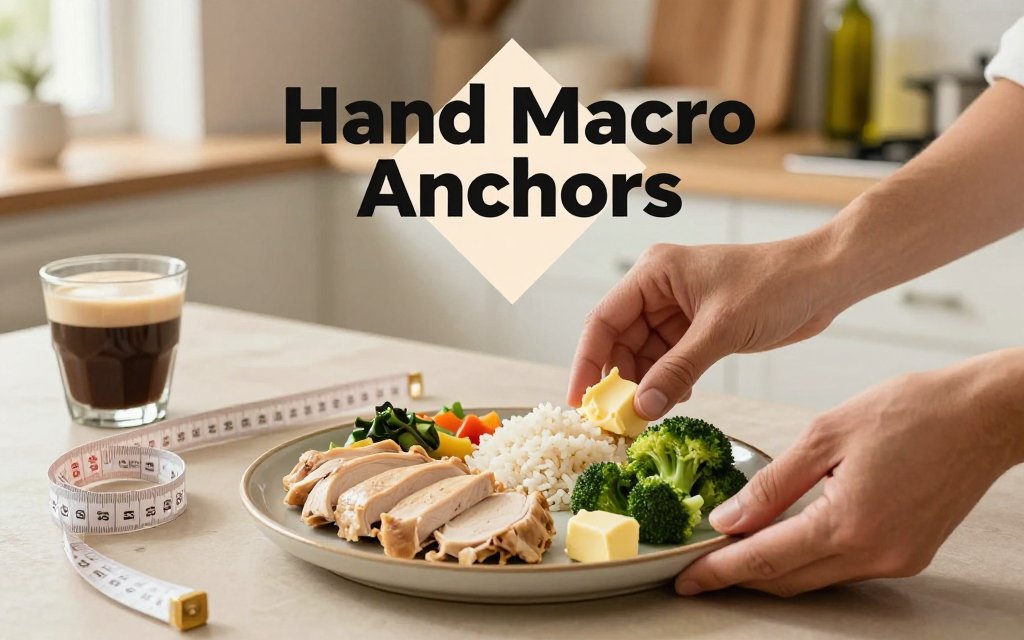
“The hand portion method is a simple way to estimate protein, carbs, fats, and vegetables using your own hand as the measuring tool, so your portions stay personalized even when you are not using a food scale.” That is the whole point: your hand generally scales with your body size, which makes this more “you-sized” than copying someone else’s 1,800 calorie meal plan. In real life, the win is not perfect accuracy at one meal, it is staying consistent across dozens of meals per week. If you have a medical condition or you are adjusting medications that affect appetite or blood sugar, check with your clinician for personal guidance.
The classic hand anchors are easy to remember: a palm of protein (think cooked chicken breast, salmon, tofu, lean steak), a fist of non-starchy vegetables (spinach, broccoli, peppers), a cupped hand of carbs (rice, pasta, oats, beans, fruit), and a thumb of fats (olive oil, butter, peanut butter, mayo, cheese). As a practical starting point, one palm of cooked lean meat often lands around 3 to 4 ounces and roughly 25 to 30 grams of protein, which is about 120 to 180 calories depending on the cut and cooking method. A cupped hand of cooked rice is commonly close to 1/2 cup, roughly 100 to 130 calories. These are not laws of physics, they are training wheels that keep your plate roughly balanced.
Most people “mess it up” in predictable places, and you can guardrail those right away. Liquid calories are the big one: a 16 ounce flavored latte can swing from 120 calories to 300-plus depending on milk, syrup, and whipped cream. Oils are the stealth multiplier: one tablespoon of olive oil is about 120 calories, and restaurant cooking can easily use several tablespoons across a dish. Mixed dishes are the third trap because your hand can only estimate the final pile, not the hidden ingredients (cream sauces, cheese, sugary glazes). When you are unsure, assume there is at least one extra thumb of fat in a shiny or creamy entrée, and log an “oil used in cooking” entry rather than pretending it is free.
If you can name the palms, fists, cupped hands, and thumbs on your plate in under 20 seconds, you are ready to log. Do it the same way each meal and your weekly trends will get much easier to manage.
The 20-second rule: estimate first, log second
Here is the workflow that keeps you from burning out: look at the plate, assign hand portions, then log a best-match item in CalMeal. For example, you might decide: “2 palms chicken, 1 cupped hand rice, 2 fists mixed veggies, 1 thumb oil or dressing.” Only after you estimate do you open the app and pick the closest match (like “grilled chicken breast,” “cooked white rice,” “mixed vegetables,” and “olive oil”). This sounds small, but it flips the order from perfection-first to consistency-first. If you are also prioritizing satiety (or you are navigating appetite changes), pairing this method with GLP-1 protein fiber tracking can make your logs more useful with less mental math.
Picture a work lunch where you are grabbing a bowl and heading into a meeting. You dish up shredded chicken, black beans, rice, fajita veggies, salsa, cheese, and guacamole. Instead of debating grams, you do a quick hand scan: chicken looks like 1 palm, beans plus rice looks like about 2 cupped hands total, veggies are at least 1 fist, guac is about 1 thumb, cheese is another half-thumb. You log it as a chicken burrito bowl with beans and rice, then add a guacamole entry if needed. Done in under a minute, no logging fatigue, and you still captured the two most important variables for calories: carb portions and added fats.
How accurate is eyeballing calories, really
Eyeballing is more accurate than most people think, if you use the same anchors every time and you do not ignore oils and drinks. A realistic expectation for many everyday meals is landing within roughly 10 to 20 percent when you have practiced for a few weeks and you are logging consistently. Research also supports the general idea that hands can be useful estimation aids. In a University of Sydney study comparing hand-based methods with household measures, a “finger width” approach helped many geometric-shaped foods and liquids land within plus or minus 25 percent of true weight more often than household measures did, although irregular foods and spreads were still tough to estimate accurately (see hands as portion aids). Translation: aim for trend accuracy across the week, not a perfect number on one dinner.
If you want this to work even better, “calibrate” once or twice per week at home. Pick one meal you already eat a lot, like your yogurt bowl or your chicken and rice dinner, and weigh it one time to see what your palm and cupped hand look like in real grams. You are not doing this forever, you are training your eyes. Also, be honest about calorie-dense add-ons: measure peanut butter once so you can recognize what 1 tablespoon actually looks like, and remember that a restaurant “light drizzle” can still be 2 thumbs of oil. Keep the goal simple: build repeatable portions you can stick to, then let your weekly average in CalMeal tell you what to adjust.
Palm, fist, thumb: portion sizes that work
Your hand is a surprisingly practical “measuring tool” because it is always with you, it works at restaurants, and it keeps you consistent even when labels and serving sizes get confusing. The idea is simple: match food portions to hand shapes, then repeat that pattern meal to meal. For most people aiming for fat loss, this gets you close enough to hit a calorie deficit without weighing chicken or counting every gram of rice. Think of it as training wheels for macros that still work once life gets busy. If you have any medical condition, recent surgery, or a history of disordered eating, it is smart to check with a doctor or qualified clinician before changing how you eat.
Here is the quick mental model: palm equals protein, cupped hand equals carbs, thumb equals fats, fist equals veggies. The numbers are intentionally “boring” and repeatable: each hand portion roughly maps to a predictable macro amount and a calorie ballpark. You will not be perfect, and you do not need to be. The win is that you can look at a plate and quickly answer, “Do I have enough protein?” or “Did my pasta dinner get heavy on carbs and light on veggies?” That awareness alone tends to reduce accidental overeating, especially with calorie-dense foods like oils, nut butters, and cheese.
Your hand to macro cheat sheet
Use the table below as your baseline, then learn what each portion looks like in foods you actually eat. A palm of protein means the size and thickness of your palm (not fingers). That might be 1 chicken thigh (meat only) or a palm-sized piece of chicken breast, or a thick slab of salmon. For a no-cook option, a single-serve tub of Greek yogurt is often close to 1 palm of protein, but check the label since brands vary. The “classic” hand conversions used in coaching resources commonly place a palm of protein around 20-30 g protein, a cupped hand of carbs around 20-30 g carbs, and a thumb of fats around 7-12 g fat, which you can also see in this hand portion infographic.
For carbs, your cupped hand is the “base” portion. A cupped hand of cooked rice is a common one, and it is also easy to eyeball in meal prep containers. Oats work too: a cupped hand of cooked oatmeal is a simple breakfast carb portion, and you can pair it with a palm of Greek yogurt for protein. Tortillas are a good real-world test: one small flour tortilla can land around a cupped-hand portion of carbs, while a large burrito tortilla can be 2 or more cupped hands. If your carb source is also fatty (like buttery noodles or a cheesy quesadilla), keep the carb hand the same but plan fewer “thumbs” of added fats.
Fats are the easiest macro to underestimate, so treat the thumb portion like a “budget” you spend on the foods that make meals satisfying. One thumb of fats can look like a small smear of peanut butter, a drizzle of olive oil, a chunk of avocado, or a small handful of shredded cheese that roughly matches your thumb size. If you cook with oil, count it. One quick tip: pour oil into a spoon first, then you will learn what “one thumb” looks like in real life. With cheese, it is especially helpful to portion once at home, then remember the visual for restaurants, where cheese can quietly add hundreds of calories.
Try this at your next meal: build your plate with 1 palm protein, 1 cupped hand carbs, 1 thumb fat, and 1-2 fists veggies. Then adjust one piece at a time based on hunger and goals.
Hand size differences are a feature, not a bug. A larger person generally has a larger hand, and they often need more food to maintain muscle, training, and daily energy. A smaller person usually has a smaller hand, so portions naturally scale down without math. That does not mean it is perfectly individualized, but it is a solid starting point. If you are losing weight too slowly, you can tighten the plan by trimming 1 thumb of fat per day or swapping 1 cupped hand of carbs for an extra fist of veggies. If you are losing weight too fast, feeling weak, or struggling with workouts, add back a cupped hand of carbs around training, or add an extra palm of protein.
Mixed meals: how to portion bowls, wraps, and pasta
Mixed meals get easy when you deconstruct them into four jobs: base (carb), main (protein), add-ons (fats), and volume (veggies). Example 1, burrito bowl: start with 1 cupped hand rice as the base, add 1 palm chicken thigh meat as the main, then pile on 1-2 fists fajita veggies, lettuce, and salsa for volume. For add-ons, pick 1 thumb guacamole and decide if you want cheese. If you add cheese, that is often another thumb of fat, so either skip the guac or use a half-thumb of each. If you want creaminess without as much fat, a few spoonfuls of plain Greek yogurt can act like “sour cream,” and it counts toward protein.
Example 2, pasta night: mentally separate noodles from sauce. Make noodles your base (1 cupped hand cooked pasta), choose a main (1 palm chicken, turkey, or shrimp), then build volume by stirring in 1-2 fists of spinach, mushrooms, zucchini, or peppers. Finally, watch the add-ons: olive oil, pesto, and parmesan are delicious, but they are thumb portions that stack fast. If you want a bigger-looking bowl with fewer calories, focus on volume and lean protein, and steal a few tactics from energy density hacks for fewer calories. This is also where CalMeal-style logging can help, take one photo, estimate your hand portions, and you are done in under a minute.
How to use hand portions for weight loss
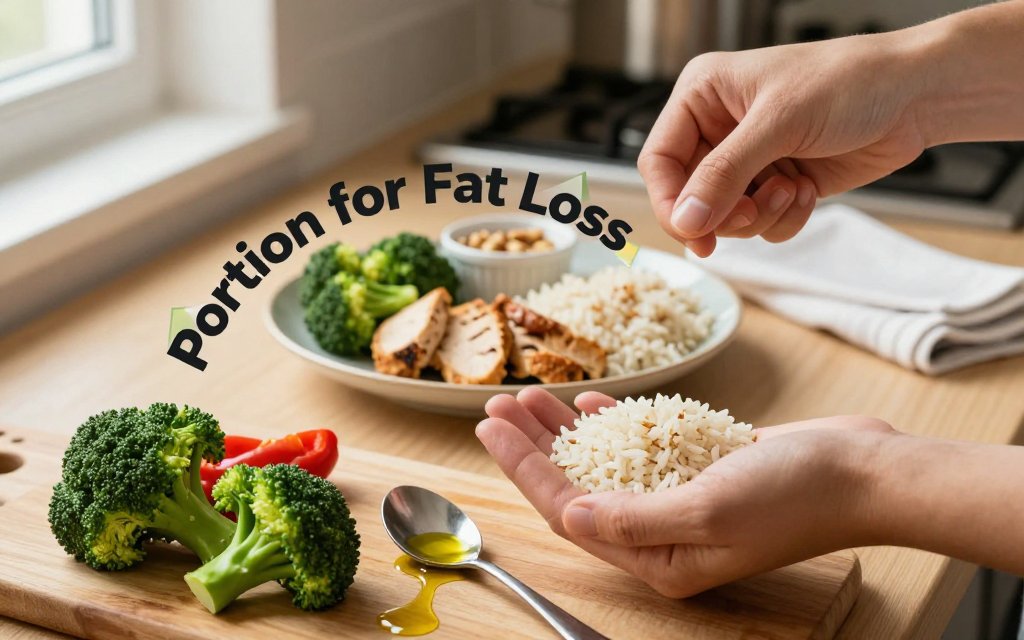
If your goal is fat loss, protein and veggies are the easiest levers to pull consistently, and added fats are the easiest to underestimate. Here is why: a fist of broccoli or salad adds a lot of volume for very few calories, while a thumb of oil, butter, mayo, nuts, or cheese can quietly add 100 to 200 calories before you even feel fuller. So the repeatable plan is simple: keep protein steady, push veggie volume up, and be honest about fats. Research reviews on higher-protein diets also find they can help with satiety and support fat loss during calorie restriction, even though results vary by study design and adherence, which is why consistency beats perfection over time (see this protein and weight loss review).
The plate method for weight loss using your hands
To build a fat loss plate without measuring, assemble it in this order: start with 1 to 2 fists of veggies, then add 1 to 2 palms of protein, then 1 cupped hand of carbs, then 1 thumb of fats. That sequence matters because it makes the high-volume, high-protein parts non-negotiable. Example at home: a big stir-fry with 2 fists of mixed peppers and broccoli, 1 to 2 palms of chicken or tofu, 1 cupped hand of cooked rice, and 1 thumb of sesame oil or peanut sauce. If you want a calorie reality check, a thumb of olive oil (about 1 tablespoon) is roughly 120 calories, while 2 fists of non-starchy veggies are often under 100 calories total.
Adjusting for training days versus rest days is where hand portions shine because you can change one dial without rewriting your whole routine. Keep veggies and protein the same, then scale carbs up or down based on activity. On lifting days or long runs, move from 1 cupped hand of carbs to 2 cupped hands (or add a second carb source, like fruit). On rest days, go from 1 cupped hand down to 0 to 1, depending on hunger and progress, and keep the plate anchored with the same palms of protein and fists of veggies. This approach helps you avoid the common trap of cutting everything at once, getting overly hungry, and then rebounding at night.
For meal prep, think in hand portions first, containers second. Batch cook proteins (chicken thighs, turkey chili, lentils, salmon), roast a sheet pan of veggies, and portion carbs in advance (rice, potatoes, pasta, tortillas). Then you can build grab-and-go bowls that match your target without weighing: each container gets 1 to 2 palms protein, 1 to 2 fists veggies, and 0 to 2 cupped hands carbs depending on your day. Keep fats visible so they are harder to “forget”: single-serve guacamole cups, measured dressing cups, or a clearly labeled bottle that reminds you, one thumb per meal. If you track in CalMeal, snap a photo before eating and log the hand portions as a quick baseline, then refine later if needed.
If your weight stalls, keep your palms of protein and fists of veggies the same, then shave one thumb of added fat or one cupped hand of carbs for a week and recheck.
Common mistakes: oils, nuts, cheese, and restaurant portions
The most common reason hand portions fail for weight loss is not carbs, it is hidden fats. Cooking oil is the big one: a quick pan “glug” can be 2 to 3 thumbs, which is 240 to 360 calories. Fix: decide in advance how many thumbs you get at that meal, then use a teaspoon or a quick spray to stay close. Sauces and dressings are another stealth add, especially creamy ones. Ask for them on the side and dip with intention, then count what you used as thumbs. Nuts are healthy, but they behave like fats for calorie math, so treat them as thumb portions, not “a handful.” Same for cheese: one slice of cheddar can easily be around 100 calories, which is roughly a thumb in many plans.
Restaurants add two challenges: bigger portions and more added fat used in cooking. Your best move is a half-portion tactic before hunger makes the decision for you. Box half the fries, split the entree, or order a salad plus a protein and add the carb you actually want (one cupped hand) instead of the default pile. Mini example, burger and fries: estimate the burger as 1 to 2 palms of beef (or chicken), the bun as 1 cupped hand of carbs, cheese and mayo as 1 to 2 thumbs of fat, and fries as 1 to 2 cupped hands of carbs plus at least 1 thumb of fat from frying oil. That can land anywhere from about 800 to 1,300 calories depending on size and add-ons, so the “sauce on the side” and “box half” habits matter.
If progress is slow after two weeks, do not slash portions randomly. Pick one adjustment and keep it for seven days so you can learn what works for your appetite. Most people get the best results by keeping protein at 1 to 2 palms per meal, keeping veggies at 1 to 2 fists, and tightening fats first (drop one thumb of added fat per day) before cutting protein or vegetables. Also check the “extras” that bypass your plate: latte add-ins, alcohol, bites while cooking, and second servings of calorie-dense snacks. Hand portions are a tool, not a diagnosis, so if you have medical conditions, a history of disordered eating, or you are unsure about safe calorie targets, talk with your doctor or a registered dietitian for personalized guidance.
Adjust hand portions to match your goals
Hand portions work best when you treat them like adjustable “dials,” not rigid rules. Two people can eat “one palm of chicken” and still have very different results, because sleep, stress, training volume, and starting body size change how many palms, thumbs, and cupped hands you actually need. A simple way to personalize it is to keep protein steady, then move carbs and fats up or down based on your goal. For fat loss, you are usually turning the energy dial down slightly. For maintenance, you keep the dials steady. For muscle gain, you turn the energy dial up, especially around training, while keeping food quality consistent.
Different goals also change how you judge success. In a fat loss phase, a realistic target is often a slow, steady drop, paired with manageable hunger and decent gym performance. In maintenance, the win is stable weight trend, consistent energy, and workouts that keep moving forward. In a muscle gain phase, you want performance and measurements to improve without a big jump on the scale. If you are using a GLP-1 medication and appetite feels dramatically lower, your “goal” might shift to hitting enough protein, fluids, and micronutrient-dense foods. The FDA Wegovy prescribing information notes GLP-1’s role in appetite and caloric intake, and that semaglutide can delay gastric emptying, so smaller, protein-first meals often feel better. Talk with your clinician if appetite is so low that you struggle to meet basic nutrition.
Calibration week: make your estimates more accurate
Calibration is how you turn “close enough” into “surprisingly accurate.” Pick 3 to 5 common foods you eat weekly (chicken, rice, Greek yogurt, olive oil, peanut butter). For a few meals at home, build your plate using your hand estimates first, then weigh or measure just once to see your baseline. For example, the USDA lists cooked roasted chicken breast at about 165 calories per 100 g in USDA FoodData Central nutrition data. If your “one palm” of chicken is usually 90 g, that is roughly 150 calories and around 28 g protein. If it is 140 g, it is closer to 230 calories and around 43 g protein. Neither is wrong, you just need to know which one is yours.
After calibration, use two weeks of data to decide what to tweak, not a single “weird” morning weigh-in. Track a daily scale weight if you can, but judge progress by the trend across 14 days, plus two check-ins: hunger (are you thinking about food all day?) and training (are reps and energy holding steady?). If progress stalls for two full weeks, change one thing at a time. Start with the easiest lever: reduce fats by 1 thumb per day (often about 90 to 120 calories depending on the fat source), or reduce carbs by 1 cupped hand per day (often about 100 to 150 calories depending on the carb). Keep protein stable so you feel satisfied and recovery stays strong. CalMeal can help you spot patterns by logging a few “typical days” and comparing them to your hand targets.
If your weight jumps two pounds overnight, it is almost never fat. Look at the two-week trend, your hunger, and your workouts. Adjust one knob, then give it a full week.
FAQ: Hand portion tracking questions beginners ask
The hand method is meant for real life: busy weekdays, travel, family dinners, and meals you did not cook. The goal is not perfect precision, it is repeatable consistency. That is why the best “upgrade” is having quick rules you can apply in 10 seconds. Use the FAQs below like a mini troubleshooting guide. If you are unsure, prioritize protein first, add veggies next, then decide how many carbs and fats match your goal. If you are on a GLP-1 and portions feel too big, flip the order: start with smaller protein portions more often, and add carbs and fats only as tolerated.
How many calories is a palm-sized portion of protein
A palm-sized portion of protein is usually about 3 to 4 oz cooked (often 85 to 115 g), which commonly lands around 120 to 250 calories depending on leanness. Lean proteins like chicken breast, turkey, white fish, and shrimp sit on the lower end. Higher-fat proteins like salmon, ribeye, sausage, or chicken thigh sit higher. Quick rule: if the protein looks “dry and lean,” assume 150-ish calories per palm. If it looks “oily or marbled,” assume 220-ish calories per palm, then adjust fats on the rest of the plate.
Does the hand portion method work for restaurants and fast food
Yes, restaurants are where hand portions shine, because you can control your choices even when you cannot control the kitchen. Use your hand to estimate the main items, then make one “calorie insurance” move. Examples: at Chipotle, ask for one palm of chicken, then choose either rice or cheese, not both. At a burger spot, count the patty as about 1 to 2 palms, skip mayo, and swap fries for a side salad, or eat half the fries and box the rest. If the meal arrives huge, immediately box half, then portion the remaining plate using your hands.
Can I use hand portions to hit high-protein macros
Yes, count “palms per day” and build your meals around that number. A practical estimate is 25 to 30 g protein per palm for many cooked lean proteins, so a 130 g daily target is often about 4 to 5 palms total. Example day: breakfast, 1 palm Greek yogurt plus berries; lunch, 1 to 1.5 palms chicken salad; snack, 1 palm protein shake; dinner, 1 to 1.5 palms salmon or tofu with veggies. Quick rule: keep protein steady, then adjust carbs and fats to match your goal so high-protein does not accidentally become high-calorie.
Ready to start tracking your nutrition today without overthinking every bite? Download CalMeal for free and take the guesswork out of calorie counting with AI-powered food recognition. Pair your hand portion estimates with quick photo logging to stay consistent anywhere. Get the app here: iOS or Android, then log your next meal and build momentum today.
Start Tracking Your Nutrition Today
Download CalMeal for free and take the guesswork out of calorie counting with AI-powered food recognition.