Night Shift Nutrition: Calorie Targets That Actually Stick
Night shifts can scramble hunger cues and make calorie tracking feel pointless. This guide shows you how to set a realistic calorie target, choose a consistent 24-hour tracking window, and plan meals and snacks around sleep so fat loss keeps moving without white-knuckling cravings.

Working nights can make weight loss feel impossible, even when you are trying hard. The real problem is usually not willpower. It is a messy tracking window, low-protein choices that do not keep you full, and decision fatigue that hits hardest around 2 a.m. In this guide, you will learn how to set a calorie target you can repeat, define a personal 24-hour boundary that matches your schedule, and build a shift-friendly meal rhythm that stays consistent.
Why night shift hunger feels out of control
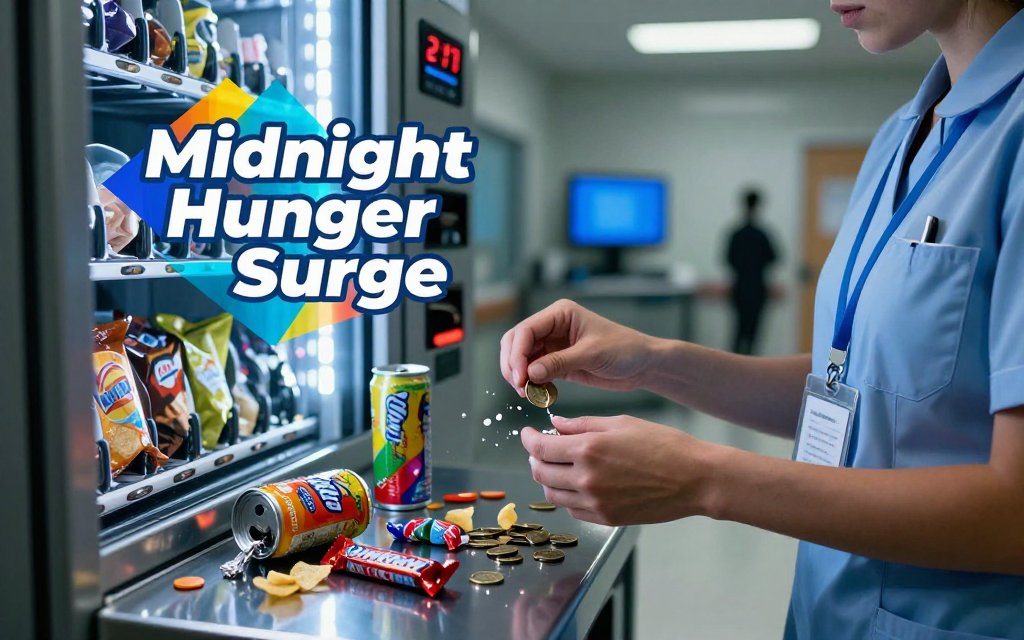
At 2:17 a.m., the unit finally gets quiet. A nurse grabs a “quick bite” from the vending machine, tells herself it is just to get through the last few hours, and somehow ends up with chips, a candy bar, and a second caffeinated drink. If that sounds familiar, it is not a willpower problem. Your internal clock, short sleep, and higher stress load can all nudge hunger hormones and cravings in the wrong direction. In one well-known lab study, sleep curtailment was linked with lower leptin, higher ghrelin, and more hunger, especially for carb-heavy foods, which helps explain why the same calorie target can feel harder at night (sleep loss raises hunger).
Here is the frustrating part: you can eat “enough” on paper and still feel snacky at 1 to 3 a.m. Night shift often means less total sleep, more broken sleep, and less predictable breaks. Layer in adrenaline spikes (codes, calls, aggressive patients, back-to-back runs), then long stretches of sitting charting or driving. Your brain looks for fast fuel because it is trying to stay alert when it expects rest. That is why cravings tend to skew toward quick carbs and salty, crunchy foods, not salmon and broccoli. The goal is not to force yourself into daytime eating rules. The goal is to match your calories and macros to the reality of your shift.
Circadian rhythm and appetite: what changes at night
Your circadian rhythm is basically your body’s scheduling system. It helps coordinate when you feel sleepy, when digestion feels “on,” and when you naturally want meals. When you work overnight, you are eating during your biological night, even if your wall clock says it is lunchtime. That mismatch is a big reason late-shift hunger can spike even when your total calories are reasonable. You might also notice that you want foods that hit fast: pretzels, fries, ramen cups, cookies, or anything that is easy to chew and easy to grab. Night shift hunger is often a timing problem, not a calorie problem. Once you plan for timing, your calorie target stops feeling like a daily fight.
A simple way to make your target feel “stickier” is to build two anchor eating moments: a pre-shift meal and a planned mid-shift mini-meal. For weight loss, many night shift adults do well starting with a pre-shift meal around 400 to 600 calories that includes 30 to 40 g protein and 8 to 12 g fiber. Real examples: a turkey sandwich on whole grain bread plus an apple; a bowl with 1 cup cooked rice, 4 to 5 oz chicken, and a big pile of roasted veggies; or Greek yogurt (2 percent) with berries and 1 oz nuts plus a banana. If you are using appetite-changing meds, this structure still matters, and GLP-1 protein fiber tracking can help you stay consistent when hunger cues feel unpredictable.
If you keep “losing control” at night, stop blaming yourself and start adjusting the plan. Put most of your protein and fiber before the vending machine moment, then schedule one intentional snack so hunger never gets desperate.
The 3 traps that blow up night shift calories
Most night shift calorie blowups come from a few repeat patterns, not from one dramatic “cheat.” They usually start earlier than you think, like skipping food before clock-in because you are rushing, then trying to patch the energy gap with caffeine. They also show up as nibbling, where calories feel invisible because nothing looks like a meal. If you log in CalMeal, these are the moments to watch, because they add up fast and they are highly fixable with a small structure change.
Try this schedule if you work 7 p.m. to 7 a.m.: eat a real meal at 5:30 to 6:30 p.m. (protein plus carbs plus produce), then plan a 200 to 350 calorie mini-meal around 11 p.m. to 1 a.m. (think: 2 hard-boiled eggs plus fruit, or cottage cheese plus crackers, or a protein bar that you actually like). After 2 a.m., switch from “fueling up” to “holding steady” with a lighter 100 to 200 calorie option if needed, like beef jerky plus grapes, edamame, or air-popped popcorn. Cap caffeine 6 to 8 hours before your planned sleep time to avoid the wired-but-hungry spiral, and keep water within reach since dehydration can feel like cravings.
On days off, the common mistake is trying to eat like a daytime person again, then feeling ravenous the first night back. You do not need a perfect routine, but you do need a repeatable structure. Keep one anchor meal time consistent across workdays and off-days (often the meal right after waking), and plan your “vending machine danger window” snack in advance. Also watch the big three: skipping the pre-shift meal, leaning on caffeine as a meal replacement, and pretending you can eat “normally” when your sleep is flipped. You are not broken. Your schedule just needs a different nutrition structure that respects how night shift changes hunger.
Set a calorie target you can repeat weekly
Here is the simplest rule that actually works for night shift fat loss: aim for a small weekly calorie deficit you can repeat, not a perfect day you can only tolerate once. If your target supports a gradual loss pace (many public health guidelines point to about 1 to 2 lb per week for many adults), you are in the sweet spot where consistency usually beats intensity. The CDC highlights that people who lose weight gradually tend to keep it off better than faster loss, which is exactly what most night workers need when sleep and stress are already pushing appetite up. See the CDC guidance on gradual loss.
To set a target you can repeat weekly, think in averages, not isolated shifts. Start by estimating maintenance calories (the amount that holds your weight steady) for a typical workday and a typical off day. Many people maintain higher on workdays because they move more, walk more, and stay awake longer, but some people snack more off shift, so be honest with your pattern. Then choose a modest deficit and lock in protein as your non-negotiable. After that, let carbs and fats flex based on what makes the night feel easiest. This “protein first, calories second” approach keeps your plan stable even when your sleep schedule is not.
A realistic deficit for night shift weight loss
For most night shift workers cutting weight, a realistic deficit is about 250 to 500 calories below maintenance. Use 0.5 to 1.0 percent of bodyweight loss per week as a sanity check on whether the deficit is too aggressive or too mild. Bigger cuts can backfire because sleep disruption and job stress make hunger louder, cravings sharper, and willpower less reliable at 2 a.m. There is also research showing circadian misalignment can change energy metabolism during simulated night shift schedules, which can make “just eat less” feel harder than it should. If you want the science context, skim this study on circadian misalignment.
Minimum effective deficit: pick the smallest calorie drop you can hit on every shift, for two full weeks. If weight is not trending down, adjust by just 100 to 150 calories, not a dramatic cut.
Example (night shift nurse): say your maintenance averages 2,400 calories on three 12-hour shifts and 2,200 calories on four off days, for a weekly maintenance of 15,200. A minimum effective deficit could be 300 per day on average, so roughly 2,100 on workdays and 1,900 on off days (weekly target about 13,300). Notice what we did not do: we did not slash to 1,500 on off days to “make up” for cafeteria food at work. Keep the swing small (often within 100 to 250 calories) so your body does not treat off days like rebound days.
Example (first responder on rotating nights): if maintenance is about 2,800 on duty and 2,500 off duty, start with 2,500 and 2,300 instead of trying to “diet hard” at 2,000. If you are consistently hungry at 2 a.m. (not just snacky, but real stomach hunger), raise calories by 100 to 200 for a week and tighten food quality before cutting harder. That might mean swapping chips and candy for a higher-protein option, adding a piece of fruit, and drinking water or electrolyte water before going back for seconds. You are not failing, you are dialing in a target you can sustain under stress.
Use the table as a grab-and-go cheat sheet for nights when the break room is all donuts and leftovers. The numbers are approximate, so check your specific brand, but the pattern matters: each option buys you protein for a relatively small calorie cost. That is the lever that keeps your deficit from feeling miserable on shift. If you want tracking to feel faster, practice scanning labels and logging the same staples repeatedly, and save your brainpower for the unpredictable meals. CalMeal users often find that front-of-pack label calorie tracking makes those repeat meals almost automatic.
Macro anchors that make calorie tracking easier
Make tracking easier by anchoring two macros first: protein and fiber. Start protein at about 0.7 to 1.0 grams per pound of goal bodyweight. If your goal is 170 lb, that is roughly 120 to 170 grams of protein per day. You do not need perfection, you need coverage across the shift: aim for 30 to 45 grams at your main meal, then 20 to 30 grams in a packed snack, and another 20 to 30 grams near the end of shift if mornings trigger cravings. Easy options that pack well include Greek yogurt cups, cottage cheese, tuna packets, chicken wraps, and a protein shake paired with fruit.
Next, set fiber at 25 to 35 grams per day, and treat it like a nightly craving shield. High-fiber carbs are slower and more filling, which matters when your body thinks it should be asleep and starts asking for quick energy. Practical night shift moves: add a bagged salad kit to your main meal, keep microwave steamable veggies in your work fridge, choose oats or a high-fiber cereal on “breakfast at 5 p.m.” days, and build at least one bean or lentil meal into the week. If fiber is currently low, increase gradually and drink fluids so your gut keeps up. If you have a medical condition or you are unsure what is appropriate for you, check with a doctor or registered dietitian.
Define your 24-hour tracking window, not midnight
If you work nights, midnight is just a number on a clock, not the start of your “real” day. Research on shift work shows your body’s rhythms (sleep, digestion, blood sugar regulation) get pushed out of sync when you are awake and eating at night, which is one reason consistent routines matter so much. An easy way to think about it is that timing and regularity help your body and your tracking system stay predictable. For a quick, readable overview of how meal timing can matter for night shift workers, see this NIH meal timing study. You do not need a perfect schedule, you just need a repeatable one.
Here is the core idea that makes calorie targets “stick” on nights: define your own 24-hour tracking window (your personal day boundary) so one shift does not get split across two calendar days. If your shift runs 7 p.m. to 7 a.m., logging by midnight can create chaos. Your 10 p.m. meal lands on “today,” your 2 a.m. snack lands on “tomorrow,” and then your post-shift breakfast lands on “tomorrow” too. The result is two messy days that look like overeating, even if your total for the full shift cycle was right on target. A custom window fixes that by making one complete shift cycle equal one complete day of intake.
Option A: Sleep-to-sleep tracking (the simplest for beginners)
Sleep-to-sleep tracking means your “day” starts when you wake up and ends when you go to sleep, even if those times look unusual. If you wake at 3 p.m. and go to sleep at 9 a.m., your 24-hour window is 3 p.m. to 9 a.m. the next day. That is it. No mental math. No pretending your day resets at midnight. This approach is beginner-friendly because it lines up with appetite cues and routines: wake, eat, work, snack, unwind, sleep. It also eliminates “free calories after midnight,” which is the sneaky trap where a 250 calorie snack feels like it does not count because it landed on a different calendar date.
Worked example (7 p.m. to 7 a.m. shift) using sleep-to-sleep: you wake at 3 p.m., so your window is 3 p.m. to 9 a.m. Start with a pre-shift meal at 5:30 p.m.: a turkey burrito bowl (1 cup rice, 5 to 6 oz turkey, salsa, lettuce) around 650 calories. Mid-shift at 11:30 p.m., log a meal like Greek yogurt, a banana, and a handful of granola around 400 calories. Planned snack at 3:00 a.m., log a protein bar or a tuna packet with crackers around 200 calories. Post-shift at 7:45 a.m., keep it light: two eggs plus toast and fruit around 450 calories. Total is about 1,700 calories, and it all lives in one clean day.
Pick a start time that matches your real day. Log everything from that moment until the next start time, including the 2 a.m. snack. If it is in your window, it counts, no exceptions.
Option B: Shift-anchored tracking (best for rotating schedules)
Shift-anchored tracking is great if your sleep time changes week to week, but your work block is the one consistent anchor. You define your “day” as a window that starts 2 to 4 hours before your shift begins and ends 2 to 4 hours after your shift ends. That captures the whole work period plus the meals that naturally bookend it. In practice, CalMeal-style logging feels cleaner because each shift becomes one complete day of intake. You look at one screen and see the entire story: pre-shift fuel, mid-shift meal, planned snack, and the post-shift meal that often decides whether you sleep well or spiral into grazing.
Worked example (7 p.m. to 7 a.m. shift) using shift-anchored: set your day from 4 p.m. to 10 a.m. Pre-shift at 4:30 p.m., log a solid meal like chicken pasta (5 oz chicken, 2 cups cooked pasta, marinara) around 700 calories. Mid-shift at midnight, log a packed meal like a deli sandwich on whole wheat with an apple around 450 calories. At 3:30 a.m., log a planned snack like cottage cheese plus berries around 200 calories. After shift at 8:30 a.m., log a smaller “landing meal” like oatmeal with whey mixed in around 450 calories. Total is about 1,800 calories, and you can compare shift to shift even if you slept at different times.
Your consistency rule is simple: pick one window and keep it for at least 2 weeks before you judge progress. If you change the boundary every couple of days, your daily totals will look random, and random data is stressful data. Use the same calorie target you set in the previous step (for example, 1,900 calories per tracking day), then watch your 7-day average inside that same window. If weight or measurements are not moving after 14 days, adjust the target by a small, manageable amount like 100 to 200 calories, or tighten up logging accuracy, then hold again. If you have a medical condition, pregnancy, or concerns about sleep and appetite, check in with a clinician for personalized guidance.
Meal timing and snacks that prevent 2 a.m. overeating
If you have ever felt “fine” at 10 p.m. and then suddenly starving at 2 a.m., you are not imagining it. Night shift hunger is real, and the fix is rarely willpower. A repeatable rhythm that prioritizes protein and fiber tends to work best because it keeps fullness steadier between breaks. For example, a systematic review on protein and appetite found that higher protein intake can reduce hunger and increase fullness in randomized trials. Put simply, the goal is to stop “grazing” and start “scheduled eating”: you plan 2 meals plus 1 to 2 snacks, you know the calorie ranges, and you walk into your shift with food already decided.
A simple night shift meal rhythm (pre, mid, late, post)
Start with a pre-shift meal of 400 to 700 calories, ideally 60 to 90 minutes before work so you are not rushing. Make it protein-forward (roughly 30 to 45 g protein) and add fiber (at least 8 g) so it digests slowly. Real examples: turkey chili (1.5 cups) plus cooked rice (3/4 cup) and a side of broccoli, or a big chicken salad wrap made with a high-fiber tortilla plus an orange. If mornings are your “evening,” eggs and potatoes also work, try 2 whole eggs plus 1 cup egg whites, 250 g roasted potatoes, and salsa. Log it before you leave the house so your calories are not a mystery at midnight.
Mid-shift, aim for your second main meal, again 400 to 700 calories. Place it around your most predictable break (often 4 to 6 hours into the shift) so you do not arrive at the vending machine in “emergency hunger.” Good options that reheat well: chicken breast or tofu stir-fry with frozen mixed vegetables and microwave rice, or a meal-prep bowl with salmon, quinoa, and a bagged salad kit. If your workplace has limited fridge space, build a shelf-stable backup: two tuna packets, whole grain crackers, and a high-fiber fruit like a pear. This is also where many people accidentally overshoot calories with “liquid snacks,” so keep sweetened coffee drinks and juices as planned items, not surprises.
Late shift is where overeating usually happens, so plan a small, boring-on-purpose snack: 150 to 300 calories. The win is consistency, not novelty. Pick something high-protein, high-fiber, and easy to log in one entry so you do not end up “nickel and diming” your calories for an hour. Snack ideas that work in real break rooms:
If you do not want to eat it at 2 a.m., do not leave it within arm's reach at 2 a.m. Pack one planned snack, log it, and make everything else slightly inconvenient.
Finally, decide on a post-shift light bite of 150 to 400 calories, only if it helps you sleep. Some people sleep better with a small, familiar carb plus protein, while others do better going straight to bed. If you do eat, keep it low effort and not spicy or greasy (heartburn is not a recovery tool). Easy options: 3/4 cup Greek yogurt with berries and a sprinkle of cereal, or a half portion of your high-protein overnight oats. Caffeine matters here too. When possible, stop caffeine 6 to 8 hours before your planned sleep time, since sleep guidance often recommends a long cutoff window to protect sleep quality, including at least eight hours for many people in general advice like the Sleep Foundation's caffeine timing overview.
How do I count calories on night shift if my day crosses midnight?
Count calories inside your chosen 24-hour window, not by the clock hitting 12:00 a.m. A clean approach is to define “your day” as wake time to next wake time (or shift start to next shift start). Then everything you eat during that stretch belongs to that same day, even if it crosses midnight. This avoids the common trap of accidentally “resetting” at midnight and double-eating because both days look under target. If your app lets you add meals after midnight to the prior day, use that feature. If not, just stay consistent and focus on the weekly average.
Should I eat the same calories on days off as workdays?
Most people do best with a small, intentional difference, not a total rewrite. If your steps and activity drop on days off, eating the exact same calories can slow fat loss, but under-eating can backfire and trigger rebound snacking. Try this: keep protein the same, keep your meal rhythm similar, and adjust calories by 100 to 300 based on activity and hunger. For example, you might keep two 500 calorie meals and a planned snack, but swap your mid-shift meal for a lighter home meal and add more vegetables. Track your weekly trend, not one perfect day.
What are the best healthy night shift snacks for fat loss?
The best snacks are the ones you can repeat, log quickly, and stop eating after one serving. Look for 150 to 300 calories with at least 15 g protein and some fiber. Great “default” choices include edamame, roasted chickpeas, cottage cheese with crunchy vegetables, or an apple with measured peanut butter. If you prefer packaged options, pick one protein bar you tolerate well and keep it as your emergency snack so you are not guessing in the moment. Most importantly, pre-portion it before your shift, because eating from a large bag at 2 a.m. is how calories disappear.
Ready to make your calories consistent, even on nights? Start tracking your nutrition today with CalMeal. Download it free and take the guesswork out of calorie counting with AI-powered food recognition, fast logging, and simple daily targets that fit your shift schedule. Get CalMeal on iOS or Android, then log your next meal and build momentum.
Start Tracking Your Nutrition Today
Download CalMeal for free and take the guesswork out of calorie counting with AI-powered food recognition.