Satiety Index Meal Planning, Stay Full Under Calories
Use the satiety index idea to pick the most filling foods per calorie, build meals that keep hunger low in a calorie deficit, and log them fast in CalMeal. You will get a practical satiety-focused food list, simple meal formulas, and a volume eating plan that still hits your macros.
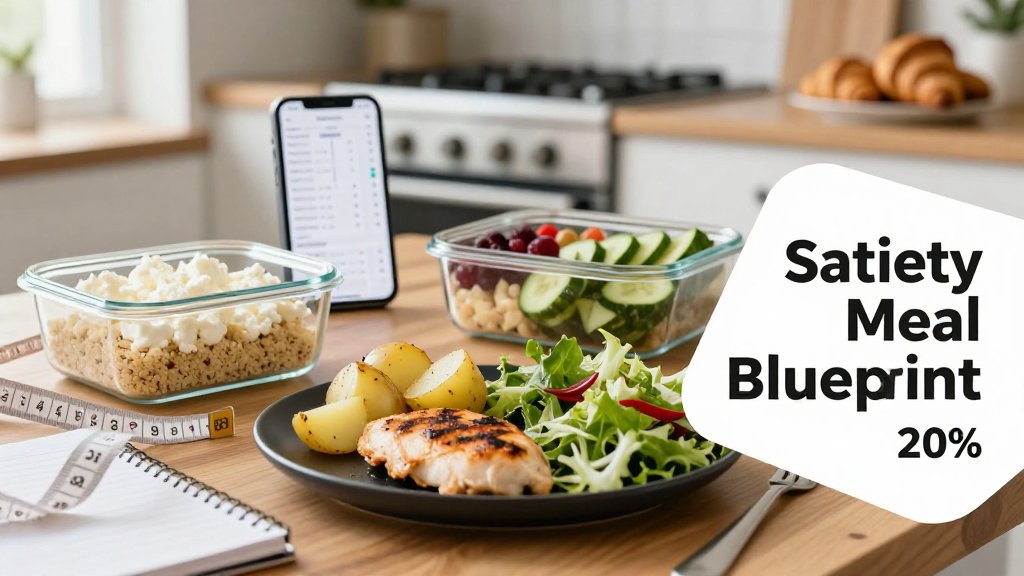
If you are constantly hungry while trying to stay in a calorie deficit, the problem is rarely willpower. It is usually meal design. Satiety index meal planning helps you choose foods that deliver more fullness per calorie, so you can eat satisfying portions and still hit your targets. In this article, you will learn how to think in satiety-first terms, which food traits matter most, and how to turn those choices into repeatable, mix-and-match meals for the week. You will also see how to log them quickly without obsessive measuring.
Satiety Index basics, what actually keeps you full
Satiety is the “how long am I comfortably satisfied?” feeling after a meal. In real life, good satiety means you can focus for 3 to 4 hours without stalking the snack drawer or white-knuckling hunger. The Satiety Index is a simple way to think about that: some foods keep you fuller per calorie than others. In the classic lab study behind the idea, foods were compared in equal-energy portions (with white bread set to 100), then people rated hunger for hours afterward. You can skim the original tables in the Satiety Index common foods PDF, then steal the patterns for your own meal planning.
Build meals around a protein anchor, then add fiber and water-rich volume. If you finish eating and feel physically hungry again within 90 minutes, increase protein and produce first, not snacks or extra fats.
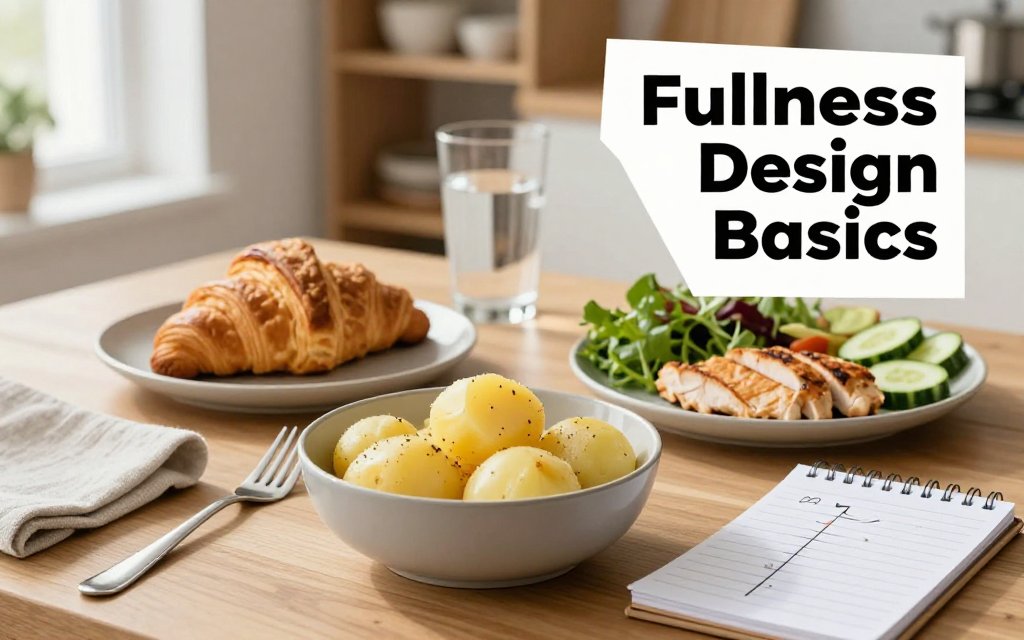
The big lesson is not “eat only the highest-score foods.” It is: fullness is a design problem. Boiled potatoes scored extremely high for satiety (323 vs white bread at 100), while a croissant scored very low (47), even though both can fit in a calorie budget. Why? Potatoes bring water and volume, plus a lot more food weight per calorie. Croissants pack calories into a small, easy-to-overeat package. That is the core rule for staying full under calories: build meals that are physically big and slow to digest, without quietly stacking oils, nuts, and sweets into “healthy” but tiny portions.
The 4 levers of fullness you can control
Lever 1 is protein. For most adults cutting calories, a practical target is 25 to 40 g protein per meal. That amount tends to “turn the volume down” on hunger, and it makes your meal feel like a real stopping point, not a teaser. Examples that land around 30 g: 5 oz chicken breast (about 230 calories), 1 cup low-fat cottage cheese (about 160 to 200 calories depending on brand), a can of tuna (about 120 to 180 calories), or 2 whole eggs plus 1 cup egg whites (roughly 240 calories). If breakfast is just toast and fruit, you are starting the day without the main hunger brake.
Lever 2 is fiber, aim for 8 to 12 g per meal, and let it come from real food first. A cup of lentils, black beans, or chickpeas can deliver 12 to 16 g fiber plus extra protein; berries, pears, and apples help too; and vegetables are the easy “fiber plus volume” combo. Lever 3 is water-rich volume: shoot for 2+ cups produce (salad, roasted veggies, cut fruit) or start with a bowl of broth-based soup. Lever 4 is low energy density, meaning more grams of food per calorie. Swap chips for 3 cups air-popped popcorn, or build a veg-heavy pasta bowl by keeping pasta to 1 cup cooked and adding zucchini, mushrooms, and spinach.
A helpful mindset shift is to plan meals as components, not as “good foods” and “bad foods.” Start with a protein anchor (chicken, tofu, Greek yogurt, eggs, fish). Add a fiber carb if you want it (beans, oats, potatoes, high-fiber wraps, quinoa). Add water volume (big salad, roasted veg, fruit, soup). Then add flavor on purpose, not accidentally, using measured fats (1 tsp to 1 tbsp olive oil, a sprinkle of cheese, a spoon of pesto) and bright tastes like salsa, mustard, hot sauce, lemon, and vinegar. This is also where tracking helps: in CalMeal, you can quickly sanity-check whether your plate actually hit the protein and fiber numbers that keep cravings calmer.
Common hunger traps in a calorie deficit
A few patterns make people ravenous even when calories look “fine” on paper. Saving most calories for night often backfires because you spend all day under-fueled, then overdo it when willpower is lowest. Liquid calories are another trap: a 250-calorie coffee drink or smoothie can disappear in minutes with almost no chewing, so your brain does not register it like a meal. The biggest sleeper issue is low-protein breakfast (pastry, cereal, toast, fruit). If you are hungry within 90 minutes, your last meal probably lacked protein and volume, so fix those first before you slash calories further.
“Healthy fats” portion creep is the classic reason a meal feels small but costs a lot. Nuts, nut butter, olive oil, granola, avocado, and dark chocolate are nutritious, but they are easy to pour or drizzle into an extra 200 to 400 calories without noticing. Another overlooked issue is under-salting meals: bland food often feels unsatisfying, so you keep chasing “something else.” If you are tracking and training, it can help to be intentional about sodium and potassium, see sodium and potassium logging. If you have blood pressure, kidney, or heart concerns, ask your clinician what sodium targets make sense for you.
Most filling foods per calorie to build meals
If your goal is to stay under calories without feeling like you are white-knuckling hunger, build meals from foods that score well on “fullness per calorie.” The exact satiety you feel will vary by person, portion size, and cooking method (for example, roasted veggies shrink, blended foods digest faster, and added oils raise calories quickly). Still, the pattern is consistent: high protein, high fiber, and high water volume usually win. Classic satiety research found boiled potatoes among the most filling options per calorie in the original satiety index research paper, and that same idea shows up in real life meal planning: start with an anchor, then add volume.
| Food | Serving | Use |
|---|---|---|
| Nonfat yogurt | 250 g | parfait base |
| Chicken breast | 150 g | bowl protein |
| Boiled potato | 300 g | hearty side |
| Black beans | 170 g | taco filling |
| Broccoli | 200 g | plate volume |
| Oats | 60 g dry | breakfast base |
Protein anchors that calm hunger fast
Think of protein as the “hunger off switch” at the start of a meal. For many adults, a practical baseline is 120 to 170 g cooked lean meat or seafood at meals, or 200 to 300 g nonfat Greek yogurt or low-fat cottage cheese at breakfast or snacks. Easy, high satiety picks include chicken breast, turkey breast, tuna, shrimp, white fish, tofu, tempeh, seitan, and legumes (lentils, chickpeas, black beans). If you like eggs, try a volume-friendly combo: 1 whole egg plus 200 g egg whites, scrambled with spinach and mushrooms. You keep flavor and satisfaction, while the calories stay reasonable.
Shopping and prep can make these proteins nearly automatic. Keep two “zero-thinking” options ready: a tub of plain nonfat Greek yogurt, plus a cooked protein in the fridge (baked chicken, air-fried tofu, or a batch of lentils). For canned fish, choose tuna or salmon packed in water when you want the lowest calorie density, then add crunch with celery, pickles, or shredded cabbage. If packaged foods confuse you, use front-of-pack calorie labels to quickly spot higher protein choices without getting stuck reading every panel. Pair your protein with a high-volume plant first, then decide if you want a carb or fat add-on.
Build each meal like a triangle: start with a protein anchor, add two fists of vegetables or fruit, then spend any remaining calories on a smart carb or a little fat for flavor.
Volume and fiber all-stars that stretch a plate
High-volume plants make a diet feel generous. Load up on cruciferous veggies (broccoli, cauliflower, Brussels sprouts, cabbage), salad greens, carrots, mushrooms, zucchini, bell peppers, and tomatoes. Aim for at least 2 packed cups of veggies at lunch and dinner, more if you enjoy it. Mushrooms and zucchini are especially helpful because they cook down but still add bulk, so you can mix them into ground turkey, tofu crumbles, or shrimp stir-fries. Fruit can do the same job for snacks: berries, apples, and oranges bring fiber and water that helps you feel full for relatively few calories, especially compared with juice or dried fruit.
Now for the smart carbs that earn their calories: potatoes, oats, and beans. A simple rule is “carbs with structure,” meaning intact, minimally processed carbs that come with fiber and water. Try 300 to 400 g cooked potatoes (boiled, baked, or air-fried with minimal oil) as your main starch, then pair with 150 g chicken or fish plus a big veggie side. For breakfast, 50 to 70 g dry oats cooked with water or milk, then topped with berries and stirred with 200 g Greek yogurt, often lands in a sweet spot for hunger control. Beans pull double duty as both protein and carb, so they are great in bowls and soups.
Broth-based soups and air-popped popcorn are two “busy day” satiety tricks. A large bowl of vegetable-heavy chicken soup can feel like a full meal for a modest calorie cost, especially if you add extra shredded chicken, lentils, or tofu cubes. Popcorn (air-popped, then lightly salted) is a high-volume snack that can replace chips when you want something crunchy. If you want a done-for-you structure for these ideas, Diet Doctor’s higher-satiety 14-day meal plan shows how to combine protein and fiber in repeatable meals. If you have medical conditions or take medications, check with your clinician before making major diet changes.
A step by step satiety meal planning method
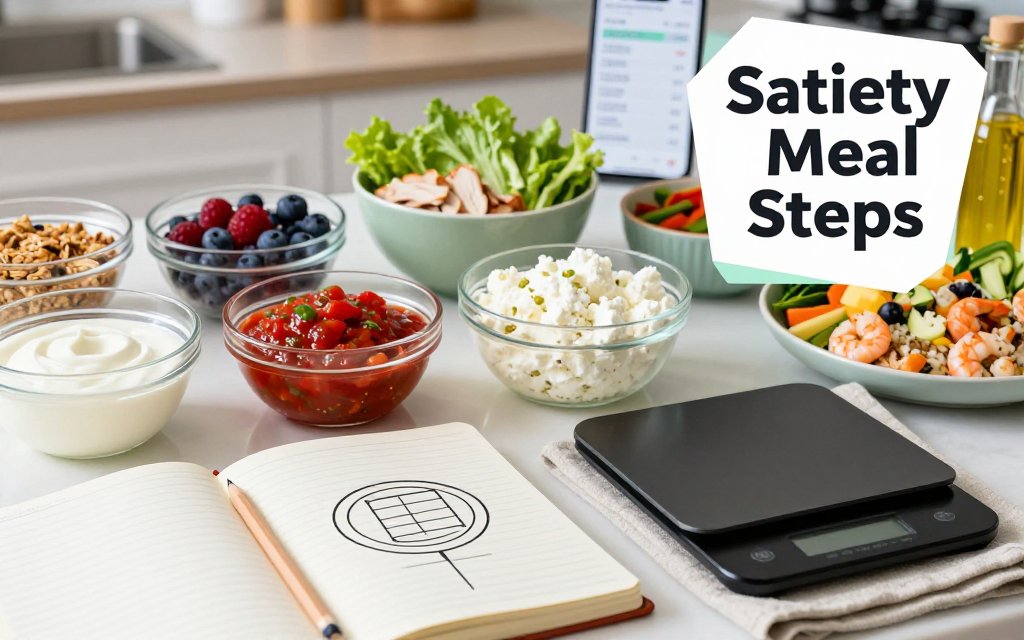
Here is a real-life, repeatable example day around 1,450 calories that feels like a lot of food. Breakfast: 200 g 0% Greek yogurt, 1 cup berries, 15 g granola (about 300 calories, 25 g protein). Lunch: turkey taco bowl over 3 to 4 cups shredded lettuce with salsa, 1/2 cup black beans, and 30 g avocado (about 500 calories, 35 to 40 g protein). Afternoon snack: 1/2 cup low-fat cottage cheese plus a big crunchy veggie plate (about 200 calories, 13 g protein). Dinner: shrimp and veggie stir-fry with 2 cups cauliflower rice plus 1/3 cup cooked rice and 1 tsp sesame oil (about 450 calories, 35 to 40 g protein). Total: roughly 110 to 120 g protein, big portions, and no “diet tiny plate” vibes.
Now the method. You are not hunting for “perfect” foods, you are building predictable meals with low calorie density and high volume, then adjusting the smaller, higher-calorie parts on purpose. That is the core idea behind volume eating patterns like the approach described in this Volumetrics diet review. Think of it like budgeting: you spend most of your calories on foods that take up space (vegetables, fruit, broth soups, lean proteins), then you measure the “easy to overeat” items (rice, granola, nuts, oils, cheese) so they support your goals instead of silently blowing up your day.
The Satiety Plate Formula you can reuse daily
Use this as your autopilot for lunch and dinner, and most breakfasts too. Start by picking the protein first, because it is the hardest macro to “fix later” without adding a lot of calories. Then add volume, then carbs, then fat. If you track macros, this structure makes your log clean and consistent. If you do not track, it still works because portions are built into the formula. Aim for a plate that lands around 400 to 650 calories per main meal, depending on your daily target (for many people, 1,500 to 2,200 calories).
Examples make this click fast. Taco bowl: lettuce and cabbage base, 93% lean turkey, salsa, a measured sprinkle of cheese, then pick your carb, either beans or a small tortilla on the side. Stir-fry: use cauliflower rice as the “big base,” then add 1/3 to 1/2 cup cooked jasmine rice for the real-carb hit; if calories are tighter, keep rice to 1/4 cup and add more snap peas or zucchini. Yogurt bowl: 200 g nonfat Greek yogurt plus berries, then measure granola at 15 to 25 g and add cinnamon; if you want more crunch, add sliced apple and keep the granola portion the same. These are the same meal pattern, just different flavors.
To fit different calorie targets, keep the protein and volume steady, then scale carbs and fats. At 1,500 calories/day, you might run 25 to 35 g carbs at lunch and dinner and stick to 1 tsp oil or 30 g avocado. At 1,800 calories/day, add 1/2 cup beans or an extra piece of fruit. At 2,200 calories/day, bump carbs toward 50 g per meal and use the full 1 tbsp olive oil, or add a second planned snack. Quick swap rule: if you add 120 calories of rice, remove 120 calories from oil, nuts, or cheese, not from vegetables or protein. That keeps fullness high while calories stay controlled.
Build every meal around a protein anchor, then add volume first. If hunger hits later, add another cup of vegetables or broth soup before adding more starch or fat. You stay satisfied while your calories stay predictable.
Hunger management tricks that are not willpower
Pre-load your appetite, then eat your meal. Ten minutes before lunch or dinner, have a simple starter: a mug of broth soup, a crunchy salad with vinegar-based dressing, or a big plate of raw veggies. Add “chew factor” on purpose: carrots, snap peas, cucumber, apple slices, or air-popped popcorn can make a snack feel larger without many calories. Prioritize breakfast protein if mornings are chaotic, even 25 g (Greek yogurt, egg whites plus whole eggs, or a protein shake) can prevent the mid-morning snack spiral. Hydration matters too: people often confuse thirst and hunger, and going very low sodium can make you feel flat and snacky. Poor sleep is a big lever as well; one controlled study found extra late-night calories with sleep restriction, which you can skim in this sleep restriction calorie increase paper.
Use calorie buffers and a panic protocol, so high-hunger days do not turn into high-calorie days. Calorie buffer: leave 100 to 200 calories unassigned in your plan (for example, 1,600 planned when your goal is 1,750) for an extra fruit, a measured dessert, or a bigger carb portion at dinner. Panic protocol (still under calories): pause and drink water, then eat a “volume first” mini-meal like a bowl of broth soup plus a protein anchor (tuna packet, 0% yogurt, or deli turkey) and add a fruit. Wait 15 minutes, then decide if you still want the treat or snack, and portion it. If frequent intense hunger is new for you, or you have health concerns, check in with a doctor or registered dietitian to personalize the plan.
Log satiety meals in CalMeal, stay consistent
Your satiety-first plan only works if you can log it on real days, like the meeting-heavy Tuesday when you eat whatever is easiest. In CalMeal, the goal is to remove friction so you do not “start over” every morning. Build a small set of go-to meals that keep you full (protein + fiber + volume), save them once, then reuse them with quick serving tweaks. Consistency comes from boring wins: repeat meals, saved recipes, flexible portions, and macro targets that keep hunger predictable. If you have health concerns, medications, or a history of disordered eating, check in with a doctor or registered dietitian before aggressively restricting calories.
Fast tracking workflow for busy days
Pick 2 breakfasts, 2 lunches, 2 dinners, and 2 snacks to repeat for a full week. Log each one once in CalMeal, then reuse it from your recent meals or saved meals list. This keeps your calorie deficit steady without spending mental energy on brand new recipes daily. If you are tracking macros, set a protein target first, then let carbs and fats flex. A simple starting point many people tolerate well is 25 to 35 g protein per meal and 8 to 12 g fiber across the day, then adjust based on hunger, training, and digestion.
Here is a repeatable “8-meal” template you can copy, save as recipes, and rotate. Each option is built to be high satiety for the calories, and easy to portion up or down without changing the whole meal. Save the base version, then create a second saved version labeled “+150” or “-150” so you can slide calories without redoing your day.
Portion edits should be mechanical, not emotional. If calories are high, keep protein the same and trim fats first (for example, go from 1 tbsp olive oil to 1 tsp, or from 1 oz cheese to 0.5 oz). If you are hungry, raise lean protein by 3 to 4 oz, or add 1 to 2 cups of high-volume vegetables, before adding calorie-dense extras. Quick rule: measure calorie-dense items (oil, nuts, nut butter, cheese, dressings); eyeball low-calorie vegetables (leafy greens, zucchini, peppers). For mixed plates, use CalMeal photo logging or smart recognition, then spot-check the highest calorie items.
Why am I still hungry in a calorie deficit even with “healthy” food?
“Healthy” can still be low protein, low fiber, and easy to overeat. A salad with 2 tbsp olive oil, nuts, and cheese can hit 600+ kcal and still leave you hungry if protein is only 10 g. In CalMeal, check your last 2 meals: aim for 25 to 35 g protein per meal (many reviews suggest benefits around 1.2 to 1.6 g/kg/day) and add 8+ g fiber per day from oats, beans, berries, or vegetables. Evidence summaries like protein targets for appetite can help you pick numbers that are realistic.
What are the best high satiety low calorie snacks for weight loss?
Choose snacks that are protein-forward or fiber-forward, ideally both, and keep them pre-logged. Good targets are 120 to 250 kcal with 15 to 25 g protein, or 5+ g fiber. Examples: 170 g nonfat Greek yogurt (about 90 to 120 kcal) plus berries; 1 cup cottage cheese (about 160 to 220 kcal depending on fat) with cucumber; edamame (1 cup) with salt; air-popped popcorn (3 to 4 cups) plus a string cheese; or a protein shake plus an orange. Fiber-rich options, especially oats and rye, show favorable satiety signals in reviews like cereal fiber and satiety.
How do I stop nighttime hunger without blowing my calories?
Night hunger is often a math problem: too few calories earlier, too little protein at dinner, or a big gap between dinner and sleep. In CalMeal, look at your day by 3 pm. If you are already 70% of your calories in, plan a higher-protein, higher-volume dinner (35 to 45 g protein plus 2 cups vegetables). If hunger hits later, budget a 150 to 250 kcal “planned closer” snack, like 200 g Greek yogurt or 170 g cottage cheese, and log it before you eat. If you plateau and feel hungrier, keep calories steady for 7 days but increase steps by 1,500 to 2,500 per day and tighten oil, nuts, and snacks first.
Satiety-first planning is the adherence cheat code because it turns willpower into systems. When you repeatedly log meals that keep you full, you get cleaner data, fewer “mystery” calories, and fewer rebound cravings. Keep one weekly check-in: pick your top 2 most filling meals from CalMeal history, make sure they still fit your calorie target, and schedule them on your busiest days. Over months, that simple loop matters more than finding a perfect macro split. If hunger, mood, or sleep worsens, adjust the deficit to a gentler level and consider professional guidance so the plan stays sustainable.
Ready to make satiety-first eating easier to track? Start tracking your nutrition today with CalMeal. Download it for free and take the guesswork out of calorie counting with AI-powered food recognition, so you can log meals faster and stay consistent. Get CalMeal on iOS or Android, then scan, log, and build meals you will actually stick with.
Start Tracking Your Nutrition Today
Download CalMeal for free and take the guesswork out of calorie counting with AI-powered food recognition.