White Rice Calories vs Brown Rice Per Cup
See exactly how white rice calories stack up against brown rice per cup, per 100 grams, and per serving, with real USDA numbers, fiber facts, and simple tips for logging rice in a calorie deficit.
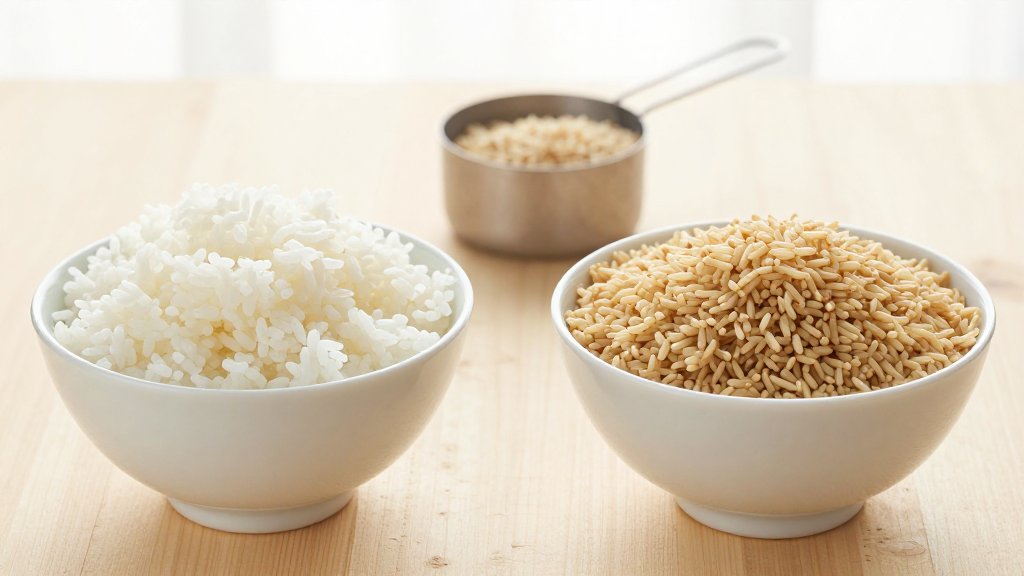
A plain cup of white rice looks light, but the numbers add up faster than most people expect. White rice calories land at about 242 per cooked cup, while the same cup of brown rice holds around 218, according to Harvard Health. That 24 calorie gap is small, so the real question is which rice fits your goals.
This guide breaks down the calorie content in rice by serving size, from 100 grams to a full cup, and compares white and brown grain by grain. Every figure comes from USDA data and published nutrition research, so you can log your bowl with confidence. If you snap a photo of dinner, a free calorie counter can estimate the portion, but knowing the base numbers helps you sanity check any tracker.
White Rice Calories at a Glance
Per 100 grams cooked, white rice holds about 130 calories, roughly 28 grams of carbohydrate, 2.7 grams of protein, and almost no fat, based on USDA figures. A cooked cup weighs more than 100 grams, which is why the calorie content of white rice climbs to roughly 205 to 242 per cup depending on grain and packing.
A cooked cup of white rice carries about 205 to 242 calories, mostly from carbohydrate, with under half a gram of fat.
| Nutrient | Per cup | Per 100 g |
|---|---|---|
| Calories | 205 cal | 130 cal |
| Carbs | 45 g | 28 g |
| Protein | 4.3 g | 2.7 g |
| Fat | 0.4 g | 0.3 g |
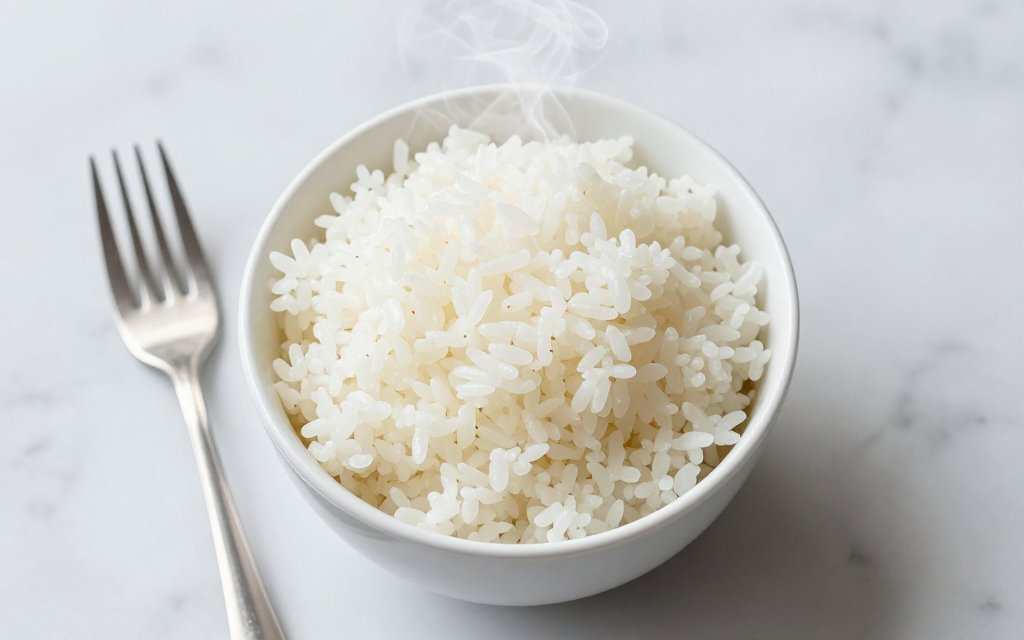
White rice calories per cup
Serving size drives the count more than anything else. A half cup of cooked white rice runs about 100 calories, a full cup lands near 205, and a heaped restaurant portion can push past 300. Written as white rice kcal, that is roughly 860 to 1010 kJ per cup for readers outside the United States.
Brown Rice vs White Rice: The Real Difference
The brown rice vs white rice debate usually starts with calories, but the two grains are nearly even there. Brown rice calories sit around 218 per cooked cup, only 24 fewer than white. The bigger gap is fiber. Brown rice keeps its bran and germ, so it delivers about 3.5 grams of fiber per cup, while white rice offers closer to 0.6 grams, according to published Healthline analysis.
Fiber changes how a meal behaves. It slows digestion, blunts blood sugar spikes, and helps you feel full on fewer bites. Brown rice also carries more magnesium, potassium, and B vitamins, though enriched white rice adds back iron and folate, with a cup providing roughly 195 to 222 micrograms of folate.
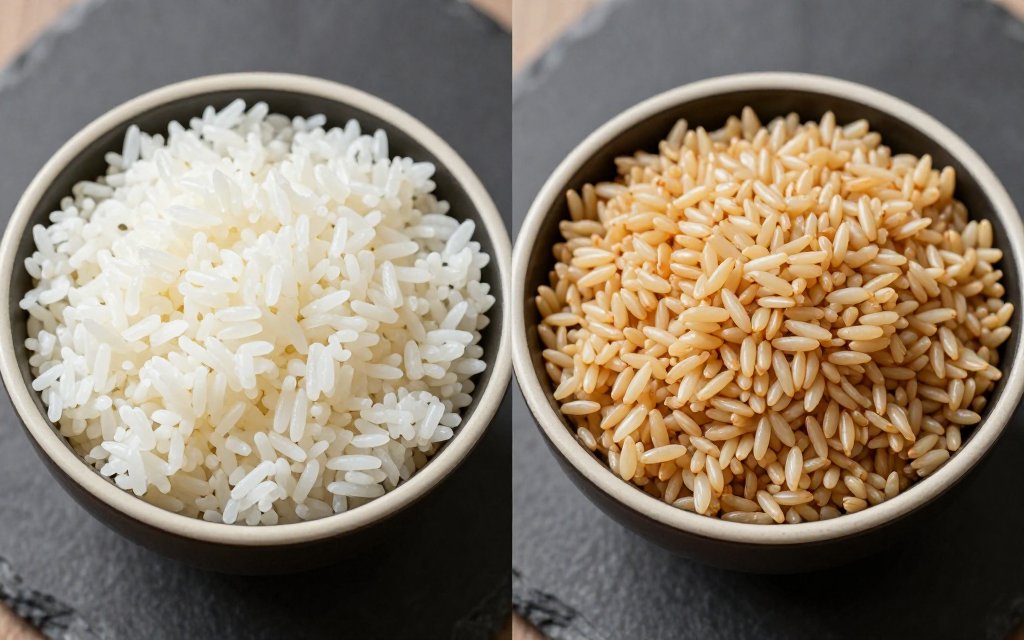
Brown rice per cup and fiber
For a cooked cup, brown rice totals about 218 calories, with 45 grams of carbohydrate, 5 grams of protein, and close to 1.8 grams of fat. The extra fat and protein come from the intact bran layer. That layer is also why brown rice takes longer to cook and has a chewier bite than polished white grains.
Brown rice offers about 3.5 grams of fiber per cooked cup versus 0.6 grams in white rice, a difference that shapes hunger more than the 24 calorie gap.
1 Cup Rice Calories by Serving Size
Most people eyeball rice, and that is where tracking slips. The question of a cup of rice how many calories it holds depends on whether the grain is packed or loose and whether it is white or brown. The table below lists 1 cup rice calories next to smaller servings, so you can match your bowl to a real number instead of a guess.
| Serving | White rice | Brown rice |
|---|---|---|
| 100 g cooked | 130 cal | 123 cal |
| Half cup | 100 cal | 108 cal |
| One cup | 242 cal | 218 cal |
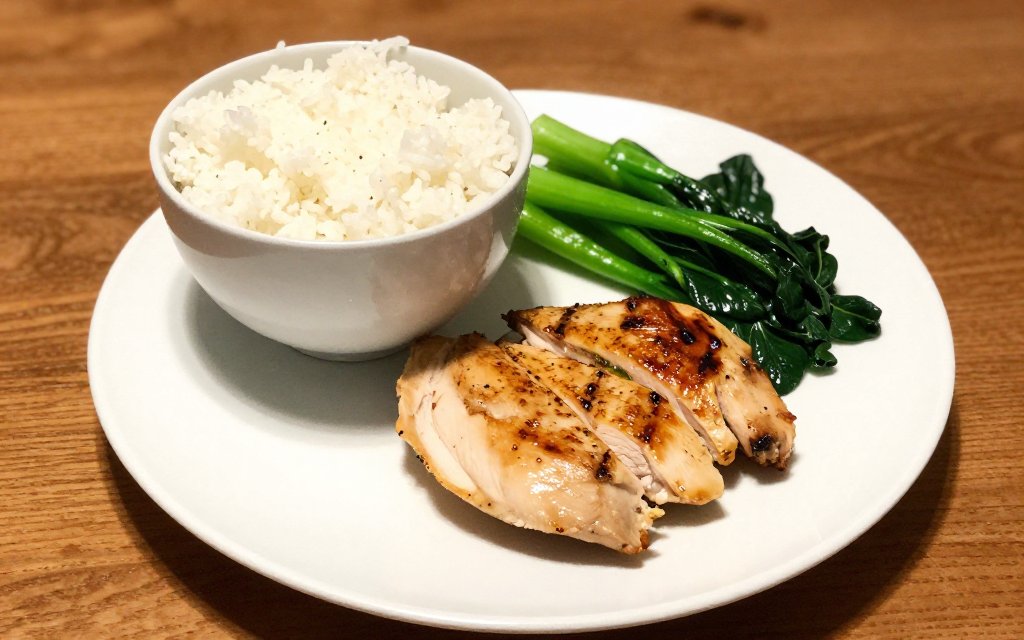
Pairing matters as much as portion. A cup of white rice next to grilled chicken and vegetables makes a balanced plate near 500 calories, while the same rice under fried takeout can double that. For a protein anchor, see our guide to chicken breast calories, or check how rice stacks up inside a build your own bowl.
How Rice Fits a Calorie Deficit
Rice is not off limits when you want to lose weight. It is an energy dense carbohydrate, so the trick is portion control, not elimination. Measuring a cup instead of filling the plate can save 150 calories or more per meal, which adds up across a week.
If you track daily targets, knowing your maintenance number makes rice easy to budget. Our maintenance calorie guide shows how many calories you can eat and still lose fat. Slot a measured cup of rice into that budget and the grain stops feeling like the enemy.
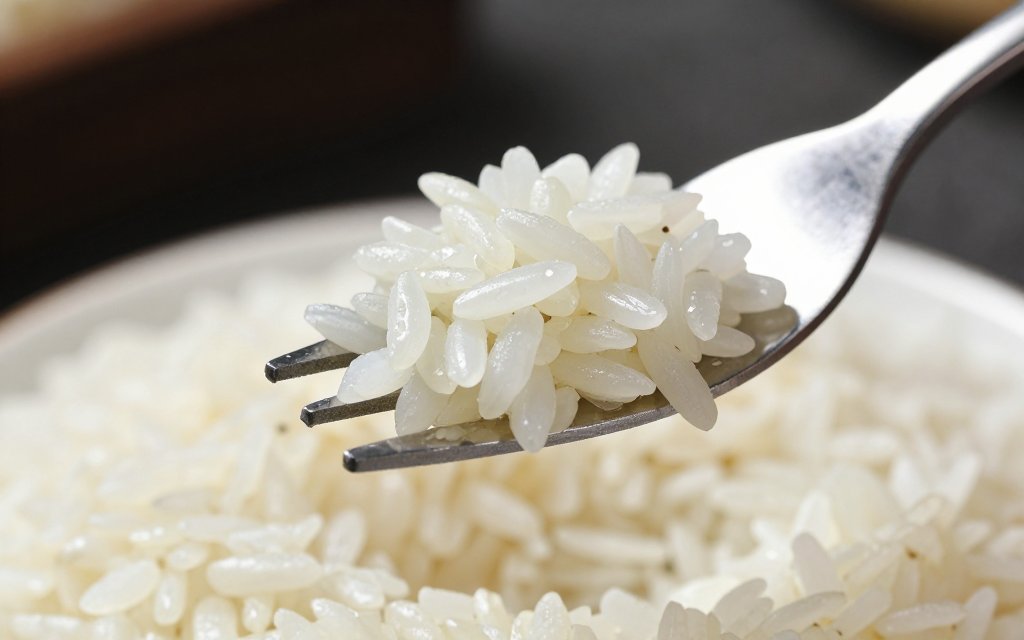
Measuring a cooked cup of rice instead of a heaped plate can trim 150 calories from a single meal without changing the food you eat.
Common Questions About Rice
How many calories are in one cup of rice?
A cooked cup of white rice holds about 205 to 242 calories, and brown rice holds around 218. If you are wondering about calories in one cup of rice for tracking, log 240 for white and 220 for brown to stay safe. Packed cups and larger restaurant scoops can run higher.
Is brown rice healthier than white rice?
For most goals, yes. Brown rice brings more fiber, magnesium, and B vitamins, and research links it to a lower risk of type 2 diabetes than white rice, per Harvard Health. That said, enriched white rice still supplies folate and iron, so white rice is not unhealthy in normal portions.
Does rinsing rice lower its calories?
Rinsing removes surface starch and some added iron in enriched rice, but it barely changes the calorie count. A cooked cup stays close to 205 to 242 calories whether or not you rinse. Rinsing mostly improves texture by reducing stickiness.
Is white rice bad for weight loss?
No single food blocks weight loss. White rice is energy dense, so oversized portions can stall a calorie deficit, but a measured cup fits most plans. Pair it with protein and fiber to stay full, and track the serving you actually eat.
Rice is easy to enjoy once you know the numbers behind each cup. Take the guesswork out of white rice calories and every other food on your plate by snapping a photo and letting smart food recognition estimate the portion for you. Start tracking your nutrition today for free. Get the app here: iOS or Android.
Start Tracking Your Nutrition Today
Download CalMeal for free and take the guesswork out of calorie counting with AI-powered food recognition.