Half the calories in an avocado make a snack, a whole one is a meal
A whole avocado carries 227 calories and 21 g of fat, while half lands near 114. Here's the USDA breakdown by portion, plus what toast, guacamole and a week of whole fruits add to your log.
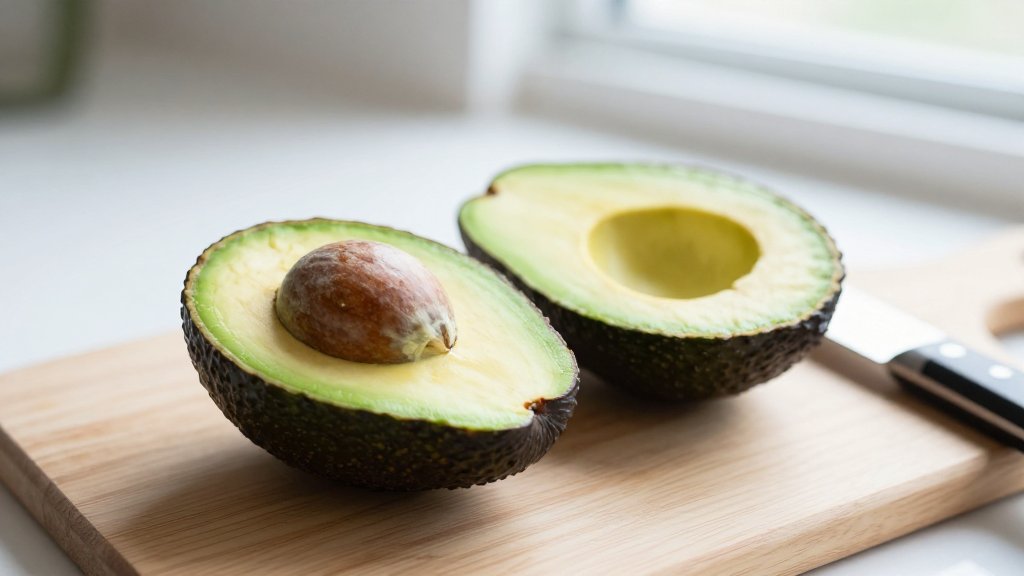
A whole avocado, peeled and pitted, runs about 227 calories. Cut it in half and you're near 114, which is a comfortable snack rather than a small meal. That gap is the whole story for most people logging food.
The calories in an avocado come mostly from fat, and the fruit is easy to eat in one sitting without noticing. The USDA's nutrient database puts the edible part of one California avocado at 136 g, and every number below is scaled from that entry so you can match it to what's actually on your plate.
How many calories in an avocado, by the gram
Avocado flesh carries about 167 calories per 100 g, or roughly 1.7 calories per gram. According to the USDA Standard Reference report for raw California avocado, a cup of mashed avocado (230 g) reaches 384 calories. That cup is the portion that sneaks into homemade guacamole bowls.
| Portion | Weight | Calories |
|---|---|---|
| FDA label serving (1/3 fruit) | 50 g | 80 |
| Half an avocado | 68 g | 114 |
| Per 100 g | 100 g | 167 |
| Whole avocado | 136 g | 227 |
| 1 cup mashed | 230 g | 384 |
Why the label says 80 calories
In July 2016 the FDA moved the official avocado serving from one fifth of a medium fruit (30 g) to one third (50 g), as the California Avocado Commission explains on its serving size page. That 50 g serving lists 80 calories. It's an honest number, it just describes a portion smaller than most people scoop.
Rule of thumb: avocado flesh is about 1.7 calories per gram. Weigh it once, multiply, and you'll never be far off.
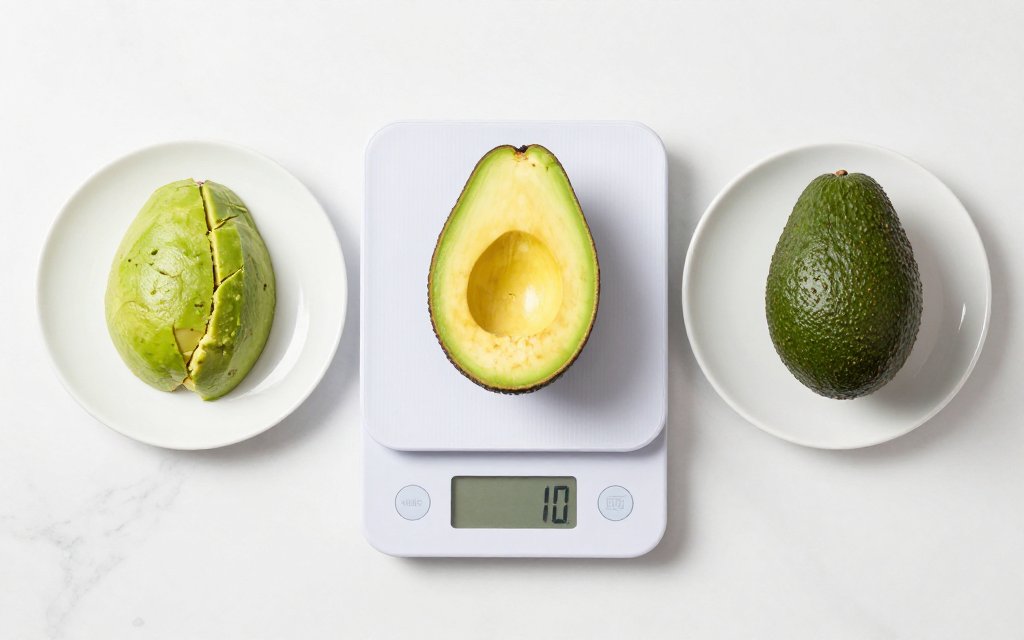
Calories in half an avocado and other everyday portions
Half a fruit is the most common way avocado lands on a plate, so it's worth knowing cold. Calories in half an avocado come to about 114, with 10.5 g of fat, 4.6 g of fiber and just 1.3 g of protein. Here's how other real-world portions scale from the same USDA figures.
A thin smear versus a thick layer
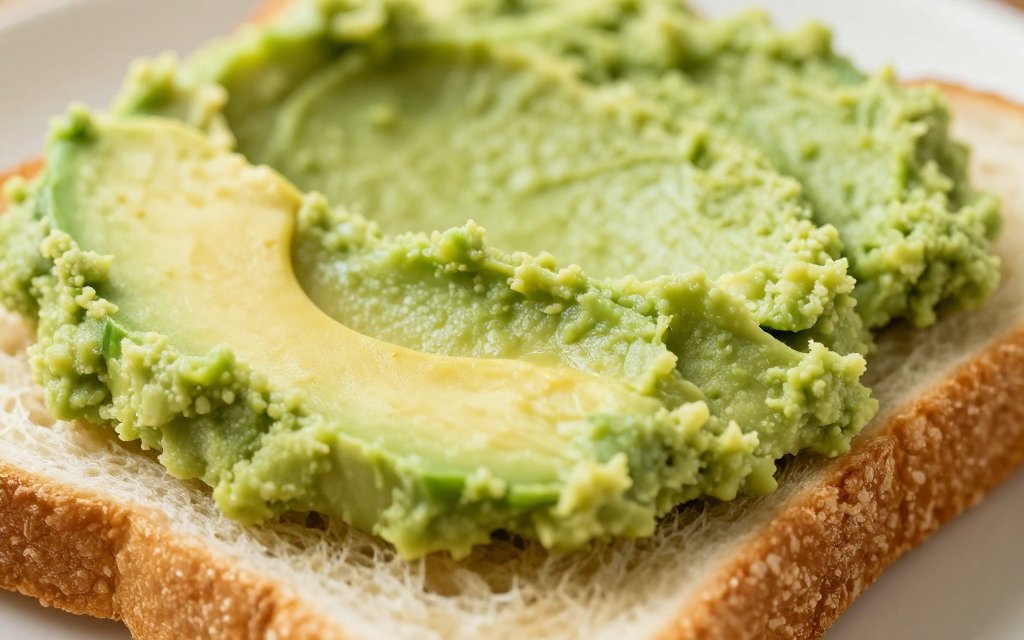
Spreading is where estimates drift. A thin smear on toast might be 30 g, around 50 calories, while a thick layer can easily hit 70 g and 117 calories. If you can't weigh it, the hand portion method gets you close enough for daily tracking.
Avocado nutrition facts beyond the calories
The fat in avocado is mostly monounsaturated. A whole fruit holds 13.3 g of monounsaturated fat out of 21 g total, with 2.9 g saturated. That's why the fruit sits closer to nuts and olive oil than to apples on a calorie chart, even though it's technically a fruit.
| Nutrient | Whole fruit | Half fruit |
|---|---|---|
| Fat | 21.0 g | 10.5 g |
| Fiber | 9.2 g | 4.6 g |
| Carbohydrate | 11.8 g | 5.9 g |
| Protein | 2.7 g | 1.3 g |
| Potassium | 690 mg | 345 mg |
How much avocado protein you actually get
Not much. Avocado protein tops out at 2.67 g for a whole fruit, which works out to under 5% of its calories. If you're building a high protein breakfast, pair it with something like eggs; our guide to protein in an egg shows how that combo stacks up.
A whole avocado gives you 21 g of fat and fewer than 3 g of protein. Treat it as your fat source for the meal, not your protein.
Avocado toast calories and guacamole calories
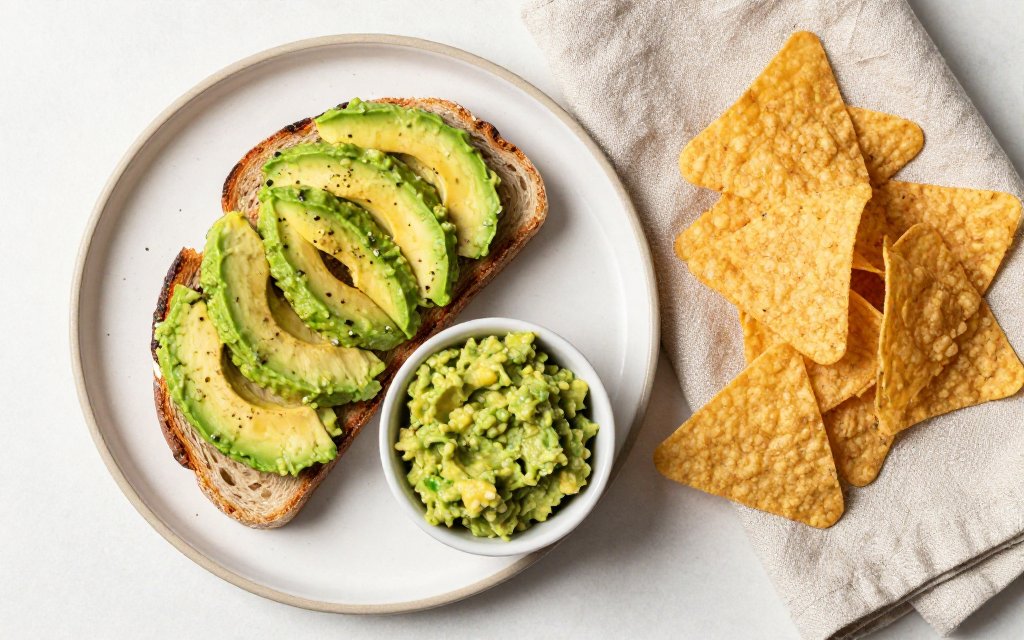
Avocado rarely shows up alone. Healthline's breakdown of a simple version, a 1 oz slice of whole wheat bread topped with avocado, puts avocado toast calories at about 195, with 11 g of fat and 8 g of fiber. Thicker bakery bread or a heavier hand with the avocado pushes that up fast.
Guacamole calories depend on the recipe, but store-bought tubs are fairly lean per spoonful. One brand lists 45 calories and 4 g of fat for 2 tablespoons. The chips are usually the bigger number, so log them separately.
Restaurant toast runs higher
Healthline lists the Dunkin' avocado and roasted tomato toast at 260 calories, 37 g of carbs and 7 g of protein for one piece on sourdough. Cafe versions with an egg, feta or a drizzle of oil climb further, and that oil adds up quickly, as our look at calories in olive oil and butter shows.
What half versus whole adds up to over a week
Here's where the portion choice actually matters. Eating a whole avocado every day adds about 1,589 calories across a week. Switching to half a fruit drops that to roughly 798, a difference of nearly 800 calories without cutting avocado out at all.
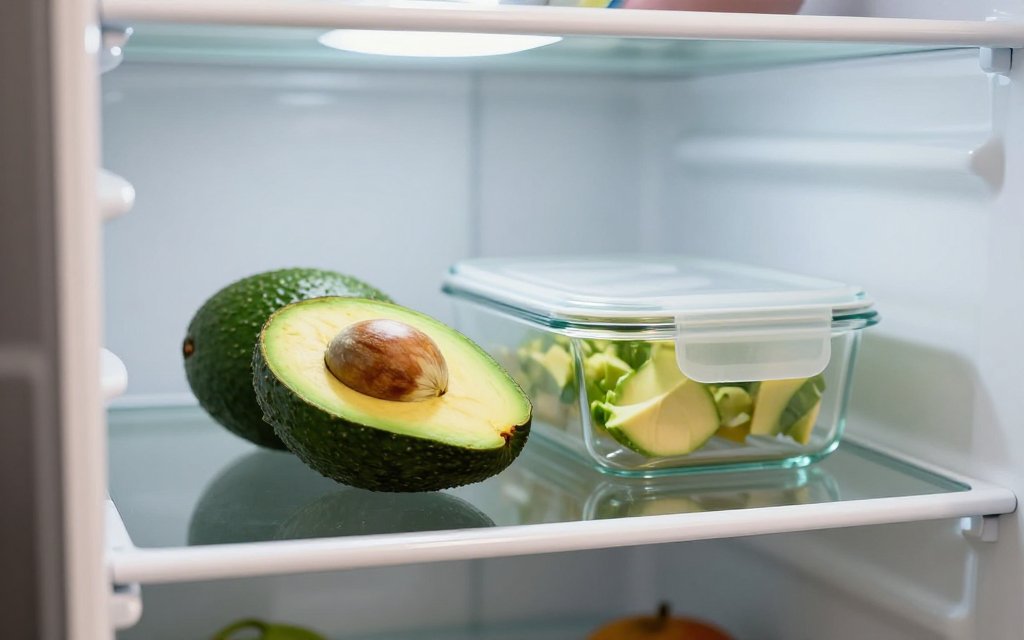
You also stretch each fruit across two days, so a bag of avocados lasts twice as long. Wrap the half with the pit still in and press plastic against the cut face; it'll keep for a day in the fridge with only light browning.
Seven whole avocados a week is about 1,589 calories. Seven halves is about 798. Same habit, half the cost to your daily budget.
None of this means avocado is a problem food. It means the portion is the lever, and small, steady trims like this are how a calorie deficit diet usually works in practice. If you have a medical condition affecting your diet, check portions with your doctor or a dietitian.
How to log avocado fruit calories without guessing
Avocado fruit calories are easy to undercount because the fruit varies so much in size. The quickest fix is to weigh the flesh once or twice, learn what your usual half looks like, and log by grams after that.
Photo logging helps here because avocado sits in so many mixed dishes. A photo calorie counter estimates calories and macros from a picture of the whole plate, so a salad or a burrito bowl with avocado gets counted along with everything else.
Avocado nutrition chart questions people ask
How many calories in an avocado that's extra large?
Use the gram rule. A large fruit with 200 g of flesh would come to about 334 calories at 167 per 100 g. Weighing beats guessing by size, since labels like medium and large aren't standardized.
Is avocado good for weight loss?
It can fit, thanks to 9.2 g of fiber per fruit, which helps meals feel filling. The catch is energy density, so portion size decides whether it helps or quietly adds 100 extra calories a day.
Does avocado nutrition change when it's mashed?
No, mashing doesn't change the calories or nutrients. It just makes portions harder to see, since a cup of mash holds 230 g and 384 calories, which is closer to two fruits than one.
Want your avocado toast, salads and bowls counted without weighing every slice? Download CalMeal for free and let AI-powered food recognition estimate the calories and macros from a single photo of your meal. Get the app here: iOS or Android.
Start Tracking Your Nutrition Today
Download CalMeal for free and take the guesswork out of calorie counting with AI-powered food recognition.