Eating pumpkin seeds with the shell lowers calories in pumpkin seeds
An ounce of whole roasted pumpkin seeds runs about 126 calories, while hulled pepitas reach 148 to 163. Here's how the shell changes protein, fiber and minerals, and how to portion a carving night snack.
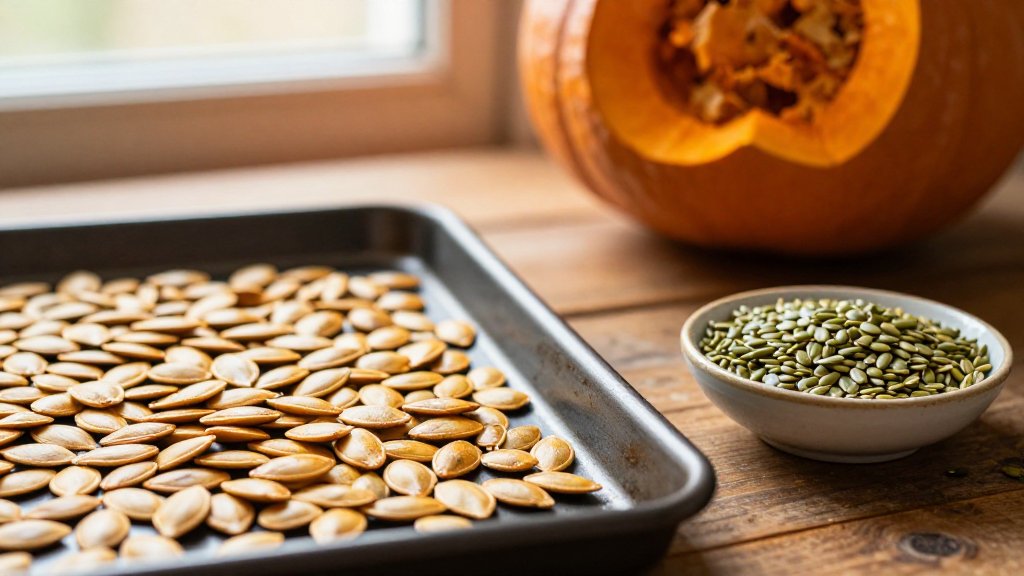
Keep the shells on. An ounce of whole roasted pumpkin seeds, about 85 seeds, comes to roughly 126 calories, while an ounce of hulled kernels runs about 148. That gap is the biggest swing in the calories in pumpkin seeds, and it shows up right as Halloween carving fills kitchen bowls with them.
The shell shifts the rest of pumpkin seeds nutrition too. Whole seeds carry around 5 grams of fiber per ounce but less protein, while green pepitas pack more protein, fat and magnesium into the same weight. Neither is wrong. They're simply different snacks, and they deserve different entries in your food log.
Calories in pumpkin seeds, whole versus hulled
USDA-based figures put 1 ounce of whole roasted seeds at 126 calories, 5.3 g protein, 5.5 g fat and 15.2 g carbs, according to the University Hospitals nutrition database. The same weight of roasted kernels lands at 148 calories, 9.4 g protein, 11.9 g fat and 3.8 g carbs.
| Seed form | Calories | Protein |
|---|---|---|
| Whole roasted, 1 oz | 126 | 5.3 g |
| Roasted kernels, 1 oz | 148 | 9.4 g |
| Dried kernels, 1 oz | 163 | 8.5 g |
| Whole roasted, 1 cup (64 g) | 285 | 12 g |
Why does the shell bring the number down? The hull is mostly fiber, which adds weight without adding much fat. Part of every ounce of whole seeds is shell, so less of it is the oily kernel inside. Weigh 28 grams of each and the whole seeds come out lower.
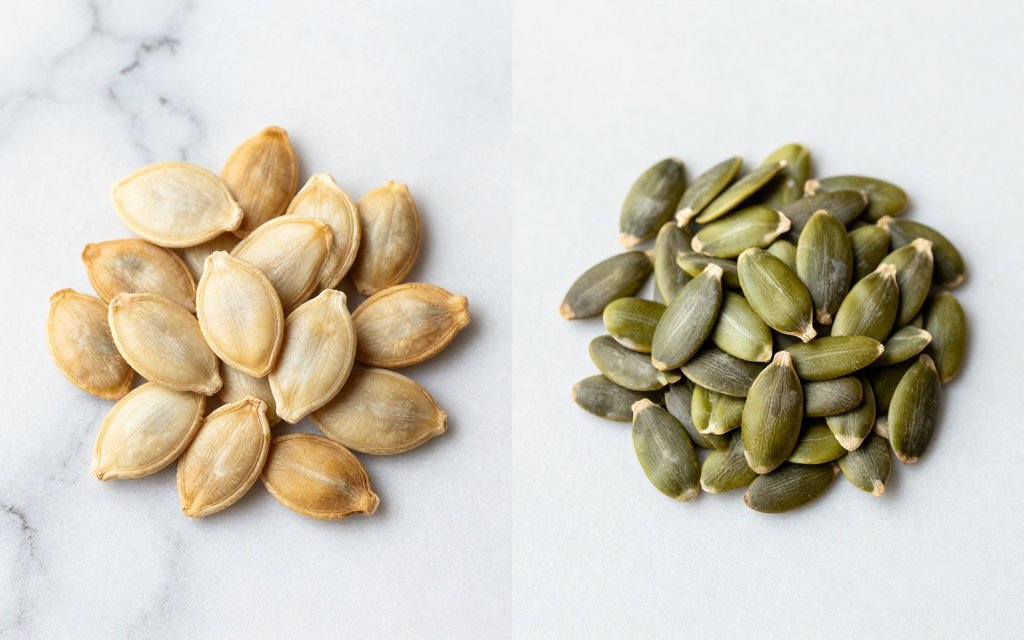
One ounce of whole roasted pumpkin seeds is about 85 seeds and 126 calories. Count a handful once and you'll know your number for the rest of the season.
Can you eat pumpkin seeds with the shell?
Yes. The shells are edible, much like sunflower seed shells, and eating the whole seed gives you the fiber and zinc held in the hull, as a small-town newspaper's nutrition column on pumpkin seeds points out. The kernel tastes better and the shell takes more chewing, but for most people that's the only downside.
Who might prefer hulled pepitas
If your gut is sensitive, a sudden jump in fiber from a big bowl of shells can feel rough. Start with a small handful, drink some water, and talk with your doctor if you have a digestive condition. Pepitas are also easier to sprinkle over salads and oatmeal.
Pepitas nutrition packs more protein per ounce
Green pepitas come from hulled seeds or from pumpkin varieties that grow without a shell. Roasted kernels give 9.4 g of protein per ounce, which works out to about 16 calories per gram of protein. Whole roasted seeds give 5.3 g, closer to 24 calories per gram.
How pumpkin seeds protein fits a high protein day
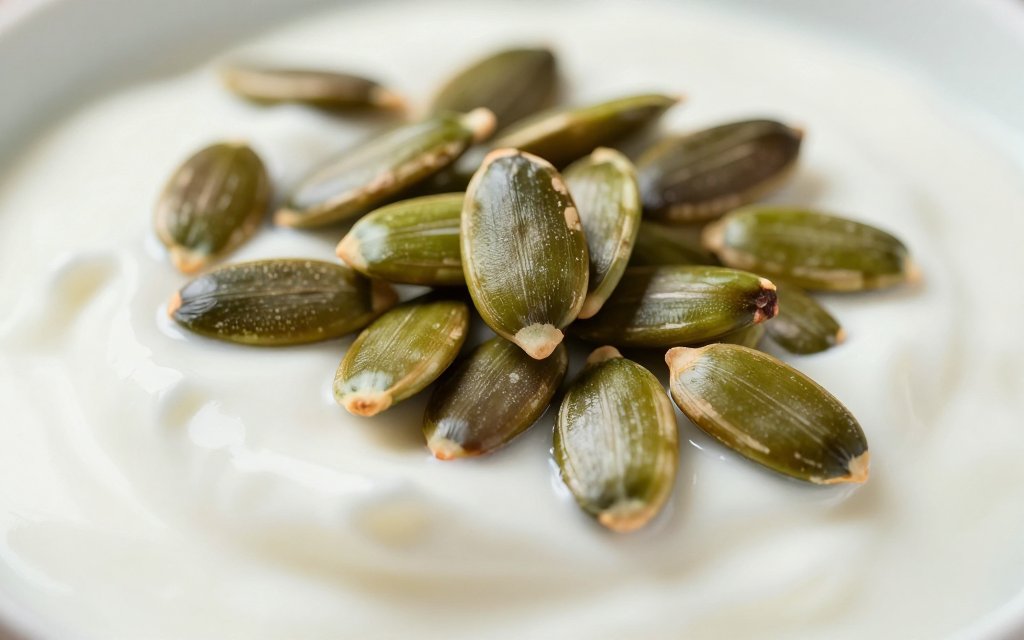
Nine grams won't replace a chicken breast, but it's a handy top-up. Stir an ounce of pepitas into a bowl of high protein Greek yogurt and you've built a snack with real staying power. Our list of protein rich snacks for weight loss has more pairings that keep calories steady.
What are pumpkin seeds good for in a meal plan?
Magnesium is where pepitas stand out. An ounce of roasted kernels holds 151 mg, and dried kernels reach about 156 mg, roughly 37% of the daily value, according to a breakdown of USDA data from Nutrition Advance. Iron runs about 4.2 mg per ounce of roasted kernels, while the shells nudge zinc up to 2.9 mg.
| Nutrient | Kernels, 1 oz | Whole, 1 oz |
|---|---|---|
| Fat | 11.9 g | 5.5 g |
| Carbs | 3.8 g | 15.2 g |
| Fiber | 1.1 g | about 5 g |
| Magnesium | 151 mg | 74 mg |
| Zinc | 2.1 mg | 2.9 mg |
| Iron | 4.2 mg | 0.9 mg |
The health benefits of pumpkin seeds, kept in proportion
Research on the health benefits of pumpkin seeds is promising but small. In one trial of 15 people, adding 65 g of pumpkin seeds to a high carb meal cut the rise in blood sugar after eating by about 35% compared with the meal alone. That's one small study, and 65 g of kernels is roughly 340 to 375 calories, so treat it as interesting rather than as a reason to eat a bowlful.
Pumpkin seed benefits come from the magnesium, zinc and unsaturated fat, but they arrive with 126 to 163 calories per ounce. Portion is most of the story.
What a carving night handful does to your calorie budget
Here's where the numbers start to matter. A cupped handful or two while you're carving can easily reach 3 ounces. That's about 380 calories as whole roasted seeds, or about 444 as roasted kernels, which is close to a small meal either way.
Compare that with candy. A fun size Snickers is 80 calories, so a single ounce of pepitas costs nearly two of them. The seeds bring protein and minerals the candy doesn't, but your weekly energy balance only counts the calories.
Easy ways to keep a seed snack in check
Our guide to reading serving sizes with your hand makes that eyeballing step easier once you've weighed a portion on a kitchen scale.
Roasted pumpkin seeds at home without the extra oil
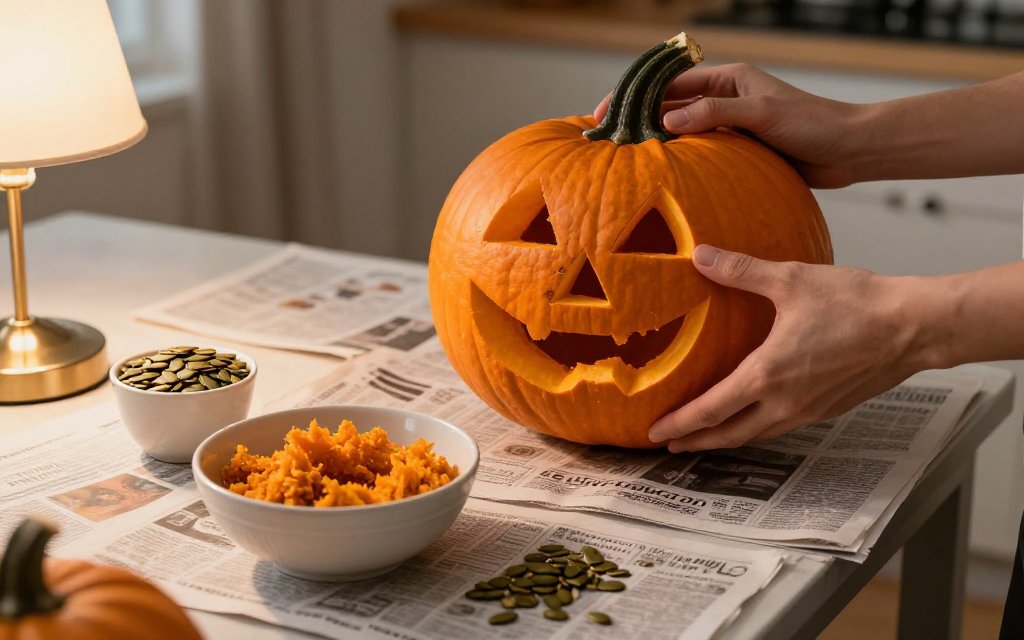
The method is simple. Scoop out the seeds, rinse off the stringy pulp, dry them well, ideally overnight, then toss with a little olive oil and spices and bake at 350°F for 15 to 20 minutes, stirring every 5 minutes.
Measure the oil. Every spoonful goes into the batch total, and it's the part people forget to log. We covered how cooking oil hides real calories in a separate guide, and the same logic applies to a tray of seeds.
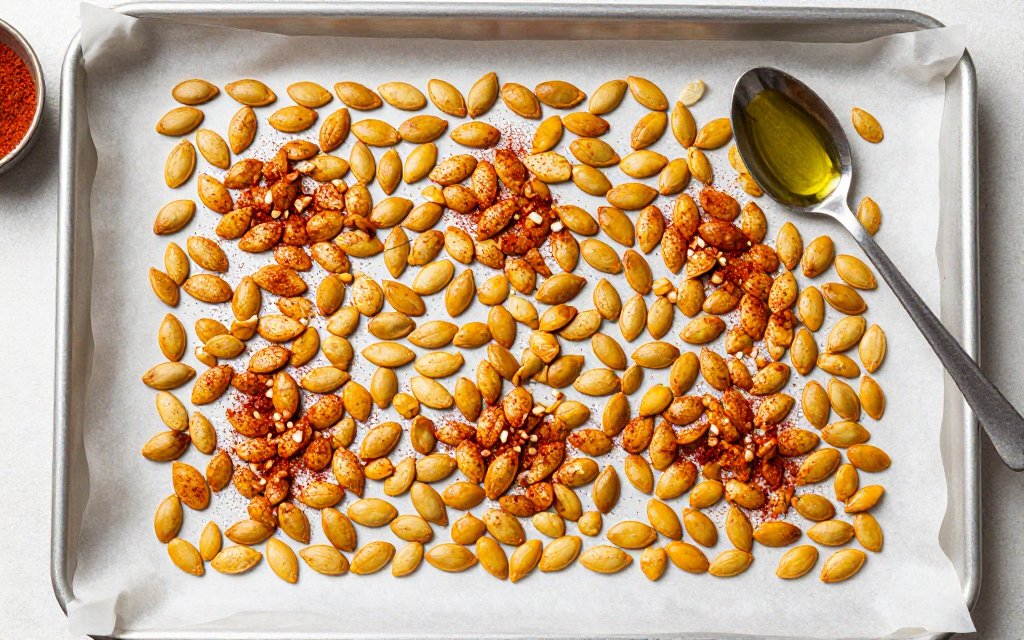
Seeds you roast at home get their calories from two places, the seeds and the oil. Log both and your numbers stay honest.
Are pumpkin seeds good for you? Quick answers
Are pumpkin seeds good for you if you're losing weight?
They can be. An ounce gives you protein, fiber or magnesium for 126 to 163 calories depending on the form, which is fair value for a snack. The catch is how easy they are to overeat, so portion them before you sit down.
Are pepitas good for you, or are whole seeds better?
Both are solid picks with different strengths. Pepitas win on protein, magnesium and iron per ounce, while whole seeds win on fiber and come in about 22 calories lower per ounce. Choose based on what your day is short on.
Is eating pumpkin seeds every day too much?
A daily ounce fits comfortably into most eating plans. If you're chasing a fiber target, the whole seeds help, and our fiber per day guide shows how they compare with other foods. If you have kidney, gut or other health concerns, check with your doctor about what suits you.
Start tracking your nutrition today. Snap a photo of your seed bowl and CalMeal estimates the calories and macros for you, shells or no shells. Download CalMeal for free and take the guesswork out of calorie counting with AI-powered food recognition. Get the app here: iOS or Android.
Start Tracking Your Nutrition Today
Download CalMeal for free and take the guesswork out of calorie counting with AI-powered food recognition.