Sweet potato calories barely beat white potatoes, the toppings decide
A medium baked sweet potato has about 103 calories, and per 100 g it beats a white potato by just two. Here's the size chart, the butter and syrup math, the fries gap and what a simple topping swap saves you each week.
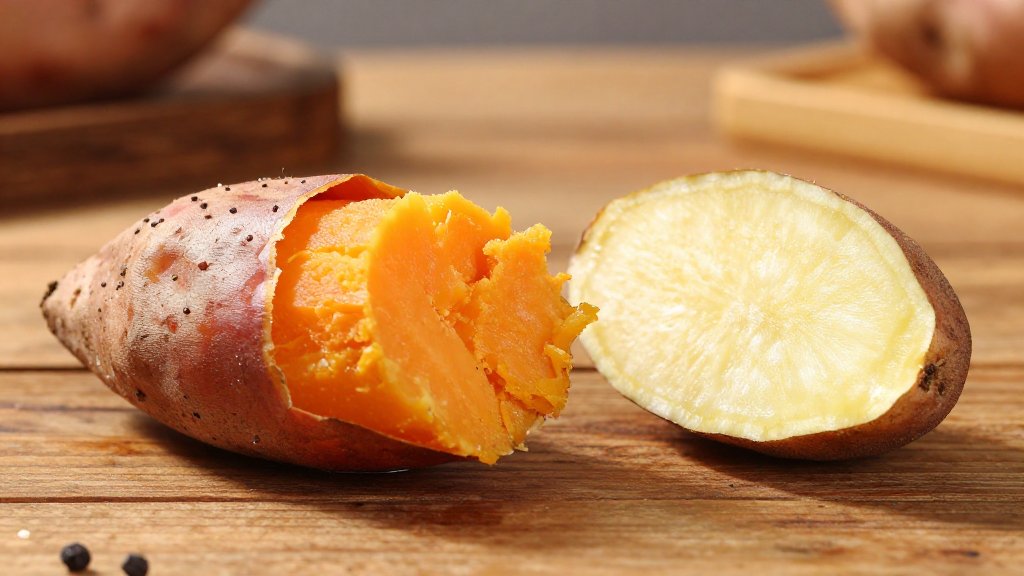
A medium sweet potato baked in its skin comes in at about 103 calories, and that number surprises people who assumed it was the "diet" potato. Per 100 grams, sweet potato calories sit at 90 while a white potato sits at 92, so the gap is two calories. What you put on top matters far more than which spud you picked.
That doesn't make the swap pointless. The orange one brings a big vitamin A payload and a bit more fiber, and the white one brings a little more potassium. If you're counting, though, sweet potato calories barely move the needle on their own, and a tablespoon of butter moves it by 100.
Sweet potato calories by size, weighed out
The USDA-based entry hosted by University Hospitals lists one medium sweet potato (2 inches wide, 5 inches long) baked in skin at 102.6 calories, 23.6 g of carbs, 3.8 g of fiber and just 0.17 g of fat. That's a lot of food for the energy. Most of what you're eating is starch, water and fiber.
Scaling up from the medium
Real sweet potatoes rarely come in the textbook size. The grocery bin is full of fat ones that weigh twice as much, so it helps to work from the per-100 g figure of roughly 90 calories and multiply. Weighing one once is enough to calibrate your eye, and our hand portion guide covers the no-scale version.
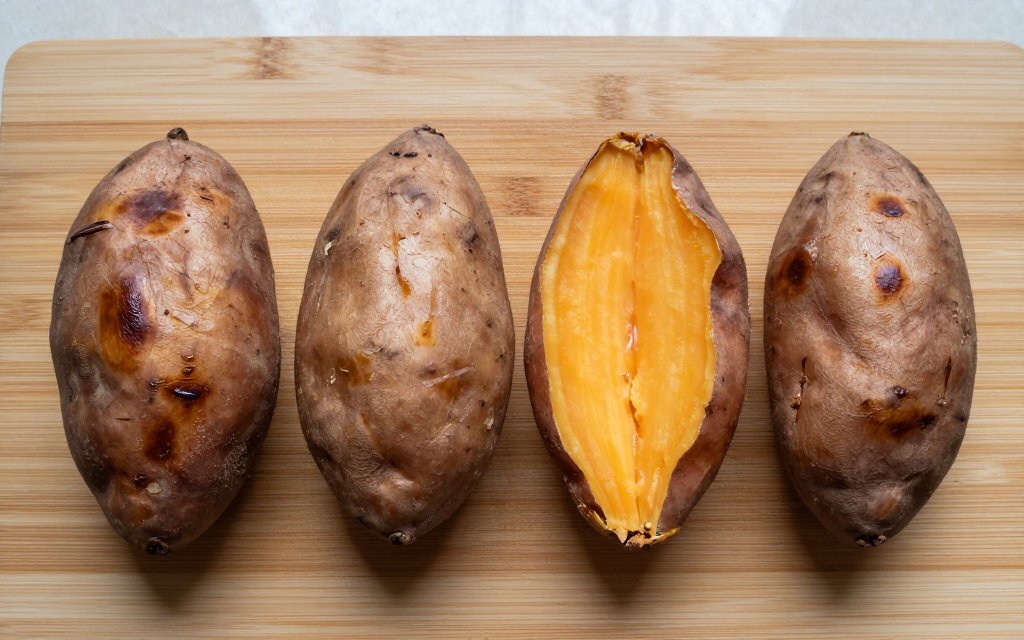
Sweet potato vs potato, side by side per 100 grams
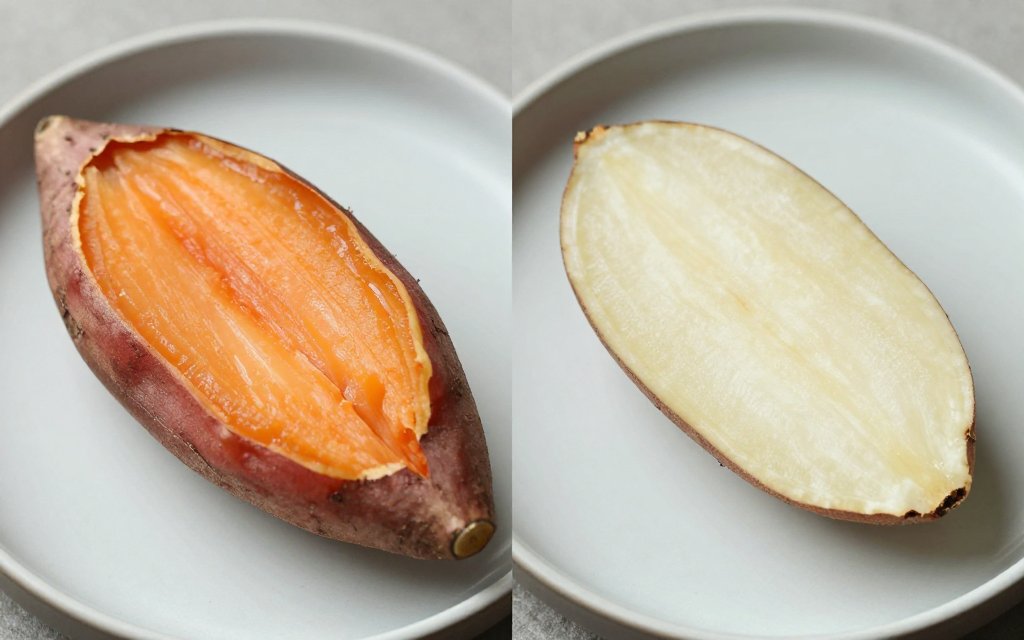
Healthline's sweet potato vs potato comparison uses 100 g with skin for both, which is the fairest way to line them up. The calories, protein and carbs are close to identical. The differences are in the micronutrients and the fiber.
Per 100 grams, a sweet potato has 90 calories and a white potato has 92. If you swapped one for the other every night for a week, you'd save about 14 calories in total.
Baked sweet potato calories once the toppings land
Here's where the real numbers live. One tablespoon of salted butter is 101.8 calories and 11.5 g of fat, and a tablespoon of maple syrup adds 52.2 calories with 11.9 g of sugar. Stack both on a medium potato and baked sweet potato calories go from 103 to about 257, which is two and a half times the plain spud.
The classic butter and syrup version
| Build | Added | Total |
|---|---|---|
| Plain medium, baked | 0 | 103 |
| Plus 1 tbsp butter | 102 | 205 |
| Plus 1 tbsp maple syrup | 52 | 155 |
| Butter and syrup | 154 | 257 |
| 2 tbsp butter and syrup | 256 | 359 |
None of this means butter is off the table. It just means the topping is the line worth logging carefully, the same way cooking fats hide calories in almost every pan-fried meal. Measure the butter once and you'll know what a "pat" really costs you.

Sweet potato fries calories and the oil problem
Frying changes the math twice. The oil adds calories, and the cut gives it lots of surface to soak up. One popular frozen brand lists its crinkle-cut sweet potato fries at 140 calories, 5 g of fat and 22 g of carbs per 3 oz serving before cooking, while a restaurant serving logged in Fitbit's database reaches 330 calories and 20 g of fat for about 3.6 oz.
So sweet potato fries calories can run more than three times higher than the same weight of plain baked potato. They're not a health food just because they're orange. If you love them, the oven version from the frozen aisle is the one that fits most budgets.
A medium baked sweet potato weighs about 114 g and has 103 calories. A 3.6 oz restaurant portion of sweet potato fries has 330.
Sweet potato nutrition facts beyond calories
The headline benefit is vitamin A. The same medium baked potato carries about 21,900 IU, mostly as beta-carotene, which is the pigment that makes the flesh orange. It also brings 542 mg of potassium and 22 mg of vitamin C, which rounds out the sweet potato nutrition picture nicely.
How much sweet potato protein is there?
Not much. A medium one has about 2.3 g of sweet potato protein. Treat it as a carb and fiber side, then pair it with chicken, fish, beans or cottage cheese if you're aiming for a high-protein plate.
If fiber is the main reason you reach for sweet potatoes, our high fiber foods guide shows how one potato fits into a daily target.
What the swap means for your weekly calorie budget
Let's put it in outcomes. Swapping a white potato for a sweet potato at dinner every night saves you almost nothing in energy. Halving the butter on that same potato saves about 51 calories a night, or roughly 357 a week, and dropping the restaurant fries for a plain baked one saves well over 200 calories each time you order.
That's the honest takeaway. The potato type is a nutrition choice, mainly about vitamin A and fiber, while the toppings and the cooking method are the calorie choice. For the bigger picture on why small daily trims add up, see our post on how a calorie deficit diet runs on estimates.
Trimming one tablespoon of butter to half a tablespoon on a nightly sweet potato saves about 357 calories a week, more than three plain potatoes' worth.

Questions people ask about sweet potatoes
Is sweet potato good for weight loss?
It can fit well. At about 103 calories with nearly 4 g of fiber for a medium one, it's a filling side that's easy to count. Whether it helps depends on the portion and the toppings, and anyone managing a health condition should check with a doctor or dietitian.
Are sweet potatoes the same as yams?
No. According to University of Illinois Extension, true yams are monocots in the Dioscoreaceae family, mostly grown in Africa and Asia, while sweet potatoes belong to the morning glory family. In the yam vs sweet potato label mix-up at US stores, the USDA requires "yam" products to also say "sweet potato."
Does the cooking method change the blood sugar response?
It does. A 2011 study of ten sweet potato cultivars in the Journal of Nutrition and Metabolism found boiled samples had glycemic index values of 41 to 50, while baked samples ranged from 82 to 94 and fried wedges fell between 63 and 77. The calories stay similar, but how quickly the carbs hit can differ quite a bit.
What are the main benefits of sweet potatoes?
The standout benefits of sweet potatoes are the vitamin A from beta-carotene, a solid dose of fiber and a low fat content. They also work in both sweet and savory dishes, which makes them easy to rotate.
Start tracking your nutrition today. Snap a photo of your baked sweet potato, butter and all, and CalMeal estimates the calories and macros in seconds so the toppings never slip past you. Download CalMeal for free and let our photo calorie counter handle the guesswork. Get the app here: iOS or Android.
Start Tracking Your Nutrition Today
Download CalMeal for free and take the guesswork out of calorie counting with AI-powered food recognition.