Mediterranean Weight Loss Plate: Calories and Macro Targets
A practical Mediterranean plate method for weight loss, with simple calorie ranges per meal and macro targets you can actually hit. Includes high-protein, low-calorie swaps, meal-prep ideas, and an easy way to track Mediterranean diet macros with a calorie counter.
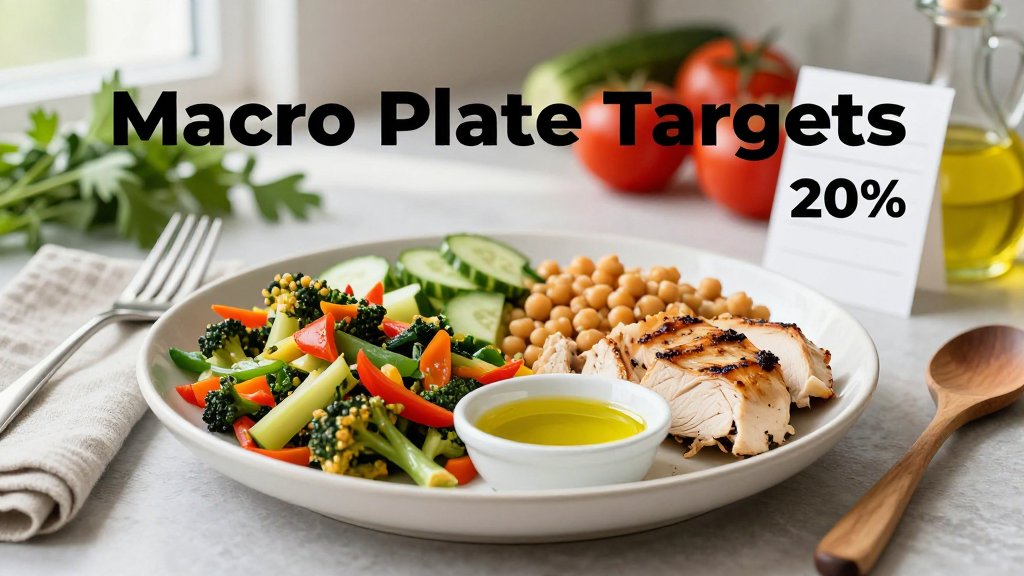
The Mediterranean diet can be a powerful tool for weight loss, but many people stall because “healthy” foods still add up fast when portions drift. If you want results, you need a simple way to build meals that feel satisfying and still fit a calorie deficit. In this guide, you will learn the Mediterranean weight loss plate method, realistic calorie ranges per meal, and straightforward macro targets for protein, carbs, and fat. You will also see practical plate examples and the common mistakes that quietly sabotage progress.
Mediterranean weight loss plate method, what goes where
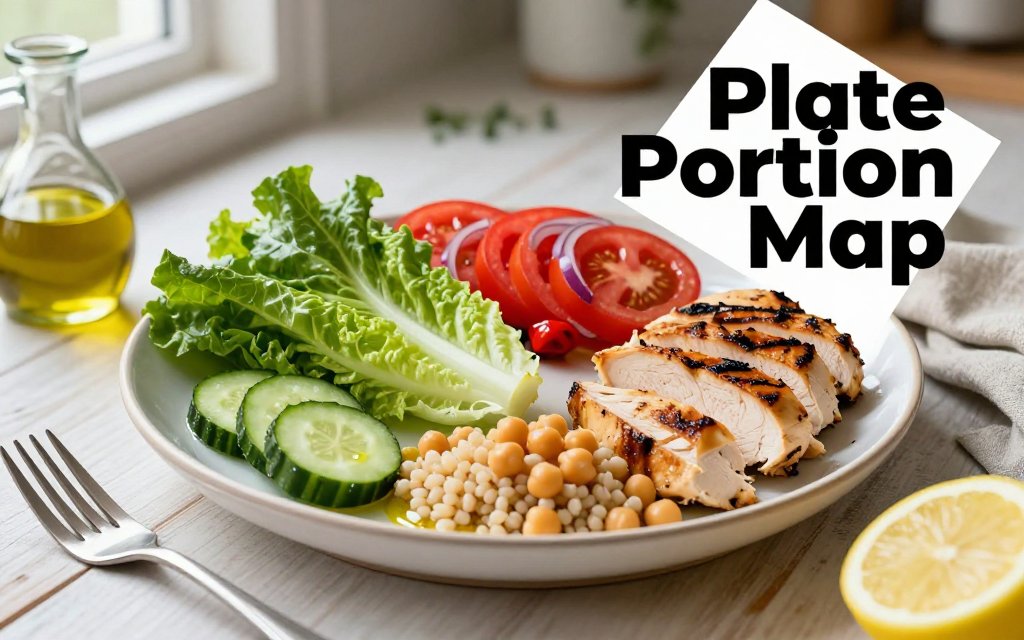
If you want a Mediterranean-style meal that naturally lands in a calorie deficit, use your plate as the measuring tool. The big idea is simple: more volume from low-calorie vegetables, enough protein to keep you satisfied, and a controlled amount of calorie-dense fats (yes, even healthy olive oil). This is also why the Mediterranean pattern is often described as easier to stick with than strict rules, because you are building meals around real food structure, not perfection. If you like seeing the science side, the Harvard Mediterranean diet guide summarizes research linking stronger Mediterranean adherence with better weight maintenance over time.
Your weight loss plate in one sentence
Rule of thumb you can use at lunch today: fill 1/2 your plate with non-starchy vegetables, 1/4 with protein, 1/4 with high-fiber carbs, plus 1 to 2 teaspoons of olive oil (or a small handful of olives or nuts). The goal is volume plus protein plus fiber, not “no carbs.” A quick example plate: start with a Greek salad base (romaine, cucumber, tomato, red onion, peppers), add grilled chicken or canned tuna, add chickpeas or farro, then finish with a measured olive oil and lemon dressing. This setup works because it keeps the most calorie-dense items in the smallest sections, without making the meal feel small.
Here is a real build with specific portions you can copy. Use an 8 to 10 inch plate. Half the plate: about 2 packed cups chopped romaine plus 1 cup cucumber and tomatoes, and add as many extra crunchy vegetables as you want (peppers, radish, shredded cabbage). Protein quarter: 4 to 5 oz cooked grilled chicken breast, or 1 standard can of tuna in water, drained. Carb quarter: 1/2 cup cooked chickpeas or 2/3 cup cooked farro. Fat: 1 teaspoon olive oil whisked with lemon juice, vinegar, garlic, oregano, and a pinch of salt and pepper. This lands around 450 to 550 calories depending on the exact protein and carb, and it commonly hits roughly 35 to 50 g protein.
Build the plate first, then add calories. Start with vegetables until the plate looks full, add a palm of protein, then a fist of beans or grains, and measure your oil with a teaspoon.
To tighten calories without losing the Mediterranean feel, shrink the most calorie-dense part first. If your deficit is aggressive, keep the vegetables at 1/2 the plate, keep protein at 1/4, and reduce the carb section to 1/8 of the plate (for example, 1/3 cup beans or grains instead of 1/2 cup). If you train hard or walk a lot, you can do the opposite and keep the plate structure the same while bumping the carb portion slightly (like a full 3/4 cup potato) on workout days. Either way, measuring olive oil is the “make or break” habit, because free-pouring can quietly add a few hundred calories across a day.
Mediterranean diet foods list for beginners, built for fat loss
If you are new to this style of eating, the easiest approach is to pick “default groceries” you can mix and match into plates on repeat. You are looking for vegetables you will actually eat raw or roasted, proteins you can prep in bulk, carbs that bring fiber, and a few high-impact flavor builders so food does not feel bland even with smaller portions of oil, nuts, and cheese.
The common Mediterranean fat loss mistakes are not about bread or pasta, they are about “healthy extras” piling up. Olive oil is nutritious, but 1 tablespoon is about 120 calories, so two generous pours at lunch can erase your deficit fast. Nuts are similar: a small handful can be 160 to 200 calories. Hummus, feta, and tahini are easy to over-scoop because they taste like “just a little something,” but they add up quickly. A simple guardrail: pick one calorie-dense add-on per meal (oil or nuts or cheese), portion it intentionally, and let herbs, lemon, vinegar, and crunchy vegetables do most of the heavy lifting for flavor and satisfaction.
High-protein, lower-calorie swaps help a lot without changing the vibe of the plate. Try 2 percent Greek yogurt mixed with lemon, garlic, and dill as a creamy sauce instead of a heavy feta pile. Choose tuna, shrimp, or grilled chicken over extra pita when you want more fullness for fewer calories. If your bowl feels small, add vegetables first (extra cucumber, tomato, arugula, roasted zucchini) before doubling rice or farro. For social meals, the same plate fractions still work, and you can practice ahead of time with BBQ plate deficit formula. If you have health concerns or a medical condition, check with your clinician for personal targets.
Calories per meal on a Mediterranean deficit
Most people do better with a simple, repeatable calorie budget per meal than a perfectly engineered weekly plan. For Mediterranean weight loss, the goal is not “eat Mediterranean foods and hope,” it is “eat Mediterranean foods inside a calorie deficit.” Your daily target sets the guardrails, but your per-meal calories decide whether you feel steady and satisfied or swing between starving and snacking. As a starting point, smaller or less active adults often land around 1400 to 1700 calories per day, moderately active adults often land around 1700 to 2100, and larger or very active adults may need 2100 plus. If you have medical conditions or a history of disordered eating, check in with a clinician before pushing calories lower.
Simple calorie ranges that work in real life
Most weight-loss Mediterranean meals land around 350 to 550 calories, with snacks planned instead of accidental. That range is big enough to include a real protein portion, lots of produce, and a little olive oil, but small enough that three meals still leave room for one or two snacks. It also reduces decision fatigue because you can eyeball whether a plate is “in range” without weighing every tomato. If your mediterranean meal plan calories are 1600, a practical split is 450, 450, and 550 for meals, plus a 150 snack. If you are hungriest at night, flip it, go lighter earlier and keep dinner bigger.
Here are easy Mediterranean meals under 500 calories that still feel like food, not diet punishment. Salmon plus a big veggie salad works if you keep oil measured: 4 oz salmon (about 230 calories) plus cucumber, tomatoes, peppers, lemon, herbs, and 2 teaspoons olive oil (about 80 calories) puts you near 350 to 450 depending on add-ons, and you still get roughly 25 g protein. A chicken shawarma bowl can stay under 500 if you use cauliflower rice as the base, add 3 to 4 oz chicken breast, a half cup chickpeas, and a big pile of chopped salad. Lentil soup plus a side salad is a great “volume meal,” especially when you add a dollop of nonfat Greek yogurt for extra protein. An egg and veggie scramble with a slice of sourdough is an easy 400 to 500 if you keep cheese modest.
The most common reason a Mediterranean deficit stalls is not carbs, it is calorie creep from fats plus under-eating protein. Olive oil, nuts, tahini, pesto, and cheese are healthy, but they can crowd out your protein budget fast. Set a protein floor first, then “spend” remaining calories on carbs and fats. A solid target for many dieters is 25 to 40 g protein per meal, then 10 to 20 g from a snack. If you train, research reviews and position stands often discuss higher daily protein ranges (commonly around 1.6 g per kg body weight, depending on goals and training), which can make deficits feel better and help preserve lean mass. See ISSN protein intake ranges for the context and citations. Quick math: at 150 lb (about 68 kg), even 1.4 g per kg is about 95 g daily, which is much easier when you plan protein at every meal.
Build the plate in this order: choose the protein first, then add a mountain of vegetables, then add your carbs, and finally drizzle fats. If you start with oil and bread, the calories disappear before you get full.
Use this table to set meal calories fast
Use the table below as a quick budgeting tool. Pick the daily calorie target that matches your current plan, then commit to either 3 meals plus 1 snack or 3 meals plus 2 snacks. Your only “job” is to keep most meals inside that lane and hit your protein floor. You can still eat out, you can still swap meals, and you do not need a rigid weekly menu. The win is consistency: a 450 calorie lunch done five days a week beats a perfect 350 calorie lunch done twice. If your hunger is high, choose the 2-snack pattern and keep snacks protein-forward.
| Daily | 3+1 | 3+2 |
|---|---|---|
| 1400 | 400x3 +200 | 350x3 +2x175 |
| 1600 | 450x3 +250 | 400x3 +2x200 |
| 1800 | 500x3 +300 | 450x3 +2x225 |
| 2000 | 550x3 +350 | 500x3 +2x250 |
| 2200 | 600x3 +400 | 550x3 +2x275 |
Busy professionals do best with repetition. Pre-decide two meal templates for weekdays and rotate them, then use one flexible dinner formula. Example templates: breakfast is Greek yogurt, berries, and a spoon of chopped walnuts; lunch is a tuna and white bean salad with lemon and arugula, or leftover chicken and roasted vegetables. Dinner is “protein plus 2 vegetables plus one carb,” like shrimp with sautéed zucchini and a half cup farro. Log these once in your tracker and reuse them, then adjust portions to match your budget. If staying full is the struggle, keep snacks intentional and high-satiety, and use satiety index meal planning tips to choose foods that feel bigger per calorie.
Watch out for the classic Mediterranean dinner trap: saving calories all day, then “free pouring” olive oil and adding bread plus wine at night. Those foods are fine, but the portions matter in a deficit. A tablespoon of olive oil is about 120 calories, so two quick glugs can erase your snack budget. Try measuring oil for two weeks to recalibrate your eyes, then go back to estimating if you prefer. Keep bread to one portion (or pick bread or wine, not both most nights), and make the plate physically large with vegetables so dinner still looks generous. If you are genuinely hungry after workouts, add 100 to 200 calories on training days, preferably from protein or high-fiber carbs, not just extra oil.
Mediterranean diet macros, easy targets to hit
Macro targets for weight loss, no calculator needed
Here is the quotable shortcut that makes Mediterranean eating work for weight loss without turning your day into a math test: aim for 25 to 40 g protein per meal, 8 to 15 g fiber per meal, and keep added fats measured. If you like macro percentages, a simple deficit-friendly split that fits most people is protein 25 to 35 percent of calories, carbs 35 to 45 percent, fats 25 to 35 percent. That is still comfortably within the AMDR macro ranges, it just nudges protein higher than the average plate so meals stay satisfying while calories stay reasonable.
The “why” matters, because it keeps you consistent. Protein helps protect lean mass while you diet, and it is the macro that most strongly improves “staying power” after a meal, so you are less likely to roam for snacks at 9 pm. Fiber is your volume tool, it adds chew and fullness for very few calories, especially from vegetables, beans, berries, and intact whole grains. Fats are absolutely part of Mediterranean eating (olive oil, nuts, seeds, olives, feta), but they are calorie dense, so the win is not removing them, it is measuring them. A practical rule is 1 to 2 teaspoons of olive oil per meal (or 1 tablespoon for a bigger dinner), not a free pour.
If you want grams that are easy to hit with the “plate” approach, try this per main meal: 25 to 40 g protein, 30 to 60 g carbs (higher on training days, lower on rest days), 10 to 20 g fat, and 8 to 15 g fiber. That usually lands you in a satisfying 400 to 650 calorie meal, depending on your portions and ingredients. Beginners can stop there and just repeat it meal by meal. Macro trackers can get more precise by setting a daily protein goal first (for example, 100 to 140 g for many active adults), then dividing it across 3 meals plus 1 snack. If a meal is lighter, keep protein at least 25 g, and shrink carbs and fats first.
Protein first: choose the lean protein, then build veggies and fruit around it. Add a fist of carbs if you need energy, and finish with a measured thumb of olive oil or nuts, not a pour.
How to build a high-protein low-calorie Mediterranean plate
Use portion anchors to keep this simple in real life: a palm-size protein, a fist-size carb, two fists of non-starchy veggies, and a thumb-size fat. “Palm” means the thickness and width of your palm (think 4 to 6 oz cooked chicken, fish, shrimp, or tofu). “Fist” means about 1/2 to 1 cup cooked grains or starchy veg (quinoa, farro, potatoes, or fruit). Two fists of veggies can be a big salad, roasted zucchini and peppers, or chopped cucumbers and tomatoes. Thumb-size fat is the part most people forget, it is 1 tablespoon oil or 1 small handful of nuts, not both, unless the rest of the meal is very lean.
Macro-friendly assembly #1: tuna and white bean salad. Start with 1 can tuna in water (roughly 25 to 30 g protein), add 1/2 cup white beans (fiber and carbs), then pile on crunchy vegetables (celery, cucumber, cherry tomatoes, arugula). For dressing, measure 2 teaspoons olive oil plus lemon, Dijon, garlic, and herbs, and you get the Mediterranean flavor without blowing the calorie budget. Assembly #2: a chicken and veggie souvlaki bowl. Use a palm of grilled chicken, two fists of chopped salad or roasted vegetables, then a fist of carbs like 1/2 cup cooked quinoa or a small pita. Finish with tzatziki made from Greek yogurt for extra protein.
Macro-friendly assembly #3: shrimp plus roasted veggies plus quinoa. Shrimp is a secret weapon for high-protein low-calorie Mediterranean meals because it is lean, cooks fast, and takes on garlic, lemon, and paprika beautifully. Aim for 5 to 6 oz shrimp (often 30 to 40 g protein), roast a sheet pan of broccoli, peppers, onions, and zucchini, then add 1/2 cup cooked quinoa or farro for carbs and extra fiber. Assembly #4: a Greek yogurt bowl that still feels like dessert. Use 3/4 to 1 cup plain 2 percent Greek yogurt, add a cup of berries, and measure 1 tablespoon chopped walnuts or pistachios. Counterintuitive insight that saves calories fast: you do not need to cut olive oil, you need to stop free-pouring it.
If you track with an app like CalMeal, treat your macro targets like guardrails, not a grading system. Log your protein first (chicken, fish, yogurt, legumes), then add produce and carbs, and only then log oils, nuts, and cheese so you see the real cost of “extras.” One fast win for the next 24 hours is to pick one meal (often lunch) and pre-decide the protein: a can of tuna, a rotisserie chicken portion, a Greek yogurt cup, or pre-cooked shrimp. When protein is decided, the Mediterranean plate becomes almost automatic: vegetables for volume, beans or grains for energy, and measured olive oil for flavor. If you have health concerns or a medical condition, check in with your clinician before changing macros significantly.
How to track Mediterranean diet macros consistently
Macro tracking gets much easier when you keep your rules simple and repeatable. Start by setting a daily calorie goal, then pick protein, carbs, and fat targets you can hit most days without overthinking it. In CalMeal, plug in your calorie target first, then set macros so they match the Mediterranean basics: plenty of produce and beans, steady protein, and fats mostly from olive oil, nuts, seeds, and fish. Aim to log 80 to 90 percent of what you eat, not 100 percent perfectly. The goal is a reliable weekly average that keeps your weight trending in the right direction.
Make logging feel automatic by building a small library of “default meals” you actually eat. For example: Greek yogurt plus berries plus walnuts; chicken salad bowl with quinoa; salmon with roasted vegetables. In CalMeal, save these as meals, then swap one ingredient at a time instead of starting from scratch. For home meals, use a food scale for just 7 to 14 days to learn your usual portions (cooked grains, oil pours, nut handfuls), then switch to measuring spoons and visual estimates. This short learning phase is what makes the rest of the month fast.
If tracking feels hard, lower the friction. Log the same breakfast for a week, measure olive oil with a spoon, and treat restaurant meals as “good enough” estimates. Consistency beats precision, especially for fat loss.
Mediterranean meal prep for weight loss, two-hour setup
A two-hour prep is the shortcut to consistent macros because it creates repeatable portions. Pick 2 proteins, 2 veggie bases, 1 carb, and 2 sauces, then mix and match all week. Example: 4 to 5 oz cooked chicken in containers (protein anchor), lentils for fiber plus protein, a big tray of roasted vegetables, and a chopped salad kit you can grab by the handful. Add one cooked grain like quinoa or farro. When the same components show up daily, logging becomes copy, paste, then adjust.
Eating out is where most people lose the plot, so use a simple restaurant script: pick a grilled protein, double the vegetables, choose one starch, and count added fats separately. For portion estimates, use your hand: a palm of protein is roughly 3 to 4 oz cooked, a fist of carbs is roughly 1 cup cooked grains or starchy veg, and a thumb of fat is roughly 1 tablespoon of oil or nut butter. If the meal is oily, log “olive oil” as its own item (for example, 1 to 2 tablespoons), then log the rest of the plate normally. Dressing on the side makes this dramatically easier.
What are good Mediterranean diet macros for weight loss?
A practical starting point is protein at 25 to 30 percent of calories, carbs at 35 to 45 percent, and fat at 25 to 35 percent. That keeps you in a flexible range that still fits Mediterranean foods like beans, fruit, whole grains, and olive oil. If you want a “check your work” benchmark, the Institute of Medicine’s Acceptable Macronutrient Distribution Ranges list adults at 45 to 65 percent carbs, 10 to 35 percent protein, and 20 to 35 percent fat, which you can review in this macronutrient range reference table. Adjust based on hunger and workout schedule.
How many calories should a Mediterranean meal be for fat loss?
Think in daily calories first, then divide into meals you can repeat. If your target is 1,600 calories, a simple split is 400 for breakfast, 500 for lunch, 550 for dinner, and 150 for a snack, or three meals around 450 to 550 each. If your target is 2,000 calories, three meals around 550 to 650 plus a 200 calorie snack works well. A common guideline is that eating about 500 fewer calories per day can lead to about 1 pound of weight loss per week, which is explained in this MedlinePlus calorie deficit guide. Personal needs vary, so check with a clinician if you have medical concerns.
How do I track olive oil, nuts, and restaurant meals without guessing?
Treat fats like “precision items” because small pours add up fast. At home, measure olive oil with a tablespoon for a week, then stick to a default (like 1 tablespoon at lunch and 1 at dinner) so your log stays consistent. Pre-portion nuts into 1 oz snack bags, or buy single-serve packs, then log the whole pack and move on. For restaurants, break the meal into components: protein, starch, vegetables, and added fat. If a dish looks glossy, log 1 to 2 tablespoons of oil plus the main foods. You will not be perfect, but you will be consistent, and that is what changes results.
Ready to make your meals count starting today? Download CalMeal for free and take the guesswork out of calorie counting with AI-powered food recognition. Track your Mediterranean weight loss plate in seconds, spot portion creep early, and stay aligned with your calorie and macro targets. Get CalMeal on iOS or Android, then start logging your next meal.
Start Tracking Your Nutrition Today
Download CalMeal for free and take the guesswork out of calorie counting with AI-powered food recognition.