Pasta calories climb with the bowl, not the box
A cup of cooked pasta runs about 210 calories, but the bowl you actually eat often holds two or three. Here is what pasta calories really depend on, by type, portion and sauce, with numbers you can log.
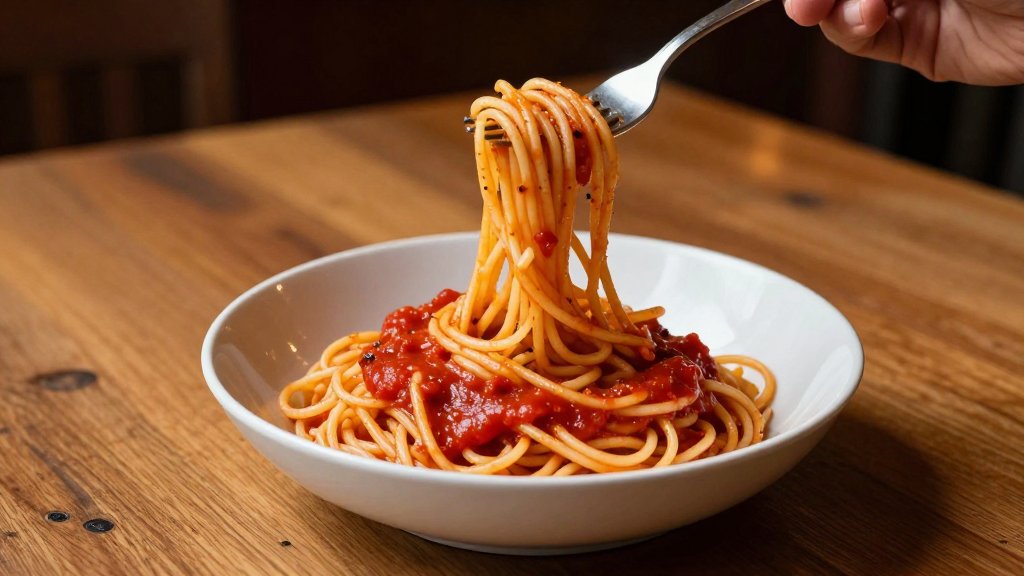
A cup of cooked spaghetti carries about 210 calories. That sounds friendly, until you notice the bowl on the table holds closer to three cups. Pasta calories rarely come from the pasta being sneaky. They come from how much lands on your plate and what you spoon over the top.
The box tells a tidy story too. A dry serving is 2 ounces, about 200 calories, but almost nobody measures 2 ounces before dinner. So the number on the label and the number in your bowl rarely match, and that gap is where a day's calorie budget quietly disappears.
Where pasta calories actually come from
Plain dried pasta is remarkably consistent. Most shapes run about 360 calories per 100 grams dry, and roughly 130 to 160 calories per 100 grams once cooked, because the noodles soak up water and get heavier without gaining energy. One standard cup of cooked pasta lands near 210 to 220 calories once it is on your plate.
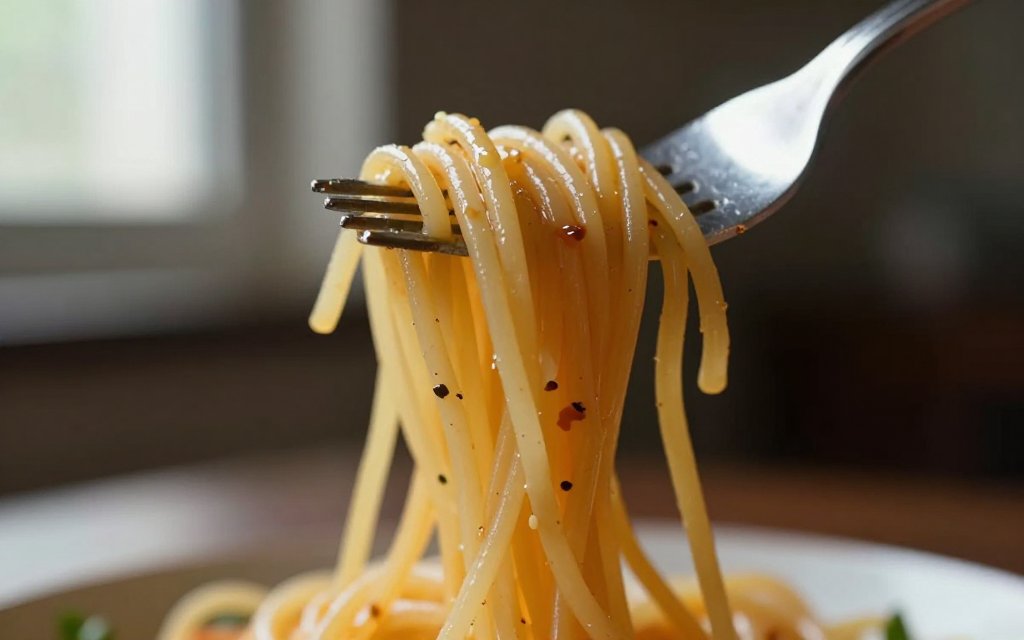
The macros are steady as well. A cup of cooked pasta gives you about 7 to 8 grams of protein, 42 to 43 grams of carbs and barely a gram of fat. The kcal in pasta comes almost entirely from those carbs, which is why the noodles themselves are easy to predict. Everything else on the plate is the variable.
Dried pasta is about 360 calories per 100 grams. Cook it and the same noodles read closer to 150 per 100 grams, because water has no calories.
Dry versus cooked is where the counting breaks
Here is the trap that wrecks most food logs. Dry pasta soaks up close to its own weight in water, so 2 ounces of dry pasta becomes about a heaped cup of cooked pasta. Weigh the same food in two states and you get two very different calorie densities, even though the total never changed.
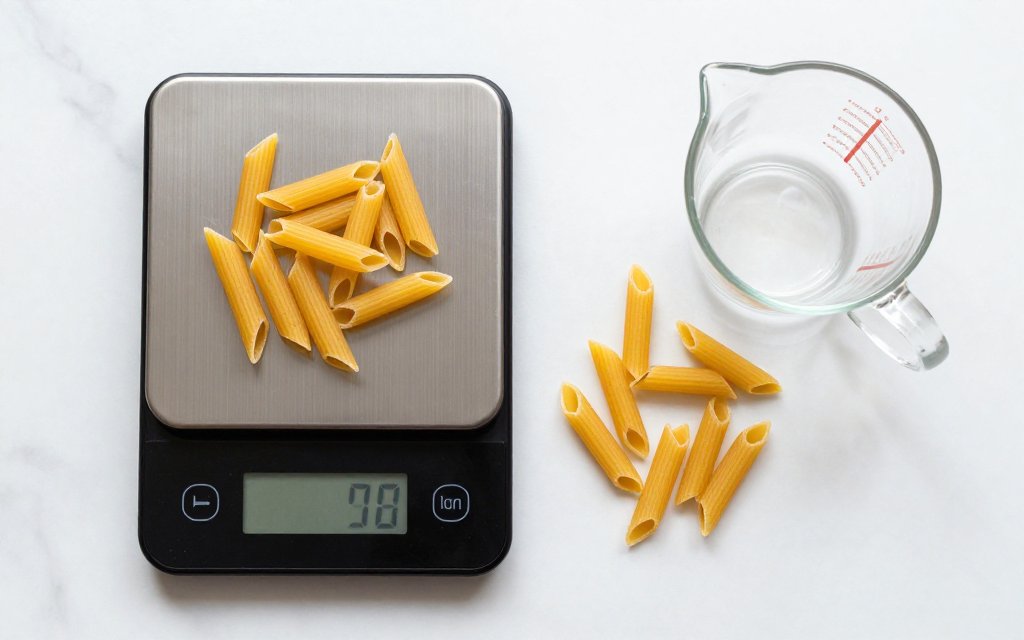
That water math is exactly why cooked pasta calories read so much lower per 100 grams than the number on the dry box. Log 100 grams of cooked pasta using the dry figure and you will triple your estimate. Weigh dry and use the cooked figure and you will undercount. Pick one state and stay in it, the way a steady serving size keeps the rest of your log honest.
Spaghetti, whole wheat and gnocchi compared
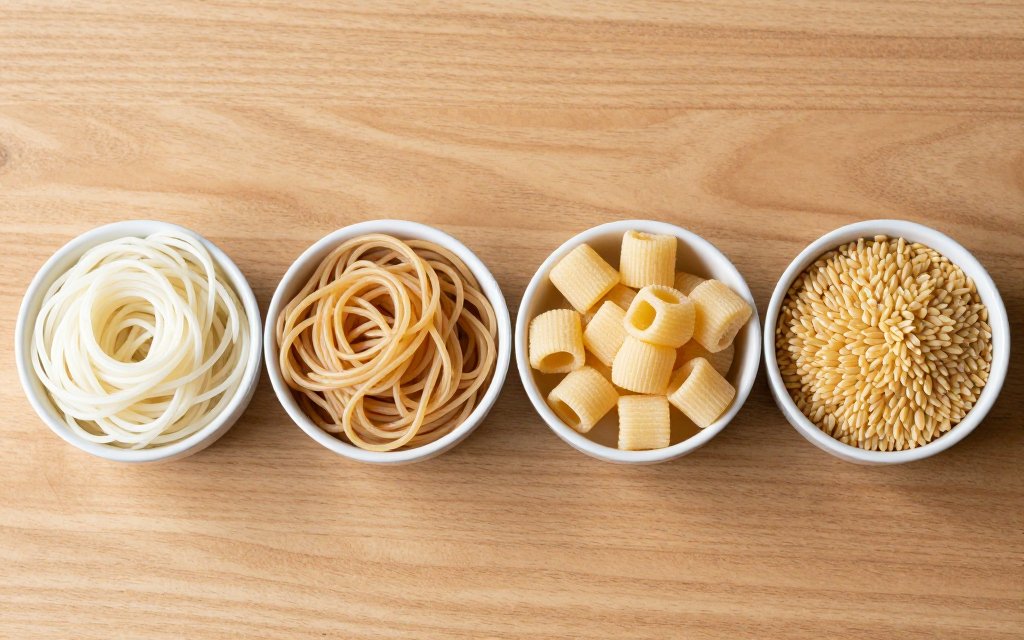
Swap the shape and the numbers shift a little, though not as much as menus imply. Whole wheat pasta calories run slightly lower per cup and bring far more fiber, which is the real reason to choose it. Spaghetti calories and most classic shapes sit in the same range, so the choice between penne and fusilli barely matters.
The outliers are worth knowing. Gnocchi is built from potato, so it rides higher per cup. Calories in orzo track regular pasta because orzo is pasta, just shaped like rice. Calories in pasta salad depend almost entirely on the oil or mayo in the dressing, which is why a cold bowl can quietly outrun a hot one.
| Pasta type | Cooked cup | Fiber |
|---|---|---|
| White spaghetti | 220 cal | 2.5 g |
| Whole wheat | 174 cal | 4 g |
| Egg noodles | 221 cal | 1 g |
| Gnocchi | 278 cal | 1 g |
| Orzo | 221 cal | 1 g |
| Rice pasta | 209 cal | 1 g |
Whole wheat, gnocchi and orzo
Whole wheat swaps about 45 calories a cup for roughly 4 grams of fiber, which slows digestion and keeps you fuller for longer. Gnocchi calories look high at about 278 a cup, so treat it like a denser side rather than a free swap. Orzo and pasta salad are the easiest to under-log, because the dressing hides in the mix.
The sauce is the plot twist
This is where two identical bowls of pasta split apart. A half cup of marinara adds only 60 to 80 calories. The same amount of alfredo can add 220 to 300, and pesto or carbonara climb higher still. Order the cream and you can double the calories of the pasta underneath it.
| Sauce | Half cup | Fat |
|---|---|---|
| Marinara | 60 to 80 cal | Low |
| Bolognese | 130 to 180 cal | Medium |
| Vodka | 150 to 200 cal | Medium |
| Alfredo | 220 to 300 cal | High |
| Pesto | 250 to 320 cal | High |
| Carbonara | 250 to 350 cal | High |
A half cup of marinara adds about 70 calories. Swap it for alfredo and you are adding closer to 260, before the pasta even counts.
None of this makes pasta a problem food. As one breakdown of dry versus cooked pasta puts it, no single food makes you gain weight, a calorie surplus does. Sauce, oil and portion size explain almost every dramatic pasta number you will ever see.
What a real portion actually costs
Put the pieces together and the plate tells the story. A logged serving is one cup, around 210 calories. A normal home portion is two to two and a half cups, so 420 to 525 calories before sauce. Cooking at home, where a little meal prep keeps portions in check, is the easy win here.
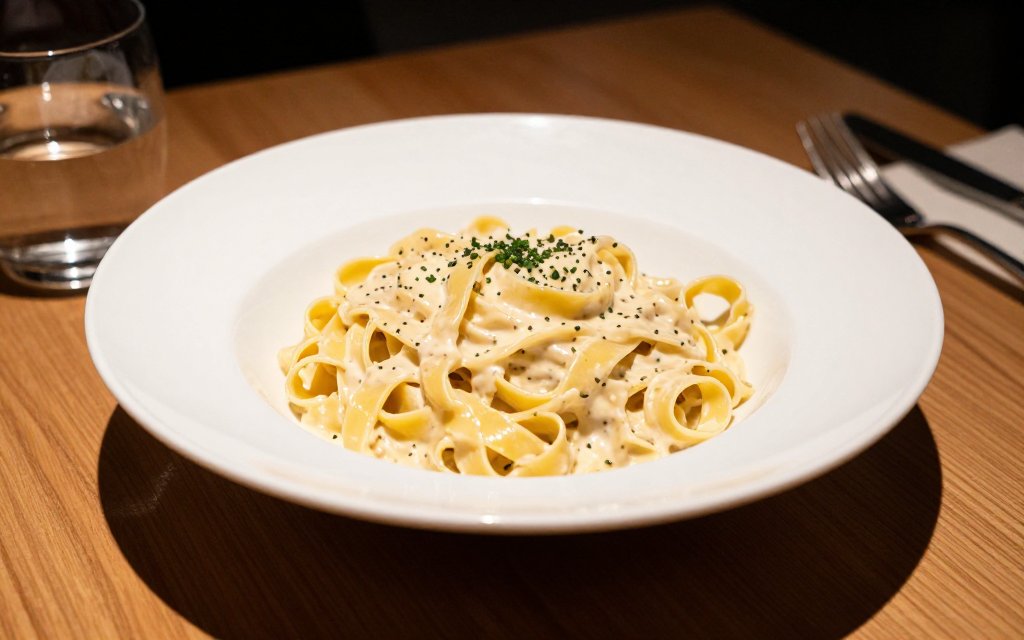
Eat out and the math shifts fast. An Italian restaurant plate is often three to four cups, 630 to 840 calories of pasta alone, the same portion creep that inflates restaurant meals everywhere. Add a cream sauce and a chain bowl can clear 1,000 calories, close to half a day for many people. That is not a reason to skip pasta. It is a reason to know the number, because a bowl you can measure is a bowl you can fit into your macros for the day.
A restaurant pasta with alfredo can top 1,000 calories, roughly what a chicken breast, rice and vegetables would cost you three times over.
Common questions about pasta calories
How many calories are in spaghetti?
A cup of cooked spaghetti is about 210 to 220 calories with 7 to 8 grams of protein. Two ounces of dry spaghetti gives you roughly the same total, since the calories do not change when the noodles absorb water. Most of the variation comes from the sauce, not the strands.
How many calories in a cup of pasta?
A standard cup of cooked pasta runs about 210 to 220 calories. The catch is that a real serving bowl often holds two or three cups, so the calories in a cup of pasta are only the starting point. If you want to know how many calories in pasta your plate holds, count the cups, not the box.
Is whole wheat pasta lower in calories?
Slightly. Whole wheat pasta calories land about 45 lower per cooked cup than white pasta, near 174 versus 220. The bigger win is daily fiber, roughly 4 grams a cup versus 2.5, which slows digestion and helps you feel full on less.
Do restaurant portions really hold that many calories?
Often yes. A sit-down plate can run three to five cups, and how many calories in spaghetti pasta a kitchen serves is usually far past a single portion. Add a cream sauce and the bowl alone can reach 1,000 calories. Splitting it or boxing half is the simplest fix.
Pasta fits any plan once you can see the real number instead of guessing at the bowl. CalMeal reads your plate from a photo and estimates the calories and macros in your pasta, sauce and sides, so a big Italian dinner stops being a mystery. Get the app here: iOS or Android.
Start Tracking Your Nutrition Today
Download CalMeal for free and take the guesswork out of calorie counting with AI-powered food recognition.