Portion control starts with healthy portion sizes
Your hands are a portion tool you never leave at home. See how the palm, fist, cupped hand and thumb set healthy portion sizes, what portion control saves you each month, and a simple chart for chicken, rice and steak.
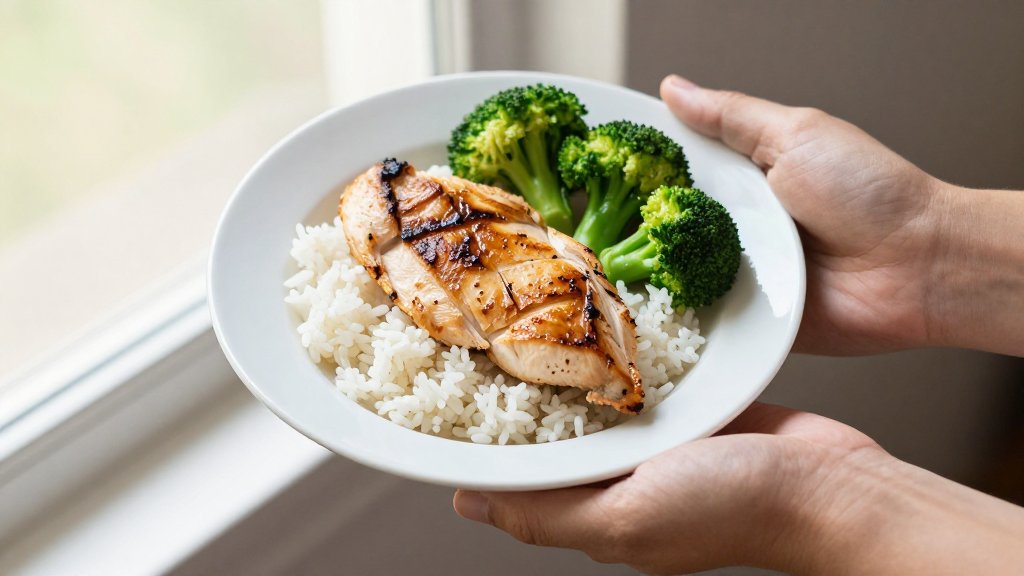
Your hands are the only measuring tool you never leave at home, and they're good enough to run a whole day of eating. Get portion sizes roughly right and calorie counting stops feeling like homework. That one habit does more for most people than any gadget.
Portion control isn't about eating less of everything. It's about matching how much lands on your plate to what your body actually uses. Nail healthy portion sizes at each meal and the daily numbers mostly take care of themselves, no scale required.
Here's the part people miss. The hand method is about 95 percent as accurate as weighing and logging every gram, according to coaches at Precision Nutrition, for a tiny fraction of the effort. That's the trade most of us actually want.
Hand portions are about 95 percent as accurate as carefully weighing and tracking every gram of food, with far less effort.
Why your hand beats guessing at portion sizes
Eyeballing a plate tends to go wrong in one direction. We pour more. Research on serving sizes shows that the bigger the plate and the bigger the scoop, the more we eat without noticing. Your hand fixes that, because it doesn't grow when you're hungry.
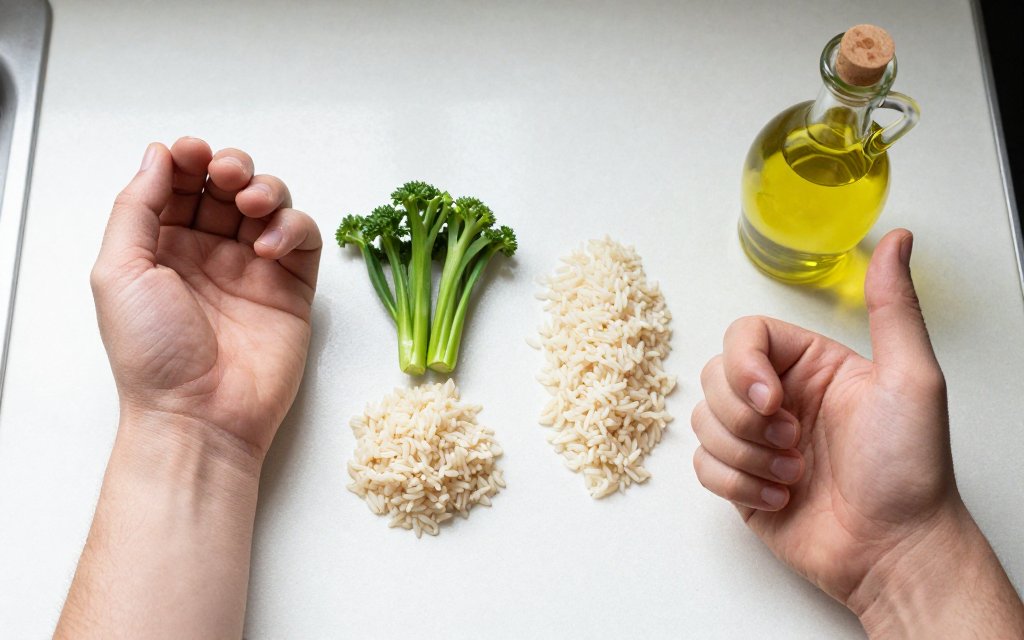
The method is simple. Your palm sets protein, your cupped hand sets carbs, your thumb sets fats, and your fist sets vegetables. Because your hand is sized to your body, a taller person gets bigger portions and a smaller person gets smaller ones, automatically.
Palm for protein, cupped hand for carbs, thumb for fats, fist for vegetables. Four cues cover almost every meal you build.
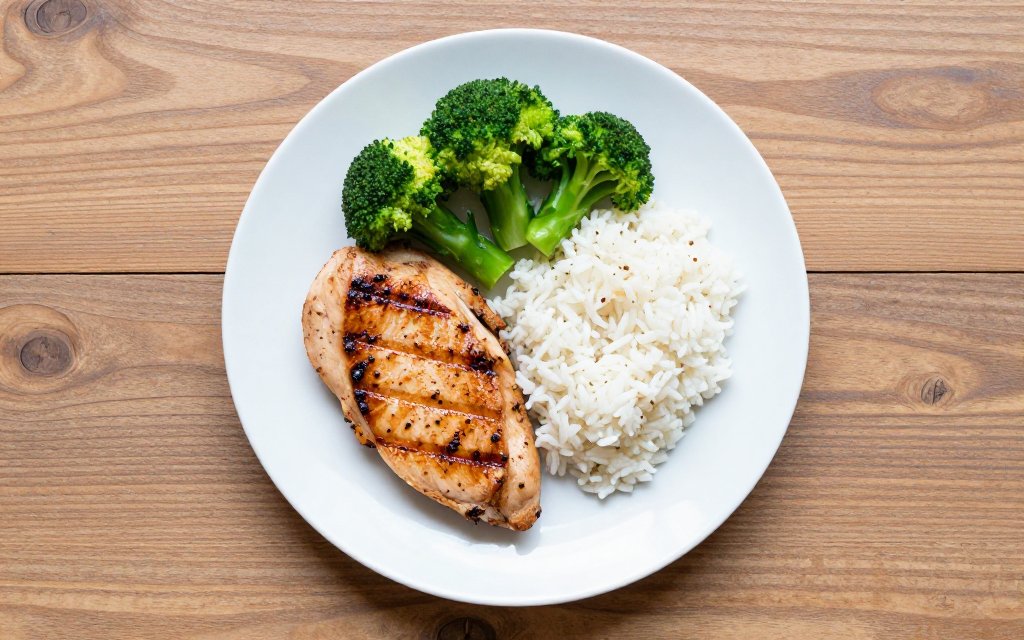
The hand portion sizes method, palm to thumb
Let's put real numbers on it. For women, one palm of protein runs about 3 oz or 85 g, and for men it's closer to 4 oz or 115 g. A cupped hand of cooked carbs is roughly 100 g for women and 130 g for men.
Fats are easy to overdo, so the thumb keeps them honest at about one tablespoon, near 14 g. A fist of non-starchy vegetables is about one cup, or 80 g, and you can pile those on for very few calories.
Palm, fist, cupped hand and thumb
Each cue maps to a macro. One palm of chicken or fish gives you roughly 22 g of protein and around 130 calories. A cupped hand of rice or oats lands near 22 g of carbs and 110 calories. A thumb of oil or nut butter is about 8 g of fat and 90 calories.
| Hand cue | Food type | Amount |
|---|---|---|
| Palm | Protein | 3 to 4 oz (85 to 115 g) |
| Cupped hand | Carbs | 100 to 130 g cooked |
| Thumb | Fats | 1 tbsp (14 g) |
| Fist | Vegetables | 1 cup (80 g) |
Portion sizes for men and women differ
Men generally use two palms, two fists, two cupped hands and two thumbs per meal. Women usually start with one of each. Treat it as a starting point, not a rule. Still hungry after a hard workout? Add a palm of protein and check in again in a week.
What portion control for weight loss really costs
Here's where it hits your wallet and your week. Portion control for weight loss usually trims 200 to 400 calories a day without a single food swap, just smaller cupped hands of carbs and honest thumbs of fat. Over a month that adds up to real fat loss with no special groceries.
It saves money too. Plate protein first and carbs second, and you buy less of the cheap filler you tend to overeat. Pair the hand method with our maintenance calorie calculator to see the daily target you're eating under.
Shaving one cupped hand of carbs from two meals a day can cut roughly 200 calories, no willpower heroics required.
Portion size and serving size are not the same
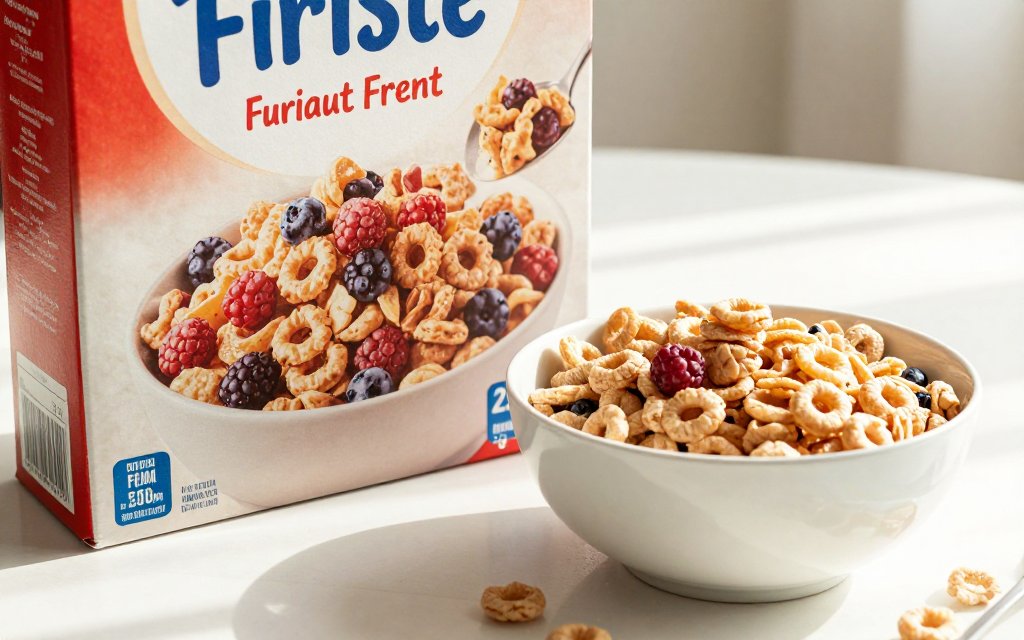
This one trips up a lot of trackers. A serving size is the fixed amount printed on a label, like 30 g of cereal. A portion size is what you actually pour, which is often two or three servings. Mixing up portion size and serving size is why calorie logs come out low.
Labels list serving sizes to standardize nutrition facts, not to tell you how much to eat. Your bowl of cereal might be three serving sizes deep. The hand method sidesteps the whole confusion by measuring what's really on your plate.
A portion size chart for chicken, rice and steak
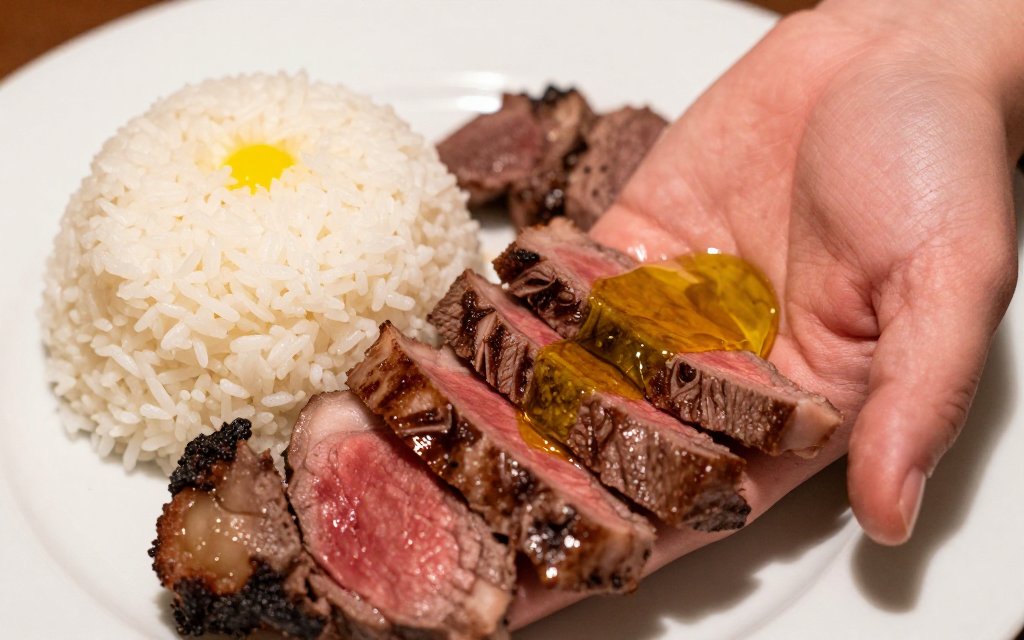
Time to make it concrete with food you actually cook. A chicken portion size is one palm, about 90 g or a deck of cards, per the British Dietetic Association. A white rice portion size is one cupped hand, roughly 150 g cooked. And a portion size of steak is a palm as well, 90 to 115 g depending on your hand.
Keep those portion measurements in your head and you can plate a balanced dinner anywhere. The same group suggests at least five 80 g portions of fruit and veg a day, about 400 g total. For the exact calorie math, our chicken breast guide, white rice calories and high protein foods list break down the numbers.
| Food | Hand cue | Portion |
|---|---|---|
| Chicken breast | 1 palm | 90 g (deck of cards) |
| White rice, cooked | 1 cupped hand | 150 g |
| Steak | 1 palm | 90 to 115 g |
| Olive oil | 1 thumb | 1 tbsp (14 g) |
Common questions about portion sizes
How many calories is a palm of chicken?
A palm of cooked chicken is roughly 90 g. Precision Nutrition puts a palm of protein at about 130 calories and 22 g of protein for a woman's hand, with larger hands holding a bit more. It's one of the leanest palms you can plate.
What is a healthy portion size for rice?
A healthy portion size for rice is one cupped hand, about 150 g cooked, which is close to two or three label serving sizes. That lands near 110 calories of carbs per cupped hand. If you're cutting, stick to one cupped hand; if you train hard, two is fine.
Do hand portion measurements work for everyone?
For most healthy adults, yes. Hand portion sizes scale to your body, so they self-adjust for height and build. Anyone managing a medical condition should follow a clinician's plan, and none of this is medical advice, just a simple framework you can start today.
Portion control gets easier when you can see the numbers behind every plate. Snap a photo and let CalMeal estimate the calories and macros in your meal in seconds, so your palm and its calorie count finally line up. Start tracking today for free. Get the app here: iOS or Android.
Start Tracking Your Nutrition Today
Download CalMeal for free and take the guesswork out of calorie counting with AI-powered food recognition.