Sushi calories run from 140 to 500 per roll
Sushi calories swing from about 135 for a cucumber roll to more than 500 for a shrimp tempura roll. See how the popular rolls, nigiri, and sashimi compare, plus the leanest ways to order and keep soy sauce sodium in check.
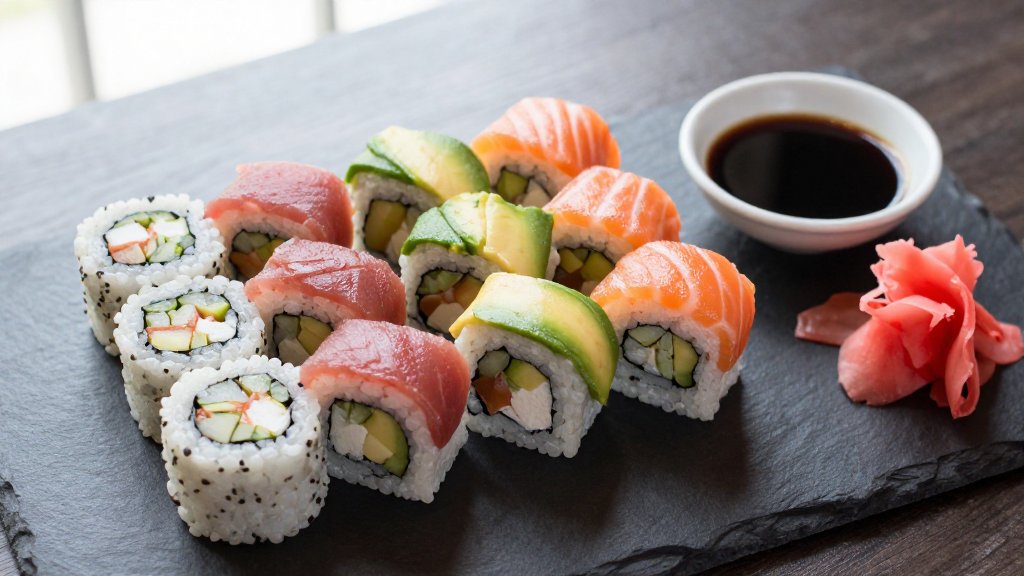
Order the same three rolls two nights in a row and your total can swing by hundreds, even though it all looked like sushi. That is the tricky thing about sushi calories. A plain cucumber roll sits near 135 calories, while a shrimp tempura roll can push past 500, and the menu rarely tells you which is which.
The gap comes down to three things: how much rice is packed under the fish, whether the roll is fried, and what sauce gets drizzled on top. Once you see how sushi roll calories add up, you can build an order that stays light without giving up the food you came for. Here is what the numbers look like, roll by roll.
What drives sushi calories in the first place
Rice does most of the damage. A single maki roll uses roughly 150 to 200 calories worth of seasoned rice, which works out to about 60 percent of the roll's total. That is before a single piece of fish gets counted.
Sushi rice is cooked with sugar and rice vinegar, so it carries more calories than plain steamed rice. Add avocado, cream cheese, or a mayo based sauce and the count climbs fast. The fish itself, the part people fret over, is usually the smallest slice of the calorie budget.
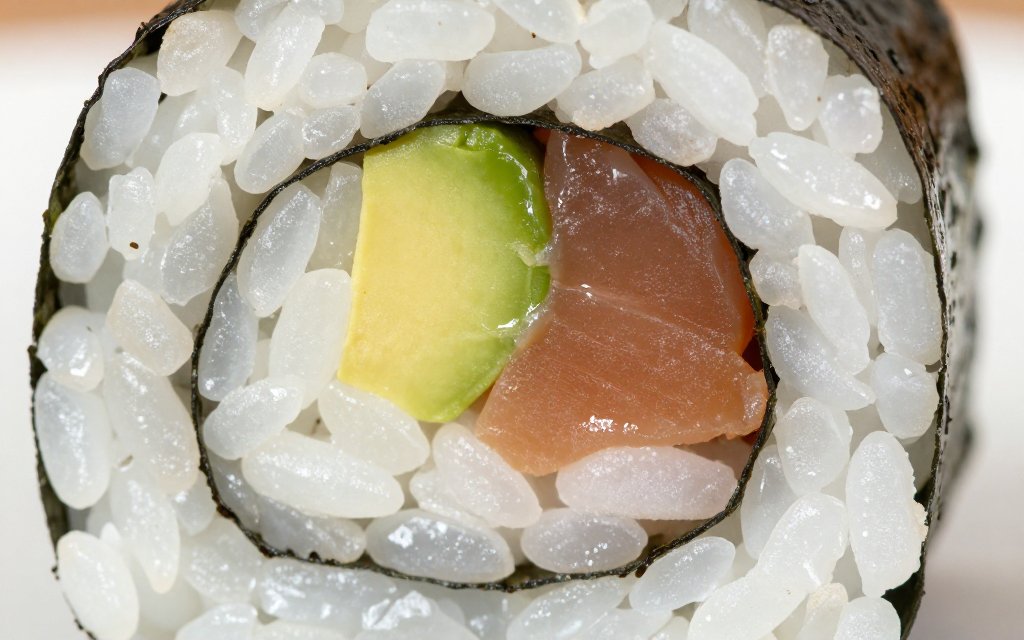
The fish is rarely the problem. Rice, frying oil, and sauce are where most sushi calories quietly pile up.
How many calories in a sushi roll, by type
Most restaurant rolls arrive cut into six or eight pieces, and that whole roll is the number worth tracking. Here is how the popular ones compare, using typical restaurant portions.
A cucumber or plain tuna roll keeps you under 200 calories, while the fried and sauced rolls at the bottom of the list can cost more than a fast food burger. If you track macros, our guide to what macros are and how to count them pairs well with this.
California roll calories and macros
The California roll is the gateway roll, and its numbers are friendly. One eight piece roll runs about 255 calories with 9 grams of protein, built from imitation crab, avocado, and cucumber. It is a safe default when you are not sure what to order.
Spicy tuna roll calories
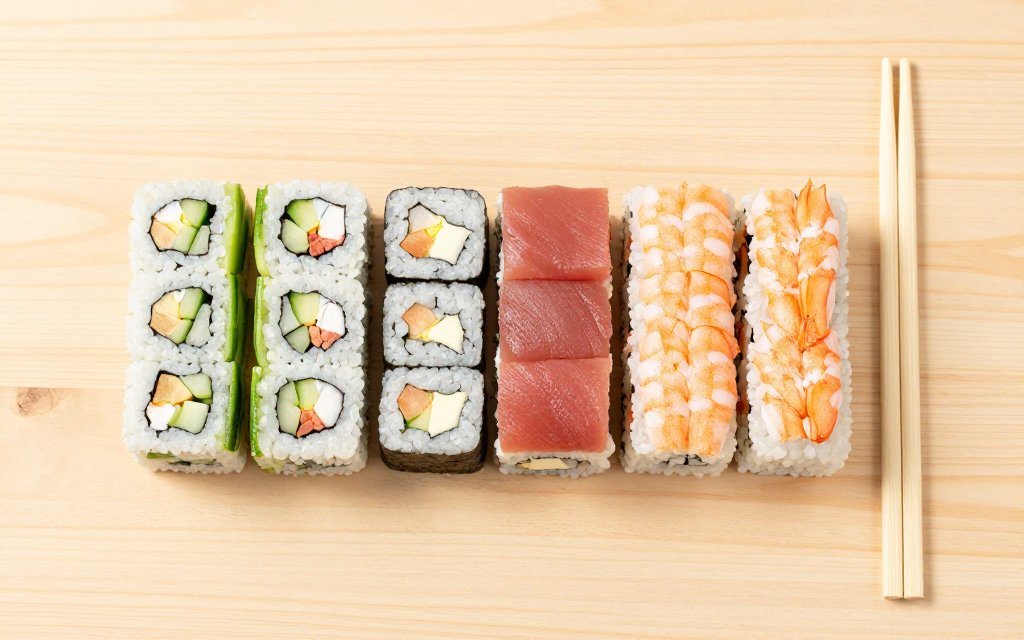
A spicy tuna roll lands around 290 calories, and most of the jump over a plain tuna roll comes from the spicy mayo. Real tuna keeps the protein respectable at roughly 13 grams. Ask for the sauce on the side and you shave calories without losing the heat.
Shrimp tempura roll calories and other heavy hitters
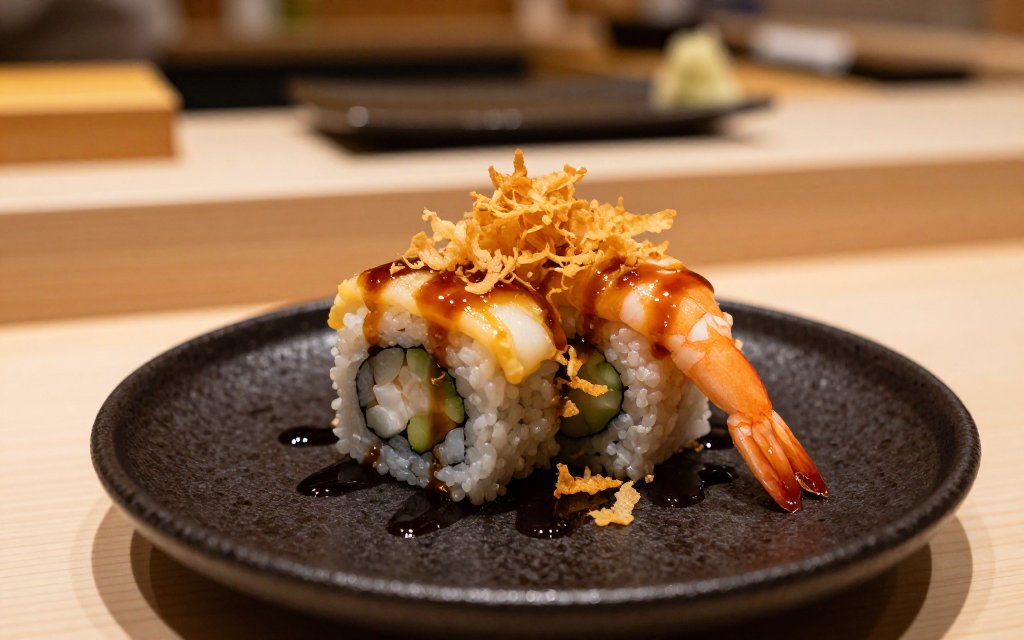
This is where sushi stops being a light meal. A shrimp tempura roll carries about 508 calories, 21 grams of fat, and 64 grams of carbs, since the shrimp is battered and deep fried before it is rolled. A dragon roll sits near 430 calories, and a rainbow roll around 475 with a strong 22 grams of protein from its fish topping.
Two rainbow rolls and one shrimp tempura roll land near 1,455 calories before you add a single drop of soy sauce.
Low calorie sushi and the leanest ways to order
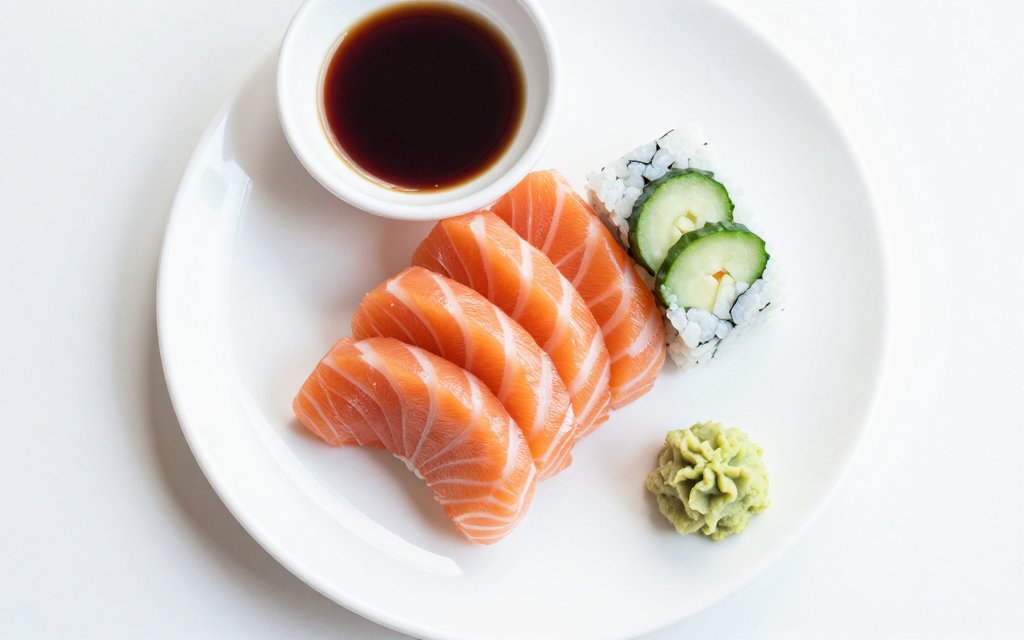
Ordering light does not mean ordering boring. Sashimi skips the rice entirely, so a three piece serving of salmon sashimi runs about 120 calories with close to 20 grams of protein. Nigiri, a small pillow of rice under one slice of fish, lands around 40 to 75 calories per piece, which makes the calories of sashimi and nigiri easy to keep low.
Among rolls, the leanest picks are simple. A cucumber roll near 135 calories, a tuna roll around 185, and a salmon roll close to what a California roll costs. If salmon is your go to, our breakdown of how much protein is in salmon shows why it is such an efficient pick. A calorie tracker like CalMeal can estimate a plate's calories from a single photo, which helps when the menu lists no numbers at all.
Is sushi good for weight loss, and what it costs you
Sushi can absolutely fit a weight loss plan, because lean fish brings protein and omega-3 fats for a modest calorie price, and the fish also supplies iodine, selenium, and vitamin B12. The catch is portion creep. A 10 piece grocery pack and a 4 piece restaurant order are not the same food, so serving size is where good intentions slip. Our guide to reading serving sizes with your hand helps when no scale is around.
Sodium is the other hidden cost. One tablespoon of regular Japanese soy sauce carries roughly 900 to 1,000 milligrams of sodium, and a low sodium version still runs about 500 to 600 milligrams, per Tasting Table. Dip lightly rather than drowning each piece, and the sushi nutrition facts on your day look a lot calmer. For a similar restaurant strategy, see the healthiest Chinese food to order.
| Soy sauce | Serving | Sodium |
|---|---|---|
| Regular Japanese | 1 tbsp | 900 to 1000 mg |
| Chinese light | 1 tbsp | 1000 to 1200 mg |
| Low sodium | 1 tbsp | 500 to 600 mg |
A lean order of sashimi and a cucumber roll can come in near 300 calories. Swap in tempura and mayo and the same meal doubles.
Sushi calorie questions people actually ask
Is sushi good for weight loss?
Yes, if you lean on sashimi, nigiri, and simple rolls while watching the rice and sauce. A protein rich order keeps you full, and swapping one fried roll for sashimi can save 300 calories or more. Balance the rest of your day and sushi fits a deficit fine.
How many calories are in an average sushi roll?
Most standard rolls land between 200 and 320 calories for the whole roll. A tuna roll sits near 185, a California roll around 255, and heavier fried rolls climb past 500. The rice and sauce, not the fish, drive most of that spread.
What is the lowest calorie sushi to order?
Sashimi wins, since it drops the rice and delivers almost pure protein at roughly 30 to 45 calories per slice. After that, a cucumber roll near 135 calories and a plain tuna roll are the leanest low calorie sushi picks on most menus.
Sushi can be a light, high protein meal or a 1,400 calorie splurge, and the only way to know is to see the numbers. Take the guesswork out of your next order with CalMeal, which counts calories and macros from a photo of your plate. Get the app here: iOS or Android.
Start Tracking Your Nutrition Today
Download CalMeal for free and take the guesswork out of calorie counting with AI-powered food recognition.