How much protein in a can of tuna, water or oil
One five ounce can of tuna in water carries about 30 grams of protein for roughly 120 calories. Oil packing nearly triples the fat and the calories. Here is what changes by cut, pack size, and serving.
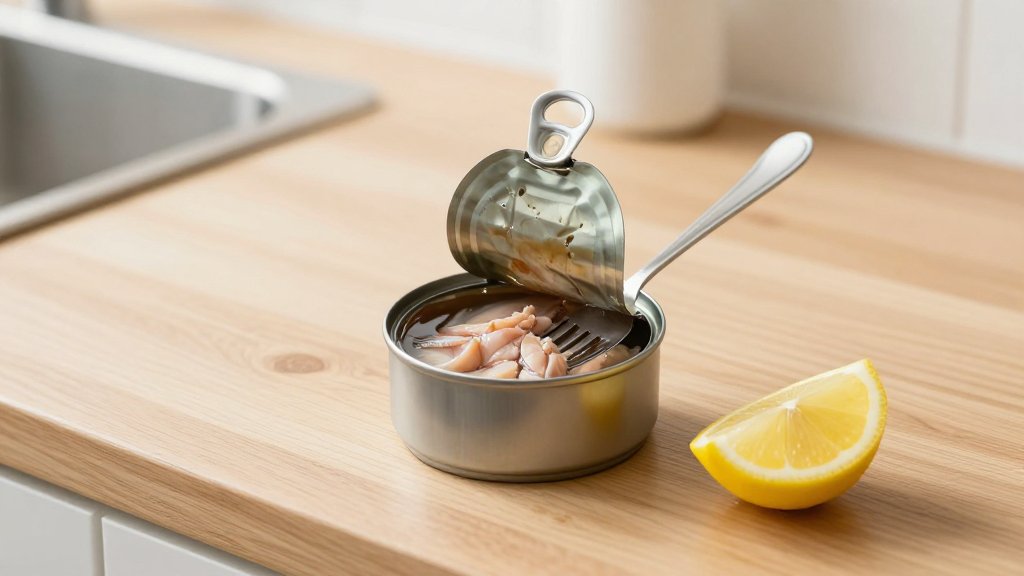
One five ounce can of chunk light tuna in water carries about 30 grams of protein for roughly 120 calories. That is most of a full meal's protein in a container you can keep in a desk drawer. If you have ever wondered how much protein in a can of tuna you really get, the short answer is a lot, for very little energy.
The catch is that not every can is equal. Tuna calories swing with the packing liquid and the cut, so a can in oil can land closer to 280 calories while the protein barely moves. Read the label before you assume, because canned tuna nutrition varies more than most people think.
How much protein in a can of tuna
Grab a standard five ounce can of chunk light in water and drain it. You are looking at about 30 grams of protein and 120 calories, with close to zero carbs and only a gram or two of fat. Per ounce, that works out to roughly 24 calories and 6 grams of protein, so the protein density is hard to beat.
Albacore, the solid white tuna, reads a little higher. A can pushes protein toward the mid 30s and calories a touch above light tuna, since albacore is a fattier fish. Either way, canned tuna protein is close to pure lean fuel with no sugar and no starch.
| Serving | Calories | Protein |
|---|---|---|
| 1 oz, water | 24 | 6 g |
| 3 oz, water | 72 | 18 g |
| 5 oz can, water | 120 | 30 g |
| 1 oz, oil | 56 | 8 g |
| 5 oz can, oil | 280 | 40 g |
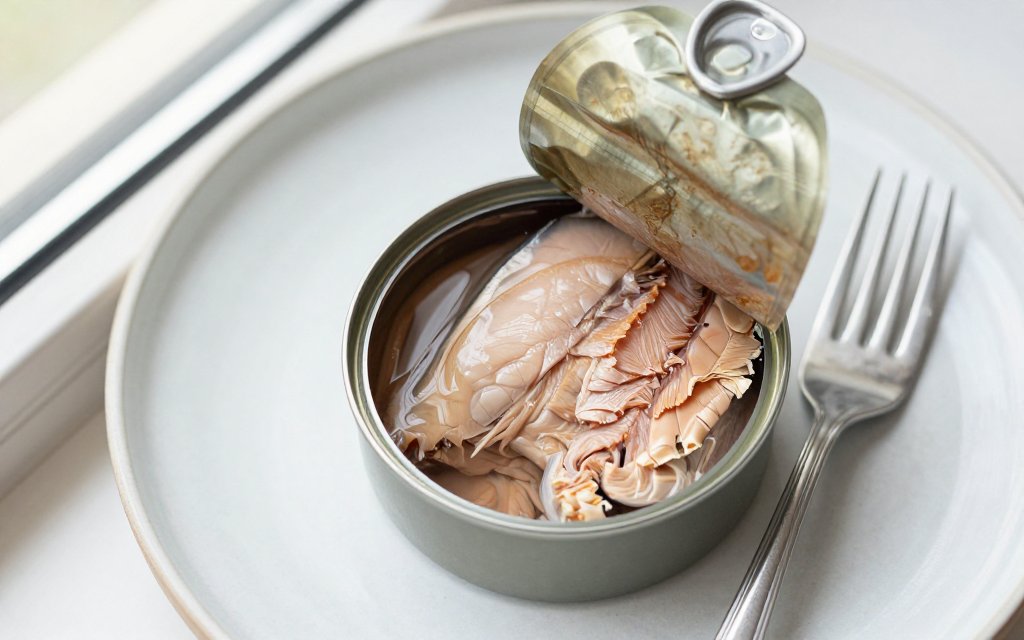
A drained five ounce can in water is about 30 grams of protein for 120 calories. Few whole foods pack protein that cleanly.
Water or oil changes the calories more than the protein
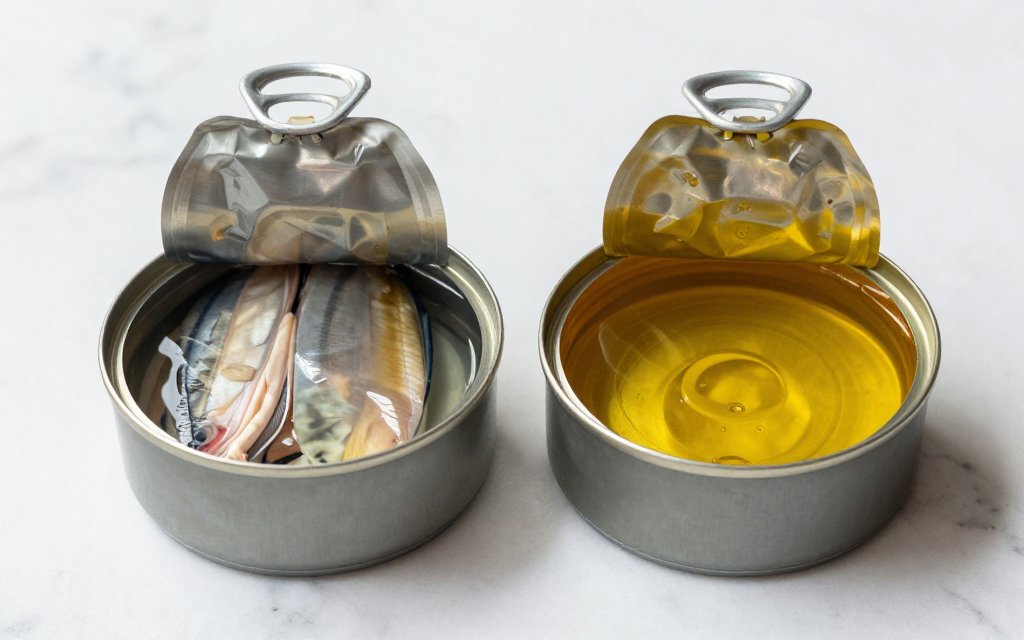
Here is where canned tuna calories move the most. Packed in water, that five ounce can sits near 120 calories. Packed in oil, the same fish soaks up fat and climbs toward 280, and by USDA figures a drained six and a half ounce can jumps from about 150 calories in water to 317 in oil. The protein stays roughly the same.
So oil does not buy you more of what you came for. It adds calories, not protein. If you are counting, water packed tuna is the easy default, and you can always stir in your own olive oil at home where you control the exact amount.
| Pack | Water | Oil |
|---|---|---|
| 5 oz can | 120 | 280 |
| 6.5 oz drained | 150 | 317 |
| Per 1 oz | 24 | 56 |
Light versus albacore and what canned tuna nutrition gives you
Two cans can read very differently. Light tuna, usually skipjack, is leaner and milder. Albacore, the white tuna, brings more protein, more calories, and more omega-3 fats, and it also carries more mercury. The tuna nutritional value is strong either way, but the trade offs matter if you eat it most days.
On mercury, light tuna is the safer everyday pick. The FDA and EPA list canned light tuna as a Best Choice and albacore as a Good Choice, which in plain terms means a few cans of light tuna a week suit most adults, while albacore is better kept to about one.
The tuna fish benefits beyond protein
It is not only about the grams. The omega-3 fats in tuna support heart and brain health, and water packed cans hold onto more of those fats than oil packed ones, since draining oil pours some omega-3 out with the liquid. Rotating in a fillet of salmon once a week adds even more of those fats.
Light tuna is a Best Choice you can eat a few times a week. Albacore is richer in omega-3 and mercury both, so space it out.
What a can of tuna does for your weight loss numbers
Here is the part that actually moves the scale. Protein is the most filling macro, so a 120 calorie can that delivers 30 grams keeps you full for a fraction of the calories a snack usually costs. Tuna sits near the top of the high protein foods ranked by calorie, which is exactly what you want when you are eating less.
Cost follows the same logic. A can often runs a dollar or two, which makes canned tuna protein one of the cheapest ways to hit a daily target while staying in a calorie deficit. If you aim for 100 grams of protein a day, three cans get you most of the way for the price of a coffee.
Trade a 400 calorie snack for a 120 calorie can of tuna and you bank the difference while eating more protein, not less.
Tuna salad and sandwiches, where the calories sneak in
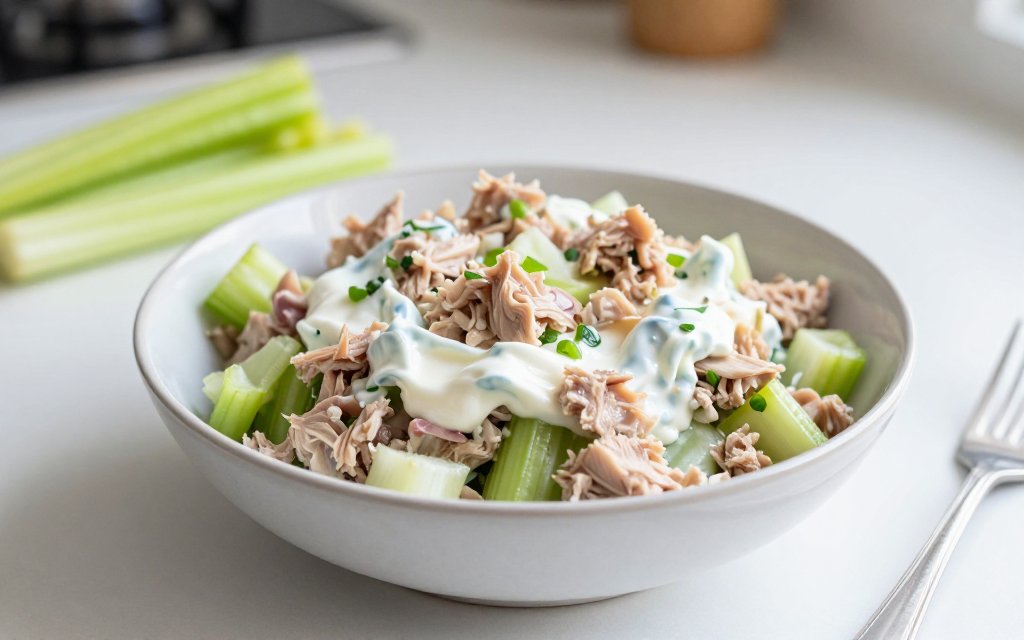
A plain can is lean. What you mix in is where the numbers change. The calories in tuna salad come almost entirely from the mayo, not the fish, since a couple of tablespoons can add 180 to 200 calories on their own. Greek yogurt or a light mayo cuts that in half.
Bread does the same thing. The calories in a tuna fish sandwich stack up from two slices and a spread more than from the tuna inside. Build it open faced, or on a lighter bread, and the sandwich stays a high protein lunch instead of a heavy one.
Common questions about tuna calories and protein
How much protein in a can of tuna?
A standard five ounce can of chunk light in water gives about 30 grams of protein for roughly 120 calories. Albacore reads a little higher on both counts. Use the drained weight, not the can size, when you log it, since the liquid you pour off is not part of the fish.
How much protein in a tuna can versus a pouch?
A single serve pouch, usually 2.6 to 3 ounces, lands near 16 to 18 grams of protein for 70 to 90 calories. A full five ounce can gives more of both. Pouches win on portion control, cans win on cost per gram of protein.
Is canned tuna good for weight loss?
Yes, for most people. It is high in protein, low in calories, carb free, and cheap, which is a strong mix when you are in a deficit. Just watch the mayo and bread you pair it with, and vary your fish so you are not eating albacore every day.
How many cans of tuna are safe per week?
For light tuna, a few cans a week fits the FDA Best Choice guidance for most adults. Albacore is higher in mercury, so about one serving a week is the usual advice. If you are pregnant, check current FDA guidance and talk with your doctor first.
Tuna is one of the easiest high protein foods to log, as long as you use the drained weight and the right pack. Take the guesswork out of canned tuna nutrition by snapping a photo and letting the app read the portion and the calories for you. Get the app here: iOS or Android.
Start Tracking Your Nutrition Today
Download CalMeal for free and take the guesswork out of calorie counting with AI-powered food recognition.